TL;DR
- Mechanical engineers design, build, test and install machinery and moving parts across power, transport, manufacturing and construction, working on a product from research to commissioning.
- The job has six duties: research and develop, design and specify, test and evaluate, improve processes and reliability, manage projects and people, and commission and maintain plant.
- Most UK mechanical engineers hold an accredited degree or a level 6 degree apprenticeship and work towards chartered status through the Institution of Mechanical Engineers against the UK-SPEC standard.
Searches for a “mechanical job description” almost always mean one role: the mechanical engineer, the discipline behind anything with moving parts, from a pump seal to a power station turbine. It is also one of the broadest engineering disciplines, which makes the job description harder to write than it looks.
This article gives a mechanical engineer job description you can adapt: what the role does, six core duties, the skills employers ask for, the qualifications and the route to chartered status in the UK, a template and the mistakes that weaken engineering adverts.
Engineers work to specifications, and their own objectives should be as clear. See how New Dynamics Goals & OKRs keep targets and progress in one place.
What does a mechanical engineer do?
The UK National Careers Service profile of a mechanical engineer puts it in one line: “Mechanical engineers design, build and install machinery used in industries like power, engineering, transport and manufacturing.”
Prospects, the UK graduate careers service, describes the scope in its mechanical engineer profile. As a mechanical engineer, it says, “you'll provide efficient solutions for the development of processes and products, ranging from small component designs to large-scale plants, machinery or vehicles”, and you will “work on all stages of a product, from research and development to design and manufacture, as well as installation and final commissioning”. Because most industries rely on mechanical systems, Prospects calls it “one of the most diverse of all engineering disciplines”.
The NCS lists manufacturing, construction, energy and utilities and transport as industries where the skills are used. Typical hours are 37 to 40 a week, with shifts possible in some roles.
Mechanical engineer duties: six responsibilities
- Research and develop. Turn research ideas into technical plans using computer-aided design, as the NCS describes, and develop and use new materials and technologies.
- Design and specify. Produce detailed specifications and design outlines, develop a project specification with colleagues from other disciplines, and consider cost, safety and time constraints.
- Test and evaluate. Develop, test and evaluate theoretical designs, test mechanical systems, analyse data and recommend modifications after prototype tests.
- Improve processes and reliability. Improve production processes, design cost-effective equipment modifications to improve safety and reliability, and ensure a product can be made reliably and will perform consistently in its specified operating conditions.
- Manage projects and people. Manage projects using engineering principles, and, depending on the role, manage a project team of technicians, designers and other engineers, discussing and solving problems with manufacturing departments, sub-contractors, suppliers and customers.
- Commission and maintain. Monitor and commission plant and systems, assess the safety of machinery and equipment and oversee maintenance programmes in buildings, power stations and production plants.
The balance between these six varies by employer. A design consultancy weights the first three; a manufacturing site weights the last three. Say which yours is.

Mechanical engineer, technician and mechanic
Three titles that get confused in adverts.
| Title | What it means |
|---|---|
| Mechanical engineer | Designs, analyses, specifies and commissions mechanical systems; usually degree-qualified; works towards chartered status |
| Mechanical engineering technician | Supports engineers with drawings, testing, maintenance and installation; often qualified through a level 3 or 4 apprenticeship |
| Mechanic or fitter | Services, repairs and assembles machinery and vehicles; a skilled trade rather than an engineering discipline |
The NCS notes that you could start as a mechanical engineering technician and train on the job to qualify as an engineer. If your vacancy is really for a technician or a fitter, say so; an engineer's job description will attract the wrong applicants and put off the right ones.
Skills employers ask for
Prospects lists the skills a mechanical engineer needs to show. They include “a high level of technical and scientific knowledge and the ability to apply this knowledge to practical problems”, good oral and written communication with clients, contractors, designers, directors and plant operators, teamwork, IT skills and particularly computer-aided design, “creativity and problem-solving ability”, the ability to work under pressure, and organisational skills including time and resource planning. The NCS adds knowledge of engineering science, maths and physics, design skills, analytical thinking, attention to detail and “the ability to come up with new ways of doing things”.
For an advert, that translates into six things to ask for, with the evidence that shows each.
- Engineering fundamentals: mechanics, thermodynamics, materials, fluids, shown by degree and by problems solved.
- Design and CAD: named tools and a portfolio of drawings or models.
- Analysis: testing, data and mathematical modelling, shown by a validated design or a failure diagnosed.
- Communication: specifications, reports and conversations with people who are not engineers.
- Project discipline: cost, time and safety managed together.
- Curiosity: new materials, methods and, increasingly, energy efficiency. The NCS identifies mechanical engineering as a potential green job, through low-carbon materials, more energy-efficient systems and environmentally friendly suppliers.
Our guide to analytical thinking covers the third of these in depth.

Qualifications and the route to chartered status
Degree. Prospects says: “You'll usually need a degree to get into mechanical engineering.” Relevant subjects include aeronautical, agricultural, computer-aided, manufacturing, mechanical and nuclear engineering and engineering science. The NCS lists mechanical, electromechanical and mechatronics engineering and manufacturing, usually with A levels including maths and physics. Both point to the Engineering Council for accredited courses; Prospects notes that an accredited degree helps towards chartered status later.
Apprenticeships. The NCS lists the manufacturing engineer level 6 degree apprenticeship and the electro-mechanical engineer level 6 apprenticeship as routes into the role, and a T Level in maintenance, installation and repair for engineering as a college route towards higher qualifications.
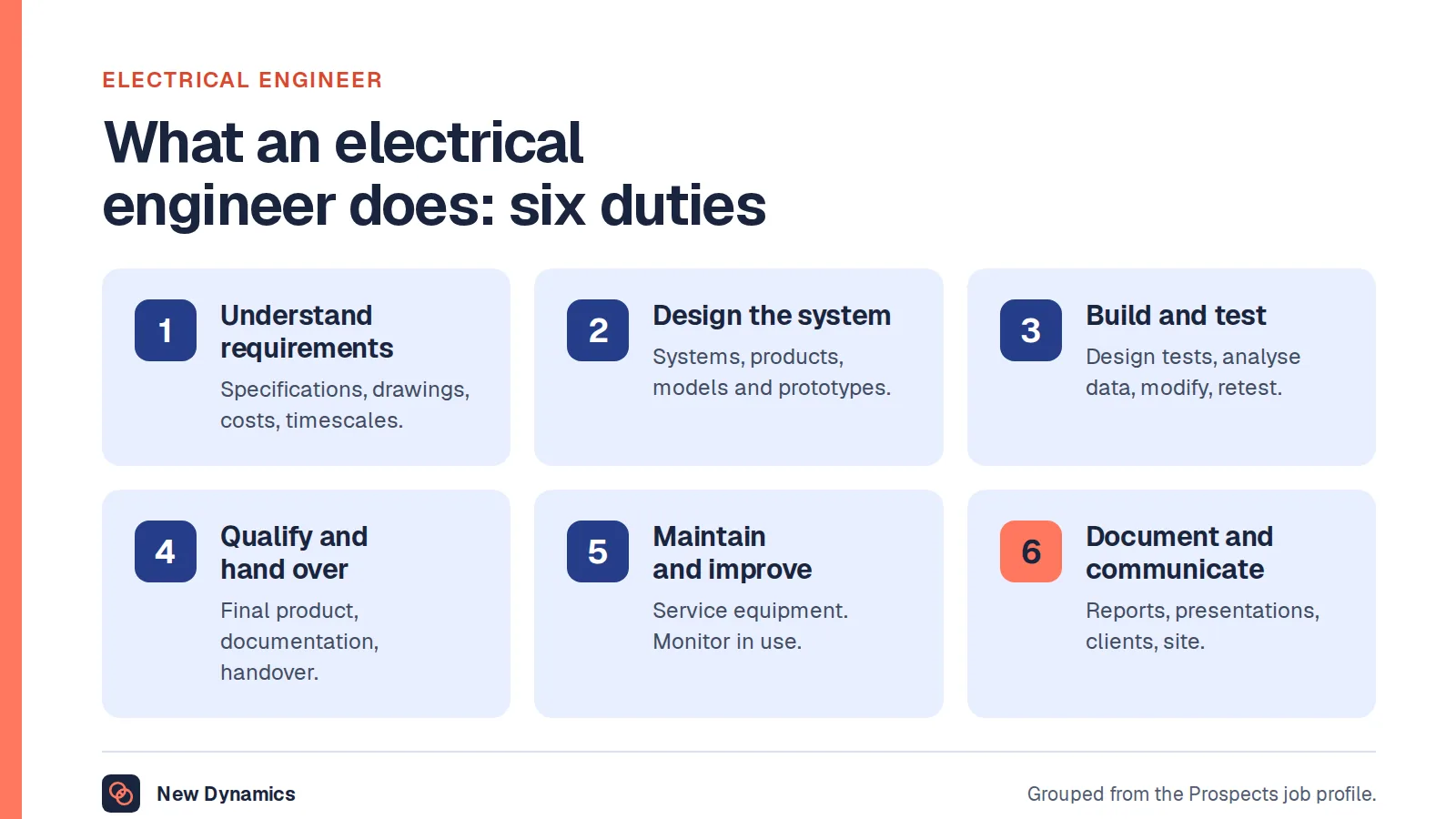
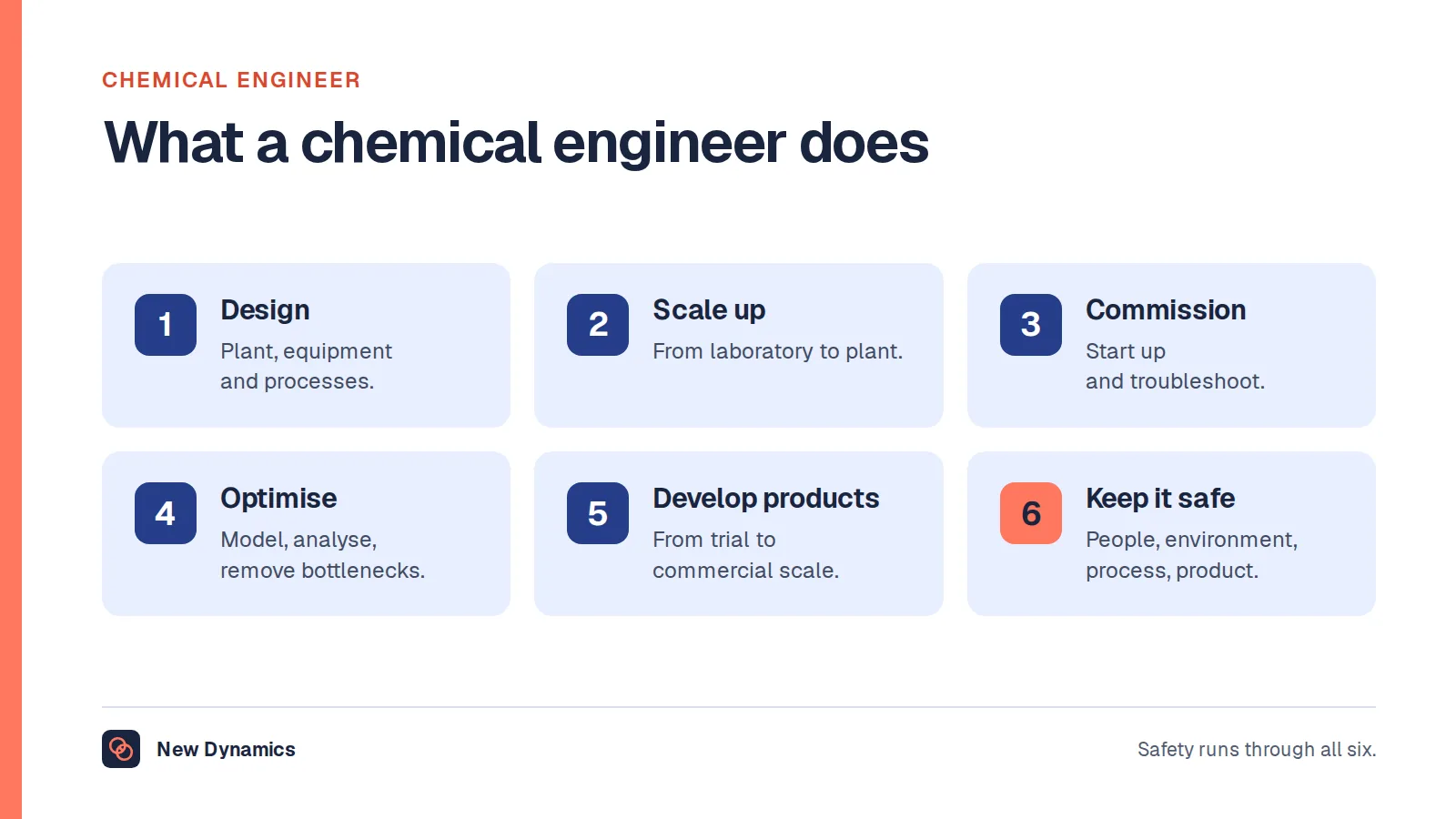
Professional registration. Prospects says you can work towards chartered engineer status (CEng), awarded by the Engineering Council, and that you will need to be a member of a professional institution such as the IET or IMechE to apply through them. Registration is assessed against UK-SPEC, the UK Standard for Professional Engineering Competence and Commitment. Our chemical engineer job description explains how UK-SPEC's five competence areas double as a review framework, and our electrical engineer job description covers the same route for that discipline.
Experience. Prospects says work experience is valuable and that many large employers offer structured internships and summer placements; the NCS suggests internships, a placement year and STEM ambassador schemes.
Requirements differ in other countries. Check the rules where you work.

Mechanical engineer job description template
Adapt the template to your organisation. Keep every line true.
Job title: Mechanical engineer
Reports to: Engineering manager or lead engineer
Location and hours: [Site], with visits to [plants / customer sites]; [37 to 40] hours a week
Purpose of the role: To design, analyse, test and commission mechanical systems for [products / plant], so that they are safe, reliable, cost-effective and delivered on time.
Main duties:
- Develop concepts into designs and detailed specifications using [CAD tool]
- Carry out calculations, simulations and tests, and recommend modifications from results
- Improve the reliability, safety and efficiency of existing equipment and processes
- Prepare project specifications with electrical, software and manufacturing colleagues
- Manage assigned projects to cost, time and safety requirements
- Commission plant and systems and support maintenance programmes
- Work with suppliers, sub-contractors and customers to resolve technical problems
Skills and experience:
- Accredited degree in mechanical engineering or a related subject, or a level 6 engineering apprenticeship
- [Years] of experience in [sector], with a portfolio of designs delivered
- Proficient in [CAD / analysis tools]
- Clear written and spoken communication with technical and non-technical colleagues
- Working towards, or holding, professional registration
We provide: Support towards chartered status with [IMechE / IET], structured CPD, [hybrid working where the work allows] and a clear route to senior and principal engineer.
State the sector, the products and the tools. Engineers search by them. Our job description template explains the overall structure.
Common mistakes in mechanical engineering job adverts
One advert for three jobs. A design engineer, a maintenance engineer and a project engineer are different roles. Pick one.
Tool lists instead of problems. Ten software packages tell a candidate nothing about the work. One paragraph about the product does.
“Engineer” for a technician or fitter role. It misleads applicants and can breach the trust of those who hold professional registration.
No mention of registration support. Chartered status matters to engineers' careers, and Prospects notes that it enhances progression. Say whether you support it.
Unrealistic experience for the pay. Ten years' experience and a senior title at a graduate salary is an advert that fills nobody's vacancy.
Frequently asked questions
What does a mechanical engineer do?
A mechanical engineer designs, builds, tests and installs machinery and mechanical systems, from small components to large plants and vehicles, working across research, design, manufacture, installation and commissioning. The National Careers Service names power, engineering, transport and manufacturing as typical industries.
What are the duties of a mechanical engineer?
Six core duties: research and develop products, design and specify, test and evaluate designs, improve processes and reliability, manage projects and people, and commission and maintain plant. The weight of each depends on whether the role sits in design, manufacturing or maintenance.
What qualifications does a mechanical engineer need?
In the UK, usually an accredited degree in mechanical engineering or a related subject, or a level 6 degree apprenticeship such as manufacturing engineer or electro-mechanical engineer. Engineers then work towards chartered status through a professional institution such as the IMechE, assessed against UK-SPEC.
What skills does a mechanical engineer need?
Technical and scientific knowledge applied to practical problems, design and computer-aided design, analysis and testing, creativity and problem solving, clear communication with technical and non-technical people, teamwork, and organisation of time and resources under pressure.
What is the difference between a mechanical engineer and a mechanic?
A mechanical engineer designs, analyses and specifies mechanical systems and is usually degree-qualified. A mechanic services, repairs and assembles machinery and vehicles and is a skilled trade. Between the two sits the mechanical engineering technician, who supports engineers and often trains through an apprenticeship.
Is mechanical engineering a green job?
It can be. The National Careers Service identifies mechanical engineering as a potential green job when engineers use low-carbon materials such as recycled metals, make mechanical systems more energy efficient and use environmentally friendly suppliers.
Your next step
- Decide which of design, manufacturing or maintenance your vacancy really is, and weight the six duties to match.
- Replace the tool list with a paragraph about the product or plant.
- State the qualification level, the sector experience you need and whether you support professional registration.
- Plan how the engineer's first-year objectives will be set and reviewed.
For a method for that last step, read and download our SMART goals guide. The guide is free to read, and the PDF uses our short download form.
Want engineering objectives, feedback and development in one place? Book a New Dynamics demo and bring your current job description. You can also email contact@new-dynamics.com.