TL;DR
- A porter is a person whose job is to move things or people from one place to another, or to look after the entrance of a building. The word covers several different jobs.
- The five you are most likely to meet are the hospital porter, the hotel porter, the night porter, the kitchen porter and the building or college porter. In the United States the word can also mean a cleaner in a large building.
- A hospital porter moves patients, samples, mail, linen, medical gases and equipment. The NHS says that there are no formal entry requirements. Reliability, care with people and physical fitness matter most.
A job advertisement says “porter wanted”. It could mean wheeling patients to X-ray, carrying suitcases to the fourth floor, washing pans in a restaurant kitchen or sitting at the front desk of a block of flats. Few job titles cover so much ground.
This article answers the question what is a porter, describes the five main types, sets out the duties of a hospital porter in detail, and covers skills and entry routes. For employers, it includes a porter job description template and advice on managing a team that is easy to overlook. Most of the terms are British, and we note where American usage differs.
Porters keep a building working, and are rarely thanked for it. See how New Dynamics employee recognition makes thanks specific and visible across the whole organisation.
What is a porter?
The Cambridge Dictionary's first definition of porter is “a person whose job is to carry things, especially travellers' bags at railway stations, airports, hotels etc.”
Carrying is still the heart of most porter jobs: getting a thing, or a person, to where it needs to be. A second sense sits beside it. Cambridge also defines a porter as someone who takes care of a large building and is “present at its entrance in order to help people who live or visit there”. It labels that sense British, and gives the American equivalent as doorman.
So “porter” on its own tells you little. The word in front of it tells you the job.
Five types of porter
- Hospital porter. Cambridge: “a worker whose job is to move patients, supplies, and equipment around a hospital”.
- Hotel porter. Carries guests' luggage, shows them to their rooms and helps at the entrance. American hotels often say bellhop or bellman.
- Night porter. Cambridge defines a night porter as “someone whose job is to take care of a building or hotel at night”.
- Kitchen porter. Cambridge defines a kitchen porter as “someone whose job is to wash dishes, etc. in a hotel or restaurant kitchen”. Often shortened to KP.
- Building or college porter. Staffs the entrance or lodge of a block of flats, an office or a college. They receive visitors and deliveries, and keep an eye on the building.

Porter in American English
Three more senses belong to the United States. Cambridge's American dictionary notes that a porter “is also a person whose job is to clean, esp. in a large building”. You may see that sense in advertisements for a porter in an apartment building, a shop or a car dealership, where the work is usually cleaning and moving things. The baggage porter at a station or airport is the same in both countries. And historically, a porter was the attendant on an overnight train, who, in Cambridge's words, helped travellers “by arranging their bed, taking care of their bags, etc.” Its example is the Pullman porter.
If you are recruiting, the lesson is simple. Never advertise for a “porter” without saying which kind.
What does a hospital porter do?
NHS Scotland's careers profile of the porter gives a clear summary. Porters help “to make sure that equipment, materials, mail, biological samples, and medications are in the right place at the right time”. They also “transport patients between hospital wards and departments safely, with care and dignity”.
The profile lists the tasks, which fall into six groups.
- Patients. Transporting patients safely to and from wards and departments. Porters also take deceased patients to the hospital mortuary, in NHS Scotland's words “with dignity and respect”.
- Samples and notes. Collecting biological samples from wards and delivering them to the laboratory, and collecting and delivering medical notes.
- Mail. Collecting, sorting and delivering internal and external mail across the site.
- Linen and waste. Taking used linen for laundry, distributing clean linen, and collecting domestic and clinical waste for disposal.
- Medical gases. Collecting, delivering and connecting cylinders of medical gases.
- Equipment and furniture. Moving both between departments.
Through all of it, porters are expected to maintain a safe working environment, and to report any faults or hazards.
NHS England's careers site for young people, Step into the NHS, describes a day as a porter: moving valuable and delicate medical equipment between wings, taking a child from the ward to the X-ray department and back, and delivering stocks of emergency drugs to the right wards.
Notice how much of this is contact with patients. A porter is often alone with an anxious patient, in a lift or a corridor. The job is logistics and kindness in equal parts.

Duties of other porters
Official profiles of the other types are harder to find, so treat these as typical duties. The details depend on the employer.
Hotel porter. Greets guests, carries and stores luggage, shows guests to rooms, runs errands, arranges taxis, helps to set up meeting rooms and keeps the lobby tidy.
Night porter. Looks after the building and its guests overnight: answering the door and the telephone, checking in late arrivals, doing security rounds, serving simple food or drinks, and dealing with whatever happens at three in the morning.
Kitchen porter. Washes dishes, pots and equipment, keeps the kitchen clean, takes out waste, unloads deliveries and may help with basic food preparation. A kitchen cannot run without one.
Building or college porter. Staffs the front desk or lodge, receives visitors, parcels and post, holds keys, reports repairs, and is often the first person called in an emergency.
Skills of a good porter
NHS Scotland lists five top skills: communicating, collaborating, focussing, problem-solving and initiative. Step into the NHS adds fitness. It describes someone who is physically fit and able “to move heavy items easily and push them considerable distances”.
From those, and from the nature of the work, six qualities stand out.
- Reliability. Other people's work waits on yours.
- Care with people. Patients, guests and residents are often tired, worried or lost.
- Communication. With the public, and with busy colleagues.
- Physical fitness, and safe moving and handling.
- Discretion. Porters see and hear a great deal.
- Calm, and initiative. Priorities change by the minute.
How to become a porter
For hospital porters in England, Step into the NHS is plain: “There are no formal entry requirements, so check the job vacancies at your local hospital.” It adds that GCSEs are not essential, that most applicants are 18 or over, and that “some porter positions require a full driving licence”.
NHS Scotland asks for a good standard of education. It says that some customer service and healthcare experience, including manual handling skills, is useful. Once in post, learning includes a porter workbook, health and safety training and risk management training.
There is a route upwards. NHS Scotland mentions a medical gas certificate and further qualifications in healthcare support and facilities management, which help with applications for more senior roles “such as portering supervisor or support services manager”.
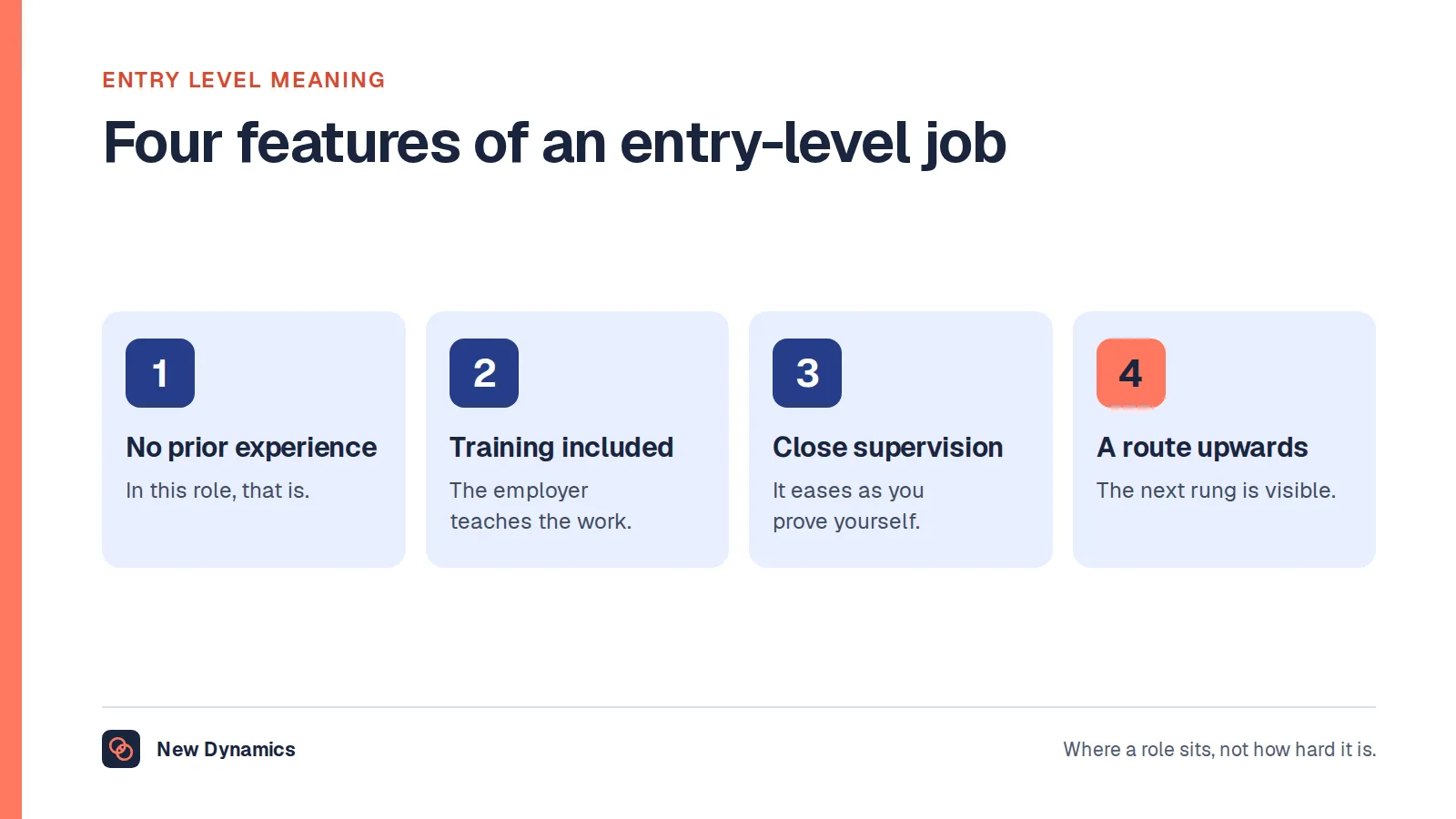
Hotels, restaurants and property managers set their own requirements. Porter jobs are often open to people with no experience, which can make them a good first job. Our guide to the meaning of entry level explains what employers should, and should not, ask of a beginner.
Porter job description template
This template is for a hospital porter. Adapt it for a hotel, kitchen or building by changing the duties. Text in square brackets is for you to complete. It was written by our editorial team as a starting point.
Job title: Porter, [department or site]
Reports to: Portering Supervisor
Hours: [Shift pattern, including nights, weekends and public holidays.]
Purpose of the role: To move patients, specimens, supplies and equipment around the site safely and on time, and to treat every patient with care and dignity.
Main duties
- Transport patients between wards and departments by wheelchair, trolley or bed, following moving and handling training.
- Collect and deliver specimens, medical notes, mail, medicines and supplies.
- Collect and distribute linen, and collect waste, following infection control procedures.
- Deliver and connect medical gas cylinders, once trained and authorised.
- Move furniture and equipment as requested.
- Transfer deceased patients to the mortuary with dignity and respect.
- Report faults, hazards and incidents promptly.
- Respond to requests from the portering desk or system in order of priority.
- Keep patient information confidential.
Essential
- Able to meet the physical demands of the role, with reasonable adjustments where needed.
- Clear spoken communication, and a considerate manner with patients and the public.
- Reliable, and willing to work the shift pattern.
Desirable
- Experience in a customer service, care or manual role.
- A full driving licence. [Make this essential only if the role involves driving.]
Training provided: [Induction, moving and handling, health and safety, infection control and medical gases.]
Keep the essential list short. Our guide to job requirements explains why each extra line costs you candidates. For another customer-facing role, see our sales associate job description.
Managing porters well
Portering teams are often spread across a site, and many work at night. They can be the last people to hear news and the last to be thanked. Five things make the difference.
- A proper induction. The site, the people, the procedures and the reasons for them. Not a uniform and a radio.
- Safety training that is kept up to date. Moving and handling above all.
- Clear goals. A few measures that the porter can influence, such as response to urgent requests, safe handling and reporting of hazards.
- Specific recognition. Thank people for a particular thing that they did, in a way that reaches the night shift too. Our employee recognition ideas include many that suit people who do not sit at a desk.
- A visible route upwards. To senior porter, supervisor or another department. Say what it takes.

Common mistakes
An unclear job title. “Porter” alone attracts the wrong applicants and confuses the right ones.
Asking for experience that the job does not need. NHS England states that there are no formal entry requirements. Do not invent them.
Forgetting the human side. A hospital or hotel porter is part of the patient's or guest's experience. Hire and train for it.
Measuring only speed. Porters who are judged on minutes alone will cut corners on safety and on kindness.
Leaving the night shift out. Briefings, training and thanks should reach every shift.
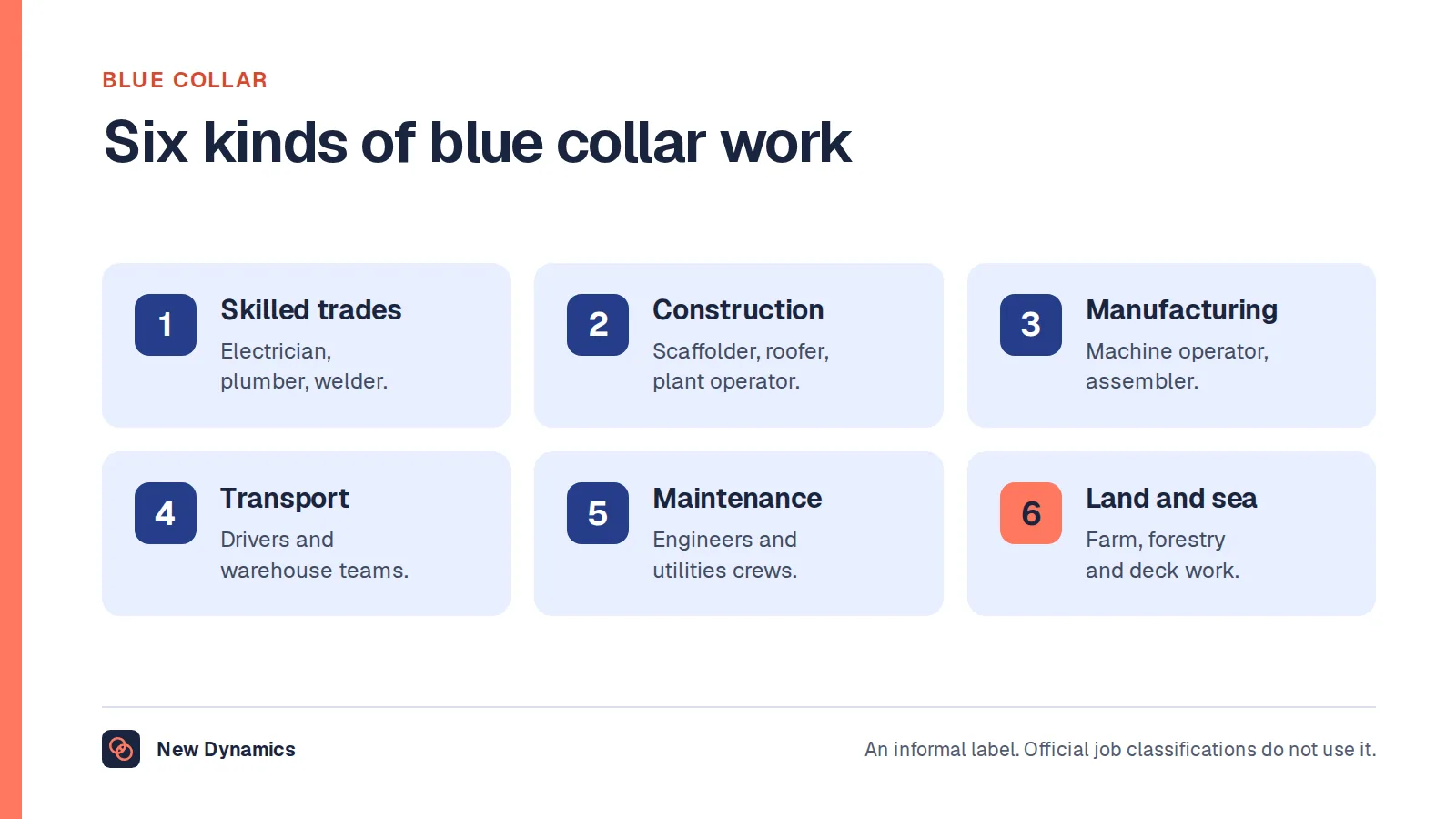
No review at all. Our article on blue-collar work explains why people in manual roles need goals and feedback as much as anyone.
Frequently asked questions
What is a porter?
A porter is a person whose job is to carry or move things or people, or to look after the entrance of a building. The main types are hospital porters, hotel porters, night porters, kitchen porters and building or college porters.
What are the duties of a porter?
They depend on the type. A hospital porter moves patients, samples, mail, linen, medical gases and equipment. A hotel porter carries luggage and helps guests. A kitchen porter washes up and keeps the kitchen clean. A building porter staffs the entrance.
What does a hospital porter do?
According to NHS Scotland, hospital porters make sure that equipment, materials, mail, biological samples and medications are in the right place at the right time, and transport patients between wards and departments safely, with care and dignity.
What is a porter position in the United States?
In the US, a porter is often a person who cleans and moves things in a large building, such as an apartment block, a shop or a car dealership. The word is also used for baggage porters. The person at the door of a building is usually called a doorman.
Do you need qualifications to be a porter?
Usually not. Step into the NHS says that there are no formal entry requirements for hospital porters in England, although some positions require a full driving licence. Employers provide training, including moving and handling.
What is a kitchen porter?
A kitchen porter, or KP, washes dishes, pots and equipment and keeps a hotel or restaurant kitchen clean. The role may include unloading deliveries and basic food preparation. It is often a first job in hospitality.
Your next step: name the porter you need
- Decide which type of porter you are hiring, and put it in the job title.
- Adapt the template above, and keep the essential list to what the job truly needs.
- Plan the induction and the safety training before the person starts.
- Agree two or three goals in the first month, and thank people for specific work.
For ways to make appreciation reach every shift, read and download our employee recognition guide. The guide is free to read, and the PDF uses our short download form.
Want goals, feedback and recognition to reach the people who are never at a desk? Book a New Dynamics demo and bring your current approach. You can also email contact@new-dynamics.com.