TL;DR
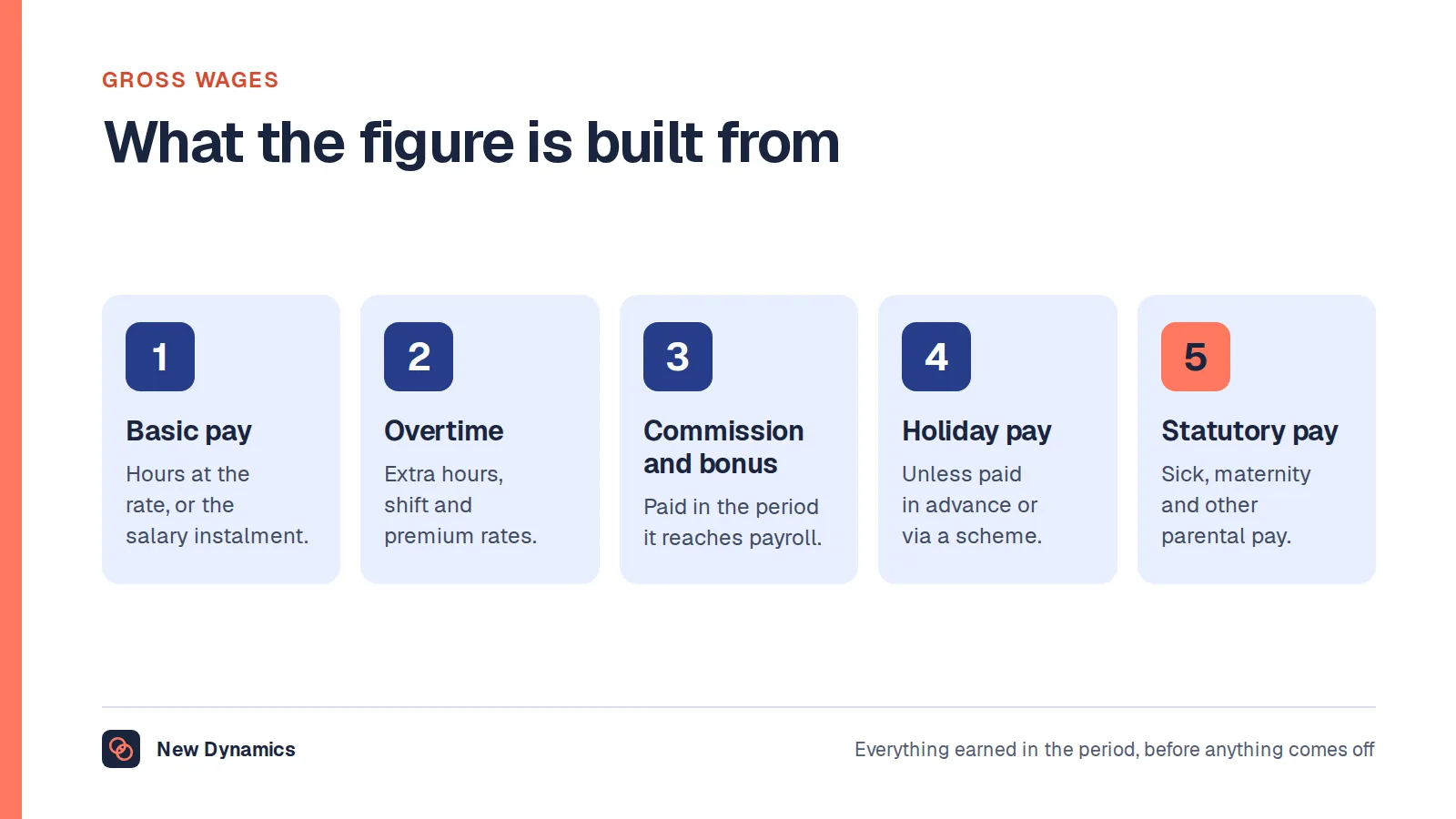
- Supplemental wages is a United States federal withholding category, not a separate tax. IRS Publication 15 (2026) defines them as "wage payments to an employee that aren't regular wages" and names bonuses, commissions, overtime pay, accumulated sick leave, severance, awards, prizes, back pay, reported tips and retroactive pay increases among them.
- There are two methods, and the employer does not always get to choose. Where supplemental wages are paid separately and income tax was withheld from regular wages in the current or immediately preceding calendar year, the employer may "Withhold a flat 22% (no other percentage allowed)" or use the aggregate method. Where no income tax was withheld from regular wages in that window, Publication 15 says to use the aggregate method.
- Above $1 million of supplemental wages to one employee in a calendar year, the excess is withheld at 37% "without regard to the employee's Form W-4". That part is mandatory, and payments from all businesses under common control count towards the $1 million.
A payroll clerk is told to run a bonus and asks which rate to use. Someone says 22%. Someone else says it depends on whether the bonus goes out with the salary. Both are repeating half of a rule that the Internal Revenue Service writes out in full, and the half each of them dropped is the half that decides the answer.
Supplemental wages is a category of United States federal income tax withholding and nothing else. There is no equivalent concept in the United Kingdom, and a British reader who arrived here searching the phrase should not try to map it across. A UK bonus is simply earnings: GOV.UK's employer guidance on bonus payments says "The bonus you've paid counts as earnings", and tells employers to "add it to your employee's other earnings" and to "deduct and pay Pay As You Earn (PAYE) tax and Class 1 National Insurance through payroll". It is taxed cumulatively through PAYE in the period it is paid, with no separate withholding method to choose. Everything below describes the United States position for tax year 2026. New Dynamics does not run payroll and this is general information, not tax advice.
Below: what counts, the two withholding methods, which one an employer must use when, the mandatory rate above the annual threshold, and the mistakes that produce a corrected Form W-2.
A bonus run goes wrong when a step has no owner, not when somebody mistypes a percentage. See how New Dynamics workflows attach each approval to a named person and a date, so the decision and the payment agree.
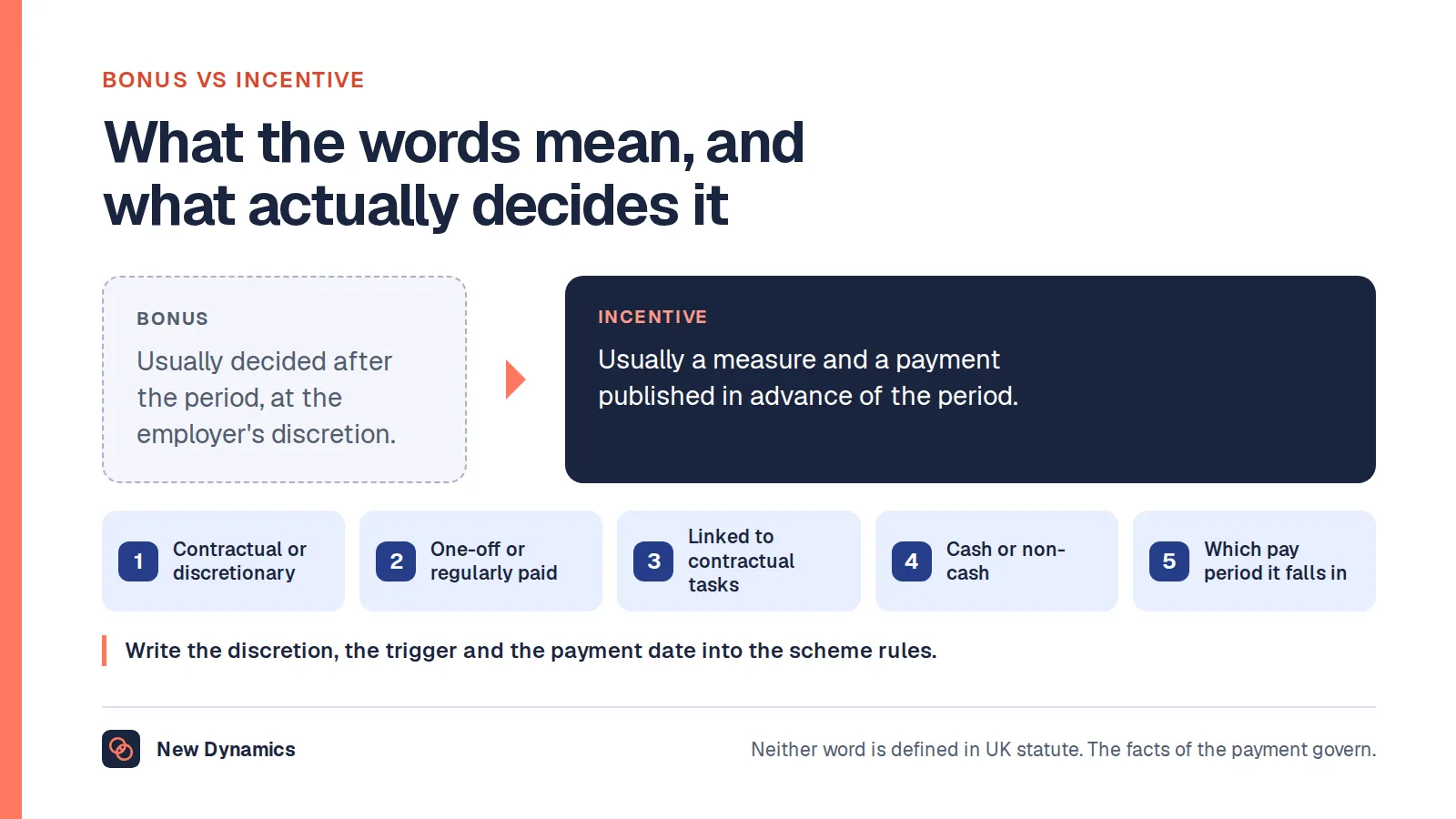
For the pre-deduction figure these payments sit inside, see our post on gross wages. For what bonus and incentive actually mean in a scheme document, see bonus vs incentive.
What supplemental wages are
The definition is one sentence, and it works by exclusion. IRS Publication 15 (2026), (Circular E), Employer's Tax Guide, marked "For use in 2026", opens section 7 with this:
"Supplemental wages are wage payments to an employee that aren't regular wages."
That is the whole test. Not a list of approved payment types, but anything paid as wages that is not the employee's regular wages. Publication 15 then gives examples and says the list is open: "They include, but aren't limited to, bonuses, commissions, overtime pay", "payments for accumulated sick leave, severance pay, awards, prizes, back pay", reported tips and "retroactive pay increases, and payments for nondeductible moving expenses". It adds that "Other payments subject to the supplemental wage rules include taxable fringe benefits and expense allowances paid under a nonaccountable plan".

Two items carry a choice rather than a rule. Publication 15 says "However, employers have the option to treat overtime pay and tips as regular wages instead of supplemental wages." Overtime is supplemental wages only if the employer treats it that way, which is worth settling in writing once rather than per pay run.
Vacation pay is the item people get backwards. Publication 15 says "Vacation pay is subject to withholding as if it were a regular wage payment", then carves out the lump sum: "When vacation pay is in addition to regular wages for the vacation period (for example, an annual lump-sum payment for unused vacation leave), treat it as a supplemental wage payment." Leave taken normally is regular wages. A payout for leave never taken is supplemental. Expense money can cross the line too: payments "for travel and other necessary expenses of your business under a nonaccountable plan are wages and are treated as supplemental wages". The plan's paperwork, not the nature of the trip, decides it.
Social Security and Medicare do not change
This is the single most common misunderstanding, and Publication 15 closes it in one line. After setting out both withholding methods, it says:
"Regardless of the method you use to withhold income tax on supplemental wages, they're subject to social security, Medicare, and FUTA taxes."
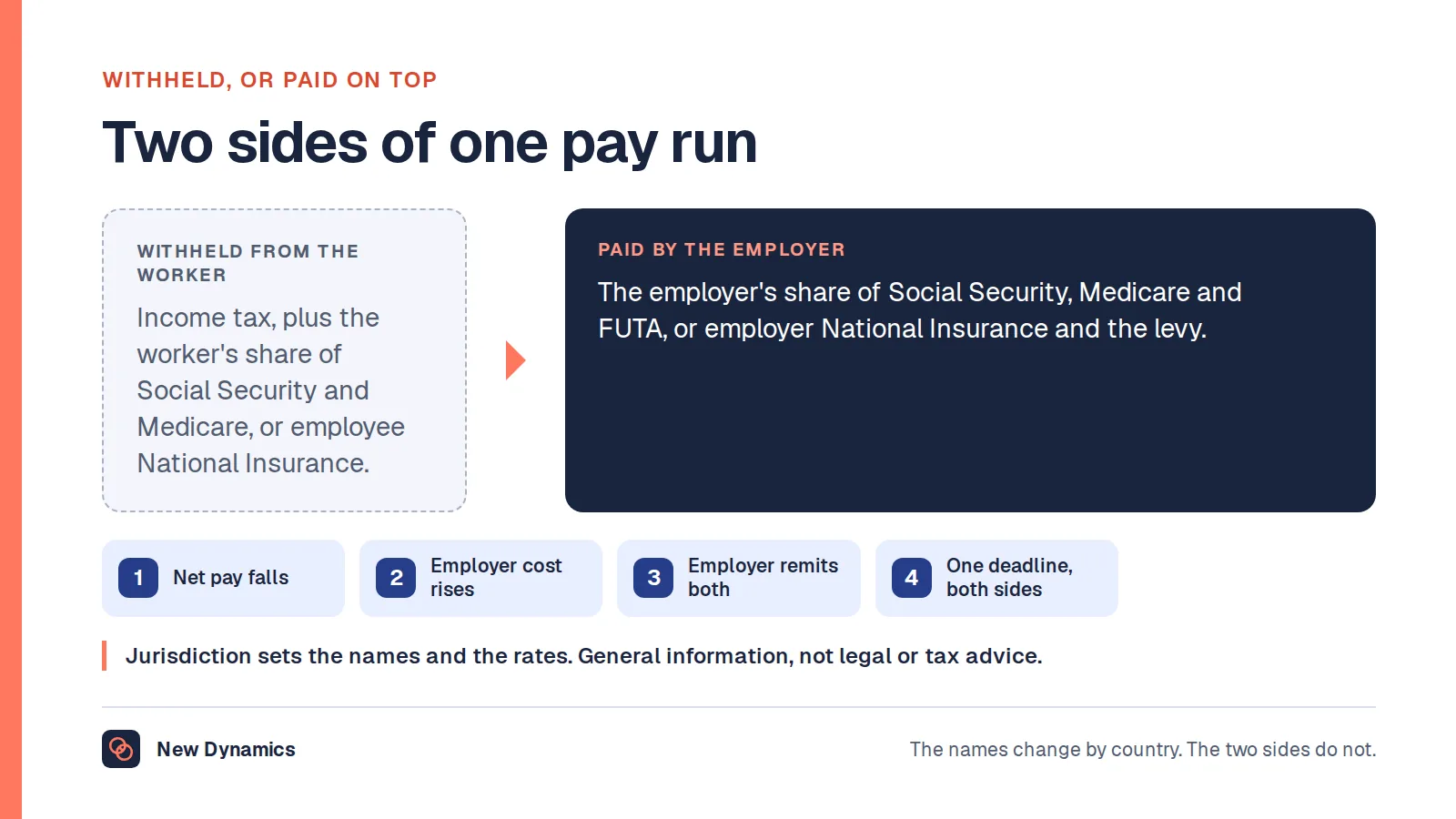
The method choice affects federal income tax withholding only. Publication 15 gives the 2026 figures: "The rate of social security tax on taxable wages is 6.2% each for the employer and employee. The social security wage base limit is $184,500. The Medicare tax rate is 1.45% each for the employee and employer, unchanged from 2025. There is no wage base limit for Medicare tax." A bonus paid to someone already past $184,500 of wages for the year therefore attracts no further employee Social Security tax, and still attracts Medicare tax, because Medicare has no ceiling. Publication 15 adds the employee-only charge: "you must withhold a 0.9% Additional Medicare Tax from wages you pay to an employee in excess of $200,000 in a calendar year". For other published pay figures we cite, see the HR statistics hub.
The two withholding methods
Publication 15 numbers them 1a and 1b. In practice they are called the flat percentage method and the aggregate method.
Method 1a: the flat percentage method
The permitted wording is narrow, and the parenthesis is the IRS's own:
"Withhold a flat 22% (no other percentage allowed)."
Take the payment, withhold 22% of it for federal income tax, ignore the employee's Form W-4 for this payment, and do not round the rate to suit anybody. Publication 15's "What's New" for 2026 confirms the figure has not moved: "The withholding rate on supplemental wages remains 22% (37% if supplemental wages paid to an employee during the calendar year exceed $1 million) because P.L. 119-21 permanently extended the individual tax rates enacted in P.L. 115-97."
Note what the IRS does not say. It does not say 22% is the tax on a bonus. It is a withholding rate, a down payment on a liability settled on the employee's own return. An employee in a lower bracket is over-withheld and gets it back. One in a higher bracket owes the difference.
Method 1b: the aggregate method
The aggregate method puts the supplemental payment back together with regular wages and runs the normal withholding tables. Publication 15 describes it like this:
"If the supplemental wages are paid concurrently with regular wages, add the supplemental wages to the concurrently paid regular wages and withhold federal income tax as if the total were a single payment for a regular payroll period. If there are no concurrently paid regular wages, add the supplemental wages to, alternatively, either the regular wages paid or to be paid for the current payroll period or the regular wages paid for the preceding payroll period. Figure the income tax withholding as if the total of the regular wages and supplemental wages is a single payment. Subtract the tax already withheld or to be withheld from the regular wages. Withhold the remaining tax from the supplemental wages."
Four steps, then: combine, figure the tax on the total, subtract what was or will be withheld on the regular wages, withhold the remainder from the supplemental payment. The employee's Form W-4 and the withholding tables in Publication 15-T do the work, so the result tracks their actual circumstances more closely than a flat 22% does.
Publication 15 adds an instruction for more than one payment in a period. Where earlier supplemental payments were made in the same payroll period, "aggregate all the payments of supplemental wages paid during the payroll period with the regular wages paid during the payroll period, figure the tax on the total, subtract the tax already withheld" and withhold the rest. Two commission runs in one month are not two independent calculations.

Which method an employer must use
The choice is not free. Publication 15 gates it on two facts: whether the supplemental amount is identified separately, and whether income tax was withheld from the employee's regular wages recently.
If the payment is not identified separately, there is no choice. Publication 15: "If you pay supplemental wages with regular wages but don't specify the amount of each, withhold federal income tax as if the total were a single payment for a regular payroll period." A bonus folded invisibly into a salary line is withheld as salary. The flat 22% is unavailable.
If the payment is identified separately, the recent withholding history decides. Publication 15 says the method "depends partly on whether you withhold income tax from your employee's regular wages". Then:
- "If you withheld income tax from an employee's regular wages in the current or immediately preceding calendar year, you can use one of the following methods for the supplemental wages", being 1a or 1b. This is the only situation in which the employer genuinely chooses.
- "If you didn't withhold income tax from the employee's regular wages in the current or immediately preceding calendar year, use method 1b." The aggregate method is mandatory. An employee whose Form W-4 produces no income tax withholding cannot be put on the flat 22%.

Taxable fringe benefits follow the same shape. IRS Publication 15-B (2026), Employer's Tax Guide to Fringe Benefits says "You can add the value of taxable fringe benefits to regular wages for a payroll period and figure income tax withholding on the total. Or you can withhold federal income tax on the value of fringe benefits at the flat 22% rate that applies to supplemental wages", and points back to Publication 15 section 7 for the rate above $1 million.
Above $1 million, the rate is mandatory
The ceiling is where choice disappears entirely. Publication 15:
"Special rules apply to the extent supplemental wages paid to any one employee during the calendar year exceed $1 million. If a supplemental wage payment, together with other supplemental wage payments made to the employee during the calendar year, exceeds $1 million, the excess is subject to withholding at 37% (or the highest rate of income tax for the year). Withhold using the 37% rate without regard to the employee's Form W-4. In determining supplemental wages paid to the employee during the year, include payments from all businesses under common control."
Three things there are routinely missed. The 37% applies to the excess, not the whole payment, so one payment can be split across two rates. The Form W-4 is irrelevant. And the $1 million is counted across all businesses under common control, so a group paying one executive from two entities adds the figures together first. Publication 15's table of special wage payments puts it in shorthand: the flat rate is "Optional with employer, except to the extent employee's supplemental wages during the year exceed $1 million."
The errors employers actually make
- Treating 22% as the tax. Telling an employee their bonus "is taxed at 22%" sets up a complaint next April when the return says otherwise.
- Using the flat rate when no income tax was withheld from regular wages. Publication 15 directs method 1b. Payroll software will do as it is told, including the wrong thing.
- Using the flat rate on a payment that was not separately identified. Combining a bonus with salary without specifying each amount removes the option.
- Rounding the flat rate. "No other percentage allowed" rules out 20%, 25% and whatever an employee asks for.
- Counting the $1 million per payment or per entity. It is cumulative across the calendar year and across businesses under common control.
- Forgetting the lump-sum vacation payout. Leave taken normally is regular wages. A payout of unused leave is supplemental.
- Assuming the method changes Social Security or Medicare. It does not, and nor does it change the Additional Medicare Tax above $200,000.
- Deciding the overtime question per run. Pick one treatment and document it.
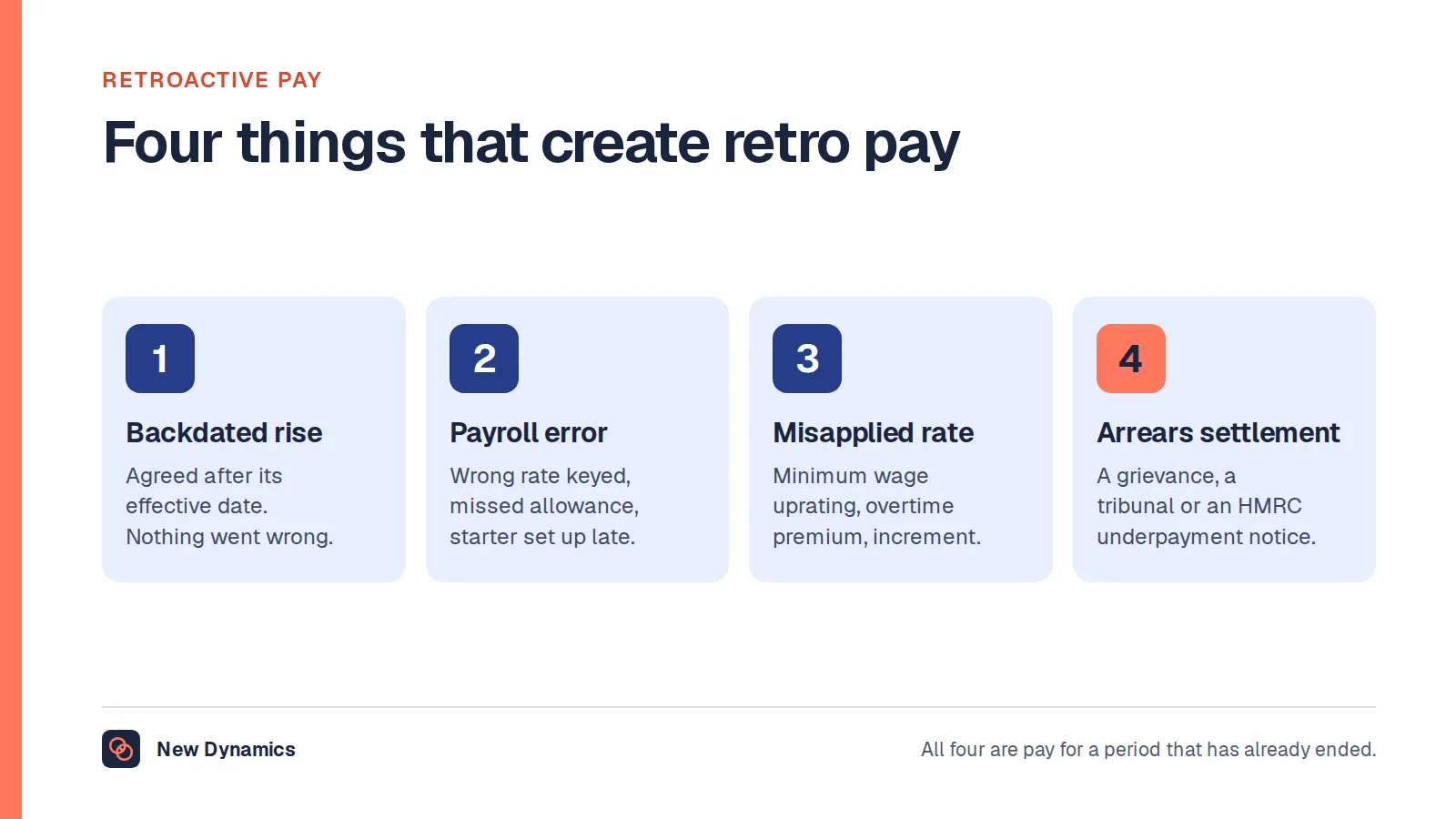
Back pay and a retroactive increase are both in the Publication 15 list, so a correction run is a supplemental wage payment and not an adjustment to a closed period. Our post on retroactive pay covers building and explaining the arrears figure, and payroll tax against income tax separates the two taxes this article keeps apart.
What the IRS does not publish here
Publication 15 sets no minimum amount below which a supplemental payment can be ignored, and no rule allowing a small bonus to be run as regular wages for convenience. It also does not publish state withholding rates. States set their own treatment of supplemental wages, so a payroll team running more than one state checks each against that state's own revenue authority rather than against Circular E.
Frequently asked questions
What are supplemental wages?
They are a United States federal withholding category. IRS Publication 15 (2026) defines them as "wage payments to an employee that aren't regular wages" and names bonuses, commissions, overtime pay, accumulated sick leave, severance pay, awards, prizes, back pay, reported tips and retroactive pay increases as examples. The list is open, so anything paid as wages that is not regular wages falls inside it.
What is the supplemental wage withholding rate for 2026?
Publication 15 (2026) says the rate "remains 22%", and permits the employer to "Withhold a flat 22% (no other percentage allowed)" on separately identified supplemental wages where income tax was withheld from the employee's regular wages in the current or immediately preceding calendar year. Above $1 million of supplemental wages in a calendar year, the excess is withheld at 37%.
Is the supplemental rate a separate tax on bonuses?
No. It is a rate of withholding on a payment, not a rate of tax on a kind of income. The employee's actual federal income tax is settled on their return, so a flat 22% withholding can leave them over-withheld or under-withheld depending on their bracket and circumstances.
What is the difference between the flat percentage method and the aggregate method?
The flat percentage method withholds 22% of the payment and ignores the Form W-4 for it. The aggregate method adds the payment to regular wages, figures withholding on the total using the normal tables, subtracts what was already withheld on the regular wages, and withholds the remainder.
When must an employer use the aggregate method?
In two situations. Where supplemental wages are paid with regular wages and the amount of each is not specified, Publication 15 says to withhold "as if the total were a single payment for a regular payroll period". And where no income tax was withheld from the employee's regular wages in the current or immediately preceding calendar year, Publication 15 says to "use method 1b", the aggregate method.
Are supplemental wages subject to Social Security and Medicare?
Yes. Publication 15 (2026) states that "Regardless of the method you use to withhold income tax on supplemental wages, they're subject to social security, Medicare, and FUTA taxes." For 2026 the Social Security rate is 6.2% each side up to a wage base of $184,500, and Medicare is 1.45% each side with no wage base limit.
Is severance pay supplemental wages?
Yes. Publication 15 names severance pay in its list of supplemental wages, alongside back pay and payments for accumulated sick leave. Our post on severance pay covers what a severance payment contains.
Does a UK employer need to think about supplemental wages?
No. There is no such category in the United Kingdom. GOV.UK's guidance on bonus payments treats a cash bonus as earnings, added to the employee's other earnings with PAYE tax and Class 1 National Insurance deducted through payroll in the period it is paid. The two withholding methods here have no UK equivalent.
Your next step: settle it before the next bonus run
- List each payment type and whether payroll treats it as regular or supplemental wages, and settle the overtime and tips option once.
- Check whether each supplemental payment is identified separately in the pay run, because that fact alone can remove the flat rate.
- For each employee receiving one, confirm income tax was withheld from their regular wages in the current or immediately preceding calendar year.
- Total supplemental wages year to date per employee across every entity under common control, and flag anyone near $1 million.
- Fix the employee communication so it says withholding and not tax, and names the tax year.
If you set pay rules other people have to follow, write them down in language those people can read: read and download our compensation policy guide. The guide is free to read, and the PDF uses our short download form.
Want bonus, commission and severance decisions to carry an owner, a date and a record before payroll sees them? Book a New Dynamics demo and bring the process you run today. You can also email contact@new-dynamics.com.