TL;DR
- The Employment (Allocation of Tips) Act 2023 inserted Part 2B into the Employment Rights Act 1996. The substantive duties came into force on 1 October 2024, and the statutory Code of Practice took effect the same day. The Act extends to England and Wales and Scotland only.
- The hinge is control. Section 27C catches employer-received tips and worker-received tips that the employer or an associated person “exercises control or significant influence over”. A cash tip a worker keeps with no employer involvement is outside the regime.
- Allocation must happen “no later than the end of the month following the month in which the tip, gratuity or service charge was paid by the customer” (section 27G). Records run for three years, and a tribunal can order up to £5,000 per worker in compensation.
A customer leaves a tip. Between that moment and the money arriving in a worker's account there is now a statutory regime with a deadline, a policy requirement, a three year record and a tribunal route. Several of the arrangements employers ran for decades stopped being lawful on 1 October 2024.
This post sets out how the allocation of tips works in England, Wales and Scotland: which tips are caught, the duty to pass them on, when payment is due, the written policy, the records a worker can demand, agency workers, the tronc and what it does to National Insurance, and what a tribunal can order. It names the statutory section behind each duty. It is general information, not legal or tax advice.
A tipping policy, a monthly allocation and a three year record are a process with stages, owners and evidence. See how New Dynamics workflows let you define your own stages, forms and approvals with a completion view instead of a spreadsheet.
What the Tipping Act changed, and when
The Employment (Allocation of Tips) Act 2023 is a short Act that does almost all of its work by inserting a new Part 2B, sections 27C to 27Y, into the Employment Rights Act 1996. Its long title is plain: "An Act to ensure that tips, gratuities and service charges paid by customers are allocated to workers." It received Royal Assent on 2 May 2023.
Commencement came in two stages. Section 9, the power to issue a code of practice, came into force on 31 July 2023. Everything else was brought into force by the Employment (Allocation of Tips) Act 2023 (Commencement No. 2) Regulations 2024, which were made on 25 July 2024 and state that sections 1 to 8 and 10 to 12 "come into force on 1st October 2024, to the extent that they are not already in force". Section 27Y confirms the regime applies only to tips "paid by customers on or after the date on which section 27D comes into force", so tips paid before 1 October 2024 are outside it.
Section 13 says the Act "extends to England and Wales and Scotland". Northern Ireland is not covered and has its own employment law.
Alongside the Act sits the statutory Code of Practice on fair and transparent distribution of tips, published on 29 July 2024, which states on its face: "This code and specified provisions of the legislation come into effect on Tuesday 1 October 2024." Under section 27T the code "is to be admissible in evidence" at a tribunal and relevant provisions "to be taken into account", but a failure to observe it "does not of itself render the employer liable to any proceedings".
When the Act passed, the Department for Business and Trade estimated that "more than 2 million workers will have their tips protected" and that "an estimated £200 million a year will go back into the pockets of hard-working staff by retaining tips that would have otherwise been deducted" (press release, 2 May 2023). Those were forecasts made at Royal Assent rather than measured outcomes. For wider published figures, see our HR statistics hub.
One current wrinkle worth knowing. A revised code was published on 29 June 2026 to reflect the Employment Rights Act 2025, then updated on 29 July 2026 with this note: "This code of practice was previously laid before Parliament, but has been withdrawn so that a new public consultation can be held on its content." GOV.UK's instruction is explicit: employers should "continue to follow the existing code of practice". The 2024 code is still the one in force.
Which tips qualify, and why control is the hinge

Section 27C defines "qualifying tips, gratuities and service charges" as two things: employer-received tips, and worker-received tips which "are subject to employer control" or "are connected with any other worker-received tips which are subject to employer control".
An employer-received tip is an amount paid by a customer "received upon its payment or subsequently by the employer or an associated person", or received by a third party under a payment arrangement with the employer. A worker-received tip is one received by the worker and "not subsequently received by the employer or an associated person". The test for control is in section 27C(5)(a): a worker-received tip is subject to employer control "if the employer or an associated person exercises control or significant influence over the allocation of the tip".
The code puts flesh on that. An employer "is likely to have exercised control or significant influence over cash tips if they tell staff how to distribute cash tips or if they collect cash tips and distribute them at the end of a shift or as part of the regular payroll" (paragraph 10). Card and app payments are almost always employer-received, because the employer receives the money first (paragraph 11). And the exclusion is equally clear: "If a worker receives and keeps a cash tip, with no employer control or involvement, the tip is out of scope for the Tipping Act and this code. Digital tipping, whereby a customer uses an app to directly tip members of staff, bypassing the employer altogether, is also out of scope" (paragraph 13).
Three further points from the statute itself. Section 27C(6) says the amount paid by the customer is "the actual amount paid", and that "any deductions from the amount paid, whether deducted by the employer or any other person, are to be disregarded" when working out what the customer paid. Section 27C(7) takes VAT out. Section 27C(8) brings in non-monetary tips, but only vouchers, stamps, tokens or similar items of a fixed monetary value that can be exchanged for money, goods or services. A casino chip of fixed value counts; a bottle of wine does not.
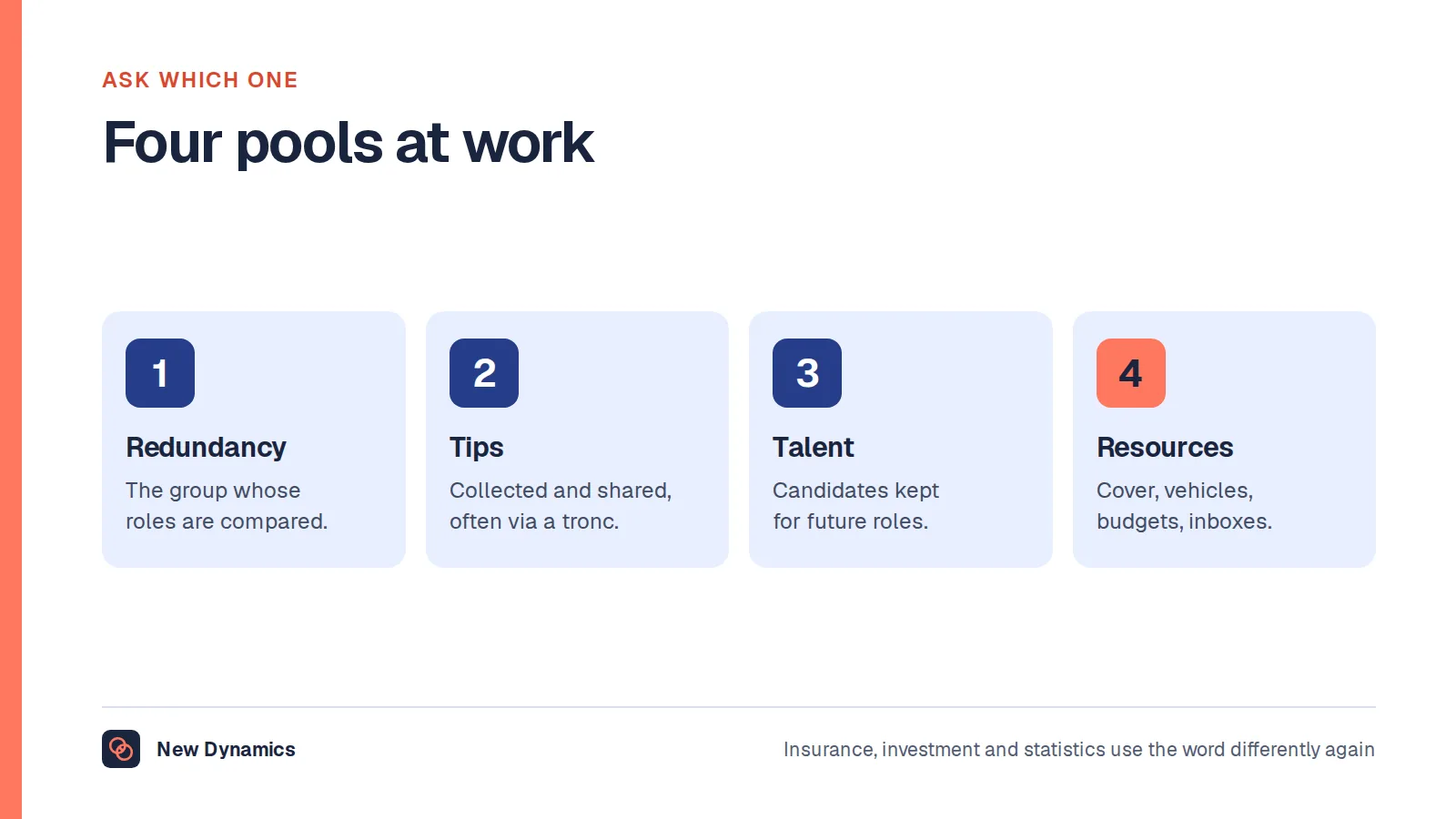
Our post on what pooling means at work covers tip pooling alongside the other workplace meanings of the word. The statutory regime described here is what governs it.
The core duty: allocate fairly, pay without deductions

Section 27D(1) is the heart of the Act. An employer "must ensure that the total amount of the qualifying tips, gratuities and service charges paid at, or otherwise attributable to, a place of business of the employer is allocated fairly between workers of the employer at that place of business". Where employer-received tips are allocated to a worker, "that amount is payable to the worker by the employer" (section 27D(2)).
Deductions are shut off from two directions. Section 11 of the Act added qualifying tips to the definition of "wages" in section 27 of the Employment Rights Act 1996, and modified section 13 so that the usual routes to a lawful deduction, a relevant contractual provision or the worker's prior written agreement, do not apply to allocated tips. The practical effect is that only a deduction required or authorised by statute, such as PAYE, survives. The code states the duty as passing on all tips "without deductions, except in very limited scenarios, such as deduction of income tax". Our post on payroll deductions covers the general deduction rules and the retail cap.
Section 27W makes a related anti-avoidance point: an agreement that requires a worker to pay the employer, or reduces their wages, where that payment is linked to being allocated tips, is void.
What "fairly" means. The code is careful: fair allocation "does not necessarily require employers to allocate the same proportion of tips to all workers" (paragraph 21). Employers "should use a clear and objective set of factors" (paragraph 22), and the code offers a non-exhaustive list: type of role, basic pay and how workers are engaged, hours worked when tips were received, individual or team performance, seniority, length of service and customer intention. Two hard edges follow. Employers "must avoid any form of unlawful discrimination when selecting and applying the factors", with "extra care to avoid indirect discrimination" (paragraph 24). And the allocation approach "should be reviewed on a regular basis in line with staff turnover" (paragraph 26).
Allocation is also per site. Section 27D(1) ties it to "a place of business", and the non-statutory guidance spells out the consequence: "employers cannot pool the tips received across multiple sites of operation, or different branches." Section 27E gives one narrow relief, allowing tips attributable to a non-public place of business to be shared with workers at public sites.
The deadline, the policy and the records
The deadline. Section 27G requires the employer to allocate the tip and make any payment due "no later than the end of the month following the month in which the tip, gratuity or service charge was paid by the customer". The code's worked example: "if a customer leaves a tip on 23 June, it must be distributed by 31 July at the latest" (paragraph 33). Two calendar months at the outside, not two months from the pay run.
The written policy. Section 27I requires a written policy wherever qualifying tips are paid "on more than an occasional and exceptional basis". It must state whether the employer "requires or encourages customers to pay tips", and how the employer ensures tips are dealt with under Part 2B "including how the employer allocates qualifying tips, gratuities and service charges between workers". It must be made available to all workers at that site, and so must any amended version. If an employer is not required to have one, section 27I(5) requires it to tell workers that, and why. The code adds that the policy "must be written in plain language" and that an accessible format must be provided to a worker with a disability on request (paragraph 37). Showing it to customers is optional (paragraph 40).
The records. Section 27J requires a record of how every qualifying tip "has been dealt with", maintained "for a period of three years beginning with the date on which the qualifying tip, gratuity or service charge was paid". A worker may make a written request for the totals paid at a site they worked at and the amount allocated to them. The limits are statutory: the period requested must be whole consecutive months, must begin no more than three years before the request, must end before the request, and the worker must have worked for the employer in each of those months. The employer has four weeks to respond. A worker may make only one request in any three month period. The code adds the privacy line: the response must give the site total and that worker's own share, "but not the specific amounts paid to other workers" (paragraph 45).
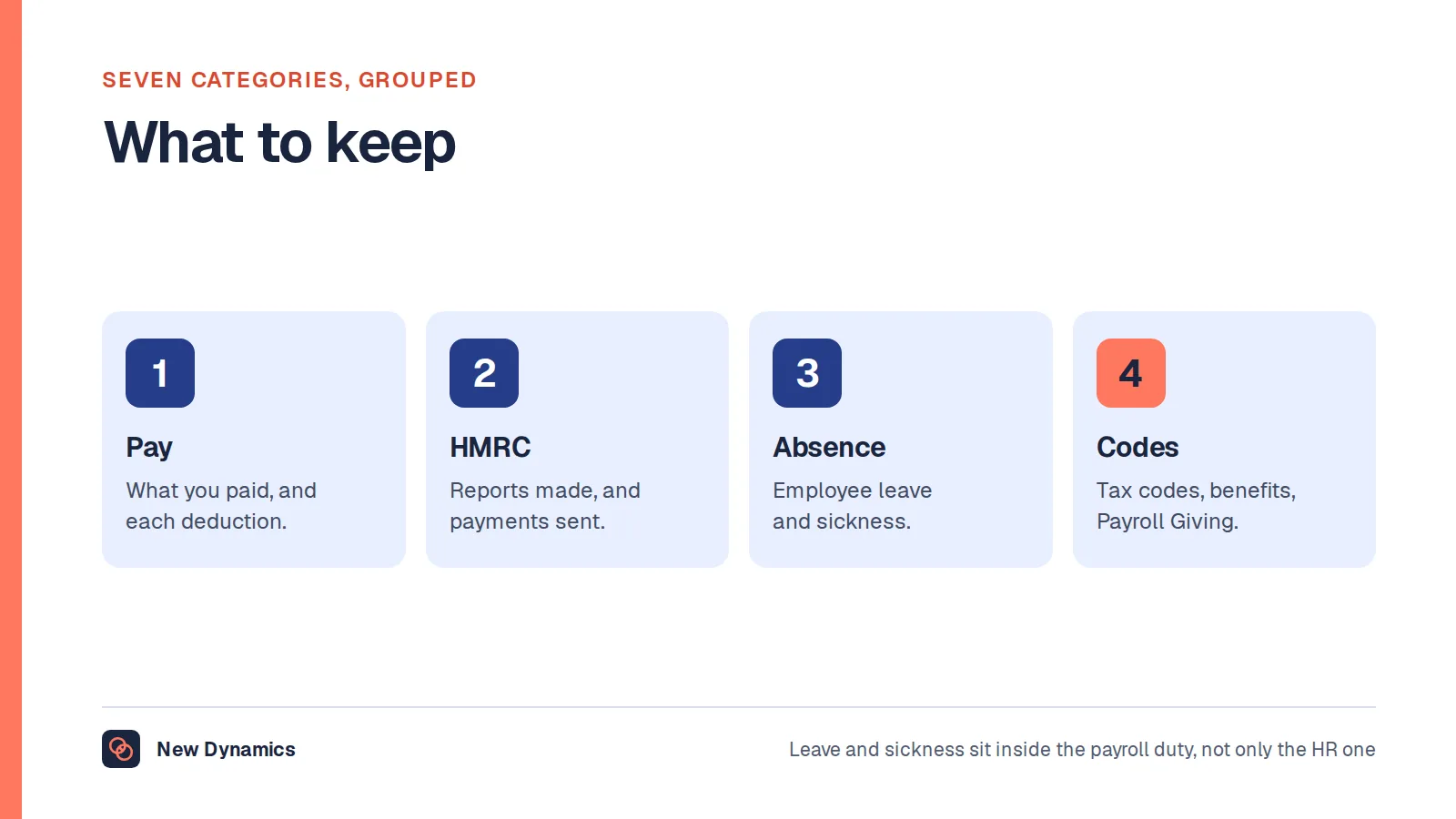
Our post on payroll records covers the wider retention picture.
Agency workers are covered
They are, and this is the area where practice most often goes wrong. Section 27H defines an "eligible agency worker" and then says that where such a worker does work at a place of business of the principal, Part 2B applies "as if the eligible agency worker were a worker of the principal, and the principal were the employer".
So the duty sits with the hirer, not the agency. The code confirms that for agency workers "any references to 'employer' refer to the hirer for this engagement" (paragraph 19). The money may be routed through the agency: section 27H(3) allows payment to the agent within the section 27G window, and section 27H(4) then requires the agent to pay it to the worker "before the end of the month after the month in which the agent is paid the amount". Neither the hirer nor the agent may make "unauthorised deductions", which section 27H(5) defines as a deduction "not required or authorised to be made by virtue of a statutory provision".
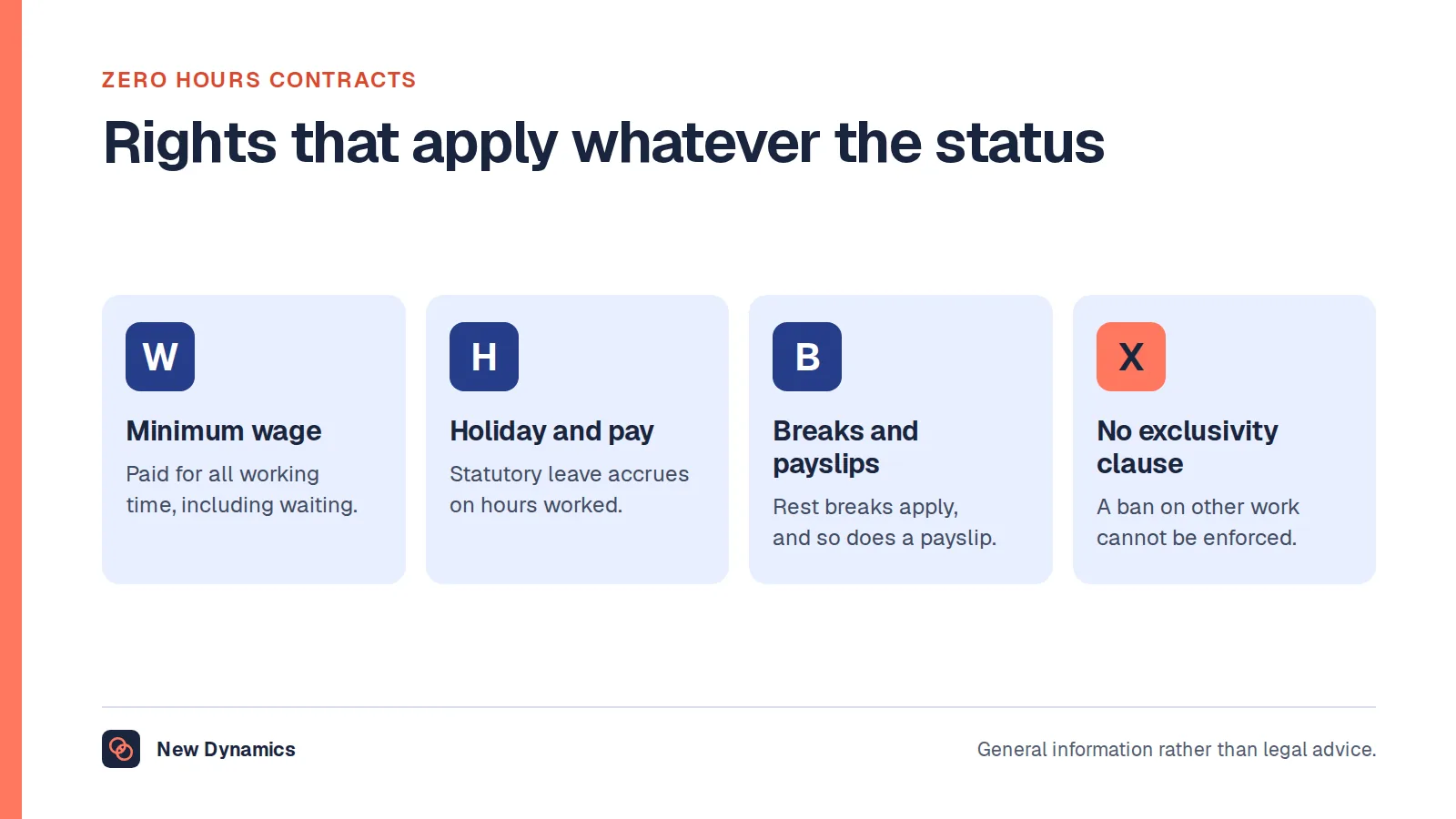
Fair does not mean identical. The non-statutory guidance gives a bar that excludes an agency bartender from the distribution entirely, and says this "is likely to be found by a tribunal to be failing to comply". It then gives a probation policy that applies to all staff and reduces everyone's share in their first two weeks, and says that "is likely to be found by a tribunal to be complying", because it is equal treatment. Zero hours staff are in scope on the same basis: see our post on zero hours contracts.
The regime covers workers, not the self-employed. The code is blunt: "The Tipping Act applies to all workers. It does not apply to self-employed people" (paragraph 16).
The tronc, and what it does to National Insurance

A tronc is, in HMRC's words, "a separate organised pay arrangement sometimes used to distribute tips, gratuities and service charges", run by a "troncmaster".
Section 27F gives it statutory recognition. Where an employer "makes arrangements for the total amount of the relevant tips to be allocated between workers" by an independent tronc operator, and "it is fair for the employer to make those arrangements", the employer is treated as having complied with section 27D(1). Section 27F(6) defines an independent tronc operator as a person the employer "reasonably considers to be operating, or intending to operate, independently of the employer", whose allocations are not subject to unauthorised deductions and whose payments fall within paragraph 5(1) of Part 10 of Schedule 3 to the Social Security (Contributions) Regulations 2001.
The code says the operator may be a member of staff appointed by the employer, an external payroll or accountancy firm, or a member of staff elected or agreed by the workers, and warns that "care is needed to maintain independence" (paragraph 30). An employer with a reasonable belief that the tronc is operating independently and fairly is regarded as compliant, but if it later "becomes aware of an independent tronc operator acting in an unfair or improper manner, they are obliged to act to address this" (paragraph 32). Delegation is not abdication.
The tax consequence, which is why troncs exist. Income Tax is due on tips either way. National Insurance is where the structure matters. GOV.UK's guidance on an employee getting tips through a tronc sets out three cases:
- "You decide how the tronc money is divided": "You pay PAYE tax and NICs."
- "The troncmaster decides how the money is divided": "Troncmaster pays PAYE tax, no NICs are due."
- "Someone else, who's not acting for you, decides how the payments are distributed": "Troncmaster pays PAYE tax, no NICs are due."
HMRC booklet E24, last updated on 18 July 2025, gives the statutory basis. A payment of or in respect of a gratuity is exempt from National Insurance if either it "is not paid, directly or indirectly, to the employee by the employer and does not comprise or represent monies previously paid to the employer", or it "is not allocated, directly or indirectly, to the employee by the employer". E24 adds the traps. A tronc run by the employer, a business partner or a company officer such as a director is treated as the employer making the payments, so it goes through the employer's payroll and National Insurance is due. The troncmaster "is personally responsible for all aspects of operating a PAYE scheme", and the tronc's PAYE records "must be kept separate from the employer's". Where the employer must tell HMRC who the troncmaster is, that is so a PAYE scheme can be set up in the troncmaster's name.
Mandatory service charges are different again. E24: "If you impose a mandatory service charge and the money is paid out to your employees, National Insurance contributions are always due on the payments. This is regardless of how the money is shared out between employees."
A cash tip a worker keeps outright sits outside PAYE altogether. E24 says no National Insurance is due and PAYE does not apply, and that "it will be the responsibility of the employees to advise HMRC of the amounts of money received", with tax usually recovered through a PAYE code adjustment.
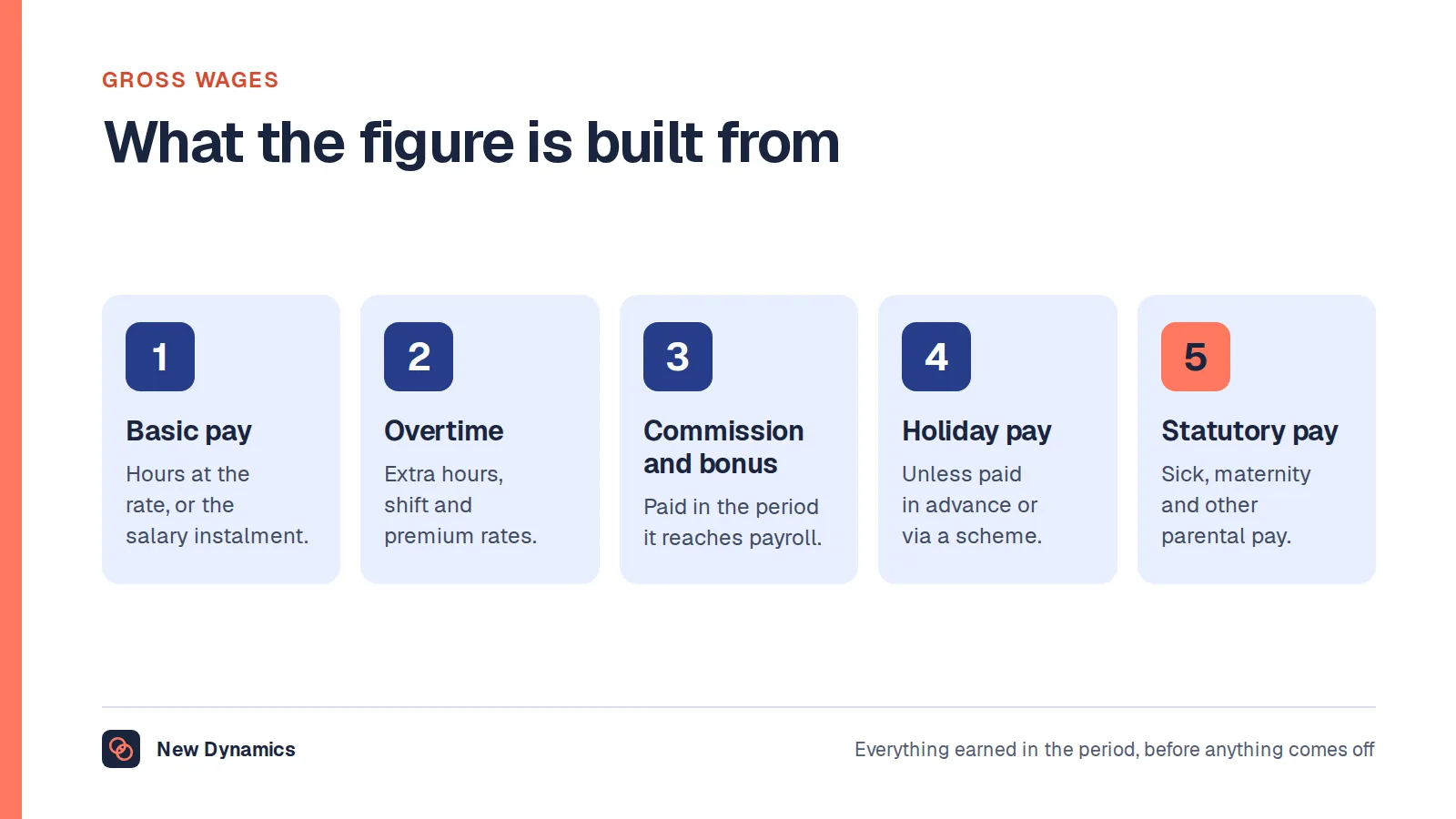
One rule survives all of this. Tips never count towards the minimum wage. E24 states that for pay reference periods starting on or after 1 October 2009, amounts representing tips, gratuities, service charges or cover charges "do not count towards National Minimum Wage pay". Our post on gross wages covers how tips sit in the wider pay figure.
Enforcement: what a worker can claim, and where
There is no inspectorate for tips. Enforcement runs through the employment tribunal, on two separate tracks with different time limits.
Allocation and timing. Under section 27K a worker may complain that the employer breached section 27D or section 27G, and an eligible agency worker may complain that the agent failed to pay under section 27H(4). The limit is generous: twelve months "beginning with the date of the failure to comply", extendable where it was "not reasonably practicable" to claim sooner, with a series of failures counted from the last one. Acas early conciliation extends the clock under section 207B.
If the complaint succeeds, section 27L requires a declaration and allows the tribunal to order the employer to deal with the tips in accordance with Part 2B. That order may "require the employer to revise an allocation", make a non-binding recommendation, or "require the employer to make a payment to one or more workers of the employer in accordance with this Part (including a worker who is not the complainant)". Section 27M allows compensation "not exceeding £5,000" for financial loss, whether or not any other order is made. Section 27U stops the employer clawing anything back from a worker whose share a revised allocation reduces.
Policy and records. Section 27N covers failures on the written policy or the records. Here the statute as enacted and the statute as it now stands differ, and the difference matters. The Act as passed set three months. Section 27N(2) now reads six months, the word having been substituted with effect from 1 October 2026 by Schedule 12 paragraph 4(4) of the Employment Rights Act 2025, commenced by S.I. 2026/954. Anyone quoting the 2023 Act's own text is quoting a word that has since been superseded. Remedies under section 27O mirror the other track: a declaration, an order to comply, and compensation of up to £5,000.
Duty or good practice: the line employers get wrong
This is a sector where confident wrong advice circulates, so it is worth separating the two.
Statutory duties: allocate qualifying tips fairly per site; pay by the end of the following month; make no deduction beyond those statute requires; hold a written policy and make it available; keep records for three years and answer a worker's request within four weeks; treat agency workers as your own for this purpose.
Good practice under the code, not yet a statutory duty: consulting workers. Paragraph 25 says employers "should consult with workers to seek broad agreement in the workplace that the system of allocation of tips is fair, reasonable and clear". That is a "should". Section 14 of the Employment Rights Act 2025 will turn it into a "must" by amending section 27I to require consultation before the first policy, a review at least once every three years, consultation on every review, and an anonymised summary of views made available to workers. As at the date of this post that section is not in force: legislation.gov.uk records it as "not in force at Royal Assent" with no commencement date appointed, and the revised code intended to accompany it has been withdrawn for further consultation. Employers who consult now will be ready; employers who assume the duty already bites are describing a law that has not yet started.
Frequently asked questions
What is the allocation of tips rule in the UK?
Section 27D of the Employment Rights Act 1996, inserted by the Employment (Allocation of Tips) Act 2023, requires an employer to ensure that the total amount of qualifying tips paid at a place of business is allocated fairly between workers at that place of business. The duty came into force on 1 October 2024 and applies in England, Wales and Scotland.
Can an employer take a deduction from tips?
Only a deduction required or authorised by statute, such as PAYE Income Tax. The Act added qualifying tips to the meaning of wages and disapplied the usual routes to a lawful deduction, so neither a contract term nor the worker's written agreement makes a deduction from allocated tips lawful. An agreement linking a payment back to the employer to receiving tips is void under section 27W.
Which tips count as qualifying tips?
Employer-received tips, and worker-received tips that the employer or an associated person exercises control or significant influence over, or that are connected with such tips. Card and app payments taken by the business are normally employer-received. A cash tip a worker keeps with no employer involvement is outside the regime, as is app-based tipping paid straight to a named worker.
When must tips be paid to workers?
Section 27G requires allocation and payment no later than the end of the month following the month in which the customer paid the tip. The statutory code's example is a tip left on 23 June, which must be distributed by 31 July at the latest.
How long must tipping records be kept, and can I see mine?
Three years from the date the tip was paid. A worker may make one written request in any three month period for whole consecutive months within those three years, and the employer must respond within four weeks with the site total and the worker's own share. It does not have to disclose what individual colleagues received.
Are agency workers covered by the tipping rules?
Yes. Section 27H treats an eligible agency worker as a worker of the hirer, and the hirer as their employer, for this purpose. Tips may be routed via the agency, which must then pay them on before the end of the following month and may not make unauthorised deductions. Excluding agency staff from the distribution purely because of how they are engaged risks a tribunal finding of unfairness.
Are tips taxable, and is National Insurance due?
Income Tax is always due. National Insurance depends on who allocates the money. GOV.UK states that where you decide how tronc money is divided you pay PAYE tax and NICs, and that where the troncmaster or someone not acting for you decides, the troncmaster pays PAYE tax and no NICs are due. HMRC booklet E24 adds that National Insurance is always due on a mandatory service charge paid out to employees.
Do tips count towards the National Minimum Wage?
No. HMRC booklet E24 confirms that for pay reference periods starting on or after 1 October 2009, amounts representing tips, gratuities, service charges or cover charges do not count towards National Minimum Wage pay. A tipped worker must still be paid at least the minimum wage on their wages alone.
Your next step: fix the five things a tribunal would ask for
- Write down, per site, which payment routes you take tips through and who currently decides the split. That one page tells you whether your tips are qualifying tips and who owes the duty.
- Check the calendar against section 27G. Take last month's tips and confirm the date they were paid out. If any sat past the end of the following month, you have already breached the Act.
- Produce the written policy if you do not have one, in plain language, covering whether you encourage tipping and exactly how you allocate. Make it available to every worker at the site, including agency staff on their first shift.
- Prove the three year record exists and that you could answer a worker's request inside four weeks with the site total and their own share, and nobody else's.
- If you run a tronc, test its independence against section 27F(6) and HMRC's E24, and confirm no director or partner is acting as troncmaster. Getting that wrong creates a National Insurance liability, not just an employment one.
For the policy structure behind all of this, read and download our compensation policy guide. The guide is free to read, and the PDF uses our short download form.
Want the policy, the monthly allocation and the records to sit in one place with an audit trail instead of three spreadsheets? Book a New Dynamics demo and bring your current tipping policy. You can also email contact@new-dynamics.com.