TL;DR
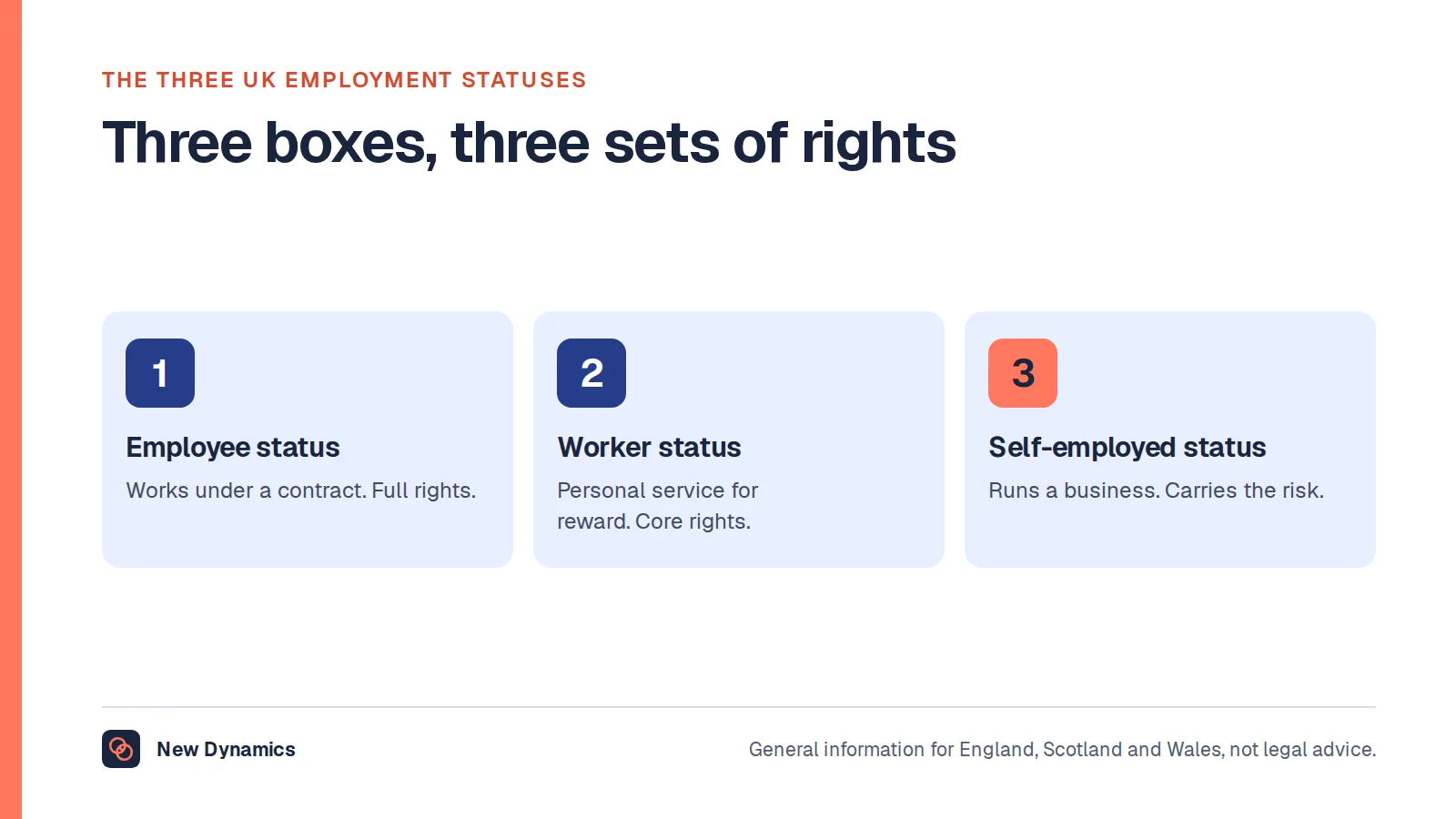
- There is no legal category called an unpaid internship. GOV.UK states that "An intern is entitled to the National Minimum Wage if they count as a worker", and that the term intern "has no legal status under minimum wage law". The employer makes the status decision and carries the burden of proof.
- The student placement exemption has a hard limit. Regulation 53 of the National Minimum Wage Regulations 2015 removes entitlement only where a higher or further education course requires "a period of work experience not exceeding one year", and two GOV.UK pages word that limit differently.
- Getting it wrong costs more than the unpaid wages. Arrears are recalculated at the current rate, the penalty is 200% of the total underpayment up to £20,000 per worker, and the Department for Business and Trade considers naming every case where arrears reached £500.
An internship advert goes out unpaid, and nobody has written down why it is lawful. That is the exposure. In the United Kingdom there is no legal category called an unpaid internship. There are workers, who must be paid at least the minimum wage, and a short list of people who sit outside it. Deciding which list a given intern is on is the employer's job, and the employer carries the burden of proof if it is challenged.
This article sets out the test that settles the question, the five arrangements the guidance separates, the condition on a student placement, whether expenses only is lawful, the current rates by age, and what follows an underpayment. It describes the United Kingdom, where minimum wage law applies in England, Scotland, Wales and Northern Ireland. It is general information rather than legal advice, and a borderline arrangement deserves proper advice before it starts.
A status decision is only worth making if it survives the start date. See how New Dynamics onboarding keeps what you agreed before day one attached to the person's record, rather than leaving it in one recruiter's inbox.
The test is worker status, not the word internship
GOV.UK's guidance on employment rights and pay for interns states the rule in one line: "An intern is entitled to the National Minimum Wage if they count as a worker." Internships "are sometimes called work placements or work experience", and "These terms have no legal status on their own."
The longer guidance for employers on minimum wage, work experience and internships is blunter. The term intern "has no legal status under minimum wage law", and entitlement "does not depend on what someone is called, the type of work they do, how the work is described (such as 'unpaid' or 'expenses only') or the profession or sector they work in. What matters is whether the agreement or arrangement they have with you makes them a worker for minimum wage purposes."
Section 54(3) of the National Minimum Wage Act 1998 defines a worker as someone under a contract of employment or under "any other contract, whether express or implied and (if it is express) whether oral or in writing, whereby the individual undertakes to do or perform personally any work or services" for someone who is not their client or customer. The contract can be oral, it can be implied, and nothing in it turns on a job title. GOV.UK puts the decision on you: "It is your responsibility to decide whether the person is a worker for minimum wage purposes and, if they are, whether an exemption applies to them." Our post on employment status covers who counts as what.
Five arrangements, and which of them you pay
Only the first creates an automatic duty to pay. The other four are narrower than they are usually assumed to be.

A worker. Pay at least the rate for their age. This is the answer whenever the intern is doing work, to a pattern, for your benefit.
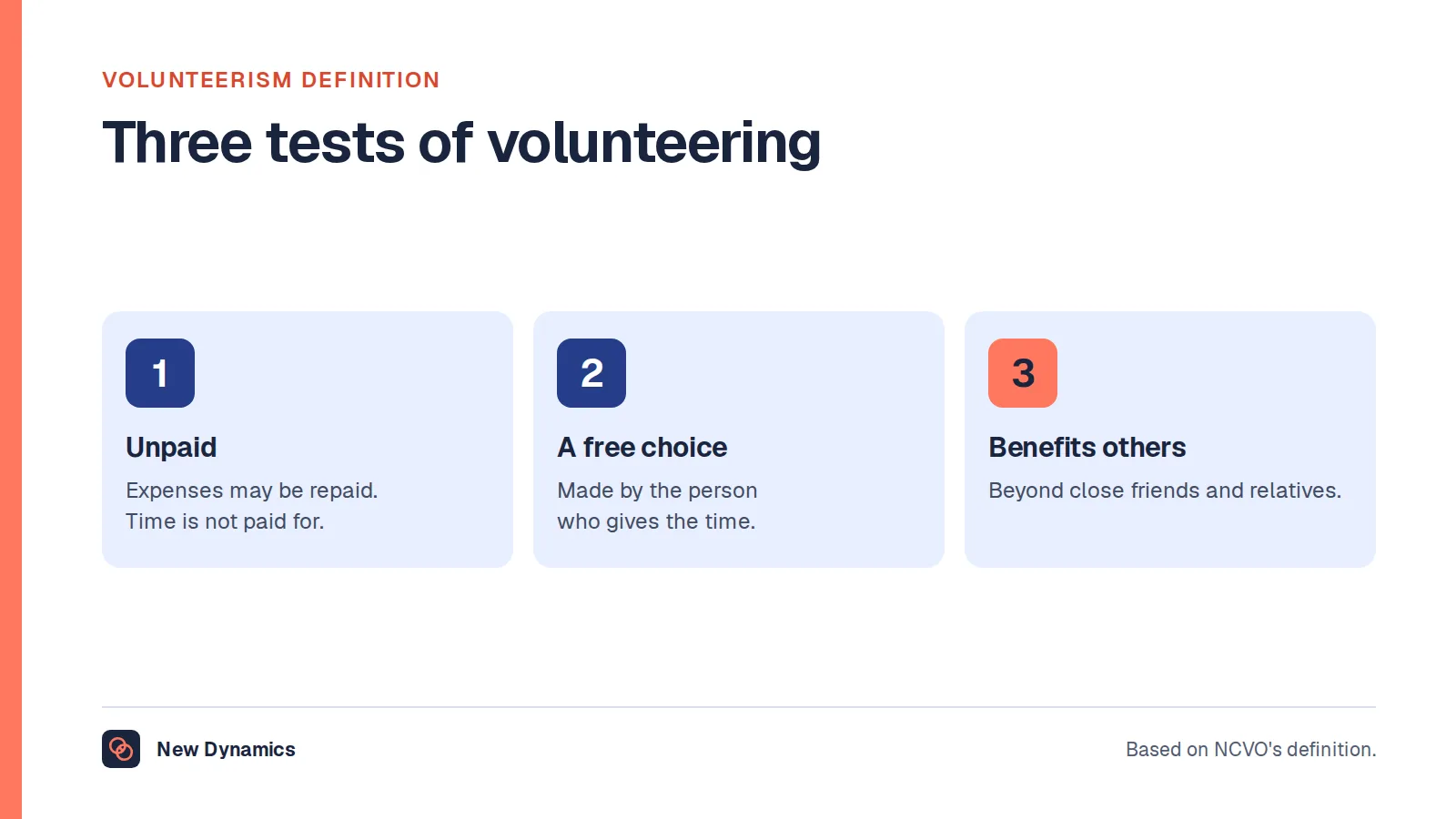
A voluntary worker at a charity or statutory body. Section 44 of the Act exempts a worker employed by "a charity, a voluntary organisation, an associated fund-raising body or a statutory body" who receives "no monetary payments of any description, or no monetary payments except in respect of expenses actually incurred in the performance of his duties", and no benefits in kind beyond subsistence or reasonable accommodation. GOV.UK warns that not every worker at such an organisation "is automatically a voluntary worker". Our post on the definition of volunteerism covers that boundary.
A student on a required course placement. Exempt, within the limit below.
Work experience at compulsory school age. GOV.UK: "Work experience students of compulsory school age are not entitled to the National Minimum Wage." Above school age, entitlement returns unless the placement is a required part of their studies.
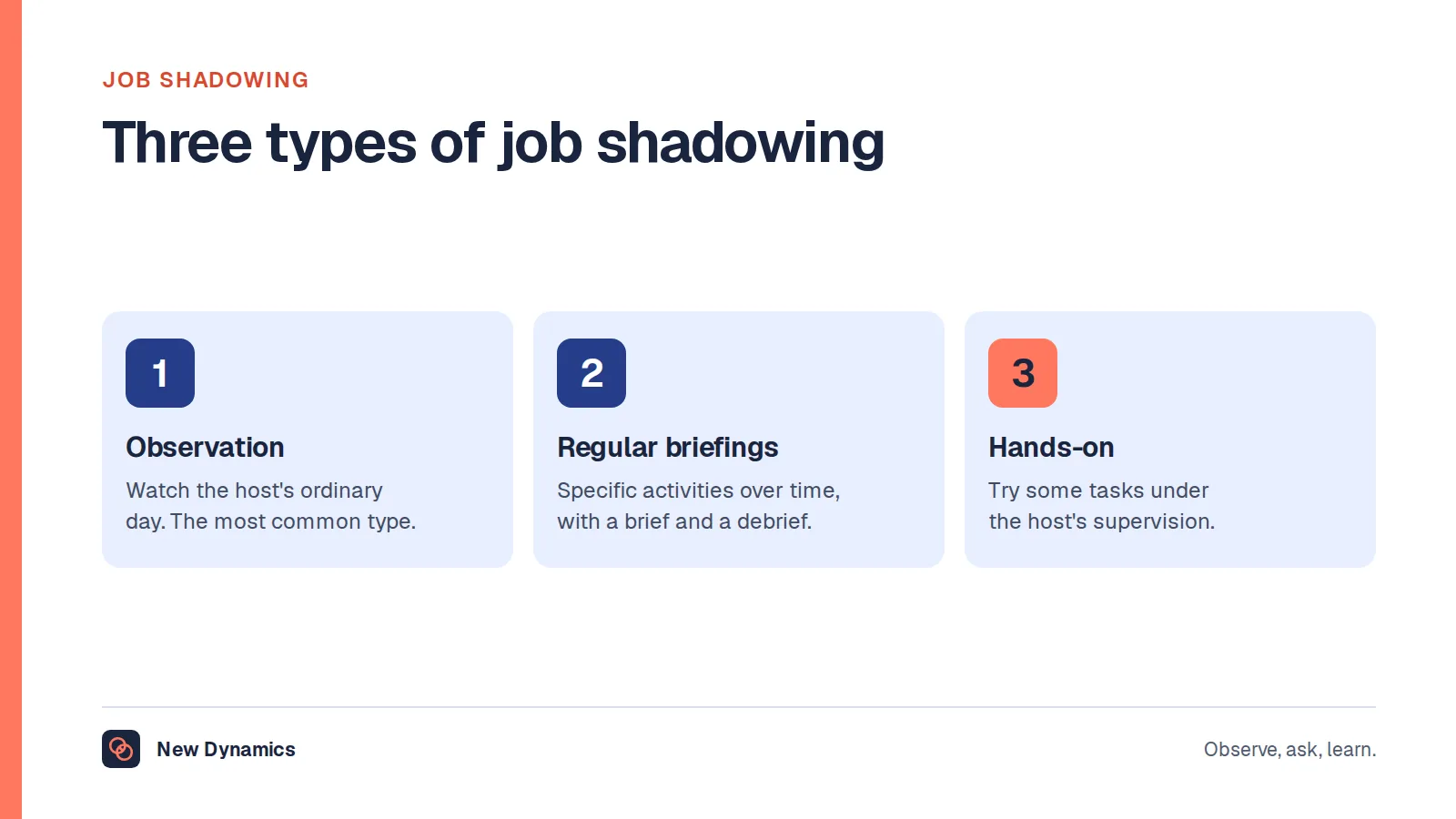
Work shadowing. Not an exemption at all. GOV.UK: "Someone who is doing a placement that does not involve any work being performed, such as work shadowing, will not come within the National Minimum Wage legislation. They are only observing and are not performing work." If you are offering a few days of watching, advertise it as job shadowing and keep it to observing.
The student placement condition, and the maximum length
Regulation 53 of the National Minimum Wage Regulations 2015 provides that a person who undertakes a higher education course or further education course, "and before the course ends is required, as part of that course, to attend a period of work experience not exceeding one year, does not qualify for the national minimum wage as respects work done for the employer as part of that course". Four conditions sit in that sentence: a higher or further education course, a placement required as part of it, attended before the course ends, and not exceeding one year.
Two GOV.UK pages word the limit differently. The employer guidance says a placement that "does not exceed 1 year", matching the regulation. The interns page says "less than one year", which is narrower. Acas, in its guidance on working hours during work experience, words it as "the work experience does not last more than one year". The regulation governs, and it reads "not exceeding one year".
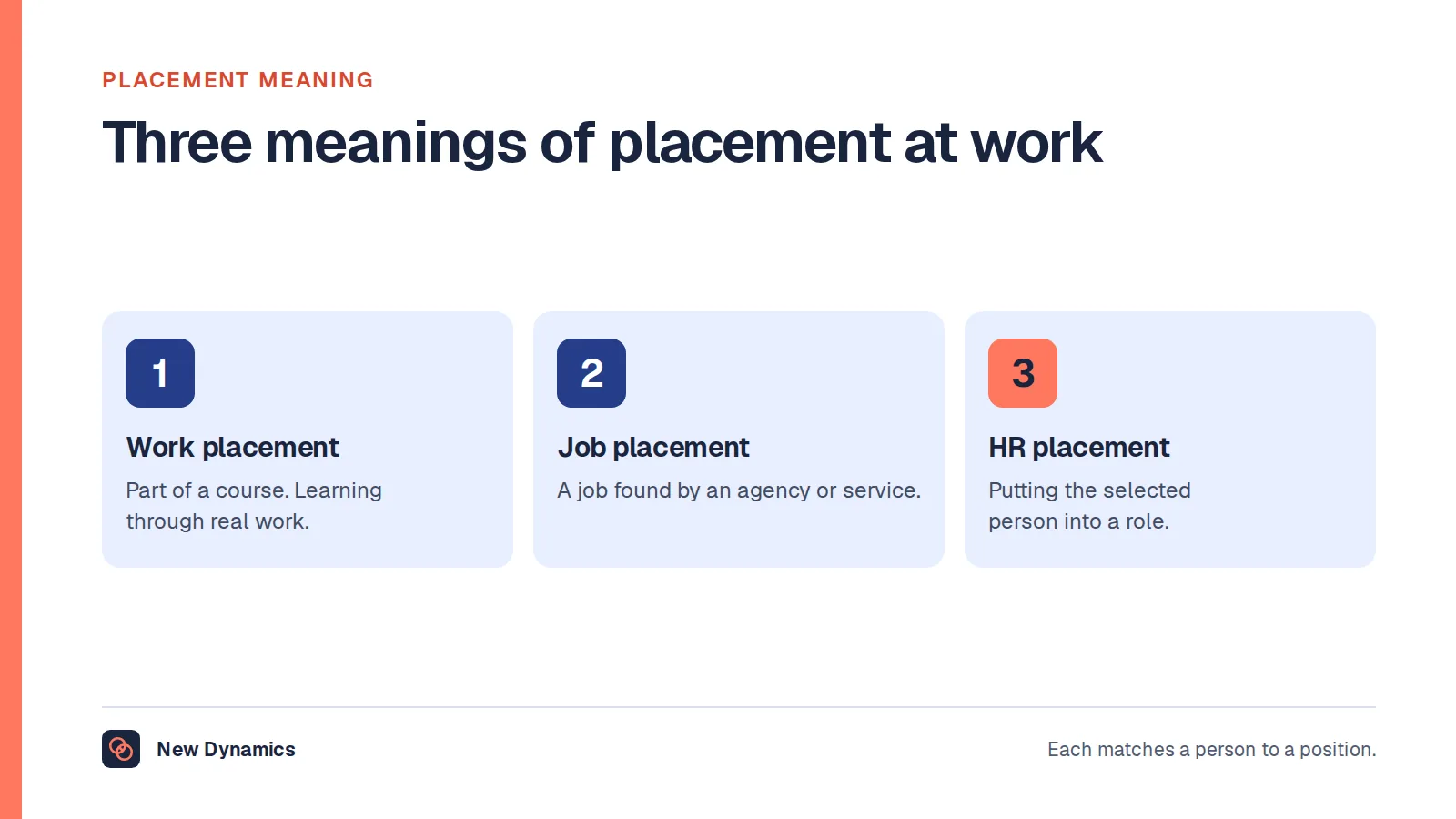
The exemption is tied to the course as well as the clock. GOV.UK: "The exemption does not apply to students performing work that is not related to their course, such as to help finance their studies or during a gap year." A student spending a summer in your office to build a CV is not on a course placement. Our post on what placement means sets out the different uses of the word.
Expenses only is not a safe harbour
Reimbursing costs does not, by itself, create a worker. GOV.UK: "Volunteers may be paid back reasonable out-of-pocket expenses. Payment of such expenses will not make them a worker for minimum wage purposes." Section 44 frames the limit as expenses "actually incurred in the performance of his duties" or "reasonably estimated as likely to be or to have been so incurred".
Paying more than that is different. GOV.UK's worked example describes someone who answered an advert offering £50 travel expenses a week and received it despite walking to work, and concludes he "should be paid at least the minimum wage", because paying "more than paying back genuine 'out-of-pocket' expenses is evidence that David is a worker for minimum wage purposes". A round weekly sum that nobody reconciles against receipts is a wage with a different name on it.
A promise counts as a reward too. GOV.UK states that an intern "is classed as a worker and is due the National Minimum Wage if they're promised a contract of future work", and its page on worker status lists as a marker of a worker that "their reward is for money or a benefit in kind, for example the promise of a contract or future work".
Nor does paperwork change the answer. "Calling an unpaid worker 'unpaid' or 'a volunteer', even if the individual agrees to this, does not prevent them from qualifying for the minimum wage if they are entitled." And: "Simply stating in a written agreement that a person is not a worker or that they are a volunteer does not mean that they are so for the purposes of NMW legislation. A court or tribunal would look at the reality of the arrangements made with the individual."
The rates, and which band an intern falls in
If the intern is a worker, the rate follows their age, not their job title. GOV.UK's page on National Minimum Wage and National Living Wage rates notes that "The rates change on 1 April every year", and lists these as current, applying from April 2026.

That is £12.71 an hour for 21 and over, £10.85 for 18 to 20, £8 for under 18 and £8 for apprentices. The same page already publishes the rates from April 2027: £13.21, £11.27, £8.31 and £8.31. Most interns are 18 or over, so the 18 to 20 band or the 21 and over band is normally the one to use, and the apprentice rate applies to apprentices rather than interns. For wider pay figures, see our HR statistics hub.
We will not give you a figure for the share of UK internships that are unpaid. We have found no official source that publishes one, so we quote no number.
What it costs to get this wrong
The unpaid wages are the smallest part of the bill.

Arrears, recalculated upwards. HMRC's guidance on enforcing the minimum wage explains that arrears "are calculated according to a formula using the current minimum wage rate", so "if the current rates for that age band are higher than the rates that applied at the time of the underpayment, the amount of the arrears due to the worker will be more than the amount of the original underpayment". An internship left unpaid in 2024 is repaid at today's rate.
A penalty of twice the arrears. The same guidance states that "The financial penalty that you are liable to pay can be up to 200% of the value of the minimum wage arrears, up to a maximum penalty £20,000 per worker", reduced "by 50% if you fully comply with all the terms of the notice of underpayment within 14 days of service of the notice". The Fair Work Agency enforcement statement, published on 19 May 2026 and updated on 26 August 2026, gives the basis: "The penalty is calculated as 200% of the total underpayment for all of the workers specified in an NoU", with a minimum of £100 and a maximum of £20,000 per worker.
Being named. The same statement sets out the naming scheme: "DBT considers all cases for naming where the total arrears owed to workers was £500 or more." A lower threshold of "more than £100" applies where the employer had another notice of underpayment in the previous six years, an outstanding enforcement undertaking or order, or an unspent conviction for a minimum wage offence. Representations can be made, but the criteria "are strictly applied".
Who enforces it. GOV.UK's withdrawal notice on the old policy states: "From 7 April 2026 a new government agency called the Fair Work Agency (FWA) began operating. It is now responsible for enforcing National Minimum Wage." HMRC's guidance page, updated on 23 October 2026, still says the minimum wage "can be enforced by HM Revenue and Customs (HMRC) compliance officers or by a worker making a claim in an employment tribunal or court". Both hold, because the Fair Work Agency statement explains the division: "HMRC operates the NoU model, on behalf of FWA, for underpayment of the National Minimum Wage."
The burden of proof is yours, and the advert is evidence. GOV.UK: "If an unpaid person claims that they are owed minimum wage arrears, you must prove that they are not a worker or that no arrears are owed." It also warns that "Adverts which suggest illegal unpaid positions inform HM Revenue and Customs' risk assessment process", and that employers considered "at risk" may be targeted for further investigation.
Can an unpaid internship be discrimination?
Possibly, on the facts, but no official source we could open states that an unpaid internship is in itself unlawful discrimination, so we will not claim it is.
What is published is the test. Section 19 of the Equality Act 2010 makes a provision, criterion or practice indirectly discriminatory where it "puts, or would put, persons with whom B shares the characteristic at a particular disadvantage when compared with persons with whom B does not share it", it puts B at that disadvantage, and the employer "cannot show it to be a proportionate means of achieving a legitimate aim". Section 83(2) defines employment for that Part as including "a contract personally to do work", which is the ground an intern who is a worker stands on, and GOV.UK lists "protection against unlawful discrimination" among a worker's rights. Whether a particular unpaid requirement fails the section 19 test is for a tribunal on the evidence.
Frequently asked questions
Are unpaid internships legal in the UK?
An internship can lawfully be unpaid only where the intern is not a worker for minimum wage purposes, or falls within a specific exemption. GOV.UK says the term intern has no legal status under minimum wage law, and that entitlement does not depend on how the work is described, including as unpaid or expenses only.
Does an intern have to be paid the National Minimum Wage?
Yes, if they count as a worker. GOV.UK states that it is the employer's responsibility to decide whether the person is a worker and whether an exemption applies. Work shadowing, where no work is performed, falls outside the legislation altogether.
Can a student do an unpaid internship?
Only inside the course placement exemption. Regulation 53 of the National Minimum Wage Regulations 2015 removes entitlement where a higher or further education course requires a period of work experience not exceeding one year, attended before the course ends. The exemption does not cover work unrelated to the course, such as work taken to finance studies or during a gap year.
Is an expenses only internship legal?
Repaying reasonable out of pocket expenses does not make someone a worker, and GOV.UK confirms that. Paying more than genuine expenses does. GOV.UK's worked example treats a flat weekly travel payment received by someone who walked to work as evidence of worker status.
What is the penalty for not paying an intern the minimum wage?
HMRC guidance puts it at up to 200% of the value of the arrears, to a maximum of £20,000 per worker, halved if the notice of underpayment is fully complied with within 14 days. The Fair Work Agency statement adds a minimum penalty of £100, and the Department for Business and Trade considers naming every case where total arrears reached £500.
Does a signed agreement saying the intern is not a worker protect us?
No. GOV.UK states that saying in a written agreement that a person is not a worker or is a volunteer does not make them so for minimum wage purposes, and that a court or tribunal would look at the reality of the arrangement.
Your next step: decide the status before the advert goes out
- For each internship you are planning, write down which of the five arrangements it is, and why. If the answer is worker, the question is settled.
- If you are relying on the course placement exemption, get the facts in writing from the institution: the course, that the placement is required, that it ends before the course does, and its length.
- Check every expenses payment against receipts or a reasonable estimate, remove flat weekly sums, and take any promise of a job later out of the offer.
- Set the rate from the person's age using the April 2026 bands, and keep the status decision and the expenses records, because the burden of proof is on you.
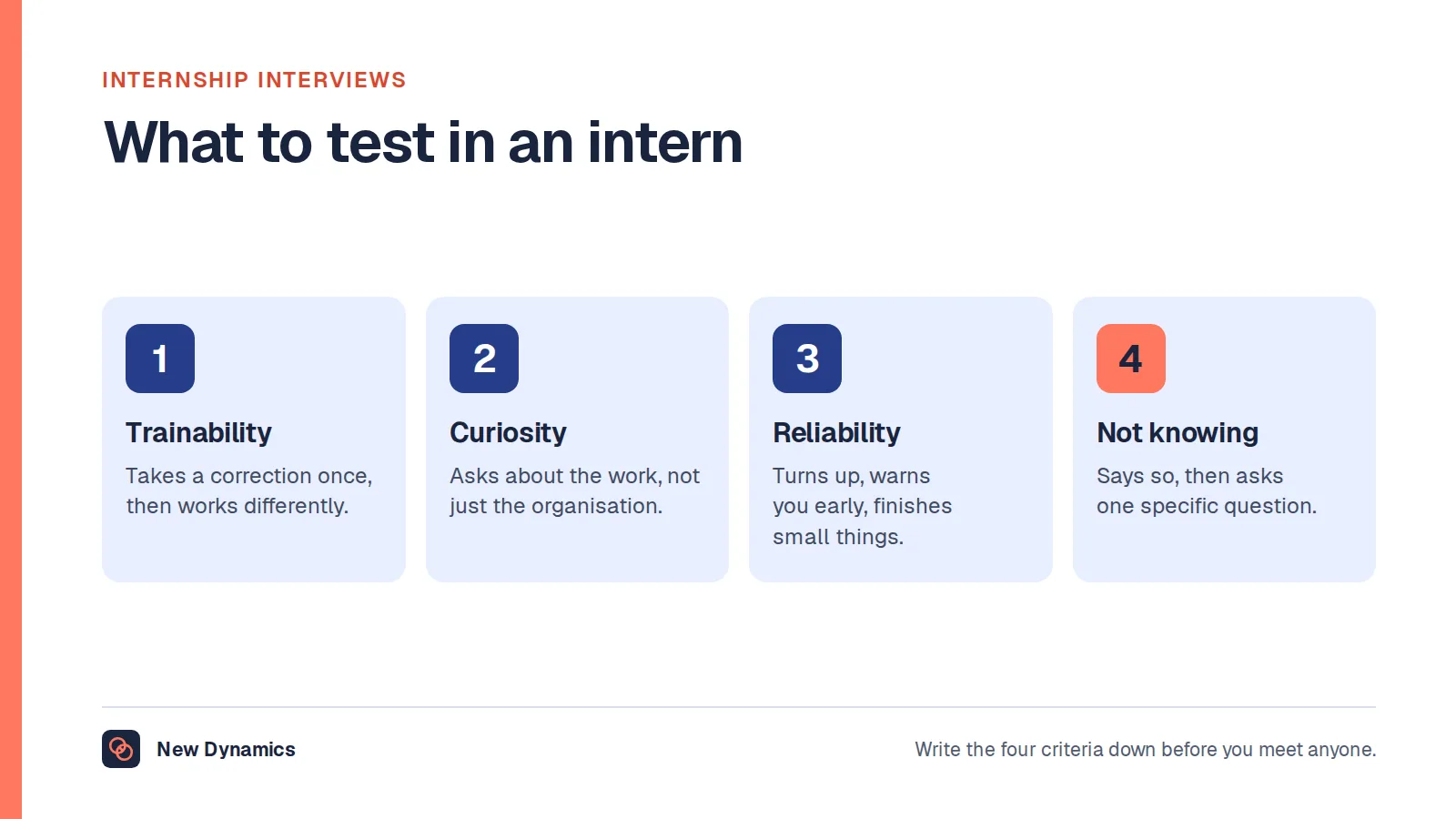
For the process around all of this, read and download our recruitment and selection guide. The guide is free to read, and the PDF uses our short download form. If you are hiring interns this cycle, our post on internship interview questions covers the selection side.
Want the status decision, the rate and the paperwork attached to the person rather than reconstructed a year later? Book a New Dynamics demo and bring one internship advert. You can also email contact@new-dynamics.com.