TL;DR
- A chief administrative officer, or CAO, is the senior executive responsible for an organisation's day-to-day administration. The Cambridge Dictionary notes that the title is often found in local government.
- In a company, the CAO usually leads the functions that support everyone else, such as HR, finance administration, technology, facilities, legal and procurement. The exact mix differs from one organisation to the next.
- A chief operating officer runs the operations that produce what the organisation sells. A CAO runs the services that let those operations work. Small organisations rarely need both.
Every organisation has work that customers never see: paying people, hiring them, keeping systems running, signing leases, buying supplies and staying within the law. When that work grows large enough to need one senior owner, the title often chosen is chief administrative officer.
This article explains what a chief administrative officer is, where the title is used, what a CAO typically does, how the role compares with a COO, a CEO and a CHRO, and how to tell whether your organisation needs one.
A role like this only makes sense when reporting lines are clear. See how New Dynamics org charts show roles, reporting lines and the relationships between them.
What is a chief administrative officer?
The Cambridge Dictionary defines a chief administrative officer as “the person in an organization, often a local government organization, who has the most important position with responsibility for managing the organization's normal activities”. The abbreviation is CAO.
Two points in that definition are worth noticing.
- The phrase “normal activities”. The CAO looks after the running of the organisation. Strategy, products and sales usually sit elsewhere.
- The phrase “often a local government organization”. The title is older and more settled in the public sector than in business.
A word of caution about the abbreviation. Cambridge lists other meanings of CAO, including chief academic officer, chief accounting officer and chief analytics officer. If you see “CAO” in an annual report or a job advert, check which one is meant.
Where the title is used
In companies. The CAO is a member of the senior leadership team who usually reports to the chief executive. Wikipedia's article on the role describes the CAO as the executive “who oversees the daily operations, staff, and resources of an organization”. There is no standard job description, and companies shape the role around the person and the need.
In local government. In many towns, cities and counties, the chief administrative officer is the top appointed official, who manages the staff and carries out the decisions of elected members. Wikipedia notes that in a municipal context the title is usually an alternative for city manager or county administrator. Cambridge's own example sentences are about cities and counties.
In public and international bodies. The United Nations Charter uses the phrase in Article 97, which says of the Secretary-General: “He shall be the chief administrative officer of the Organization.” The US House of Representatives has an Office of the Chief Administrative Officer, established in 1995, which describes itself as “a non-partisan, non-legislative office that provides support services and business solutions” to members and staff.

What does a chief administrative officer do?
The House's CAO says that its business units provide “administrative, technical, and operational solutions” so that members can do their jobs. That is a fair summary of the role anywhere: the CAO makes it possible for everyone else to work.
In a company, the CAO's remit often includes some or all of six areas.
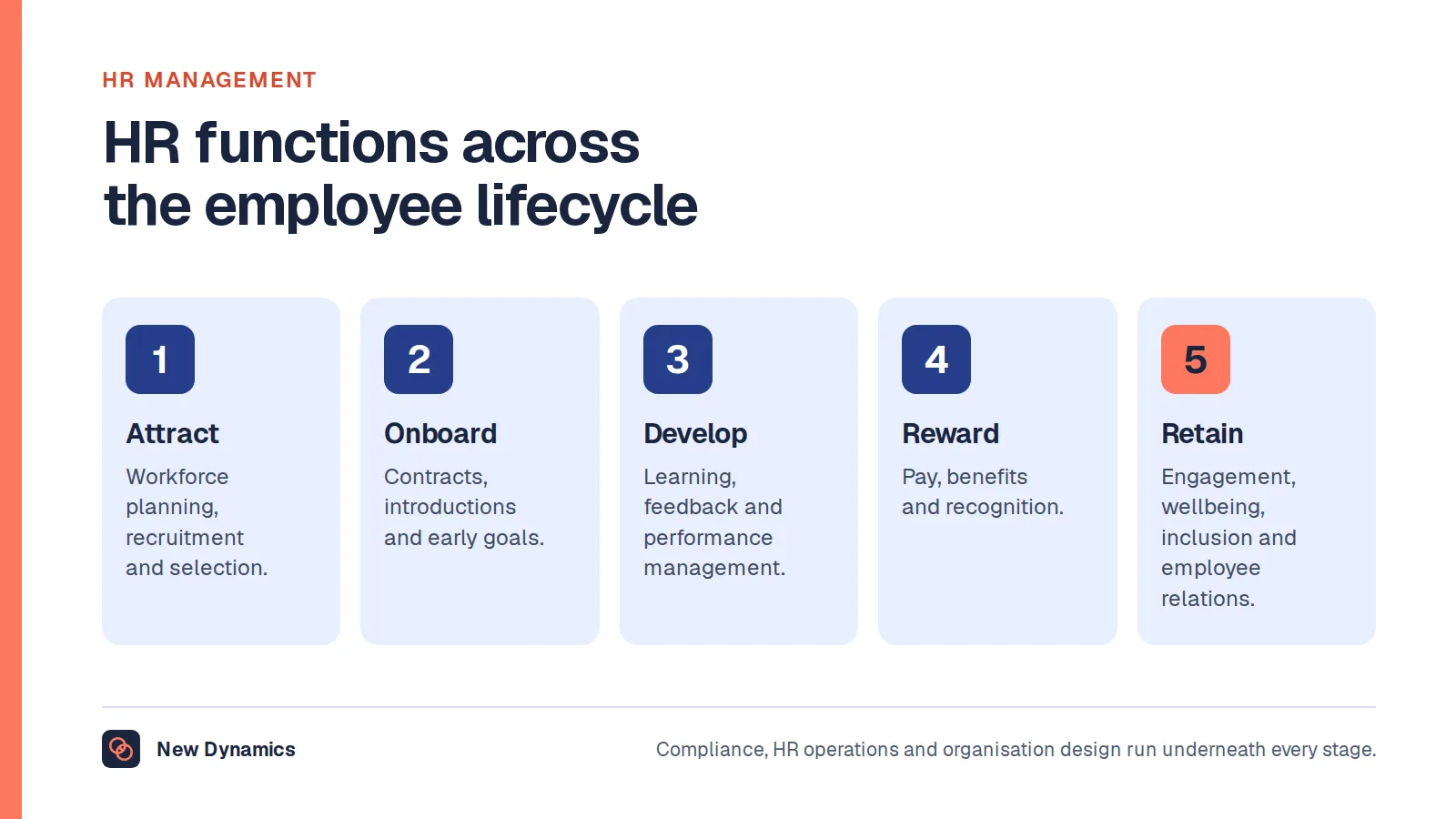
- People and HR. Hiring, pay, policies, performance management and employee relations, often through a head of HR who reports to the CAO.
- Finance administration. Budgets, payroll, expenses and financial controls, in organisations where there is no separate chief financial officer, or alongside one.
- Technology and systems. Internal IT, business systems and information security.
- Facilities and workplace. Offices, leases, health and safety, and the arrangements for hybrid working.
- Legal, risk and compliance. Contracts, insurance, data protection and regulatory duties.
- Procurement and suppliers. Buying, supplier contracts and cost control. Our guide to RFP meaning explains one of the main tools.
On top of these, a CAO usually leads cross-functional projects that have no other natural home, such as an office move, a new HR system or the integration of an acquired business.

CAO, COO, CEO and CHRO: the differences
| Role | Main concern | Typical reports |
|---|---|---|
| Chief executive officer (CEO) | Direction and results of the whole organisation | All other chief officers |
| Chief operating officer (COO) | The operations that produce and deliver what the organisation sells | Production, delivery, service, supply chain |
| Chief administrative officer (CAO) | The internal services that let the organisation run | HR, administration, IT, facilities, legal, procurement |
| Chief human resources officer (CHRO) | People strategy and HR | HR teams |
The boundary between a COO and a CAO is the one that people ask about most. A simple test helps: does the function make or deliver what the customer pays for? If so, it sits with operations. If it serves employees and managers inside the organisation, it sits with administration.
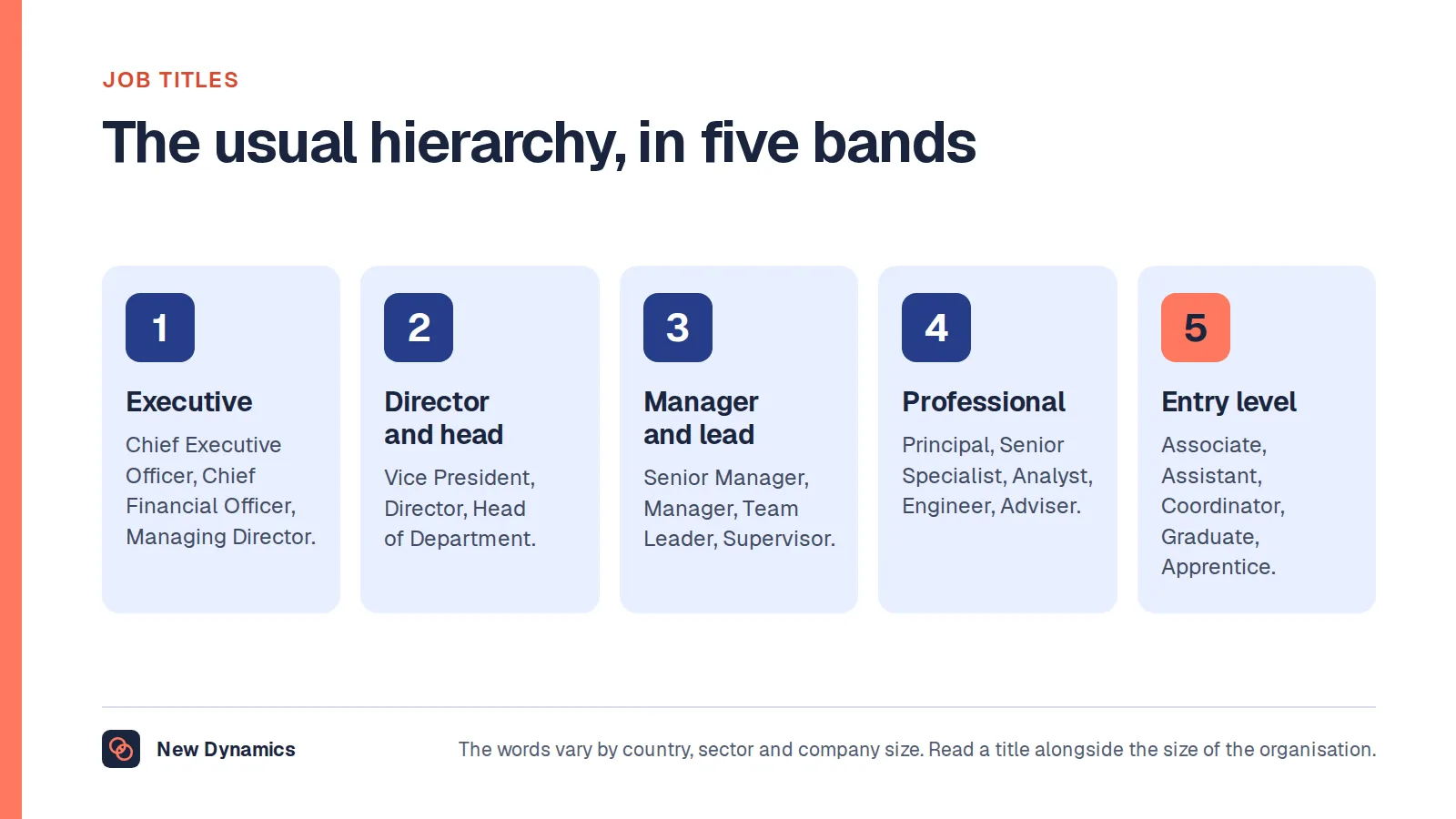
In practice the titles blur. Some organisations have a COO who also runs the support functions. Some use CAO for what others would call a COO, particularly where there is no physical product. Read the job description, not the title. Our list of job titles sets out the usual levels and the rest of the C-suite.
Does HR report to the CAO?
It can. Where a CAO exists, HR often reports there, together with the other support functions. In other organisations the head of HR reports directly to the chief executive.
Each arrangement has a cost and a benefit. Reporting to a CAO can join up HR with technology, finance administration and facilities, which share many projects. It can also place a layer between the chief executive and the person who knows most about the organisation's people. If HR reports to a CAO, that CAO needs to understand HR management well enough to represent it at the top table.
Five people questions every CAO should be able to answer
A CAO who owns HR is accountable for how people are managed. Five questions are a fair test.
- Goals. Does every team have clear goals, and can people see how their work connects to them?
- Reviews. Are performance reviews fair, on time and useful to the person being reviewed?
- Feedback. Do people get regular feedback between reviews, from more than one person?
- Structure. Is it clear who reports to whom, including people with more than one manager?
- Data. Is employee data accurate, secure and used lawfully?
If the honest answer to any of them is “I don't know”, that is where to start.

Skills and background
There is no single route into the role. People commonly arrive from finance, HR, operations, law or general management, after leading at least one support function and working closely with others.
The skills that matter most are these.
- Breadth. A CAO needs to understand enough about several professions to ask good questions and to judge the answers.
- Process thinking. Much of the work is making routine things reliable. Our workflow examples show how to map them.
- Financial discipline. Support functions are costs, and the CAO has to show what they return.
- Service mindset. The CAO's customers are inside the organisation. The job is to make their work easier, not to police them.
- Calm judgement. Legal, people and security problems tend to arrive without warning.
- Management skill. The CAO leads leaders of specialist teams. See our guide to management skills.
Does your organisation need a CAO?
Signs that the role may be worth creating:
- the chief executive has too many direct reports, and several of them lead support functions;
- projects that cross HR, IT, finance and facilities stall because nobody owns them;
- the organisation is growing fast, by hiring or by acquisition;
- regulation, security or data protection duties are increasing;
- managers complain that internal processes slow them down.
Signs that it is not:
- the organisation is small enough for the chief executive, or a head of operations, to cover the ground;
- the real problem is one weak function, which a new layer above it will not fix;
- the title is being created to reward or retain a person, with no clear remit.
If you do create the role, write down what it owns, which functions report to it, and how its success will be judged. Then review the arrangement after a year.
Frequently asked questions
What is a chief administrative officer?
A chief administrative officer, or CAO, is the senior executive responsible for managing an organisation's day-to-day administration. The Cambridge Dictionary notes that the title is often used in local government. In companies, the CAO usually leads support functions such as HR, IT and facilities.
What does a CAO do?
A CAO leads the internal services that let an organisation run. These often include HR, finance administration, technology, facilities, legal and compliance, and procurement. The CAO also tends to lead cross-functional projects, such as a new system or an office move.
What is the difference between a CAO and a COO?
A chief operating officer usually runs the operations that make and deliver what the organisation sells. A chief administrative officer runs the support services behind them. The titles blur in practice, so check the job description. Some organisations have one role that covers both.
Is a CAO higher than a CEO?
No. In a company the chief executive officer is the most senior executive, and the CAO usually reports to the chief executive. In local government, however, the chief administrative officer may be the most senior appointed official, working under the elected council.
Does HR report to the chief administrative officer?
Often, where the role exists. In other organisations the head of HR reports directly to the chief executive. Reporting to a CAO can connect HR with other support functions, but it adds a layer between HR and the chief executive.
What does CAO stand for?
In management, CAO most often stands for chief administrative officer. The Cambridge Dictionary also lists chief academic officer, chief accounting officer and chief analytics officer, so check the context.
Your next step: map who owns administration
- List your support functions: HR, finance administration, IT, facilities, legal and procurement.
- Write down who leads each one, and whom they report to.
- Mark any cross-functional project from the past year that stalled for lack of an owner.
- Decide whether the answer is a CAO, a clearer remit for an existing leader or nothing at all.
For a fuller view of the people side of the role, read and download our human resources management guide. The guide is free to read, and the PDF uses our short download form.
Want goals, reviews, feedback and reporting lines in one place? Book a New Dynamics demo and bring your org chart. You can also email contact@new-dynamics.com.