TL;DR
- Career pathing is the process by which an organisation maps the connected roles, levels and moves through which people can progress, and helps each employee plan a route through them. A career path is the individual's route; a career pathway is the organisation's map of defined and connected roles.
- Career planning is the individual's side of the same work: deciding where you want to go, what you need to get there and what you will do next. It works best when the organisation has done its pathing, so that the options and the expectations at each level are visible.
- Build career paths in six steps: define the job families and levels, describe what is expected at each, map the moves including lateral ones, publish it, connect it to development plans and reviews, and keep it current. Plan your own in five.
Ask an employee where their job leads and the honest answer, in many organisations, is “I don't know”. Ask their manager and the answer is often the same. Career pathing exists to replace that silence with a map.
This article gives the definition of career pathing, separates a career path from a career pathway and a career framework, explains how career planning fits, sets out six steps for an organisation to build career paths and five for an individual to plan one, and lists the mistakes that make career maps decorative rather than useful.
A career conversation needs somewhere to happen. See how New Dynamics performance reviews bring goals, feedback and development into one fair discussion.
What is career pathing?
Career pathing is the process by which an organisation maps the roles, levels and moves through which people can progress, and helps each employee plan a route through them. The word pathing describes the organisation's side of the work; the result for the individual is a career path.
The Cambridge Dictionary defines a career path as “the way that you progress in your work, either in one job or in a series of jobs”. The US Office of Personnel Management, in its guide to career paths for federal program and project management, gives the organisational definition: “A career path is a progression of positions in one or more occupational series.” Its career path diagrams show entry and exit points at each level, typical and less typical movements between levels, and “the various lateral movements that occur within each career stage”.
The UK Civil Service uses three related terms, and its HR career framework defines them precisely.
| Term | Civil Service definition |
|---|---|
| Career pathway | “A career pathway is a series of defined and connected job roles which often feature at different levels.” It shows what is expected at each level and how people might progress |
| Career path | “A career path is a personalised route that helps you consider future roles, whether within a single job family or across many.” It is shaped by the individual |
| Career framework | The wider structure: job families split by levels and grades, professional standards, and the career pathways |
So career pathing produces pathways and frameworks. Career planning produces paths. The two meet in the conversation between an employee and a manager.

What is career planning?
Career planning is the individual's process of deciding where they want their working life to go, what they need in order to get there, and what they will do next. It covers the choice of field, the roles to aim for, the skills and experience to build, and the timing.
The Civil Service framework describes what a personal path may include: moving into a profession from another field, moving between job families, moving laterally to gain experience, and moving up. It asks everyone in the profession to have “an idea of their career pathway that informs career and performance management conversations with your line manager and supports their development”, and advises that “You should regularly review your career pathway, especially when considering a new job, setting objectives, or undertaking performance reviews.”
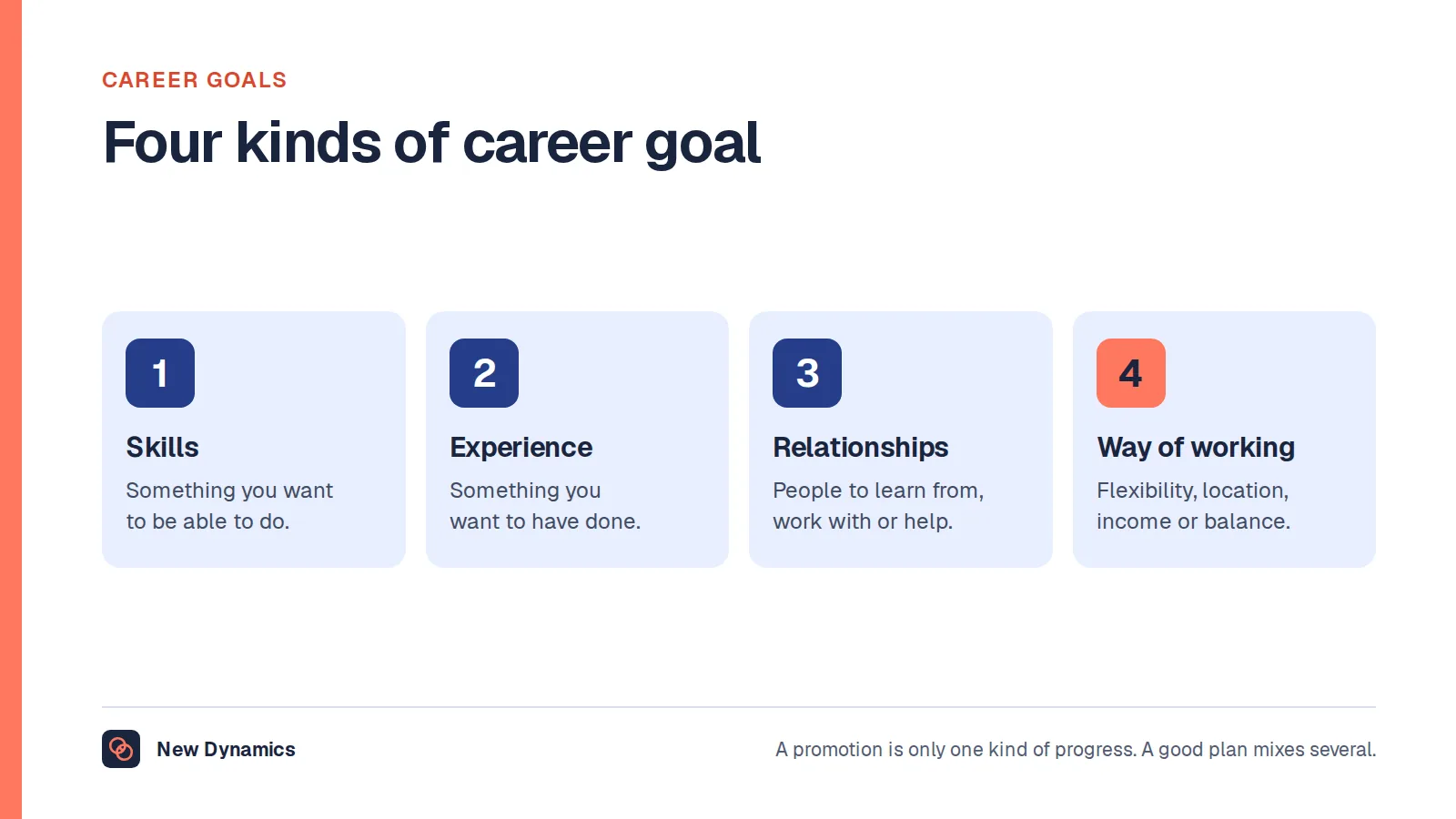
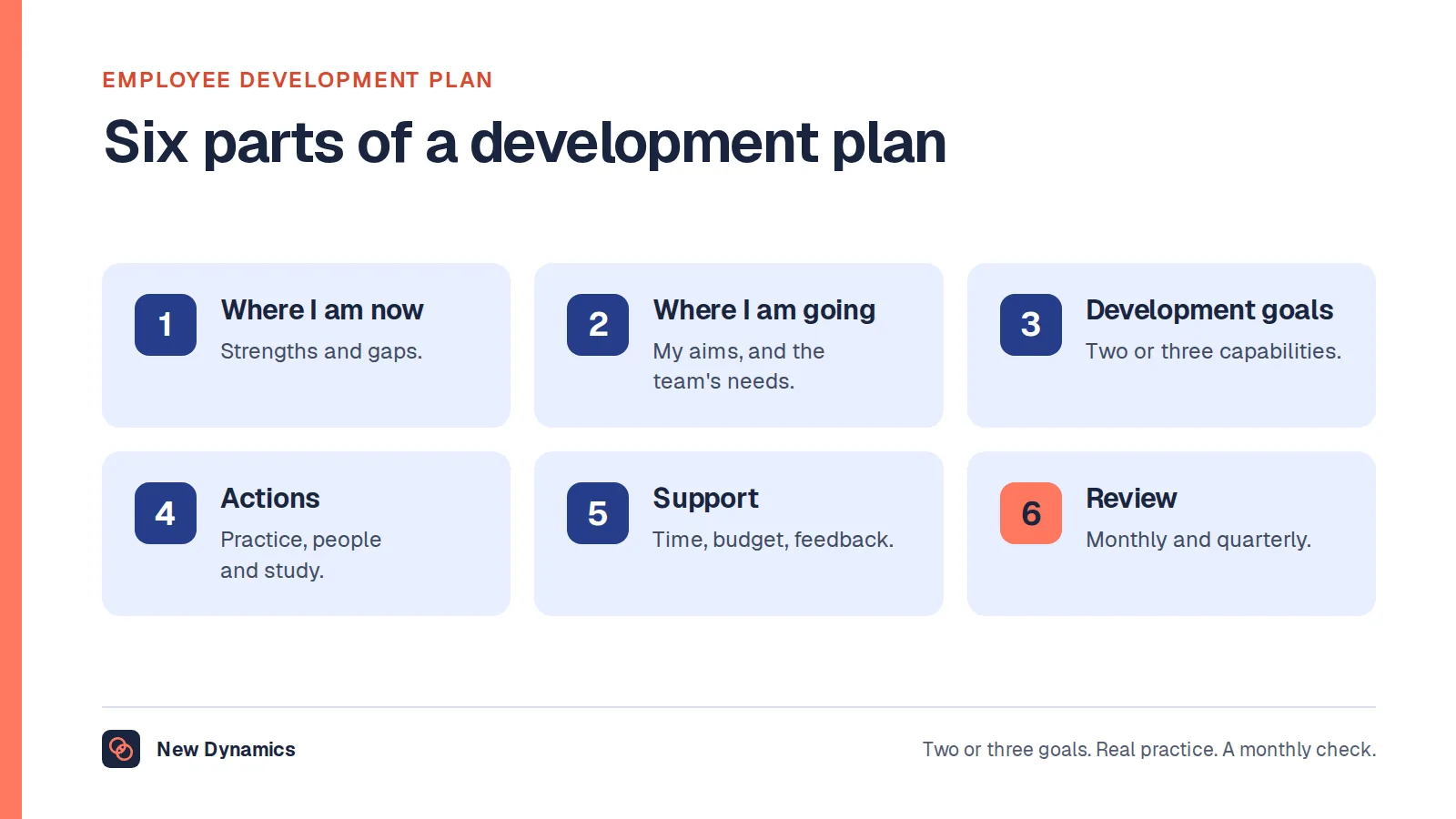
OPM adds the tool that turns a plan into action. Its guidance on career development describes the individual development plan as “a tool to assist employees in achieving their personal and professional development goals”, which “should be viewed as a partnership between an employee and their supervisor, and involves preparation and continuous feedback”. Our development plan template gives the format, and our guide to career goals shows how to write the goals a plan is built on.
Why career pathing matters
- People stay where they can see a future. A visible next step is a reason to stay through a hard year.
- It makes promotion fairer. Published expectations at each level replace the manager's instinct with criteria everyone can see.
- It fills the roles the organisation will need. Pathing is the front end of succession planning. Our succession planning guide covers the back end.
- It makes lateral moves respectable. One of the career stories in the Civil Service framework puts it plainly: moving laterally “is just as beneficial as moving up”. A map that shows sideways moves gives people permission to make them.
- It gives managers something to say. A career conversation with no map is a conversation about feelings. With a map it is a conversation about options.
How to build career paths: six steps for an organisation
- Define the job families and levels. Group the roles that share a body of work, such as engineering, customer operations or HR, and set the levels within each. The Civil Service HR framework uses 11 job families split by levels and grades.
- Describe what is expected at each level. Write the skills, knowledge, behaviours and typical responsibilities for each level, in language people can check themselves against. Our guide to core competencies shows how.
- Map the moves. Draw the typical progressions, the less common ones, the entry points from outside and the lateral moves between families. OPM's diagrams distinguish common movements from viable but less common ones, and one-way moves from two-way ones. Do the same.
- Publish it. A framework known only to HR helps nobody. Put it where every employee and manager can find it.
- Connect it to development plans and reviews. Every development plan should name the next role or level being aimed at and the gaps to close. Every review should ask whether the plan is on track.
- Keep it current. Roles change, families merge, new specialisms appear. Review the framework at least yearly, and when the organisation restructures.

How to plan your own career path: five steps
- Find the map, or draw one. If your organisation publishes pathways, start there. If not, look at the roles two levels above yours and the people who reached them.
- Pick a direction, not a destination. The Civil Service advice to review your pathway regularly recognises that destinations change. Choose the kind of work and the level you want next.
- Find the gaps. Compare what is expected at the next level with what you can show now. The gap is your development plan.
- Set short, medium and long-term goals. A skill to build this quarter, a role to reach in two years, a direction for five.
- Have the conversation, and review it. Bring the plan to your manager, agree the development it needs, and revisit it at every review and before every job decision.
Career ladders, lattices and paths
The traditional career ladder runs straight up one family: assistant, officer, manager, head, director. Most careers do not. The Civil Service framework's path definition allows for movement “within a single job family or across many”, and OPM's diagrams show sideways moves at every level. Some organisations call this a career lattice: a map with sideways and diagonal moves as well as vertical ones.
The practical point is the same under any name. The map should show every move the organisation would welcome, not only promotions, and the expectations at each position on it. For one worked example, see the six rungs in our guide to human resources jobs and their duties.

Common mistakes in career pathing
A map with no expectations. Boxes and arrows without a description of what each level requires tell people where they could go but not how.
Promotion only. A framework that shows only upward moves teaches people that sideways is failure.
Published once. A framework that does not change becomes wrong, and people notice.
Disconnected from reviews. If the review form does not ask about the path, the path is not part of the job.
Paths for some. Pathing for high potentials only tells everyone else that they have no future.
Frequently asked questions
What is the definition of career pathing?
Career pathing is the process by which an organisation maps the connected roles, levels and moves through which people can progress, describes what is expected at each level, and helps each employee plan a route through the map. The result for the individual is a career path.
What is the difference between a career path and a career pathway?
In the UK Civil Service's definitions, a career pathway is a series of defined and connected job roles at different levels, set by the organisation, while a career path is a personalised route through them, shaped by the individual. Many organisations use the terms interchangeably.
What is career planning?
Career planning is the individual's process of deciding where their working life should go, what skills and experience they need to get there, and what they will do next. It produces a career path and a development plan, and it works best when the organisation has published its pathways.
What is a career plan?
A career plan is the written result of career planning: the direction and roles aimed at, the gaps to close, the short, medium and long-term goals, and the development actions agreed with a manager. OPM's individual development plan is one common format.
Why is career pathing important?
It keeps people who can see a future, makes promotion fairer through published expectations, feeds succession planning, makes lateral moves respectable and gives managers concrete options to discuss in career conversations.
How do you build a career path framework?
Define the job families and levels, describe what is expected at each level, map the typical, less common and lateral moves, publish the framework, connect it to development plans and reviews, and keep it current.
Your next step: draw the map for one job family
- Pick the job family with the most people or the highest turnover.
- List its levels and write three sentences on what each expects.
- Draw the moves, including the sideways ones.
- Show it to five people in the family and fix what they find confusing.
To connect the map to the roles you will need to fill, read and download our succession planning guide. The guide is free to read, and the PDF uses our short download form.
Want career conversations, development plans and reviews in one place? Book a New Dynamics demo and bring your current framework. You can also email contact@new-dynamics.com.