TL;DR
- Emotional intelligence is the ability to recognise, understand and manage your own emotions and the emotions of others. At work it shows in four things: self-awareness, self-regulation, empathy and social skill.
- It looks ordinary in practice: pausing before replying to an irritating email, noticing that a colleague has gone quiet, naming your own frustration calmly, or delivering bad news with care.
- The idea is popular and also debated. Researchers disagree about how to define and measure it. Treat it as a set of learnable habits, and be wary of tests that claim to score it precisely.
The most technically gifted person in the team sends a curt reply to the whole group, and a project loses a week to repairing the damage. A manager notices that a usually lively colleague has gone quiet, asks a gentle question and learns about a problem while it is still small. Neither event will appear in a job description. Both shape results.
This article explains what emotional intelligence in the workplace means, its four parts, 20 everyday examples, practical habits for building it and an honest look at what the evidence does and does not show.
Emotional intelligence grows through feedback. See how New Dynamics continuous feedback helps people to ask how they come across, and to act on the answer.
What is emotional intelligence?
The open textbook Principles of Management, published by OpenStax, gives a working definition in its chapter on how managers make decisions: “Emotional intelligence is the ability to recognize, understand, pay attention to, and manage one's own emotions and the emotions of others.”
It describes four parts.
- Self-awareness. Knowing what you are feeling, and why.
- Self-regulation. Exerting “the necessary control” to manage your emotions “as appropriate for the situation”.
- Empathy. “The ability to understand other peoples' emotions (and an interest in doing so).”
- Social skills. Managing “the emotional aspects of relationships with others”.
The same chapter explains why this matters to managers: “Effective decision-making, then, relies on both logic and emotions.” Emotions are information. Ignoring them does not make a decision more rational. It makes it less informed.
Emotional intelligence is sometimes shortened to EI or EQ.

Why emotional intelligence matters at work
Work is done with other people. Feedback, negotiation, handovers, complaints and change all have an emotional side.
It keeps small problems small. Someone who notices tension early can address it before it becomes a conflict.
It makes feedback possible. People accept hard messages from those who deliver them with care, and they give honest feedback to those who can hear it without punishing them.
It steadies teams under pressure. Moods can spread. A calm, honest leader in a crisis helps everyone to think.
It supports inclusion. Noticing who is not speaking, and why, is an emotional skill.
20 examples of emotional intelligence in the workplace
Self-awareness
- Noticing that you are irritable after a bad meeting, and deciding not to answer sensitive emails for an hour.
- Saying, “I realise that I am defensive about this project, because I designed it. Let me try to hear the criticism properly.”
- Knowing that you talk too much when you are nervous, and preparing a shorter opening for a presentation.
- Recognising that your dislike of a proposal is partly about who proposed it.
- Asking a trusted colleague, “How did I come across in that meeting?”
Self-regulation
- Drafting the angry reply, and not sending it.
- Taking a breath and saying, “Let me think about that and come back to you”, when put on the spot.
- Delivering a difficult message in a level voice, when you feel anything but level.
- Admitting a mistake promptly, without excuses or self-punishment.
- Staying courteous with a rude customer, and debriefing with a colleague afterwards.
Empathy
- Noticing that a colleague who is usually talkative has gone quiet, and checking in privately.
- Before announcing a change, asking yourself how it will land with the people most affected.
- Hearing the worry behind an aggressive question, and answering the worry.
- Adjusting your pace for a new starter who is clearly overwhelmed.
- Recognising that a colleague's bluntness is a style, and not hostility.
Social skill
- Opening a disagreement with what you agree on.
- Giving critical feedback privately, specifically and kindly. See our negative feedback examples.
- Bringing a quiet colleague into the discussion: “Sam, you have worked on this. What do you think?”
- Repairing a relationship after a sharp exchange: “I was short with you yesterday, and I am sorry.”
- Reading the room in a presentation, and skipping to the point when attention drifts.
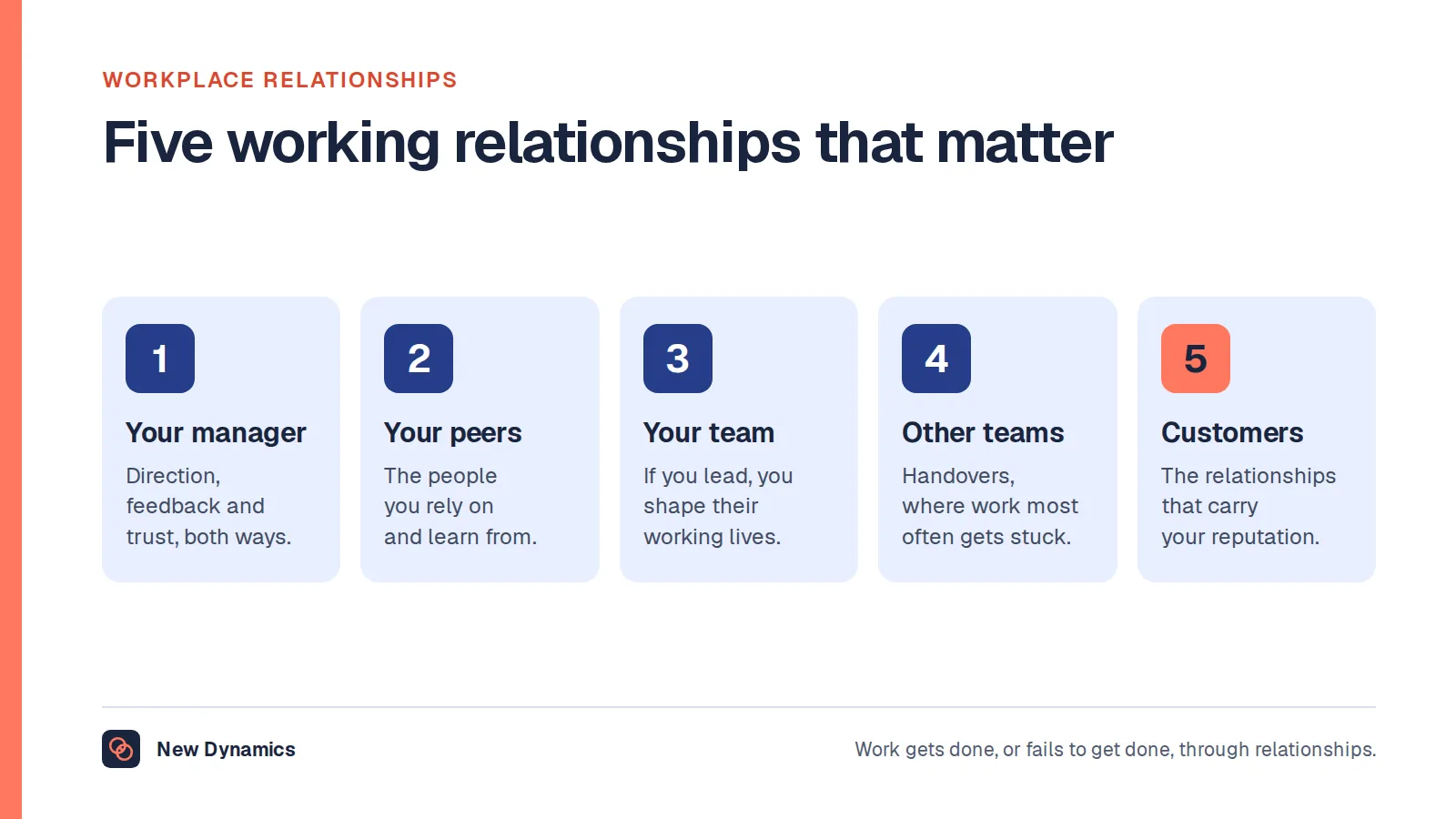
Our guide to workplace relationships shows how these habits build trust over time.
Emotional intelligence for managers
Managers' emotions carry further than other people's. A manager's mood on a Monday morning can set the tone for the week. OpenStax notes that managers who are aware of their own emotions can use that information to guide their decisions, and that managers who are aware of other people's emotions can help groups to function more effectively.
In practice, that means:
- naming the mood: “I know that this announcement is worrying. Let me tell you what I know, and what I do not”;
- separating the person from the problem when performance is poor;
- noticing your own triggers, such as being challenged in public, and planning your response;
- asking before assuming: “You seemed frustrated in the meeting. What was going on?”;
- being consistent. An unpredictable manager is harder to work for than a demanding one;
- looking after your own state. A manager who is exhausted has little empathy left to give.
See what makes a good manager and boss vs leader.

How to build emotional intelligence
It is a set of habits, and habits can be practised.
- Name what you feel, precisely. “Annoyed”, “anxious” and “embarrassed” are more useful than “stressed”. Many people find that a precise label creates a little distance.
- Notice your triggers. Keep a note for a fortnight of the moments when you reacted more strongly than the situation deserved. Patterns will appear.
- Build a pause. One breath before you reply. An hour before you send the email. A night before the big decision.
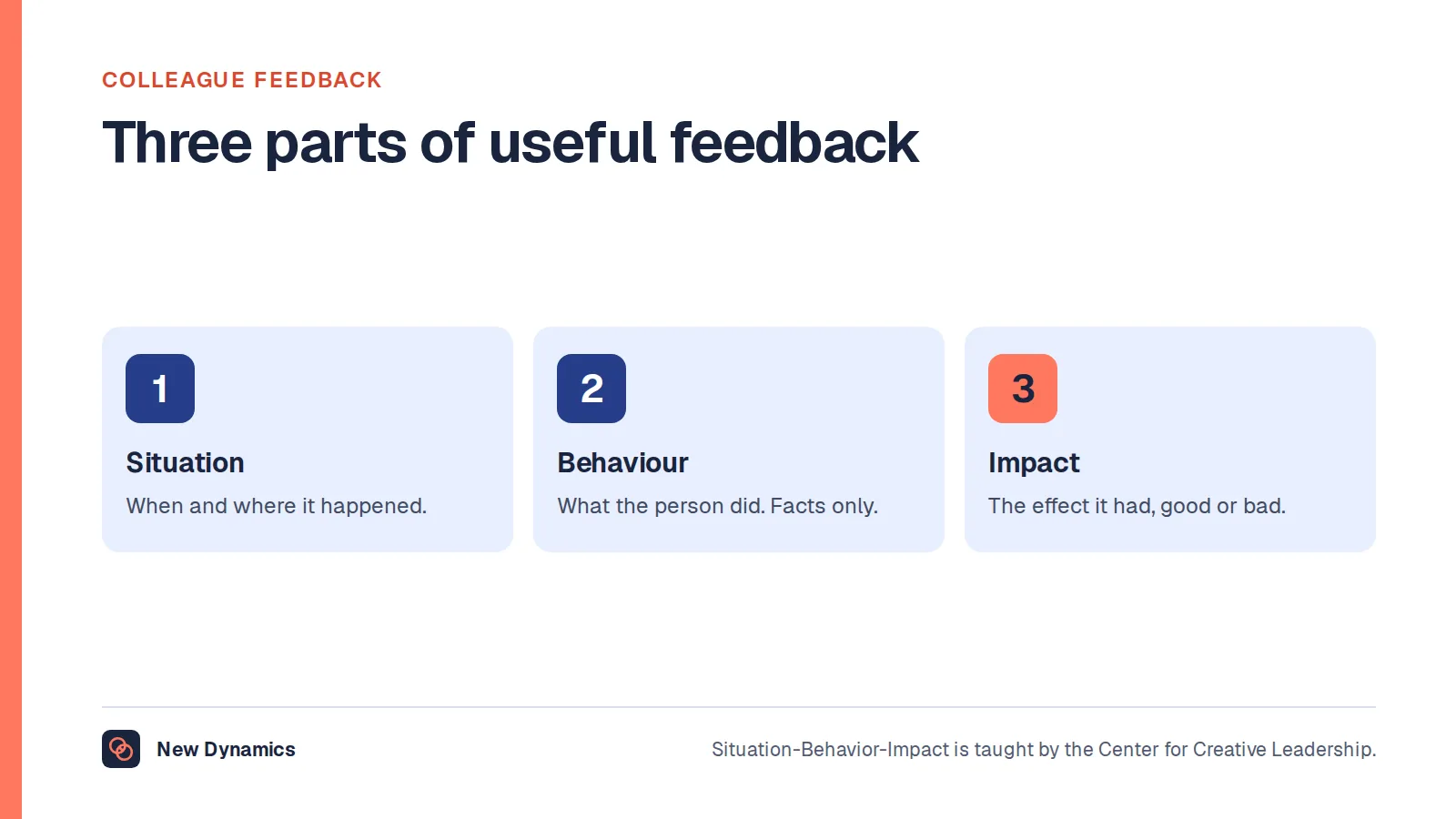
- Ask how you come across. Choose two people who will be honest. Our colleague feedback examples include questions to ask.
- Listen to understand. Summarise what the other person said before you respond. It is the simplest empathy exercise there is.
- Ask about feelings directly, and lightly. “How are you feeling about the deadline?” invites more than “Is everything on track?”
- Repair quickly. When you get it wrong, say so the same day.
- Look after the basics. Sleep, breaks and a manageable workload. Most of us find self-control harder when we are tired.
Write one of these as a development goal. Our personal development goals examples show how.
What the evidence says
Emotional intelligence is one of the most popular ideas in management, and one of the more contested in psychology.
The OpenStax textbook Psychology describes it as encompassing “the ability to understand the emotions of yourself and others, show empathy, understand social relationships and cues, and regulate your own emotions”. It then adds a caution. Some writers, including Daniel Goleman, argue that emotional intelligence predicts success better than traditional intelligence. “However, emotional intelligence has been widely debated, with researchers pointing out inconsistencies in how it is defined and described, as well as questioning results of studies on a subject that is difficult to measure and study empirically.” You can read the passage in the chapter on intelligence and creativity.
Three practical conclusions follow.
- Treat the behaviours as valuable in their own right. Pausing before reacting, listening well and giving feedback with care are useful, whatever they are called.
- Be sceptical of precise scores. A questionnaire that claims to measure someone's “EQ” to a decimal place is promising more than the science supports. Be especially careful about using such tests in hiring.
- Do not make it a personality verdict. “She has low emotional intelligence” is a label. “She interrupted the client three times” is something that can be discussed and changed.
Emotional intelligence is not the same as being nice
- It includes hard conversations. Avoiding conflict to keep everyone comfortable is a failure of social skill, not a sign of it.
- It is not suppressing emotion. Regulation means choosing how to express a feeling, including anger, in a way that helps.
- It is not manipulation. Reading people in order to exploit them is a misuse of the same abilities. The test is whether you would be content for the other person to know what you were doing.
- It does not replace competence. A warm manager who cannot plan still fails the team.
- It looks different in different people and cultures. Quiet, reserved people can be highly attuned. Do not mistake extroversion for empathy.
Common mistakes
Using it as a weapon. “You need to work on your emotional intelligence” is rarely helpful. Describe the behaviour and its effect.
Expecting it only from some people. In some teams, the same few people end up doing all the emotional work: smoothing conflicts, noticing who is upset and welcoming newcomers. Share it.
Training without practice. A workshop raises awareness. Habits change through feedback over months.
Ignoring the environment. People under constant pressure, in a culture of blame, will struggle to be patient and open. Fix the conditions as well. See our guide to team morale.

Frequently asked questions
What is emotional intelligence in the workplace?
It is the ability to recognise, understand and manage your own emotions and those of the people you work with. It shows in self-awareness, self-regulation, empathy and social skill, for example in how you give feedback, handle pressure and respond to disagreement.
What are examples of emotional intelligence at work?
Examples include pausing before replying to an irritating email, noticing that a colleague has gone quiet and checking in, admitting a mistake without excuses, hearing the worry behind an aggressive question, giving critical feedback privately and kindly, and apologising after a sharp exchange.
What are the four components of emotional intelligence?
A common description has four parts: self-awareness, which is knowing what you feel and why; self-regulation, which is managing your emotions to suit the situation; empathy, which is understanding other people's emotions; and social skill, which is managing the emotional side of relationships.
Can emotional intelligence be learned?
The behaviours can be practised: naming your feelings precisely, noticing your triggers, pausing before reacting, asking how you come across, listening to understand and repairing mistakes quickly. Progress comes from feedback over months, more than from a single course.
Why is emotional intelligence important for leaders?
Leaders' moods and reactions affect everyone around them. Leaders who understand their own emotions make better-informed decisions, and those who read other people well can deliver hard messages, handle conflict and keep teams steady under pressure.
Can emotional intelligence be measured?
Only roughly. Researchers disagree about how to define and measure it, and textbooks note that it is difficult to study empirically. Be cautious about tests that produce a precise score, particularly in hiring. Feedback on specific behaviours is more useful.
Your next step: build one pause
- For one week, notice the moments when you react more strongly than the situation deserves.
- Choose one of them, and plan a pause: a breath, an hour or a night.
- Ask one trusted colleague how you come across under pressure.
- At the end of the week, write down what you noticed.
For ways to build honest, regular feedback into everyday work, read and download our employee feedback guide. The guide is free to read, and the PDF uses our short download form.
Want feedback to be frequent, specific and safe across your teams? Book a New Dynamics demo and bring your current approach. You can also email contact@new-dynamics.com.