TL;DR
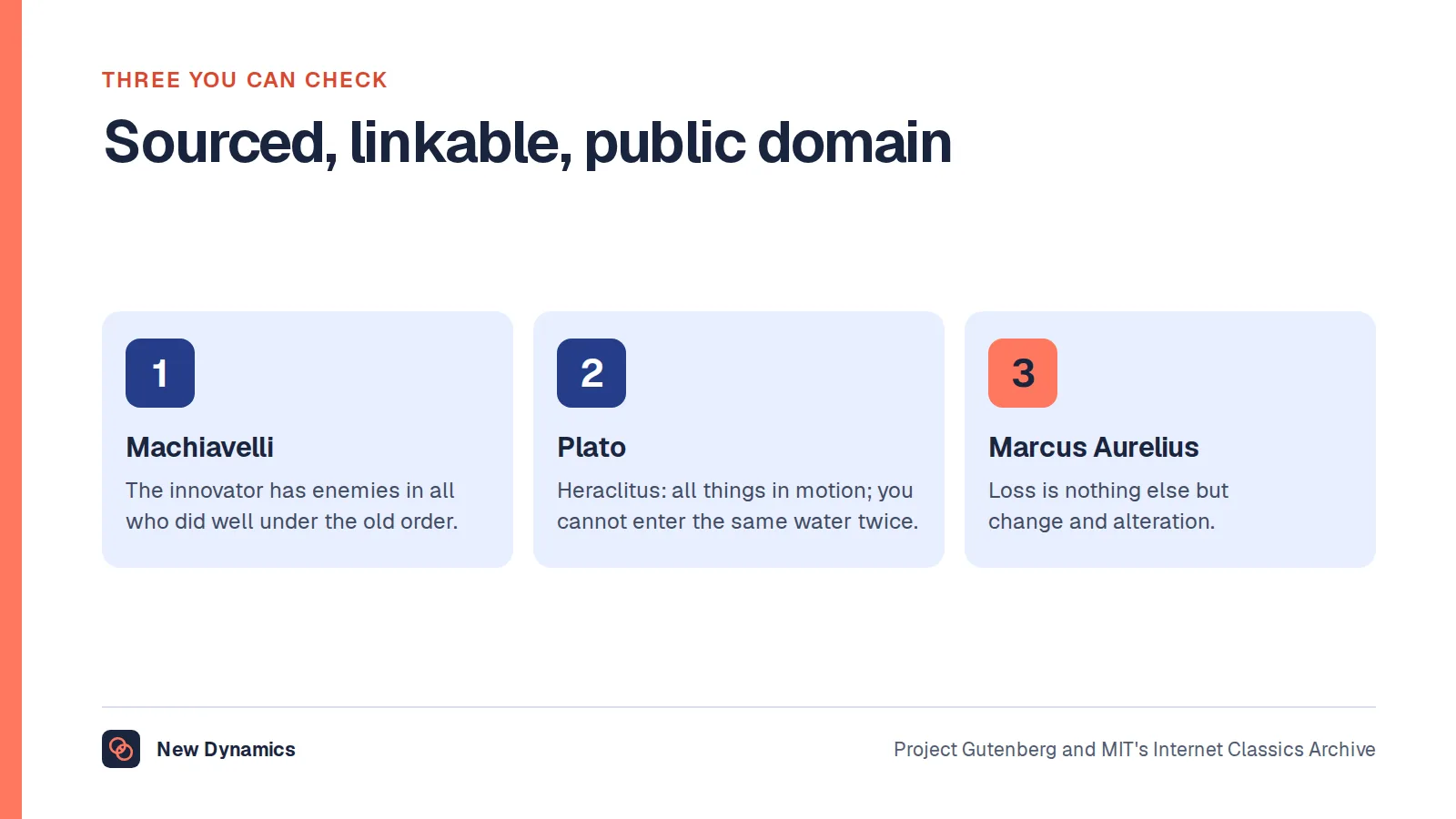
- Every quotation here was checked against a source we opened: the National Archives catalogue, a presidential library, the International Churchill Society or Project Gutenberg. Each one is linked so you can check it too. No line is included on the strength of a quotation website.
- The quotations are grouped by what a manager would use them for: taking responsibility, listening, developing people, deciding under uncertainty and humility. After each group there is a short note on what to do with the idea on Monday.
- The most useful part may be the list of famous leadership sayings that are wrong. The line about inspiring others to dream more is not John Quincy Adams, two of the best known Churchill quotations are not Churchill, and the link between Peter Drucker and culture eating strategy is not well supported.
Search for leadership quotes and you get a thousand lines and almost no sources. Many of the most shared are attached to the wrong name, and at least one was written by a living person and quietly reassigned to a dead president, because a dead president sounds weightier than a country singer.
That matters more than it sounds. A manager who puts a misattributed line on an all-hands slide has told the room, without meaning to, that nobody checked. This article does the opposite. Every quotation below was read in a source we opened, and that source is linked beside the line so you can open it too. The list is shorter than most. That is the point.
Quotations are easiest to live up to when the everyday mechanics are in place, so colleagues can say what they think and be answered. See how New Dynamics continuous feedback handles feedback, one-to-ones and check-ins as part of normal work.
Why leadership quotations go wrong, and how these were checked
Three things make leadership a bad neighbourhood for attribution. The subject attracts upgrades, because a line reads better over a famous name, and the upgrade always travels towards presidents, generals and philosophers. Classical sayings reach English through several hands, so what circulates is often a modern rewording no translator published. And nobody checks a line they agree with, which is how a 1997 book by an entertainer becomes a nineteenth-century presidential maxim.

So here is the rule we used, and the one we would suggest to you.
- Find the work, not the quotation site. A book and chapter, a speech with a date and a place, a letter with an address at the top, or a document in a national archive.
- Read the sentences either side. Cutting a quotation can reverse its meaning. Two lines below mean something noticeably different in context.
- Prefer a source your audience can open. Project Gutenberg, a presidential library, the National Archives catalogue or legislation.gov.uk. If your reader cannot check it, you have asked for trust rather than offered evidence.
- If it will not verify, leave it out. Several well-loved leadership lines are missing from this article for that reason, and are listed below rather than quietly dropped.
No official UK body publishes figures on how often quotations are misattributed in internal communications, so no number is quoted here; published HR figures sit on the HR statistics hub. A plain sentence of your own beats a famous line with the wrong name on it, which is the case our post on quotes for change at work makes for the change email.
Leadership quotes about taking responsibility
Harry S. Truman, farewell address, 15 January 1953
"The papers may circulate around the Government for a while but they finally reach this desk. And then, there's no place else for them to go. The President, whoever he is, has to decide. He can't pass the buck to anybody. No one else can do the deciding for him."
Source: the Truman Library's text of the President's farewell address to the American people. Truman's dashes are replaced with commas here; the wording is otherwise his.
A note on "the buck stops here"
Truman used the phrase, but he did not coin it. The Truman Library's page on the "Buck Stops Here" sign records that the sign was made and mailed to him on 2 October 1945, and that the phrase derives from the poker expression "pass the buck". The same page quotes him on what it meant: "when the decision is up before you ... the decision has to be made."
Dwight D. Eisenhower, note written in case D-Day failed, 5 June 1944
"Our landings in the Cherbourg-Havre area have failed to gain a satisfactory foothold and I have withdrawn the troops. My decision to attack at this time and place was based upon the best information available. The troops, the air and the Navy did all that Bravery and devotion to duty could do. If any blame or fault attaches to the attempt it is mine alone."
Source: the National Archives catalogue record for the "In Case of Failure" message, dated 5 June 1944, held in Eisenhower's pre-presidential papers at the Dwight D. Eisenhower Library. The National Archives also publishes the full transcript on its DocsTeach page for the same record. Eisenhower dated the note "July 5" in error.
Mary Parker Follett, The New State, 1918
"Representative government rests on the fallacy that when you delegate the job you delegate the responsibility."
What she wants instead: "a kind of government which will delegate the job but not the responsibility. The case is somewhat like that of the head of a business undertaking, who makes the men under him responsible for their own work and still the final responsibility rests with him. This is not divided responsibility but shared responsibility, a very different thing." Source: chapter XXVI of The New State on Project Gutenberg.
Sun Tzu, The Art of War, chapter X
"The general who advances without coveting fame and retreats without fearing disgrace ... is the jewel of the kingdom."
Source: Lionel Giles's translation on Project Gutenberg, chapter X, "Terrain", section 24. The point is credit: a manager who needs the win cannot order the retreat.
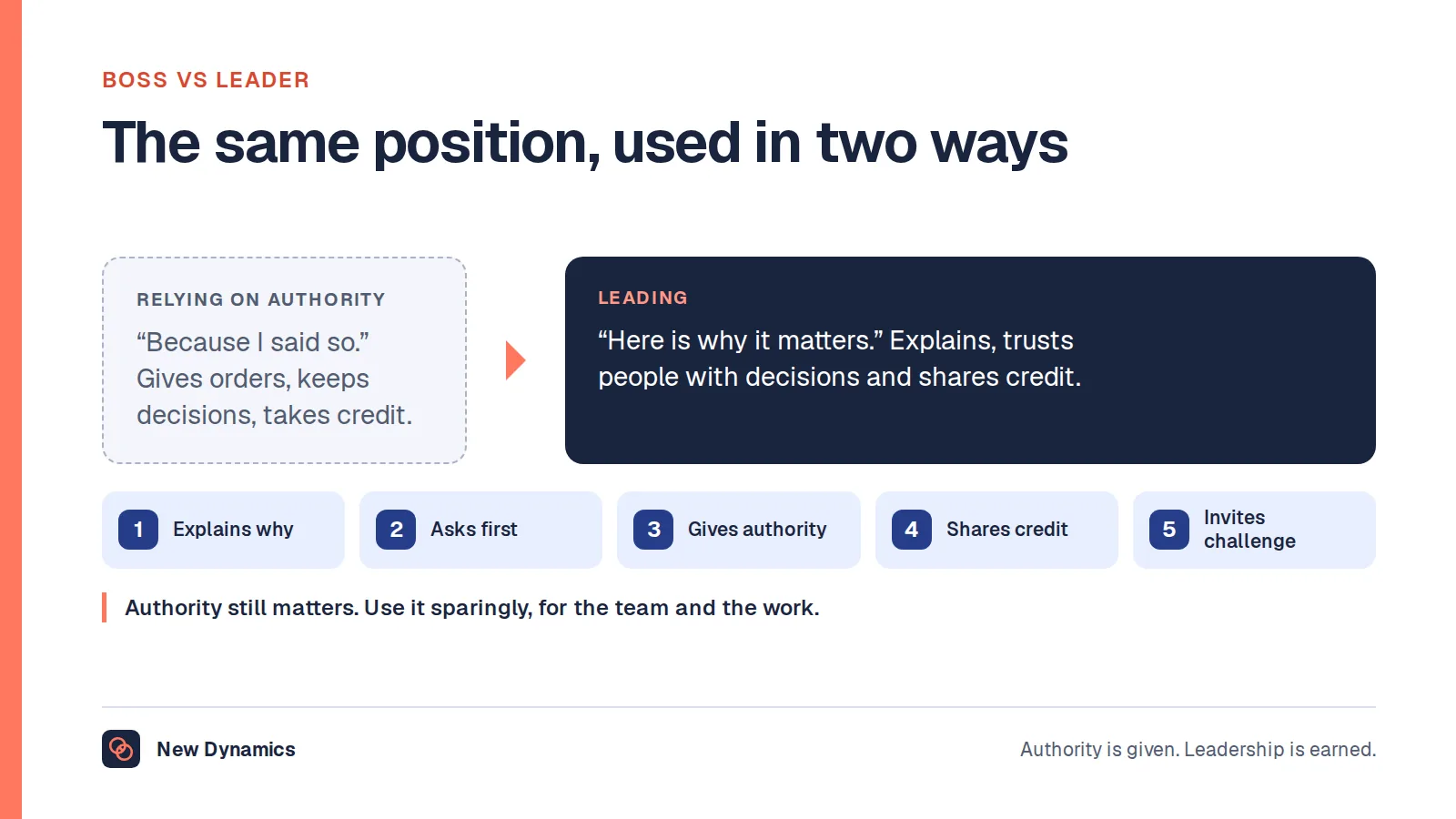
What to do with this group. Responsibility is a visible act, not a sentiment. Say "I decided" rather than "it was decided" when the decision was yours. Keep a poor outcome from your own call out of someone else's record; the first performance review as a new manager covers how to hold that line. And write down who decides what, because most accountability arguments are arguments about an unwritten boundary. Follett's distinction is the practical one: hand over the job, keep the answerability. Boss versus leader shows how differently those two read to a team.
Leadership quotes about listening
Zeno, in Diogenes Laertius
A young man was talking a great deal of nonsense, and Zeno said to him:
"This is the reason why we have two ears and only one mouth, that we may hear more and speak less."
Source: the Life of Zeno in C. D. Yonge's translation of The Lives and Opinions of Eminent Philosophers. In context it is a rebuke, not a maxim.
Mary Parker Follett, The New State, 1918
"He must be able to lead us to wise decisions, not to impose his own wise decisions upon us. We need leaders, not masters or drivers."
And a few lines later: "The skilful leader then does not rely on personal force; he controls his group not by dominating but by expressing it."
Source: chapter XXV, "Leaders or Bosses?", in The New State. She adds that "no one can truly lead except from within", the oldest clear statement we found of an idea modern leadership writing repeats without crediting her.
The Tao Teh King, chapter 17
"How irresolute did those (earliest rulers) appear, showing (by their reticence) the importance which they set upon their words! Their work was done and their undertakings were successful, while the people all said, 'We are as we are, of ourselves!'"
Source: James Legge's translation of the Tao Teh King, chapter 17. The brackets are Legge's own. Note what the chapter praises: a ruler who says little, and a result the people claim as their own.
The one you should not use
"Courage is what it takes to stand up and speak; courage is also what it takes to sit down and listen."
This is everywhere, always over Churchill's name, and it is not his. The International Churchill Society lists it among quotes falsely attributed to Winston Churchill: "This fake quote is very often attributed to Churchill but appears nowhere in the Churchill canon." The sentiment is fine. The name is wrong, and the name is the only reason the line travels.
What to do with this group. Listening is a diary problem before it is a character problem. Book the one-to-one and do not move it, because a cancelled one-to-one teaches more than any quotation. Ask one question you do not know the answer to, then stop talking. Then close the loop out loud, because people stop telling you things when nothing visibly follows. Our guide to manager one-to-ones has the question sets; management by wandering around covers the informal half.

Leadership quotes about developing people
Florence Nightingale, Notes on Nursing, 1859
On what she called petty management:
"All the results of good nursing, as detailed in these notes, may be spoiled or utterly negatived by one defect, viz.: in petty management, or in other words, by not knowing how to manage that what you do when you are there, shall be done when you are not there."
She is harder on the devoted individualist, who "may give up her health, all her other duties, and yet, for want of a little management, be not one-half so efficient as another who is not one-half so devoted, but who has this art of multiplying herself".
Source: section III of Notes on Nursing, the best early statement we found of why a heroic manager loses to a boring one with a system.
Mary Parker Follett, The New State, 1918
"The person who influences me most is not he who does great deeds but he who makes me feel I can do great deeds. Many people tell me what I ought to do and just how I ought to do it, but few have made me want to do something."
Source: chapter XXV of The New State.
Marcus Aurelius, Meditations, Book VIII
"Men exist for the sake of one another. Teach them then, or bear with them."
Source: George Long's translation of the Meditations, Book VIII, section 59. Six words of it are a complete management instruction: if the behaviour can be taught, teach it; if it cannot, stop being annoyed about it.
The one you should not use
"If your actions inspire others to dream more, learn more, do more and become more, you are a leader."
Attributed almost universally to John Quincy Adams. Quote Investigator's article on the inspire and dream leader quotation reports that it "has located no evidence that John Quincy Adams spoke or wrote the words", and that the earliest version it found was printed in a 1997 book, The Most Important Thing I Know, credited to Dolly Parton: "If your actions create a legacy that inspires others to dream more, learn more, do more and become more, then, you are an excellent leader." Quote Investigator believes Parton is the most likely originator.
If you like the line, use it and credit Parton. It is a good line. It is simply not two centuries old.
What to do with this group. Nightingale's test is the usable one: name the thing that falls over when you are away, then fix the arrangement rather than your attendance. Write down two or three decisions you will stop making personally this quarter and tell the person who will make them instead. Then give feedback specific enough to act on; manager feedback examples and the employee feedback guide cover the wording, and 360 feedback gives a wider picture than one manager can see.
Leadership quotes about deciding under uncertainty
Dwight D. Eisenhower, 14 November 1957
"I tell this story to illustrate the truth of the statement I heard long ago in the Army: Plans are worthless, but planning is everything. There is a very great distinction because when you are planning for an emergency you must start with this one thing: the very definition of 'emergency' is that it is unexpected, therefore it is not going to happen the way you are planning."
Source: the American Presidency Project's text of remarks at the National Defense Executive Reserve Conference. Note what every poster version removes: Eisenhower credits the saying to the Army, not himself. Name him as the person who popularised it.
Theodore Roosevelt, the Sorbonne, Paris, 23 April 1910
"It is not the critic who counts; not the man who points out how the strong man stumbles or where the doer of deeds could have done them better. The credit belongs to the man who is actually in the arena, whose face is marred by dust and sweat and blood; who strives valiantly; who errs, and comes short again and again, because there is no effort without error and shortcoming; but who does actually strive to do the deeds; who knows the great enthusiasms, the great devotions; who spends himself in a worthy cause; who at the best knows in the end the triumph of high achievement, and who at the worst, if he fails, at least fails while daring greatly, so that his place shall never be with those cold and timid souls who know neither victory nor defeat."
Source: the American Presidency Project's text of the Sorbonne address, "Citizenship in a Republic". Genuine, well sourced, and risky: aimed by a senior leader at internal critics it reads as an instruction to stop raising problems. It belongs with the person about to try something.
Winston Churchill, Harrow School, 29 October 1941
"Never give in, never give in, never, never, never, in nothing, great or small, large or petty, never give in except to convictions of honour and good sense."
Source: the International Churchill Society's text of the Never Give In speech, with its dashes shown here as commas. Compare the version that circulates, "never, never, never give up", which the Society lists among its misquotations. The popular form deletes "except to convictions of honour and good sense", and that clause is the whole point. Churchill is not telling a schoolroom to be stubborn. He is saying that evidence and honour are the two things worth changing your mind for.
The one you should not use
"Success is not final, failure is not fatal: it is the courage to continue that counts."
The International Churchill Society's page on falsely attributed quotes says of this line and of "success is going from failure to failure without losing your enthusiasm": "We can find no attribution for either one of these ... They are found nowhere in his canon." The same page disposes of "with integrity, nothing else counts", which a search of 15 million published Churchill words and 35 million words about him did not find.
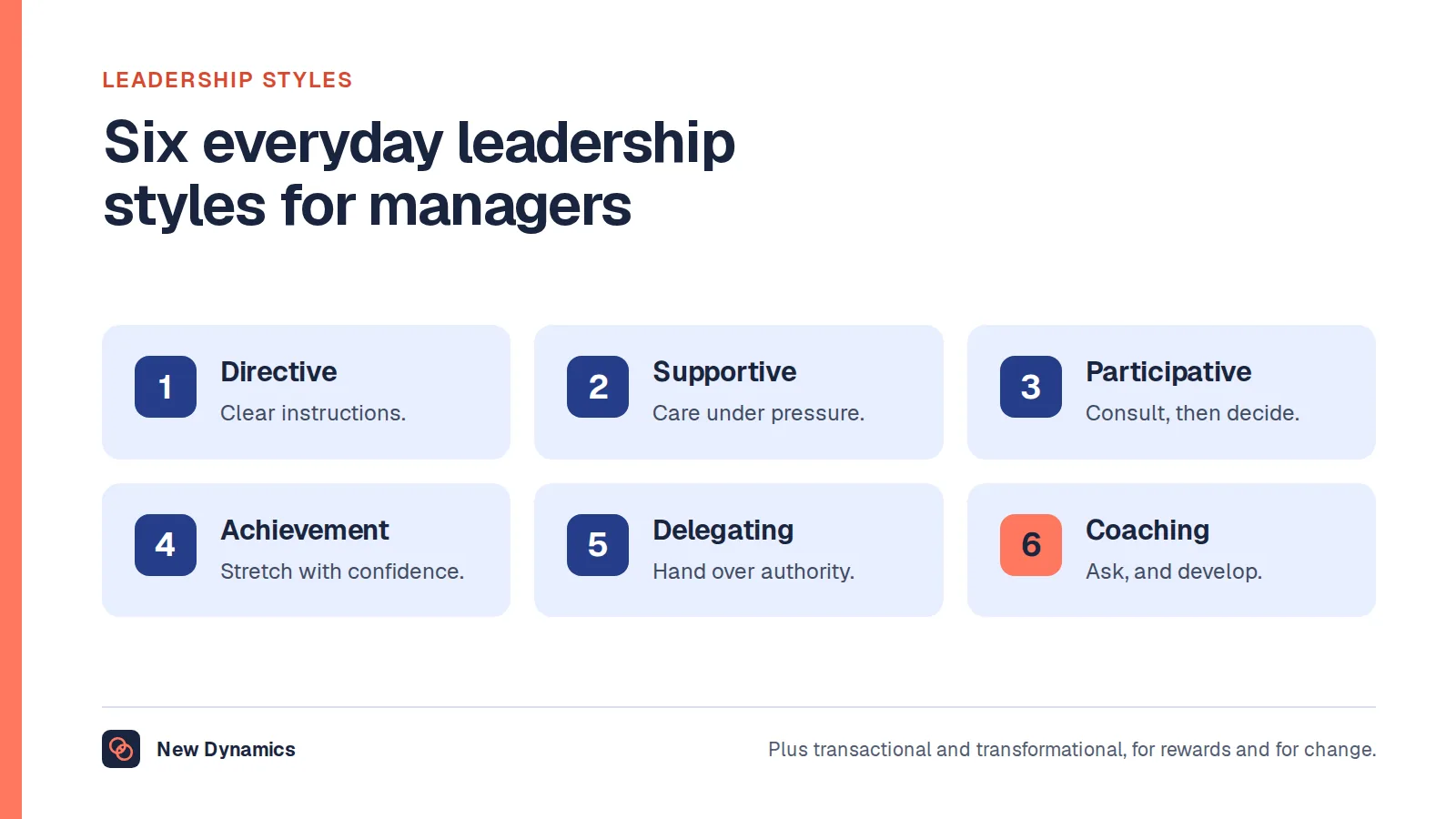
What to do with this group. Make the uncertainty explicit rather than brave. Say what you decided, what you knew at the time and what would make you change course, then put a date on the review. That protects the team from hindsight and you from pretending the first call was obvious. Churchill's clause is the discipline: name in advance the evidence that would make you give in. Decision-making questions has prompts for the meeting; leadership styles covers how much of the decision to hand over.
Leadership quotes about humility
Abraham Lincoln to Major-General Grant, 13 July 1863
Lincoln had doubted Grant's plan at Vicksburg in detail, and said so. After it worked he wrote:
"I now wish to make the personal acknowledgment that you were right and I was wrong."
Source: the letter, printed in full, in The Papers and Writings of Abraham Lincoln, Volume 6. Read it whole: Lincoln lists the judgements he got wrong before conceding, which makes it an apology rather than a courtesy.
Marcus Aurelius, Meditations, Book VI
"If any man is able to convince me and show me that I do not think or act right, I will gladly change; for I seek the truth, by which no man was ever injured. But he is injured who abides in his error and ignorance."
Source: George Long's translation of the Meditations, Book VI, section 21.
The Tao Teh King, chapter 66
"That whereby the rivers and seas are able to receive the homage and tribute of all the valley streams, is their skill in being lower than they; it is thus that they are the kings of them all. So it is that the sage (ruler), wishing to be above men, puts himself by his words below them, and, wishing to be before them, places his person behind them."
Source: Legge's translation, chapter 66.
The one you should not use, at least not like that
"A leader is best when people barely know he exists, when his work is done, his aim fulfilled, they will say: we did it ourselves."
Offered everywhere as Lao Tzu, chapter 17. It is a modern English paraphrase, not a translation we could source. Legge's chapter 17 says: "In the highest antiquity, (the people) did not know that there were (their rulers). In the next age they loved them and praised them. In the next they feared them; in the next they despised them." The ideas overlap. The wording does not, and putting a paraphrase inside quotation marks beside a named author is the error this article is about. Quote a translation and name the translator, or write the idea in your own words.
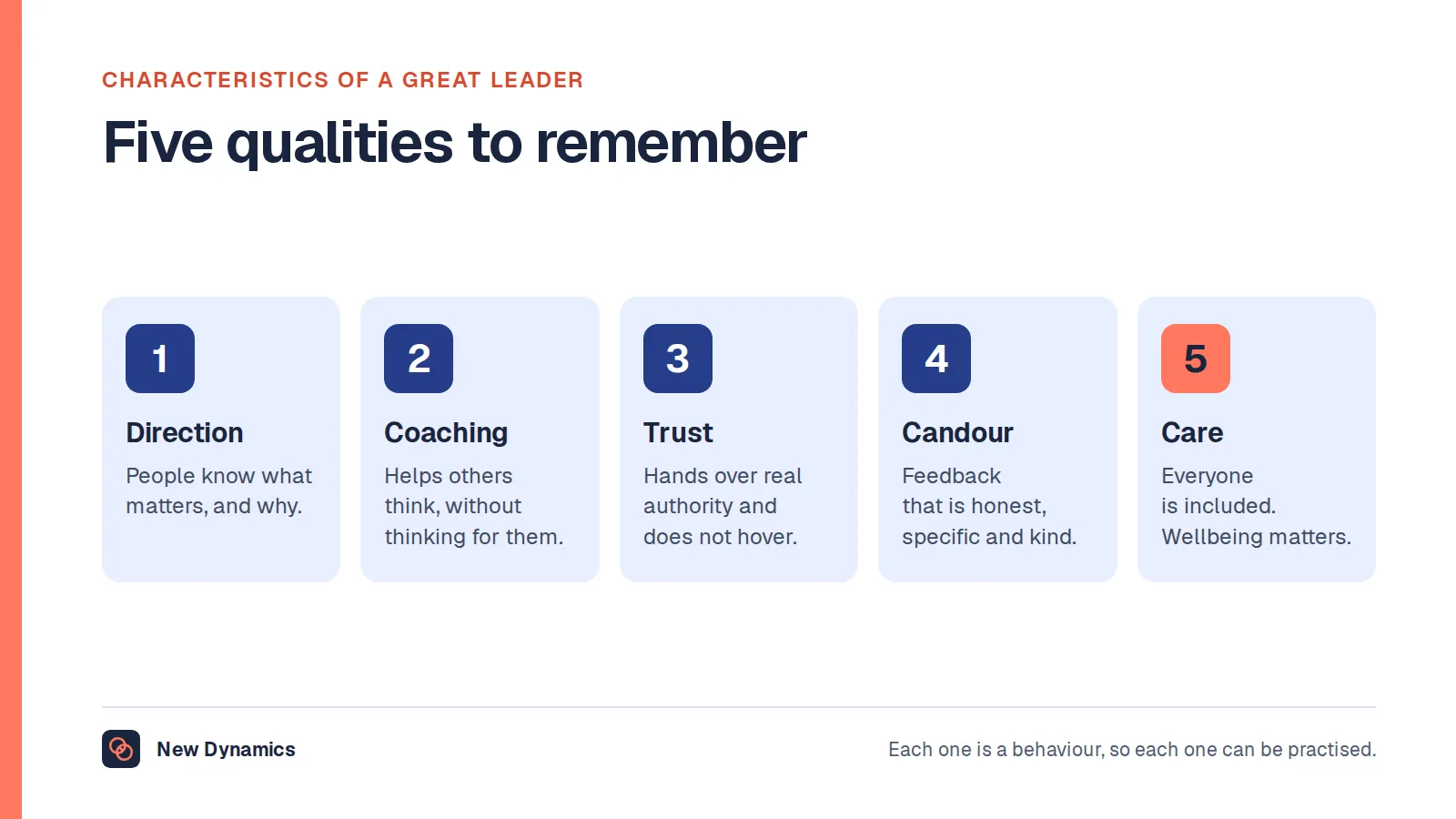
What to do with this group. Humility at work is one observable act: changing a decision in public, with the reason, and naming who changed your mind. Do it once and people bring you bad news earlier for a year. Lincoln's version is the model because he itemised what he got wrong. To see how your own behaviour lands before you quote anyone about it, start with manager self-assessment and good manager qualities; great leader characteristics has the traits this group circles.
Famous leadership sayings that are misattributed
Collected in one place, because this is the part you can act on today. Each verdict comes from the source linked beside it.

- "If your actions inspire others to dream more ... you are a leader." Not John Quincy Adams. Quote Investigator found no evidence he said it and traced the earliest version to Dolly Parton, 1997.
- "Courage is ... what it takes to sit down and listen." Not Churchill. It "appears nowhere in the Churchill canon", per the International Churchill Society.
- "Success is not final, failure is not fatal." Not Churchill. No attribution found, and not in his canon.
- "Never, never, never give up." A misquotation. The real Harrow line of 1941 ends "never give in except to convictions of honour and good sense", and the missing clause reverses the lesson.
- "The further backward you look, the further forward you can see." Not his words. The Society records that he said "the longer you can look back, the farther you can look forward", and that the misquotation reached a 1999 royal Christmas message.
- "Culture eats strategy for breakfast." Probably not Peter Drucker. Quote Investigator traced the earliest citation to Giga Information Group in March 2000 and concluded that "the linkage to Peter Drucker occurred years later and is not well supported".
- "A leader is best when people barely know he exists." A paraphrase, not a translation.
Powerful leadership quotes we left out, and why
A list is more trustworthy when it says what it rejected.
- Nelson Mandela on leading from behind. The best known version reaches us through a magazine interview and a memoir we could not open to confirm the wording. Better to omit a line from a leader we admire than print an approximation.
- "The most important thing in communication is to hear what isn't being said." Attributed to Peter Drucker everywhere, with no citation we could reach.
- "Management is doing things right; leadership is doing the right things." Credited variously to Drucker and to Warren Bennis, with no openable primary source for either.
That leaves twenty or so quotations rather than a hundred. A hundred unsourced lines is not a longer version of this list; it is a different and worse thing.
How to use a leadership quotation well
A quotation is an opener, never an answer. Four rules keep it there.
- Give the source in the room. "Eisenhower, in 1957, and he was quoting the Army" takes four seconds and changes how the line is received.
- Match it to the question being asked. A team waiting to hear whether their roles survive a restructure does not need Roosevelt on critics. It needs dates and names.
- Never quote at someone. The arena passage aimed at an internal critic, or a resilience line aimed at an overloaded team, reads as an instruction to be quiet.
- Prefer your own sentence when the stakes are high. Nobody has ever complained that a manager's sentence was not famous enough.
The all-hands problem: when the behaviour contradicts the slide
This is the most common failure and the most expensive. A quotation in a company all-hands lands badly when the behaviour in the room does not match it. A slide about listening, shown by a leadership team that cancelled the last two listening sessions, does not read as aspiration. It reads as self-deception or as contempt, and the audience picks one of those within a second. The quotation has not merely failed to persuade. It has supplied the evidence that the gap exists and that nobody at the front has noticed.
So audit the line against the last quarter. If you cannot name a recent occasion when your team did the thing in the quotation, cut the slide and name the occasion instead: "three weeks ago we moved the launch date because two of you said the testing window was too short" does more than any sourced line about listening, and it is checkable, which is why it works. If the gap is the real subject, say so. A leadership team that names its own gap is believed; one that quotes over the gap is not, and the difference between a boss and a leader is mostly a list of these gaps.
The conditions matter more than the words. The UK Health and Safety Executive's Support standard sets out that "employees indicate that they receive adequate information and support from their colleagues and superiors" and that "employees receive regular and constructive feedback". A quotation cannot provide either. It can only describe them, accurately or not.
Can you put a quotation on a slide? A note on UK copyright
Section 30(1ZA) of the Copyright, Designs and Patents Act 1988 provides that copyright "is not infringed by the use of a quotation from the work (whether for criticism or review or otherwise)" provided that the work "has been made available to the public", the use "is fair dealing with the work", "the extent of the quotation is no more than is required by the specific purpose for which it is used", and "the quotation is accompanied by a sufficient acknowledgement (unless this would be impossible for reasons of practicality or otherwise)".
A short quotation with the author and the work named is the shape the exception describes, and works old enough to be out of copyright, which covers most of the sources above, raise no question at all. This is general information about the law in the United Kingdom, covering England, Wales, Scotland and Northern Ireland, and not legal advice; if you are reproducing substantial text in a product or in published marketing, take advice on your specific use.
Frequently asked questions
What is the best leadership quote?
For working managers, Mary Parker Follett's is the most useful: representative government, she wrote in The New State in 1918, "rests on the fallacy that when you delegate the job you delegate the responsibility". What is needed instead is to "delegate the job but not the responsibility", which she calls shared rather than divided responsibility. It is specific enough to change what you do on Monday, and free to read on Project Gutenberg.
Did John Quincy Adams say "if your actions inspire others to dream more"?
No. Quote Investigator reports that it has located no evidence that John Quincy Adams spoke or wrote the words, and that the earliest version found appeared in a 1997 book credited to Dolly Parton: "If your actions create a legacy that inspires others to dream more, learn more, do more and become more, then, you are an excellent leader." Credit Parton, or use your own wording.
Which famous leadership quotes are misattributed to Churchill?
Several. The International Churchill Society lists "courage is what it takes to stand up and speak; courage is also what it takes to sit down and listen" and "success is not final, failure is not fatal" as fake, and records no attribution for "with integrity, nothing else counts". His genuine Harrow line of 1941 is "never give in except to convictions of honour and good sense", not "never, never, never give up".
Did Eisenhower say "plans are worthless, but planning is everything"?
He said the words in 1957, at the National Defense Executive Reserve Conference, but introduced them as "the statement I heard long ago in the Army". So he popularised the saying rather than coined it. Say that when you quote it: it is a better story than the poster version, and accurate.
How do I check a leadership quotation before I use it?
Find the work rather than a quotation site: a book and chapter, a speech with a date and a place, or a document in an archive. Read the sentences around the line, because cutting often reverses the meaning. Choose a source your audience can open. If none of that works, drop the name and write your own sentence.
Should leaders use quotations at an all-hands at all?
Only when the behaviour in the room matches the words. A quotation about listening, from a leadership team that cancelled its listening sessions, supplies evidence of the gap rather than closing it. Name a recent, specific occasion when your team did the thing, and the quotation becomes optional.
Your next step: check one line before you use it
- Take the quotation you were about to put on a slide and search for the work it comes from, not for the quotation.
- If you find a book, chapter, speech or archive record, add it to the slide in six words.
- If you cannot find one, delete the name and write the sentence yourself.
- Then name the recent occasion when your team did the thing. That is what the room was listening for.
For the conversations these quotations are really about, read and download our guide to manager one-to-ones. The guide is free to read, and the PDF uses our short download form.
Want one-to-ones, feedback and goals in one place, so listening and development show up in the record rather than only on a slide? Book a New Dynamics demo and bring the behaviours you are trying to encourage. You can also email contact@new-dynamics.com.