TL;DR
- Talent is a natural aptitude for something. At work it also means the people who can make a significant difference to performance, now or in future.
- Raw talent is aptitude before practice. It becomes valuable when it is combined with skill, motivation and the opportunity to use it.
- Spot talent through evidence gathered over time and from more than one person. Labels based on impressions reward confidence and visibility more than ability.
“She's a real talent.” “We need to attract top talent.” “He has raw talent, but he is not there yet.” The same word is doing three different jobs in those sentences, and that is where many people decisions start to go wrong.
This article gives a plain talent definition for the workplace. It separates raw talent from skill, strength and potential, offers ten examples of what talent looks like in everyday work and sets out fair ways to spot and develop it.
Talent shows itself in evidence over time, and one good meeting proves little. If you want that evidence captured as work happens, see how New Dynamics continuous feedback records it.
What is talent? A plain definition
In everyday English, talent is a natural aptitude for something: an ability that seems to come more easily to one person than to most.
At work the word has two further meanings:
- Talent as people. “Hiring talent” simply means hiring capable people.
- Talent as the people who matter most to performance. The CIPD talent management factsheet defines talent as “individuals who can make a significant difference to organisational performance, either through their immediate contribution or by reaching their potential”.
Notice the last part of that definition. Talent covers more than today's top performers. It includes people who could make a significant difference once they have had the chance to develop.
Talented definition: what it means to call someone talented
To call someone talented is to say they show more ability in an area than you would expect from their experience alone. They learn it faster, do it with less effort or produce better results than their peers.
The word is a compliment, but it is also a label, and labels have side effects:
- People called talented early can come to avoid hard tasks that might threaten the label.
- People not called talented may stop being offered the stretching work that would let them show what they can do.
- Managers tend to see talent most readily in people who resemble them or who are simply more visible. Generational labels work the same way, as we explain in Millennials vs Gen Z at work.
Describe what you observed instead. “You untangled that customer's problem in one call, and she renewed” is more useful than “you're so talented”, because the person knows what to repeat.
Raw talent versus developed skill
Raw talent is aptitude before practice. It is the newcomer who picks up the logic of a spreadsheet model in an afternoon, or the graduate who can calm an angry customer without any training.
Raw talent has little value until other things are added to it. Think of talent at work as four ingredients:
- Aptitude: what comes more easily to this person than to most.
- Skill: what they have learned to do reliably through practice and feedback.
- Motivation: what they choose to put effort into.
- Opportunity: the work, tools and support that let them use it.
Remove any one and performance suffers. A gifted analyst with no interesting problems to solve will look average. A modestly gifted one with good coaching and years of deliberate practice will often outperform them.

Talent, skill, strength and potential: the differences
These words are often used as if they meant the same thing. Separating them leads to better decisions.
| Term | What it means | How you would see it |
|---|---|---|
| Talent | A natural aptitude for a kind of work | Learns it quickly and improves faster than most |
| Skill | A learned ability performed to a reliable standard | Completes the task well, time after time |
| Strength | Something a person does well, often, and enjoys | Volunteers for it and has energy afterwards |
| Potential | The capacity to perform well in a bigger or different role | Handles unfamiliar, more complex work with support |
| Performance | The results actually delivered in the current role | Evidence against agreed goals |
The UK Civil Service uses a similar separation in its Success Profiles recruitment framework. It defines strengths as “the things we do regularly, do well and that motivate us” and ability as “the aptitude or potential to perform to the required standard”. It assesses them alongside behaviours, experience and technical skills, because no single element predicts success.
The most common mistake is to confuse performance with potential. A brilliant salesperson is not automatically a good sales manager. The roles need different talents.
Ten examples of talent at work
Talent is not limited to creative or technical brilliance. Much of it is quiet.
- Seeing patterns in data. Spots the anomaly in a report before anyone else has finished reading it.
- Explaining complex things simply. Colleagues leave the conversation understanding the issue.
- Building trust quickly. New clients and new team members open up to them.
- Staying calm under pressure. Their thinking gets clearer in a crisis while others freeze.
- Finishing. Reliably turns a vague request into completed work without being chased.
- Asking the question that matters. Finds the assumption everyone else missed.
- Teaching others. People they train become independent faster.
- Connecting people and ideas. Knows who should talk to whom, and makes it happen.
- Noticing how others feel. Picks up tension in a meeting and deals with it early.
- Improving the process. Cannot do a task twice without finding a better way.
Several of these never appear on a CV. They show up in how work gets done, which is why feedback from colleagues is such valuable evidence.
How to spot talent fairly
Impressions are a poor guide. They favour confident speakers, people who work near the manager and people who resemble whoever is judging. A fairer approach relies on evidence.
- Look at work over time. Judge a record built over months. A single presentation is too little to go on.
- Ask more than one person. Peers, project leads and customers see different things. Multi-manager reviews bring those views together.
- Separate performance from potential. Record them as two different judgements, each with its own evidence.
- Give everyone a chance to show it. Rotate stretching assignments so that they do not always go to the same few.
- Check the pattern. If everyone identified as talented looks alike, test the process for bias. Our performance calibration guide explains how.

Who counts as talent: a few people or everyone?
Organisations answer this differently. The CIPD describes three approaches:
- Exclusive: talent means a small group of high performers or high potentials, who receive most of the investment.
- Inclusive: everyone has talents worth developing.
- Hybrid: the whole workforce is developed, with extra attention for a core group or for critical roles.
Each has costs. An exclusive approach concentrates resources but can demotivate the majority and relies heavily on getting the selection right. An inclusive approach is fairer and wider but can spread budgets thinly. Many organisations settle on the hybrid. Whichever you choose, say it openly. Secret talent lists rarely stay secret, and they damage trust when they leak.
How to develop talent
Aptitude grows into capability through deliberate effort:
- Set a stretching goal. Give the person a real problem slightly beyond their current level. Our 50 SMART goal examples show how to word one.
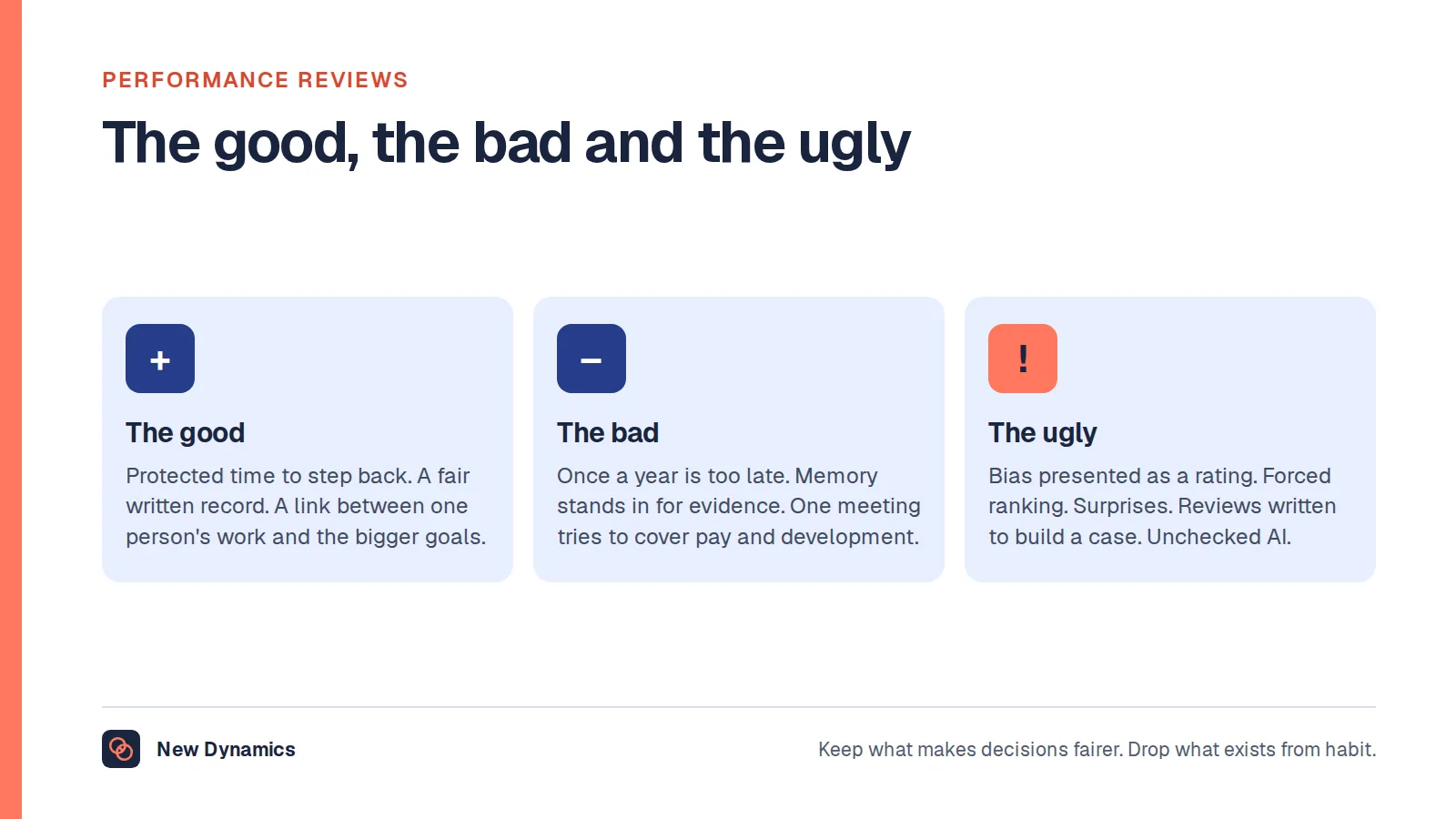
- Give feedback close to the work. Short, specific and frequent beats a long annual summary, as we explain in performance reviews: the good, the bad and the ugly.
- Widen experience. Projects, secondments and shadowing reveal talents that the current role hides.
- Coach, do not rescue. Ask questions that help the person find the answer.
- Plan the next step. Link development to real future roles. Our 40 career goals examples can help people describe what they want. See our succession planning guide and skills gap analysis guide.

Common mistakes when talking about talent
Treating talent as fixed. People develop at different speeds and in response to different opportunities. A label applied in year one is often wrong by year three.
Confusing confidence with ability. The person who speaks first is not always the person who thinks best.
Promoting on performance alone. Success in one role is evidence for that role. Test for the talents the next role needs.
Hoarding talented people. Managers who block moves to keep their best people teach those people to leave the organisation instead.
Ignoring steady contributors. Reliable, skilled people who are not labelled high potential still keep the organisation running. Recognise and develop them too.
Frequently asked questions
What is the definition of talent?
Talent is a natural aptitude for something: an ability that comes more easily to one person than to most. At work, the CIPD defines talent as individuals who can make a significant difference to organisational performance, either through their immediate contribution or by reaching their potential.
What does talented mean?
Talented means showing more ability in an area than experience alone would explain. A talented person learns the activity quickly, performs it with less apparent effort or achieves better results than peers with similar training.
What is raw talent?
Raw talent is natural aptitude that has not yet been developed through practice, feedback and experience. It shows promise but needs skill, motivation and opportunity before it produces reliable results.
Is talent born or made?
Both matter. People differ in what comes easily to them, and aptitude gives some a head start. Practice, feedback, motivation and opportunity decide how far that start carries them. In most jobs, developed skill counts for more than early promise.
What is the difference between talent and skill?
Talent is a natural aptitude. Skill is a learned ability performed to a reliable standard. Talent can make a skill quicker to acquire, but skill can be built without exceptional talent through practice and good feedback.
What does talent mean in HR?
In HR, talent usually means the people an organisation needs to succeed, and talent management means attracting, identifying, developing, engaging, retaining and deploying them. Some organisations use the word for a selected group, others for the whole workforce.
Your next step: replace one label with evidence
- Think of someone you describe as talented, and someone you do not.
- Write down three pieces of evidence for each judgement. Note where you have none.
- Ask one other person who has worked with them for their view.
- Offer each person one stretching opportunity this quarter, and watch what happens.
For questions to use in that conversation, read and download our career development guide. The guide is free to read, and the PDF uses our short download form.
Want to see talent through a full record of goals, feedback and recognition? Book a New Dynamics demo and bring your current approach. You can also email contact@new-dynamics.com.