TL;DR
- A warehouse worker receives, stores, picks, packs and dispatches goods, and keeps stock records accurate. England's warehouse operative standard sums it up as moving, packaging and stock-taking roles in a warehouse environment.
- The family of jobs includes the order picker or order selector, the packer, the material handler, the stocker, the warehouse clerk and the forklift operator. The duties overlap, and one person often does several.
- Safety belongs in the job description. In Great Britain, employers must protect workers from hazardous manual handling, and must make sure that lift-truck operators are properly trained before they drive.
Every parcel that arrives on time has passed through the hands of people whom the customer never sees. They unloaded the lorry at six in the morning, found a space for the pallet, walked several miles picking orders and wrapped the box so that it survived the journey. When the work is done well, nothing is noticed. When it is done badly, the customer notices at once.
This article gives a warehouse worker job description: what the job is, the six main duties, the related roles from order picker to forklift operator, the skills that matter, two safety duties that UK employers must meet, a template and advice for a CV or resume. The older title warehouseman means the same job.
Warehouses hire in volume, and a good first week keeps people. See how New Dynamics onboarding brings tasks, early goals and manager conversations into a clear path for a new starter.
What does a warehouse worker do?
The Cambridge Business English Dictionary defines a warehouseman, also called a warehouse keeper, as “someone who works in or manages a warehouse”. Today the usual titles are warehouse worker, warehouse operative and warehouse associate.
England's occupational standard for the role is the supply chain warehouse operative, a Level 2 apprenticeship with a typical duration of 12 months. Skills England's apprenticeship listing sums up the work in one line: “Carrying out a range of moving, packaging and stock-taking roles and duties in a warehouse environment.” The job roles that it names are fork lift truck operator, picker, store person, warehouse assistant, warehouse operative and warehouse person.
Put simply, a warehouse worker makes sure that the right item is in the right place at the right time, in good condition, and that nobody is hurt in the process.
Warehouse worker duties: six responsibilities
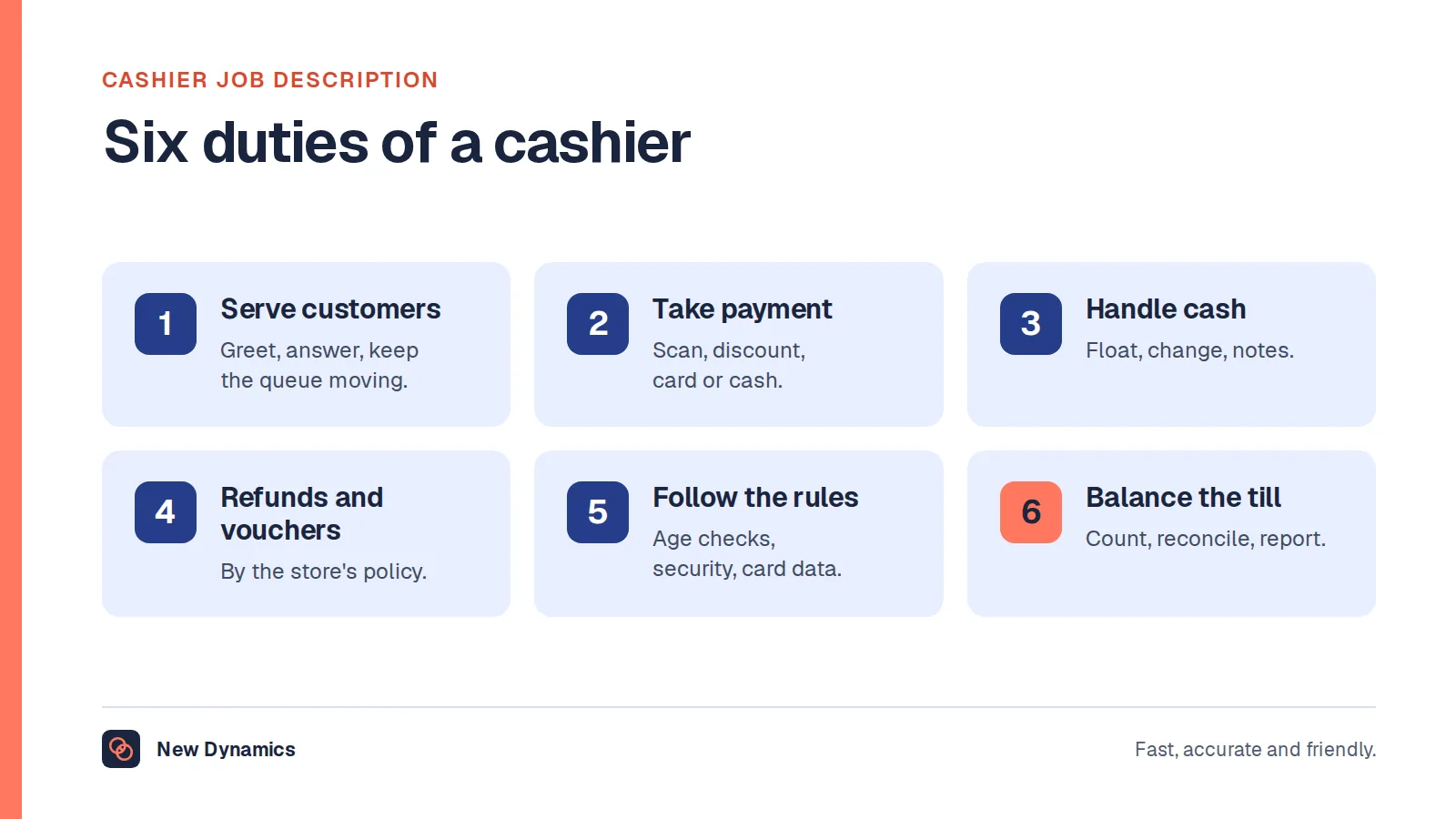
- Receive goods. Unload vehicles, check deliveries against the paperwork, report damage and shortages, and book stock in.
- Put away and store. Move goods to the correct location, by hand, trolley, pallet truck or lift truck, and follow rules for rotation, temperature and hazardous items.
- Pick orders. Collect the right items in the right quantities from a pick list, a handheld scanner or a voice system, accurately and at pace.
- Pack and dispatch. Pack goods so that they travel safely, label them, prepare the dispatch paperwork and load vehicles.
- Count and record stock. Scan every movement, take part in stock checks and cycle counts, and report differences.
- Keep the warehouse safe and tidy. Clear aisles, deal with spills and damaged pallets, check equipment before use and report hazards and near misses.
Some posts add returns processing, quality checks, replenishment of pick faces or basic machine operation.

Five related warehouse roles
Titles vary between employers, and the duties overlap. These five appear most often in job adverts.
- Order picker, order selector and packer. The picker, sometimes called an order selector, especially in the United States, collects items for customer orders. The packer prepares them for dispatch. Accuracy and pick rate are the usual measures. In small warehouses one person does both.
- Material handler. Moves materials and parts between receiving, storage and production lines, often in manufacturing. The job is duty 2 above, done all day, usually with pallet trucks or lift trucks.
- Stocker or stock clerk. Replenishes shelves or pick locations, rotates stock and keeps storage areas in order. In retail the title describes shop-floor replenishment.
- Warehouse clerk. The administrative side: booking in deliveries, raising dispatch notes, updating the warehouse management system, investigating stock differences and dealing with drivers and carriers.
- Forklift operator. Loads and unloads vehicles, puts pallets away at height and feeds the pick areas, after formal training. The operator also carries out daily checks on the truck and reports defects.
A job description should say which of these the post really is. “Warehouse operative” on an advert for a full-time forklift driver wastes everybody's time.

Skills of a good warehouse worker
- Accuracy. A wrong item costs a second delivery and a customer's patience.
- Pace and stamina. The work is physical, and much of it is done standing, walking and lifting.
- Safety awareness. Noticing the hazard before it becomes an accident, and speaking up.
- Basic numeracy and IT. Counting, checking codes and using scanners and warehouse systems.
- Teamwork and reliability. A shift that starts one person short falls behind all day.
Experience is often not essential for entry-level posts. Our guide to the meaning of entry level explains the term. Be honest about the physical demands, and consider reasonable adjustments for disabled applicants.
Two safety duties for UK employers
Manual handling
The Health and Safety Executive's guide to manual handling at work opens with the employer's duty: “As an employer, you must protect your workers from the risk of injury from hazardous manual handling in the workplace.” It defines manual handling as “transporting or supporting a load by hand or bodily force”, which includes lifting, putting down, pushing, pulling, carrying or moving loads.
HSE sets out the order of action that the law requires: avoid hazardous manual handling so far as reasonably practicable, assess the risk from any that cannot be avoided, and reduce that risk. One point surprises many managers. HSE notes that “the law does not set specific weight limits”. The assessment depends on the load, the task, the person and the environment.
Lift-truck training
Nobody should drive a forklift on the strength of a confident manner. HSE's page on lift-truck training says: “It is important that employers ensure that lift-truck operators are trained to the standards outlined in the L117 ACOP, whether using in-house trainers or external training providers.”
It adds that operator training should always include three stages: basic training, specific job training on the truck and the workplace concerned, and familiarisation training on the job under close supervision. If the post involves lift trucks, the job description should name the truck types, the training that you provide or require, and how often you refresh it.
These are summaries of HSE guidance for Great Britain. They are general information, not legal advice, and other countries have their own rules.
Warehouse worker job description template
Adapt the wording to your operation. Replace the text in square brackets.
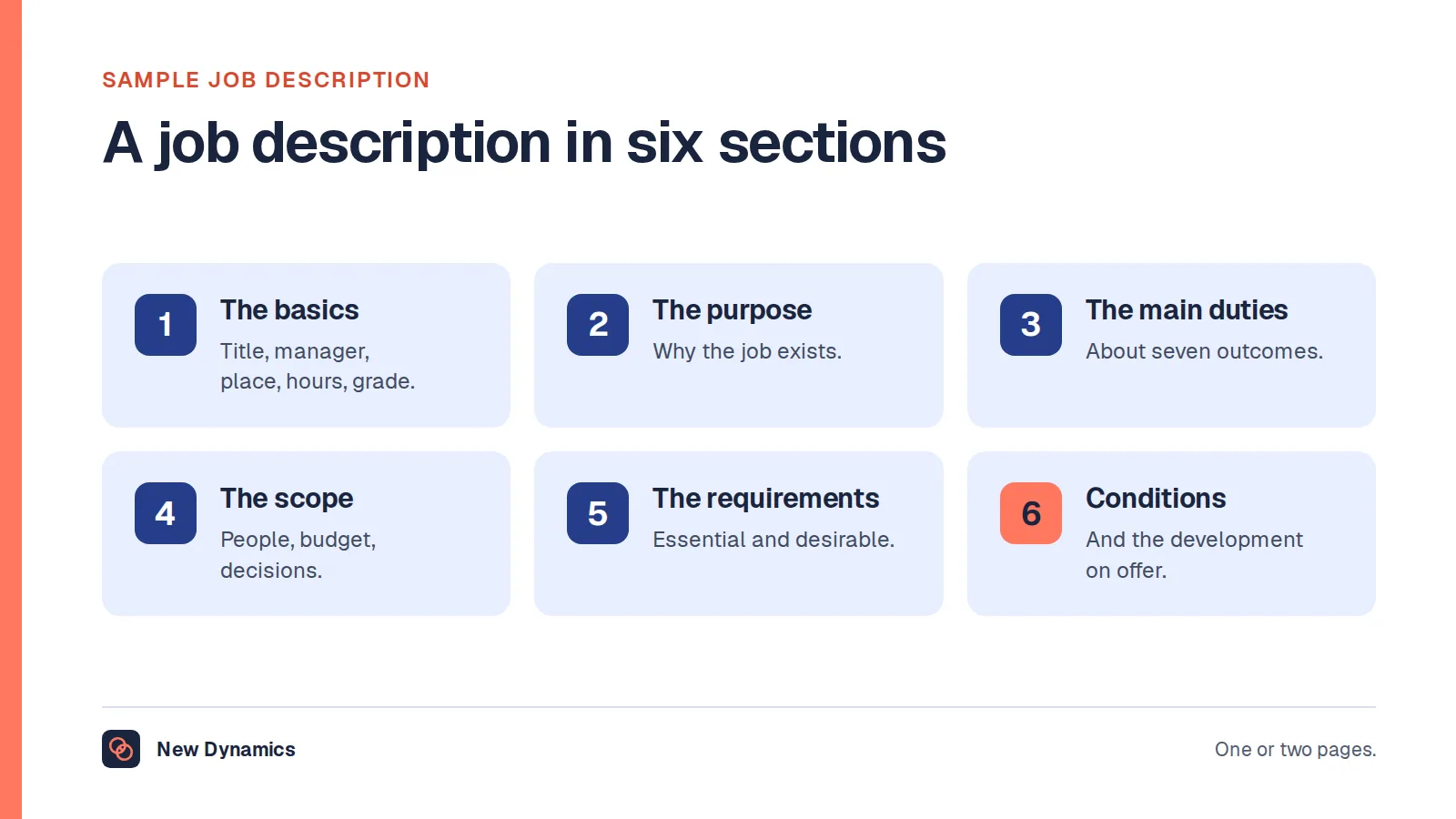
Job title: Warehouse operative [or order picker, material handler, forklift operator]
Reports to: [Warehouse team leader or shift manager]
Location and hours: [Site]. [Hours per week] on [days, nights, rotating shifts, weekends]. [Temperature: ambient, chilled or frozen.]
Purpose of the job: To receive, store, pick, pack and dispatch goods accurately, safely and on time.
Main duties
- Unload deliveries, check them against the paperwork and book stock in.
- Put goods away in the correct locations, following rotation and storage rules.
- Pick customer orders accurately using [pick lists, handheld scanners or voice picking].
- Pack, label and load orders for dispatch.
- Record every stock movement, and take part in stock counts.
- Operate [pallet trucks, reach trucks, counterbalance trucks] after training and authorisation, and carry out pre-use checks.
- Keep work areas clean and clear, follow manual handling and safety procedures, and report hazards and near misses.
- Work flexibly across areas of the warehouse as the workload requires.
Essential requirements
- Reliable attendance and timekeeping.
- Able to carry out physical work safely for a full shift, after training.
- Accurate with numbers, codes and paperwork.
- Able to follow written and spoken instructions in English.
- [A valid lift-truck certificate for the truck type, for operator posts.]
Desirable
- Experience in a warehouse, distribution centre or production environment.
- Experience of [warehouse management system].
Conditions: [Hourly rate and shift premiums], [breaks], [protective equipment provided], [holiday], [training offered].
For the general format, see our sample job description.
How to describe warehouse work on a CV or resume
“Worked in a warehouse” says nothing. Five details turn it into evidence.
- The operation. What was stored, and the size and type of site: a parcel hub, a chilled food distribution centre, a parts store.
- Your numbers. Pick rate, accuracy, pallets moved or lorries loaded per shift.
- Equipment and systems. Truck types with certificate dates, scanners and the warehouse management system by name.
- Safety. Your record, training completed and any role such as first aider or fire marshal.
- Responsibility. Training new starters, running a section, stock counts or covering for the team leader.
Use your own real figures. A modest number that is true is worth more than an impressive one that you cannot discuss at interview.

Common mistakes
One vague title for five different jobs. Say whether the post picks, packs, drives or administers.
Silence about shifts and temperature. Nights, weekends and a freezer at minus twenty are facts that candidates need at the start.
Targets without context. State how pick rates are set, and how new starters are brought up to speed.
Safety as a closing line. Put manual handling, equipment checks and reporting among the main duties.
Assuming that a certificate equals competence. HSE expects job-specific and familiarisation training as well as the basic course.
No route upwards. Team leader, trainer, inventory controller and transport planner are all reachable. Say so.
Frequently asked questions
What is the job description of a warehouse worker?
A warehouse worker receives deliveries, puts goods away, picks and packs customer orders, loads vehicles, records stock movements and keeps the warehouse safe and tidy. Some posts include operating pallet trucks or lift trucks after training.
What are the duties of a warehouse worker?
The six main duties are receiving goods, putting away and storing, picking orders, packing and dispatching, counting and recording stock, and keeping the warehouse safe and tidy.
What does an order selector or order picker do?
An order selector, called an order picker in the UK, collects the items for each customer order from their storage locations, using a pick list, scanner or voice system. The work is measured on accuracy and pick rate.
What does a material handler do?
A material handler moves materials, parts and finished goods between receiving, storage, production and dispatch, usually with pallet trucks or lift trucks. The title is often used in manufacturing.
What are the responsibilities of a forklift operator?
A forklift operator loads and unloads vehicles, moves and stacks pallets, replenishes pick areas, carries out daily checks on the truck and reports defects. In Great Britain, HSE expects employers to ensure that operators are trained to the standard in its approved code of practice.
Do you need qualifications to work in a warehouse?
Usually not for entry-level posts. Employers look for reliability, accuracy and the ability to do physical work safely, and they train new starters. Lift-truck operators need formal training. In England, the supply chain warehouse operative apprenticeship is a Level 2 route into the work.
Your next step
If you are hiring, decide which of the five roles the post really is, copy the template and state the shifts, the temperature and the equipment. If you are applying, rewrite your experience with the five details above.
For a first week that covers safety, systems and standards properly, read and download our employee onboarding guide. The guide is free to read, and the PDF uses our short download form.
Want every new starter to have clear tasks and goals from the first shift? Book a New Dynamics demo and bring your current approach. You can also email contact@new-dynamics.com.