TL;DR
- Enterprise performance management (EPM) is a finance discipline, not an HR one. It covers target setting, planning and budgeting, forecasting, group consolidation, the period-end close and management reporting. Corporate performance management (CPM) is the same thing under a different label.
- EPM sits above the ledger. The ERP records transactions, business intelligence reports what happened, and the EPM system holds the plan, the versions, the hierarchies and the comparison of plan against actual. An enterprise performance manager usually owns that model and the planning calendar, not a team of people.
- Financial performance management stops at the cost centre. People performance management starts at the individual and their manager. The two meet in exactly one place: headcount and pay planning, where both sides need the same establishment, the same effective dates and an agreed hand-off.
Search for "enterprise performance management" and you get two sets of results with very little to do with each other. One is about budgets, forecasts, group consolidation and the monthly close. The other is about goals, appraisals and whether managers ever finish their reviews. Both use the words "performance management", and the people buying them sit in different departments.
This article is about the first one. Enterprise performance management, almost always shortened to EPM, is a finance discipline. It covers the processes by which an organisation sets financial and operational targets, builds a plan to meet them, forecasts where it will land, consolidates and closes the books, and reports the result against plan to management and the board. Finance owns it, and its unit of analysis is a legal entity, a cost centre or a product line, not a named person.
We sell software in the other category, so treat this as a disambiguation piece rather than a pitch. New Dynamics goals and OKRs is where a company objective becomes something an individual owns and is reviewed on, which is one end of the chain from strategy to work. The financial plan is the other end. The rest of this article explains what sits there, what EPM software and EPM tools do, what an enterprise performance manager does all day, and where the line between financial and people performance management falls.
Where law or regulation appears below, it describes the position in the United Kingdom and is general information, not legal advice.
What enterprise performance management means
EPM is best understood as a management cycle with software attached, rather than as a product category. The cycle runs: decide what the organisation is trying to achieve, express it as numbers it can be held to, plan the resources needed, record what happened, compare the two, explain the gap, and change the plan. Finance textbooks call this planning and control. Enterprise software calls it enterprise performance management.
OpenStax's open textbook Principles of Management defines the first half plainly: "Planning is the process by which managers establish goals and specify how these goals are to be attained". It also insists that planning "should be an ongoing process", part of a manager's daily, weekly and monthly duties, rather than an annual event. That ongoing part is what EPM software is bought for. An annual budget typed into a spreadsheet once a year is planning. A model that gets reforecast every month against actuals from the ledger is enterprise performance management.
Three things distinguish EPM from ordinary financial reporting:
- It is forward looking. Statutory accounts describe a period that has ended; an EPM model mostly holds numbers that have not happened yet.
- It holds several versions of the truth. Budget, reforecast, last year, best case and board case coexist by design, with rules about who may change which.
- It is a workflow, not a report. Many people enter numbers, and somebody reviews, approves and locks them to a timetable.
EPM and CPM: one discipline, two labels
Corporate performance management (CPM) and enterprise performance management describe the same work. So does business performance management (BPM, which collides confusingly with business process management). When someone searches for "cpm software" and someone else searches for "epm software", they are usually looking for products from the same shortlist.
The labels have a rough history. Vendor marketing moved from "business performance management" to "corporate performance management" and then to "enterprise performance management", partly because each wave added scope: first reporting, then budgeting, then consolidation, then close and disclosure.
A fourth term is more useful than any of them. FP&A, financial planning and analysis, is the name of the team that does this work. If you are reading a job advert or trying to work out who in an organisation owns the process, FP&A is the group to ask for. EPM and CPM name the process and the software; FP&A names the people.
So do not try to tell EPM and CPM apart when comparing products. Compare what each does, process by process, using the list below.
The processes inside EPM

Most EPM platforms are assembled from some subset of the following. Very few organisations run all of them in one system.
| Process | What it produces | Typical rhythm |
|---|---|---|
| Strategy and target setting | A long-range plan, usually three to five years, and the targets handed down from it | Annual, sometimes rolling |
| Planning and budgeting | The approved budget for the coming year, by entity, cost centre and account | Annual, with a long cycle |
| Forecasting | A reforecast of the current year, and increasingly a rolling forecast beyond it | Monthly or quarterly |
| Financial consolidation | Group figures with intercompany transactions removed and currencies translated | Monthly and at year end |
| Period-end close | A closed ledger, reconciled accounts, a task checklist and a sign-off trail | Monthly |
| Management reporting | The management pack: actual against budget and forecast, with variance explanations | Monthly |
| Statutory and disclosure reporting | Filed accounts and the narrative around them | Annual |
| Profitability and cost analysis | Allocated costs, margin by product, customer or channel | Monthly or on demand |
Planning and budgeting
This is the part most people mean when they say EPM. OpenStax's Principles of Accounting, Volume 2: Managerial Accounting gives the standard definition: "The quantitative plan estimating when and how much cash or other resources will be received and when and how the cash or other resources will be used is the budget". The same chapter sets out why managers bother. One reason is communication, because "budgeting is a formal method to communicate a company's plans to its internal stakeholders". Another is evaluation, because "when compared to actual results, budgets are early alerts and they forecast cash flows for various levels of production".
The structure is also standardised. The master budget has two halves: "The financial budget plans the use of assets and liabilities and results in a projected balance sheet. The operating budget helps plan future revenue and expenses and results in a projected income statement". And the order matters, because everything downstream depends on one number. The textbook is explicit that "the budgeting process begins with the estimate of sales", and that once management has a solid estimate of sales for each period "they can determine how many units must be produced". From there it runs through production, materials, labour, overhead and administrative expenses to a budgeted income statement.
That sequence explains why budget season takes months and why the people cost line is agreed late: headcount cannot be settled until the activity it supports is agreed.
Forecasting
A budget is a commitment. A forecast is a repeated estimate of where the year will actually finish. Organisations that have moved on from a single annual budget run a rolling forecast, driven by a few business drivers rather than hundreds of line items: volumes, prices, conversion rates, headcount, average pay.
Driver-based models are the main reason finance teams outgrow spreadsheets. Changing one assumption should change a hundred dependent lines, consistently, with a record of who changed it.
Consolidation and close
Consolidation is the arithmetic of turning many sets of books into one: removing transactions between group companies, translating currencies, handling part-owned subsidiaries and producing group figures that tie back to each entity.
The close is the timetable around it: cut-off, accruals, reconciliations, journals, review and sign-off. It is deadline driven because the end point is a legal obligation. Under the Companies Act 2006 in the United Kingdom, the period allowed for filing accounts is "for a private company, nine months after the end of the relevant accounting reference period, and for a public company, six months after the end of that period". Group consolidation, audit and the board timetable all have to fit inside that. This is general information about the law in the United Kingdom and not legal advice; check the deadline that applies to your own company.
Management reporting
The output is the management pack: actual against budget and forecast, this year against last, with commentary. The hard part is not the chart but agreeing definitions, hierarchy and a single version of each number, so two directors reading the same line see the same figure. Our post on performance data for HR reporting makes the same argument on the people side.
How EPM, CPM, BI and ERP fit together

These four get used interchangeably in meetings and they are not interchangeable at all.
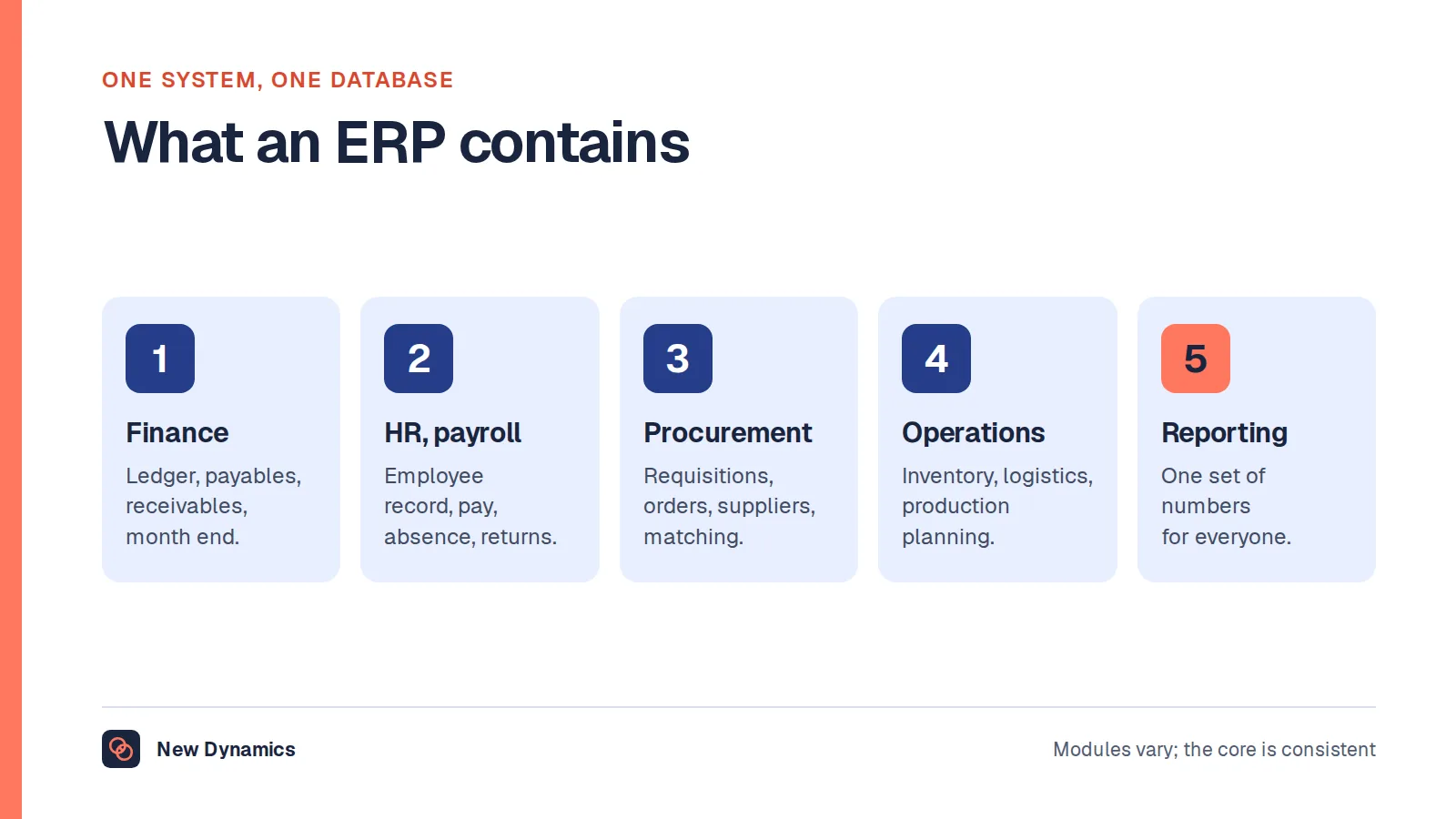
ERP is the transaction system. Enterprise resource planning software records what happened: invoices raised and paid, payroll run, stock moved, orders approved. It holds the general ledger. Our post on the ERP system covers what sits inside one and where its modules stop.
BI reports the past. Business intelligence tools read data, model it and visualise it. They are good at "what happened and how does it split", and read-only by nature. You do not type next year's salary budget into a BI dashboard.
EPM and CPM hold the plan. This is the distinguishing feature, and it decides whether you need a dedicated system. An EPM platform is written to as well as read from: budget holders enter numbers that are then checked, approved, locked and versioned. It needs a dimensional model (account, entity, cost centre, time, scenario, version), a security model deciding who sees which entity, workflow with states and deadlines, and an audit trail.
A rough test: "what did we spend" can be answered by BI from the ERP. "What are we going to spend, who committed to it, which version is approved, and how does the latest forecast differ" is EPM territory.
Two complications. Large ERP suites ship their own planning and consolidation modules, so the boundary is commercial as much as technical. And EPM platforms depend on hierarchies (legal entity, cost centre, account mapping) that live in the ERP, which is why a failing EPM project is usually failing on master data rather than software.
From strategy to the financial plan
The link from strategy to numbers is the part of EPM organisations get least right, and the part closest to people performance management.
Strategy says what the organisation is trying to be. Targets turn that into measures. The plan allocates resources. Reporting checks progress. Where the chain breaks, finance holds a budget nobody can connect to the strategy, and employees hold objectives nobody can connect to either.
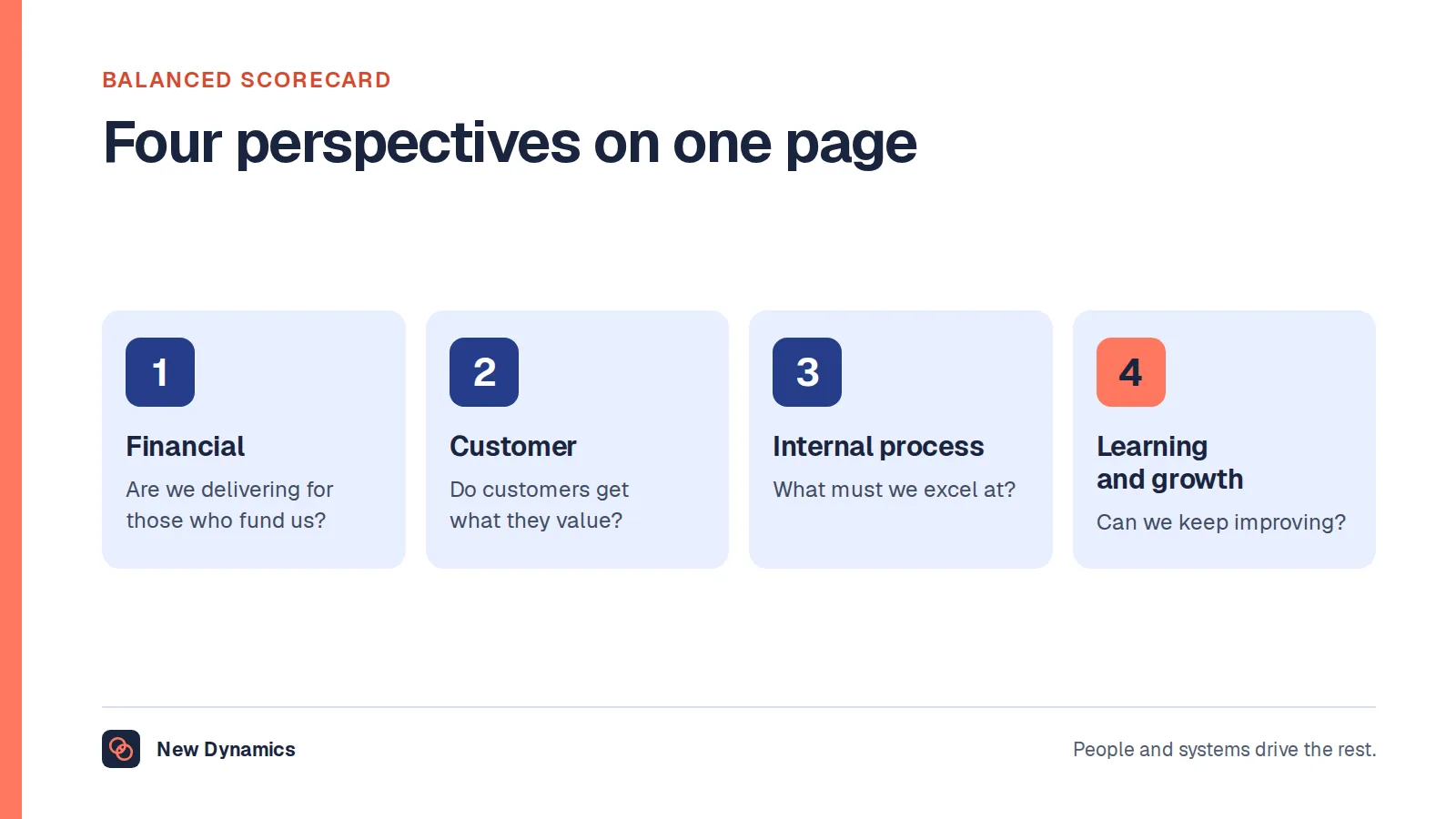
The balanced scorecard is the best known attempt to hold the chain together, by insisting that financial measures sit alongside customer, process and learning measures. Our post on the balanced scorecard covers the four perspectives and the common failure, which is treating it as a dashboard rather than as a set of causal assumptions you can be wrong about.
Governance pulls in the same direction. In the United Kingdom, the Financial Reporting Council's UK Corporate Governance Code applies to "companies listed in the commercial companies category or the closed-ended investment funds category, regardless of where they are incorporated". The 2024 edition took effect for "financial years beginning on or after 1 January 2025", with Provision 29 applying to "financial years beginning on or after 1 January 2026". Boards are expected to review the effectiveness of the risk management and internal controls framework at least annually, and the 2024 edition widened the declaration beyond financial controls to cover "compliance, operational and reporting" controls. Again, general information about the United Kingdom, not legal advice, and most private companies sit outside the Code's scope even though they borrow its habits.
The reading for a non-finance colleague is simple: boards care about management reporting because they are accountable for the controls around it. That is why an EPM implementation attracts attention an HR system does not.
For the people side of the same chain, our post on cascading goals covers how a company objective becomes a team and individual one without turning into a copy-and-paste exercise, and the OKR guide sets out how to write the objectives in the first place.
EPM software and EPM tools: the capability categories
People searching for "epm tools", "epm systems" or "best epm software" usually want a ranked list. We do not publish ranked software lists, for the reasons set out in why we do not publish a top 5 HRIS list: rankings are often shaped by commercial relationships a reader cannot see, and even an honest ranking cannot know your group structure, currencies, regulator or close timetable.
What is useful instead is the list of capability categories, so you can decide which you need before anyone demonstrates anything.
- Planning and budgeting. Input templates for budget holders, driver-based calculations, allocations, submit and approve workflow, version control and version locking.
- Forecasting and scenario modelling. Rolling forecasts, scenarios held side by side, sensitivity on a few drivers, and a comparison of any two versions.
- Financial consolidation. Multi-entity and multi-currency, intercompany elimination, ownership percentages, group hierarchies and restatement when the structure changes.
- Close management. A task list with owners and dates, account reconciliation, journal workflow and sign-off that can be evidenced.
- Management reporting. Report writing finance can do without IT, variance commentary attached to the number, and board-ready output.
- Disclosure and statutory reporting. Filed accounts and the narrative around them, with tagging where required.
- Profitability and cost allocation. Visible, auditable rules that push shared costs out to products, customers or channels.
- Data integration and master data. Scheduled loads from the ledger, mapping maintenance and hierarchy management.
- Security and audit. Who can see which entity, cost centre and pay data, and a change history nobody can edit quietly.
What to ask, whoever you are talking to
Use the same questions with every supplier, and ask for a live demonstration, not slides.
- Does it reconcile to the general ledger, and how are differences shown? A model that silently disagrees with the ledger is worse than a spreadsheet.
- Who owns the model after go-live? If every change needs a consultant, the running cost is not the licence.
- How are versions and scenarios handled? Ask to see two versions compared, and what happens when a locked version needs correcting.
- What happens at a reorganisation? Ask to see last year restated under a new cost centre structure. This question separates products.
- How is currency translation done and audited? Including the rates used and who can change them.
- Can a cost centre owner submit without training? Their time and the administrator's are the real implementation cost.
- Who can see individual salaries? Pay data inside a planning model needs a narrower access model than the rest.
- What can we export, and what happens if we leave? Full data and, ideally, the model logic.
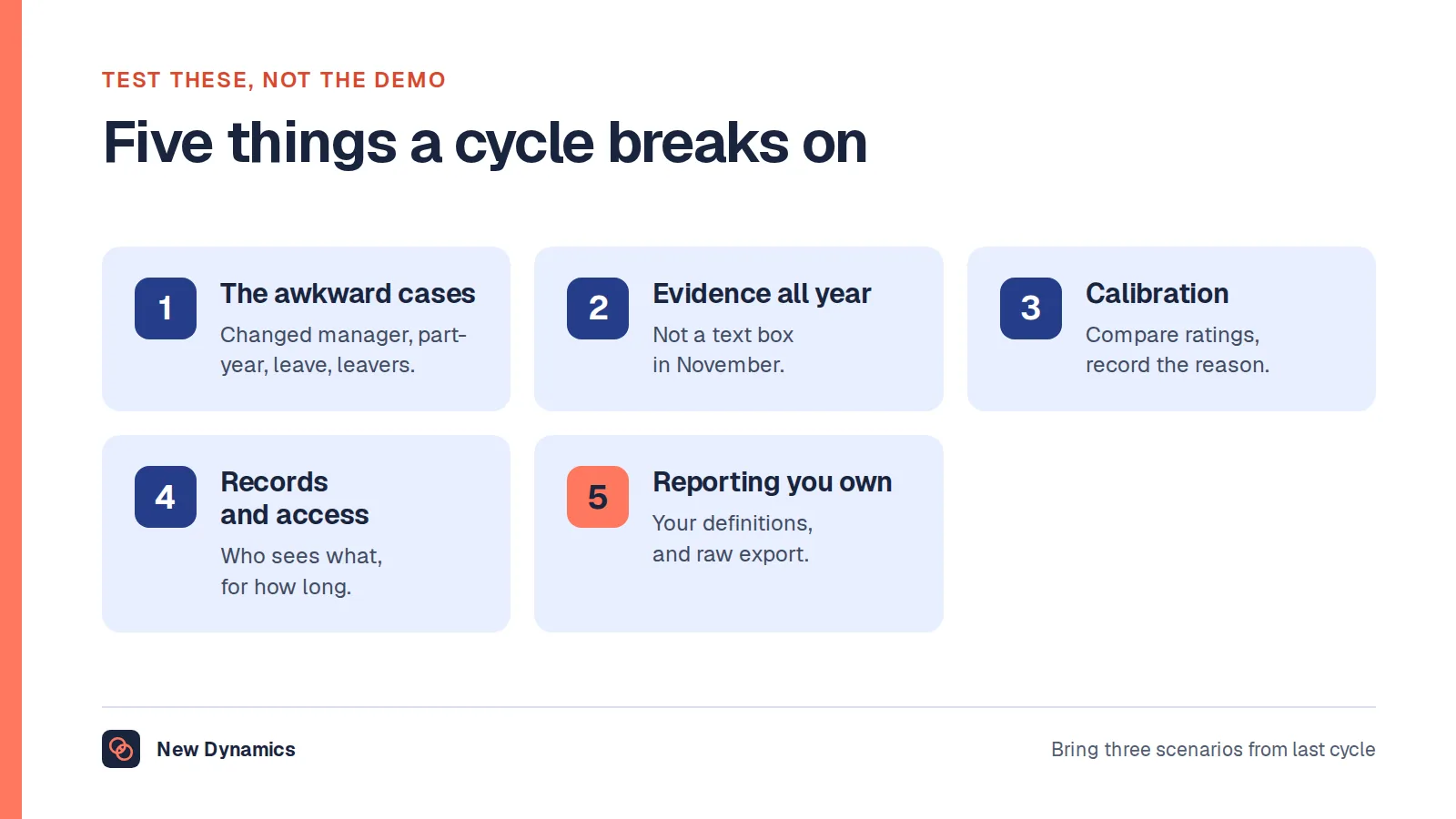
The same discipline applies on the people side. Our post on choosing a performance management system sets out the requirements a real review cycle breaks on, and the performance management software RFP template structures supplier questions so answers are comparable.
What an enterprise performance manager actually does
The title "enterprise performance manager" causes more confusion than anything else in this cluster, because it sounds like a people-management job and usually is not one.
In most organisations where it appears, an enterprise performance manager (or EPM manager, EPM analyst, EPM lead, head of EPM) sits in finance or finance systems and owns the planning and reporting machine. The day job looks like this:
- Run the planning calendar: kick-off, submission deadlines, review rounds, board approval.
- Build and maintain the planning and consolidation model, including drivers, allocation rules and report definitions.
- Keep entity, cost centre and account hierarchies aligned with the ledger.
- Produce the management pack and variance analysis, and chase commentary from budget holders.
- Support the close: reconciliations, task tracking, sign-off evidence.
- Translate between finance and IT, often the hardest part of the role.
The adjacent, better-documented role gives a sense of the work. The UK National Careers Service says management accountants "oversee a company's finances and find ways to improve profits", with day-to-day tasks including "monitor spending and budgets", "analyse the company's financial performance" and "forecast and plan future spending and ways to reduce costs". An enterprise performance manager does a narrower, more systems-heavy version of that, usually holding or working towards a chartered accountancy qualification alongside strong modelling skills.
A second, rarer use of the title sits in operations, where the role owns an organisation-wide measurement framework covering operational as well as financial measures. That version is closer to a programme job.
How to tell which job an advert is describing
Read the responsibilities, never the title. Three tests:
- Who does it report to? A finance director, a group financial controller or a head of FP&A means financial EPM. An HR director means a people role.
- What is the deliverable? A budget, a forecast, a management pack or a consolidation means finance. A review cycle, a goal framework, a feedback programme or completion rates means people.
- What systems are named? Planning, consolidation and ledger systems mean finance. HR systems and performance platforms mean people.
If an advert titled "enterprise performance manager" talks about appraisals, objectives, calibration and manager training, it is a people job that has borrowed the wrong phrase. Our post on the performance management cycle describes what that job actually runs.
Where financial performance management ends

Being precise about the boundary matters, because buying the wrong side of it is expensive.
Financial performance management has these properties:
- The unit is a financial object. A legal entity, a cost centre, a product, a project, a channel. Not a named individual.
- The measures are money and volume. Revenue, margin, cost, cash, capital expenditure, headcount cost, units.
- The evidence is the ledger. Every actual number traces to a transaction.
- The rhythm is the close. Monthly actuals, quarterly reforecast, annual budget, annual accounts.
- The owner is the chief financial officer, operating through FP&A and group finance.
That design leaves questions it structurally cannot answer. An EPM system knows the customer service team costs a certain amount and is three heads under plan. It does not know whether those people have clear objectives, whether anyone gave them useful feedback this quarter, whether their appraisals were finished, whether two managers rated consistently, or whether the person who resigned in March had ever been told what good looked like.
Those are not reporting gaps to be fixed with another chart. They are a different discipline, with a different unit of analysis and a different kind of evidence.
Where people performance management begins
People performance management starts at the pair: a person and their manager.
- The unit is an individual, recorded against a person in a reporting line.
- The content is conversation and commitment. Goals, one-to-ones and check-ins, 360 feedback, recognition, mid-year and end-of-year appraisal, calibration, onboarding.
- The evidence is the written record. What was agreed, what was said, what was rated and why.
- The rhythm is the review cycle, with chasing in between, and completion as the number HR is judged on.
- The owner is HR, operating through line managers who have other jobs.
The constraints are different too, and they are legal rather than accounting. In the United Kingdom, performance records are personal data under the UK GDPR, so access, retention and deletion all need deciding, and an individual can ask for the information held about them. Unfair or inconsistent appraisal outcomes can also become a discrimination question. Our post on choosing a performance management system sets out the data questions to put to any supplier. All of this is general information about the position in the United Kingdom and not legal advice; take your own advice on your own facts.
This is where New Dynamics sits. It is a performance management platform for goals and OKRs, feedback, recognition, performance reviews and onboarding. It is not a core HR system of record, and it is deliberately not a finance planning tool. It does not build budgets, model pay or consolidate ledgers, and it would be a poor choice for anyone who arrived here looking for EPM software.
For the measurement side rather than the process side, our post on HR metrics covers which are worth reporting, and the statistics hub collects the published UK figures we reference across the site.
The one place the two meet: headcount and pay planning
One process is genuinely needed by both disciplines, and it causes most of the arguments: the establishment, and the money attached to it.
Finance needs it because people cost is usually the largest controllable line in the plan, and in a service business it dominates everything else. Office for National Statistics early estimates for September 2026 indicate that "the number of payrolled employees was 30.3 million, which is a fall of 0.2% from September 2025", and that "median monthly pay was £2,660, an increase of 4.4%, compared with the same period of the previous year". Those are national figures for one reference month, not a benchmark for your plan, but they show why pay gets modelled person by person rather than as a single percentage.
HR needs the same data to know which roles exist, which are filled, which are open, who reports to whom, and what each person is paid relative to their peers.
Both sides need one agreed answer to the following, and it is worth writing down who owns each line.
| Item | Why finance needs it | Why HR needs it |
|---|---|---|
| Approved roles | Cost of the plan, and what is committed | What can be recruited, and what cannot |
| FTE definition | Converting part-time hours into cost | Fair comparison between teams |
| Start and leave dates | Phasing cost across the year | Onboarding, probation and offboarding |
| Salary and on-costs | Employer contributions on top of basic pay | Pay fairness and the pay review pot |
| Vacancies and attrition | Phasing savings and recruitment cost | Recruitment priorities and workload |
| Cost centre and manager | Where cost lands | Who carries out the review |
Four practical rules make this hand-off work.
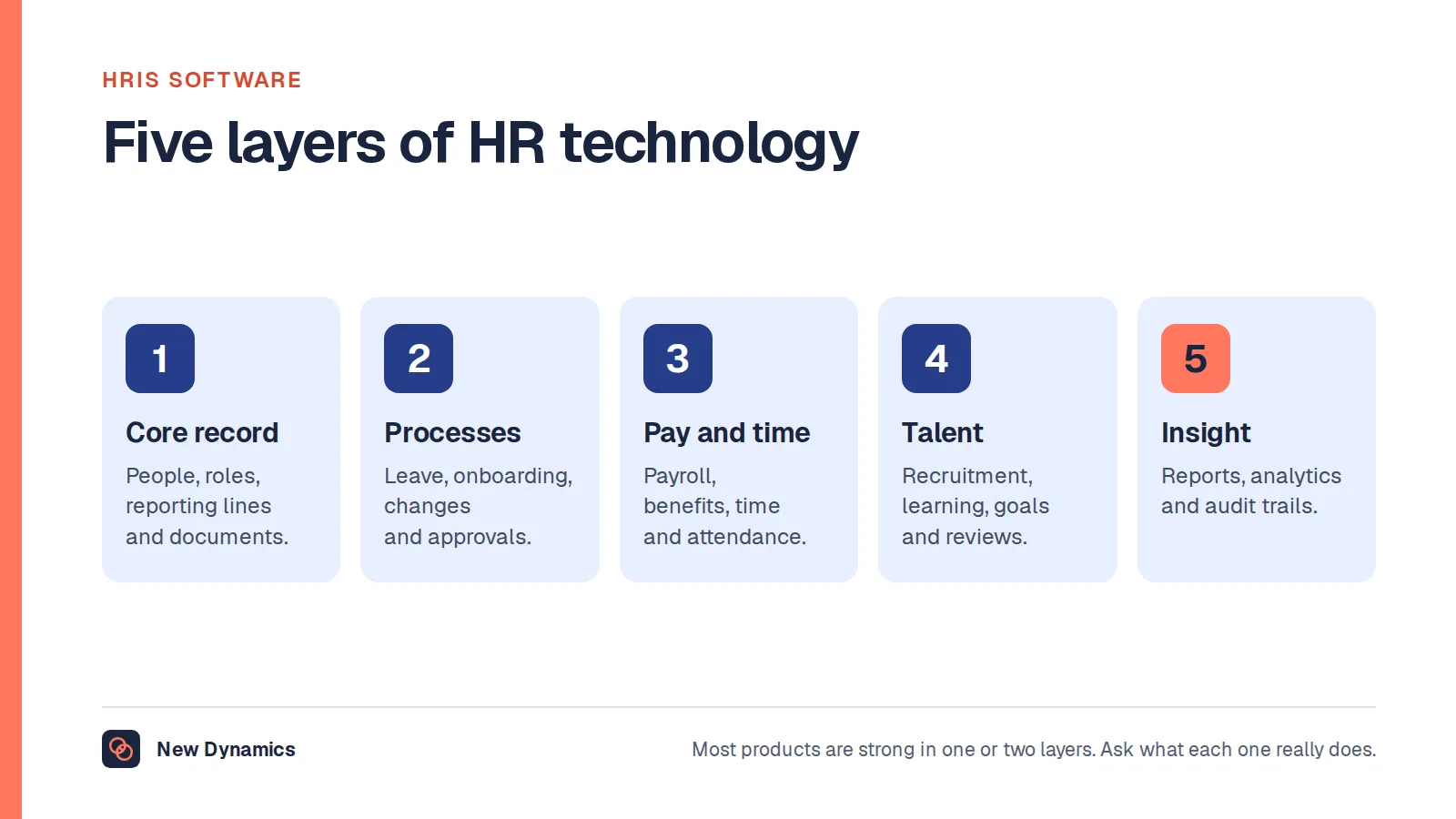
- One source of truth for the establishment, usually the HR system of record. Our post on HRIS software covers what that record holds and why other systems depend on it.
- An agreed FTE definition, written down. Our post on full-time equivalent explains the calculation and where it goes wrong.
- Agreed effective dates. Finance phases cost by month; HR thinks in start dates. A role approved in principle is not a cost until a date is attached.
- A documented hand-off for pay review. Finance sets the pot; managers and HR distribute it, often informed by appraisal outcomes. Say which outcome feeds which decision, and keep the appraisal record and the pay decision separate, with separate access.
That last point is also an access question. A planning model that shows every budget holder every individual salary is a data protection problem waiting to happen, in the United Kingdom as elsewhere. Model people cost at the level each person needs and no further. General information, not legal advice.
Which system are you actually shopping for?
If you are still unsure which category you need, four questions settle it.
- Name the question you cannot answer today. Write it as a sentence, not a feature.
- Identify the unit. An entity, cost centre or product, or a person and their manager?
- Find the evidence. The ledger and source transactions, or conversations, objectives and written reviews?
- Name the owner and the rhythm. Finance on a monthly close, or HR on a review cycle?
Entity, ledger, finance and close means EPM or CPM software. Person, conversation, HR and review cycle means performance management software. If the answer is honestly both, you have two projects, and the overlap is the headcount and pay planning above. Design it as an interface rather than buying one system for both.
The narrative that all of this planning eventually turns into is the one shareholders read. Our post on management discussion and analysis covers that section of a report, and where workforce matters reach investors.
Frequently asked questions
What is enterprise performance management (EPM)?
Enterprise performance management is the finance discipline of setting targets, planning and budgeting to meet them, forecasting the outcome, consolidating and closing the books, and reporting actual results against the plan. It also names the software category built for those processes. It is owned by finance and works at the level of legal entities and cost centres rather than individual employees.
What is the difference between EPM and CPM?
In practice there is none. Corporate performance management (CPM) and enterprise performance management (EPM) describe the same processes, and business performance management is a third label for the same thing. The term that genuinely means something different is FP&A, financial planning and analysis, which is the name of the team that does the work rather than the process or the software.
Is EPM software the same as an ERP system?
No. An ERP records transactions and holds the general ledger, so it tells you what happened. An EPM system holds the plan: budgets, forecasts, scenarios and versions, entered by many budget holders, approved through a workflow and compared against the actuals it imports from the ledger. Many ERP suites sell planning and consolidation modules, which is why the boundary looks blurred in product marketing.
What does an enterprise performance manager do?
Usually it is a finance systems and FP&A role, not a people-management one. The work is owning the planning calendar, building and maintaining the planning and consolidation model, keeping entity and cost centre hierarchies aligned with the ledger, producing the management pack and variance analysis, supporting the period-end close, and translating between finance and IT. Read the responsibilities in any advert, because the title is used loosely.
What are EPM tools used for?
Budget and forecast input with workflow and version control, scenario modelling, multi-entity and multi-currency consolidation, close task management and reconciliation, management and statutory reporting, and cost allocation or profitability analysis. We do not rank products. Decide which of those capabilities you need, then ask every supplier the same questions and insist on seeing a reorganisation and a version comparison live.
Does enterprise performance management include employee performance reviews?
No. Appraisals, goal setting, feedback, recognition and calibration are people performance management, owned by HR and line managers, with the individual as the unit and written records of conversations as the evidence. The only genuine overlap with EPM is headcount and pay planning, where both disciplines need the same list of roles, the same FTE definition and the same effective dates.
Your next step
If you came here looking for EPM or CPM software, write down which of the nine capability categories above you actually need, in priority order, then take the eight questions to every supplier. Nothing on this site will rank those products for you.
If you came here because your own performance process is the problem, start differently:
- Write the review cycle you run today on one page, including the awkward cases.
- Decide which measures you will report, and how completion is defined.
- Agree the headcount and pay planning hand-off with finance, including who owns the establishment.
- Only then look at software.
For the process itself, read our guide to modern performance management. The guide is free to read, and the PDF uses our short download form.
Want to see the people side running on your own form rather than a template? Book a New Dynamics demo and send us the appraisal form you use today. You can also email contact@new-dynamics.com.