TL;DR
- Work ethic is a person's commitment to doing their work properly. The Cambridge Dictionary calls it the belief that work is morally good. In everyday use it means the habits that show the belief.
- A good work ethic shows in five ways: you are reliable, you care about quality, you take initiative, you are honest and you persist when the work gets hard.
- Long hours are a poor measure of it. Managers build a strong work ethic in a team with clear goals, a fair workload, regular feedback, recognition and their own example.
“Strong work ethic” appears on a great many CVs, job adverts and reference letters. It is also one of the vaguest phrases in working life. To one manager it means staying late. To another it means never needing to be chased. Those are very different things, and only one of them is worth hiring for.
This article explains what work ethic means, the five signs of a good one, 15 examples, how to describe your own in a CV, interview or review, and how managers can build it in a team without rewarding long hours for their own sake.
People keep up good habits when someone notices them. See how New Dynamics employee recognition helps colleagues and managers thank each other for specific, reliable work.
What is work ethic?
Work ethic is a person's commitment to doing their work properly. The Cambridge Dictionary defines work ethic as “the belief that work is morally good”. That is the root of the idea: work is worth doing well for its own sake, whoever is watching.
The open textbook Organizational Behavior, published by OpenStax, gives a definition that is closer to how managers use the term. In its section on personal values and ethics, it says that the work ethic “refers to the strength of one's commitment and dedication to hard work, both as an end in itself and as a means to future rewards”.
Two points follow from that definition.
- It is a value. OpenStax places the work ethic “among work-related values”. It is something a person believes, and it shows in what they do.
- It has two sides. People work hard because the work matters to them, and because they expect effort to lead somewhere. Both are legitimate.
The phrase is usually traced to the sociologist Max Weber, whose 1905 book The Protestant Ethic and the Spirit of Capitalism linked diligence and discipline to religious belief. Today the term carries no religious meaning. It simply describes how seriously someone takes their work.
What is a good work ethic? Five signs
You cannot see a belief, so in practice a good work ethic is judged by behaviour. Five signs matter most.
- Reliability. You do what you said you would, when you said you would. If you cannot, you say so early.
- Care for quality. You check your work, finish the dull parts and would be content for anyone to inspect it.
- Initiative. You notice what needs doing and act, within your role, without waiting to be told.
- Honesty. You admit mistakes quickly, report progress accurately and give credit where it is due.
- Persistence. You keep going when the work is difficult or tedious, and you ask for help when you are stuck.
A “strong”, “positive”, “great” or “excellent” work ethic is the same thing, shown consistently over time and under pressure. Notice what is missing from the list: hours, speed of reply to late-night messages and visible busyness. We return to that below.

Work ethic examples
These 15 examples are grouped by the five signs. They apply in any kind of job.
Reliability
- A warehouse operative arrives ready to start at the beginning of each shift, and tells the supervisor a day ahead when that will not be possible.
- An analyst promises figures by Thursday, realises on Tuesday that the data is late and warns the team at once, with a new date.
- A colleague takes an action in a meeting and completes it without a reminder.
Care for quality
- A developer tests the awkward cases as well as the easy ones before asking for a review.
- A care worker completes the notes fully at the end of a long shift, because the next person depends on them.
- A marketer reads the email aloud once more before sending it to 10,000 customers.
Initiative
- A receptionist notices that visitors keep getting lost and draws up a simple map.
- A new starter writes down the answers to the questions they had to ask, and shares them with the next new starter.
- A team member sees a colleague struggling before a deadline and offers an hour of help.
Honesty
- An engineer reports their own error in a release before anyone else has found it.
- A salesperson tells a customer that the product will not do what they need.
- A manager presents the team's idea to the directors and names the person who had it.
Persistence
- A student on placement redoes a rejected report twice, asking for specific feedback each time.
- A support agent stays with a difficult case until it is solved, and then writes up the fix.
- A project lead keeps a long, unglamorous migration moving with small weekly steps.
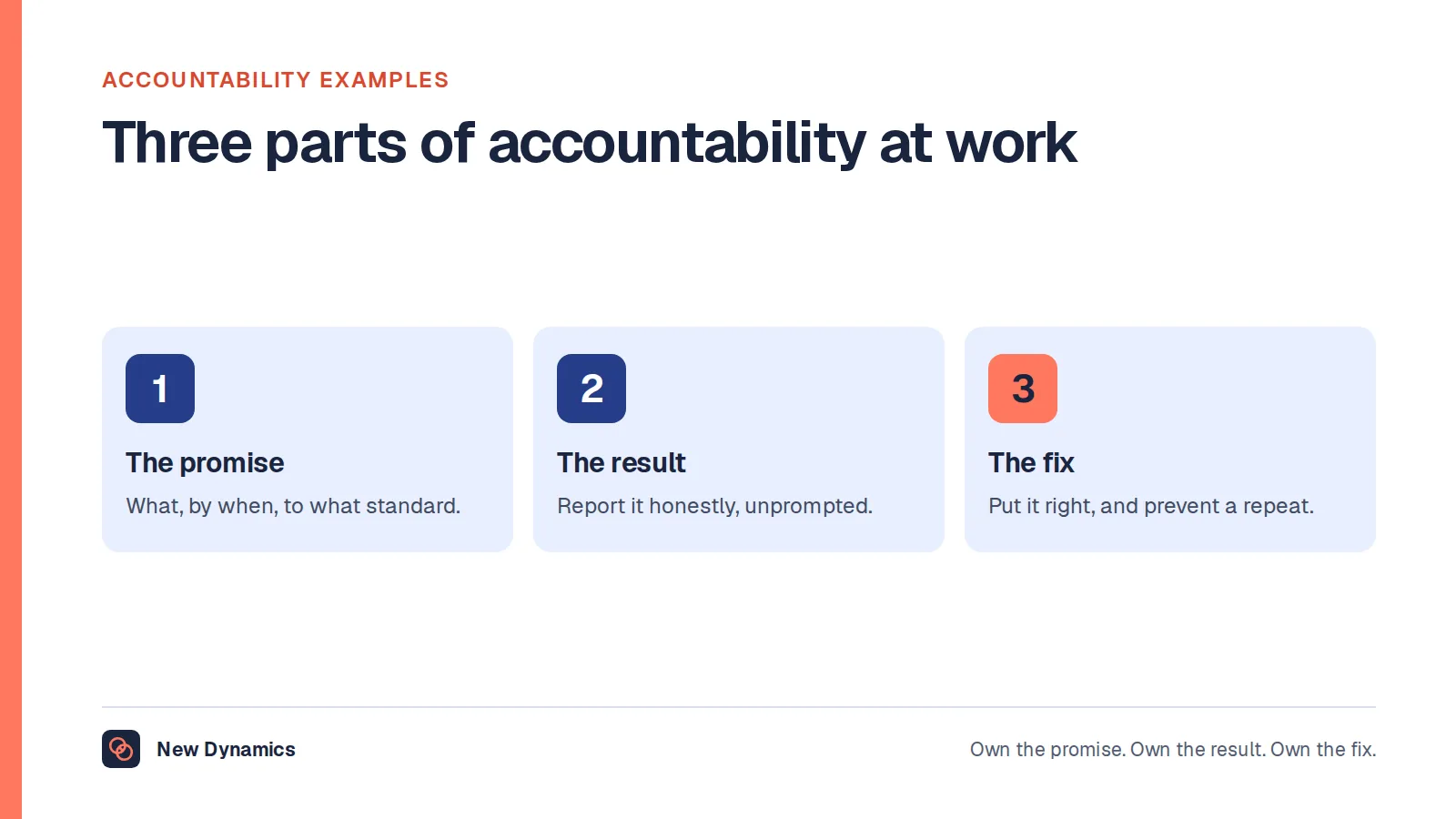
For related behaviours, see our accountability examples. The two ideas overlap. Accountability is about owning results. Work ethic is about the everyday effort behind them.
What a strong work ethic is not
It is not long hours. OpenStax suggests that “perhaps the simplest way” to compare work ethic between countries is to look at hours worked. Hours are certainly the simplest thing to count. They are a poor measure of commitment for an individual. Someone can sit at a desk for ten hours and produce little, and someone else can do excellent work in seven and go home.
There are limits in law as well. In the UK, the GOV.UK guide to maximum weekly working hours says: “You cannot work more than 48 hours a week on average”, normally averaged over 17 weeks, although workers can choose to opt out. This is general information, not legal advice.
It is not saying yes to everything. A person with a good work ethic protects the quality of what they have already promised. Sometimes that means saying “not this week”.
It is not suffering in silence. The UK Health and Safety Executive's Demands standard expects an organisation to provide “adequate and achievable demands in relation to the agreed hours of work”. If the workload is impossible, raising it is the responsible thing to do. Our article on work-life integration looks at setting boundaries.
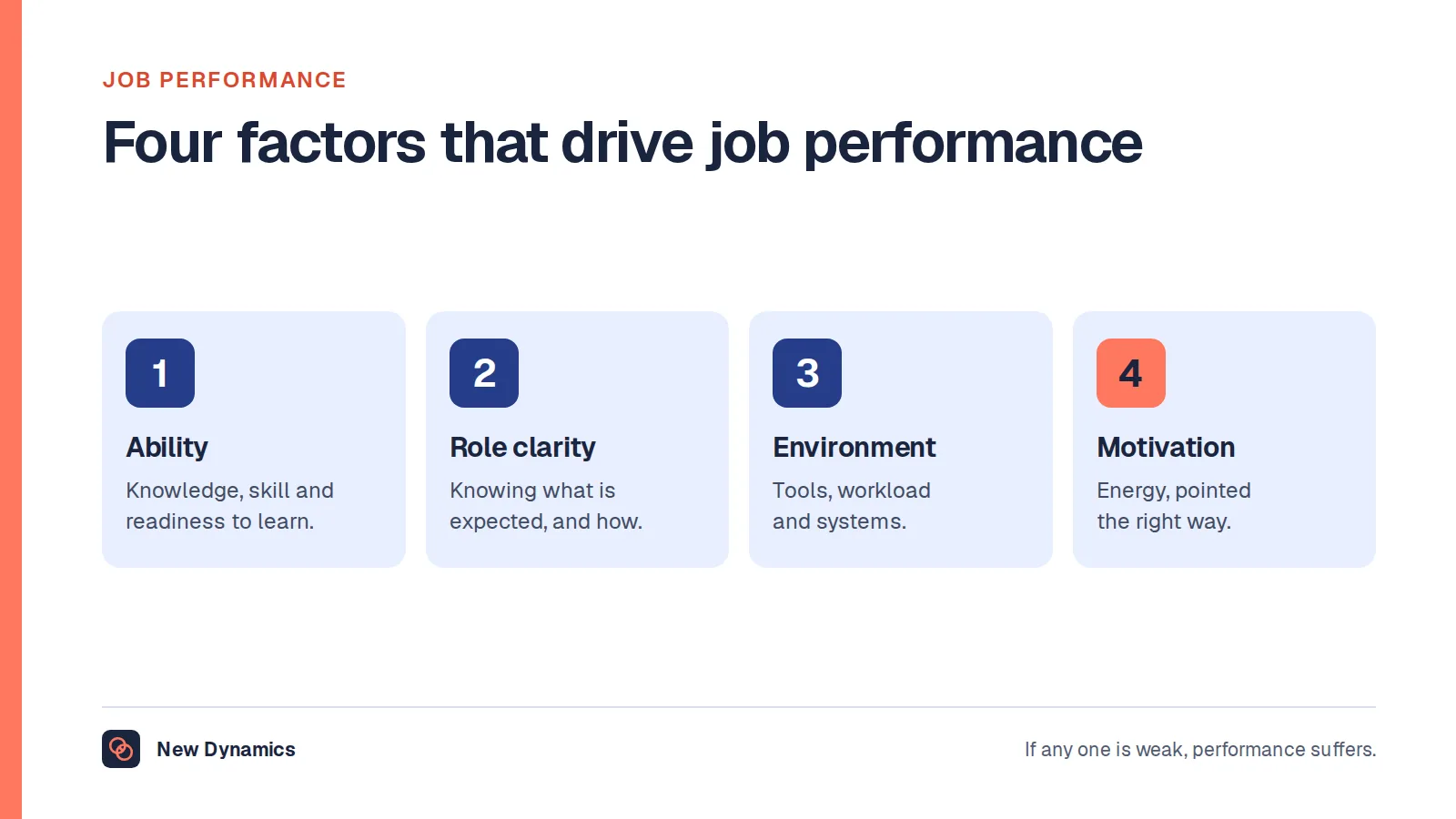
It is not the same as talent or results. A capable person can coast, and a committed one can miss a target for reasons outside their control. Judge the two separately. Our guide to job performance explains how effort, ability and support combine.
How to build your own work ethic
A work ethic is a set of habits, and habits can be built. Six steps help.
- Decide what good looks like. Ask your manager what matters most in your role, and how it will be judged.
- Promise less, and keep every promise. Give dates you can meet. Reliability grows from small commitments kept.
- Do the hard task first. Start the day with the piece of work you least want to do.
- Finish properly. Check it, tidy it and hand it over so that the next person can use it.
- Own your mistakes. Say what happened, what you have done about it and what you will change.
- Rest. Tired people cut corners. Breaks, holidays and sleep are part of doing good work.

How to describe your work ethic
Claiming a “strong work ethic” proves nothing. Describe what you did, and let the reader draw the conclusion.
In a CV
- “Delivered all 14 monthly reports on time over a period that included a system migration.”
- “Noticed a recurring invoicing error, traced the cause and wrote a check that removed it.”
- “Trusted to open and close the shop alone within three months of joining.”
These are illustrations, so replace them with your own facts. See our guide to soft skills for a CV.
In an interview
Expect “How would you describe your work ethic?” Answer with a short story: the situation, what you did and the result. For example: “Our release was due on Friday, and on Wednesday I found a fault in my own code. I told the team that day, fixed it, and added a test so that it could not happen again. We shipped on time.”
In a self-evaluation or review
Give evidence against each of the five signs: commitments kept, quality checks, things you improved unasked, problems you reported and difficult work you finished. Our self-evaluation examples and performance review phrases offer wording.
How managers build a strong work ethic in a team
Work ethic is personal, but it responds to its surroundings. People stop trying when effort goes unnoticed, goals keep moving or the workload is impossible. Five practices help.
- Set clear goals. People cannot commit to something vague. Agree what is expected and how it will be judged.
- Keep the workload fair. Reliable people attract extra work until they break. Share it out deliberately.
- Give regular feedback. Tell people promptly when work is good and when it falls short. Our positive feedback examples can help.
- Recognise effort and quality. Thank people for the unglamorous work done well, by name and with specifics.
- Set the example. Keep your own promises, admit your own mistakes and take your own holidays.
Judge outcomes and behaviour, and leave presence out of it. If you praise the person who is always online at 10pm, you teach the team that being seen matters more than the work.

When someone's work ethic seems poor
“Poor work ethic” is a label, and a label does not tell you what to do next. Before you use it, check four things.
- Clarity. Does the person know what is expected, and by when?
- Capability. Do they have the skills, tools and time?
- Circumstances. Is something going on with their health, their home life or the team?
- Consequences. Has good work been noticed in the past, or has it made no difference?
Expectancy theory gives a useful way to think about the last point. Then have a direct, private conversation. Describe the specific behaviour and its effect, ask for their view and agree what will change. If it does not improve, a written performance plan sets out expectations and support.
Frequently asked questions
What does work ethic mean?
Work ethic means a person's commitment to doing their work properly. The Cambridge Dictionary defines it as the belief that work is morally good. In everyday use it describes the habits that show that belief, such as reliability, care, initiative, honesty and persistence.
What is a good work ethic?
A good work ethic means that you can be relied on to do your work well without being chased. You keep your promises, check your work, act on what needs doing, tell the truth about progress and mistakes, and keep going when the task is hard.
What are examples of a strong work ethic?
Examples include warning colleagues early when a deadline is at risk, testing the awkward cases before handing work over, reporting your own mistake, completing records properly at the end of a long shift and finishing a tedious project in steady steps.
Does a strong work ethic mean working long hours?
No. Hours are easy to count, but they are a poor measure of commitment. A strong work ethic shows in what gets done and how well. In the UK, the law limits most workers to an average of 48 hours a week unless they choose to opt out.
How do I describe my work ethic in an interview?
Give a short, specific story in place of a claim. Describe a situation, what you did and the result. Choose an example that shows reliability, care for quality or honesty, such as finding and fixing your own error before a deadline.
Can a work ethic be learned?
Yes. It is a set of habits. Agree what good looks like, make smaller promises and keep them all, start with the hardest task, finish work properly, own your mistakes and rest well. Managers help by setting clear goals and noticing good work.
Your next step: notice one piece of reliable work
- Think of someone whose steady work you have come to take for granted.
- Thank them this week, by name, for one specific thing they did and the difference it made.
- Check whether their workload is fair, or whether reliability has simply earned them more to do.
- Pick one of the six steps for yourself, and practise it for a month.
For ways to make appreciation specific, timely and fair, read and download our employee recognition guide. The guide is free to read, and the PDF uses our short download form.
Want goals, feedback and recognition in one place, so that good work is seen? Book a New Dynamics demo and bring a challenge from your own team. You can also email contact@new-dynamics.com.