Page 2 of 2. Practical guidance for managers: leading teams, motivating people, handling difficult conversations and designing how the organisation works.
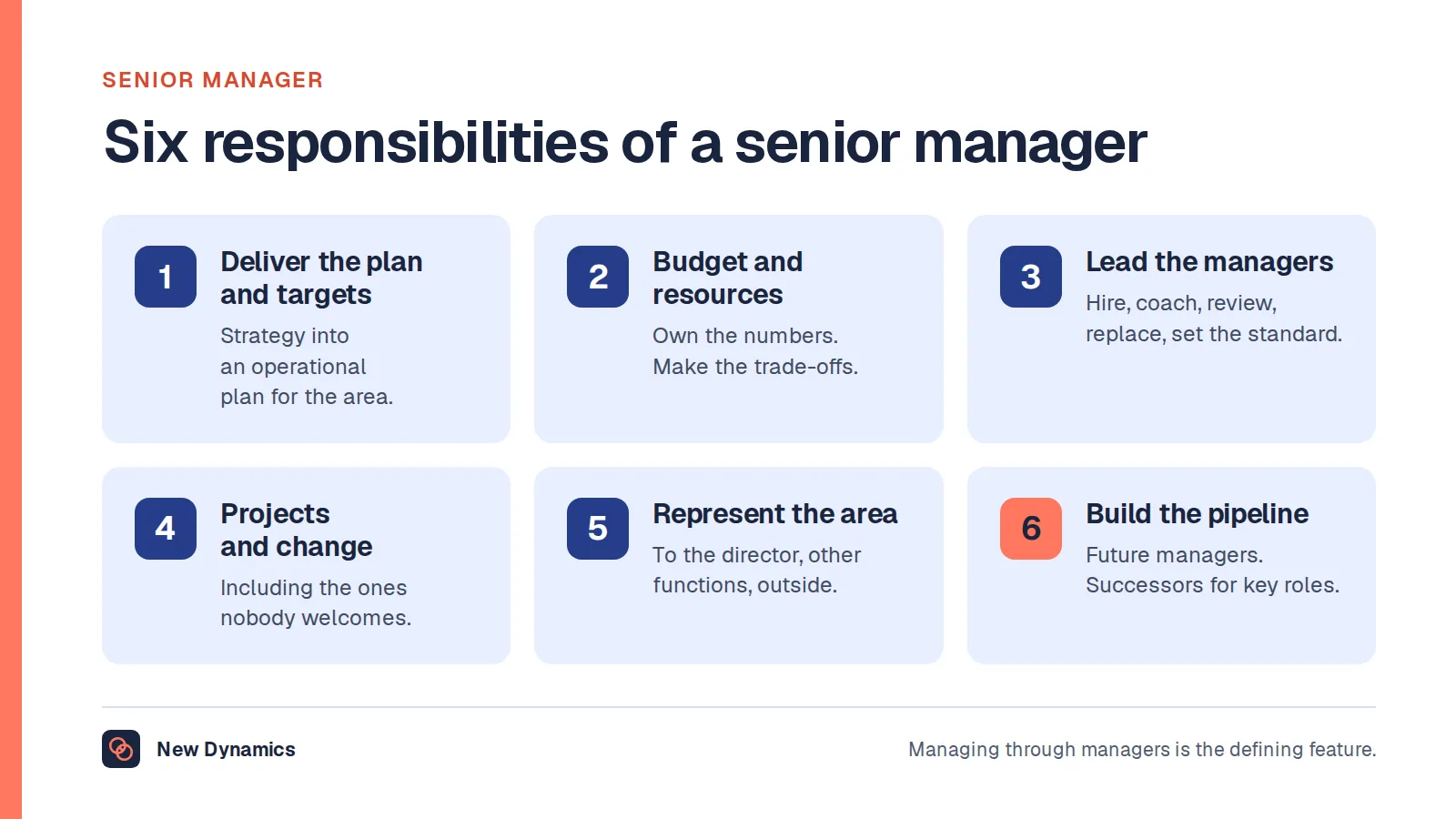
What senior manager means, where the title sits between manager and director, six responsibilities, the UK management standards that map the level, the regulatory sense of the term in financial services and a job description template.
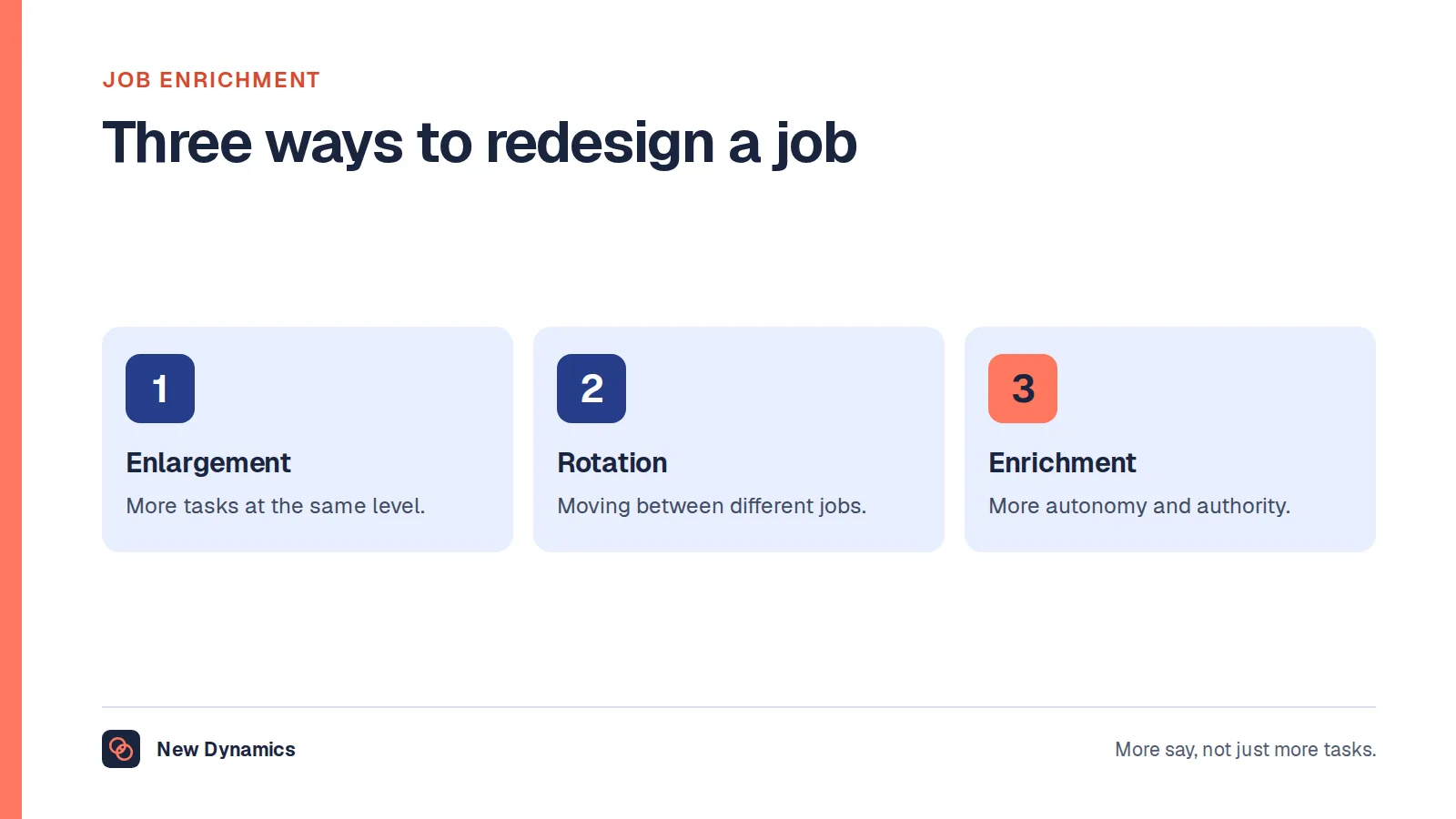
What job enrichment means, how it differs from job enlargement and rotation, 20 examples of enriched jobs, a five-step method and the risks to avoid when enriching jobs.
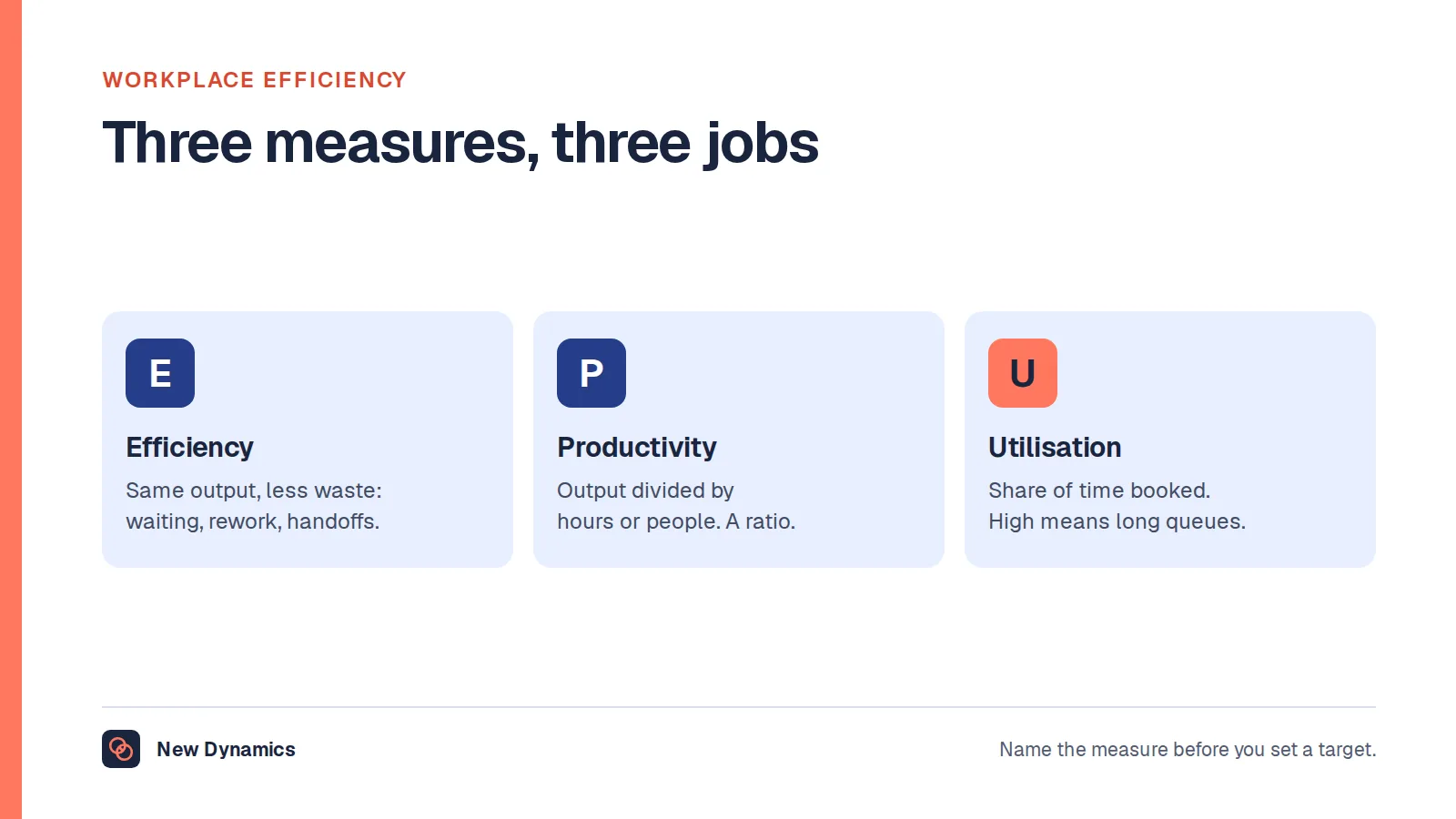
Most office efficiency problems are queueing, handoff and rework problems rather than effort problems. See how to find where the time goes, what to do about the four usual culprits, why a fully utilised team has no slack, and where measuring individuals crosses a line.
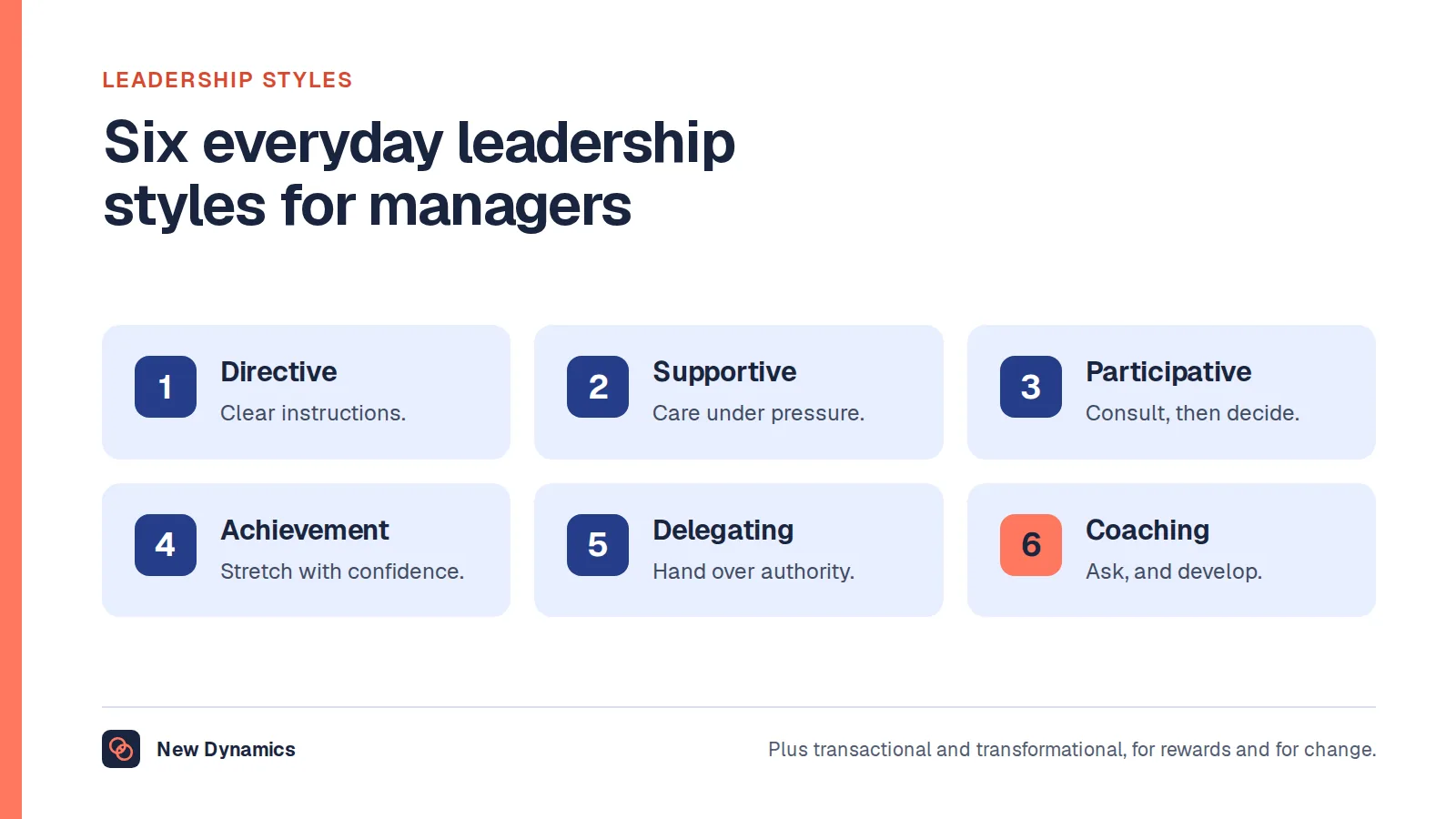
Compare eight managerial leadership styles, from directive to coaching, with examples, strengths and risks, and a simple way to choose the right style for each situation.
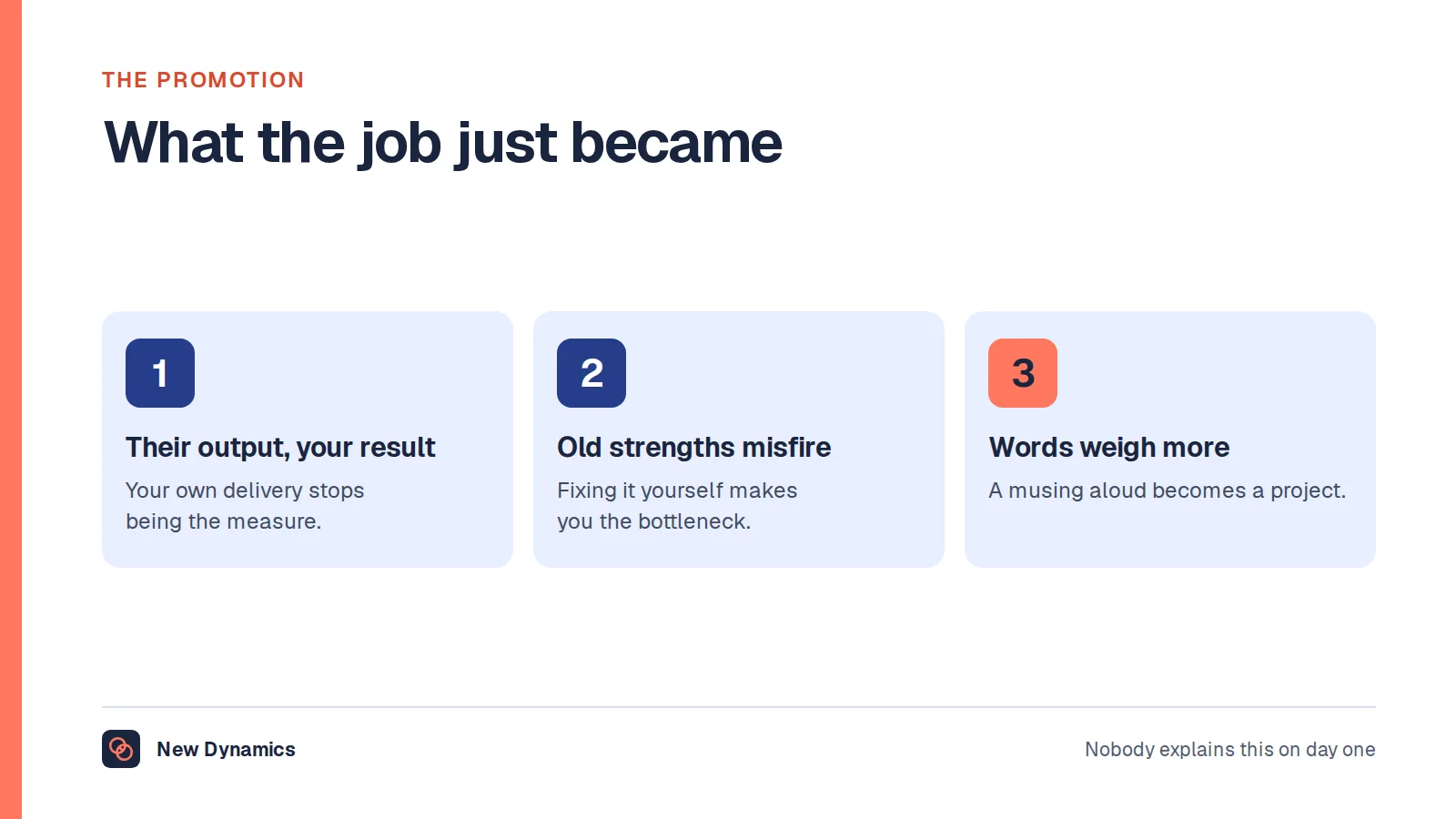
A new manager guide for the first ninety days: what to do in each phase, how to manage former peers, how to hold the first difficult conversation, and the legal duties you picked up without being told.
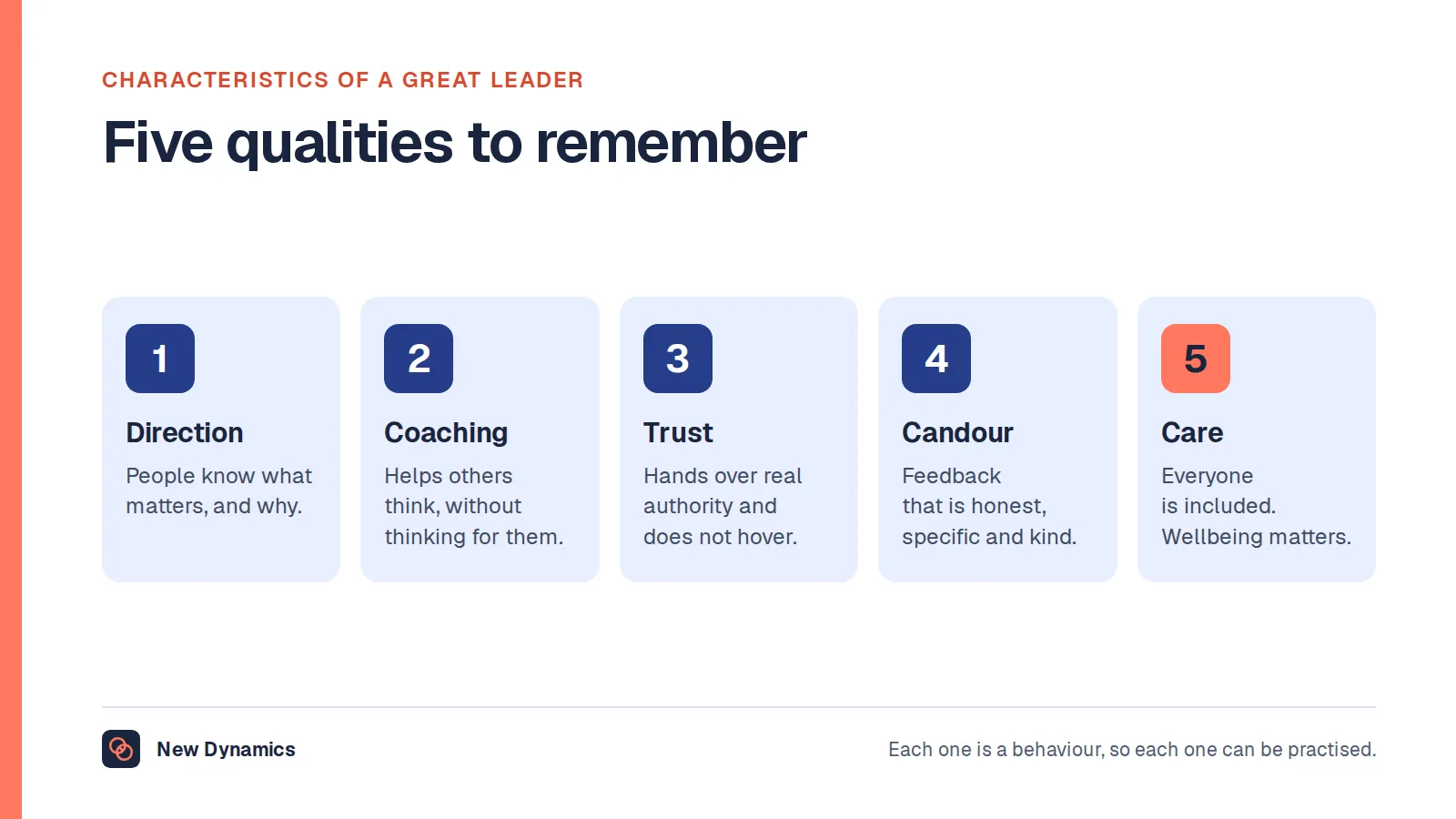
The characteristics of a great leader: 10 qualities from Google's manager research and the Civil Service, with ways to spot and build them. Start with one.
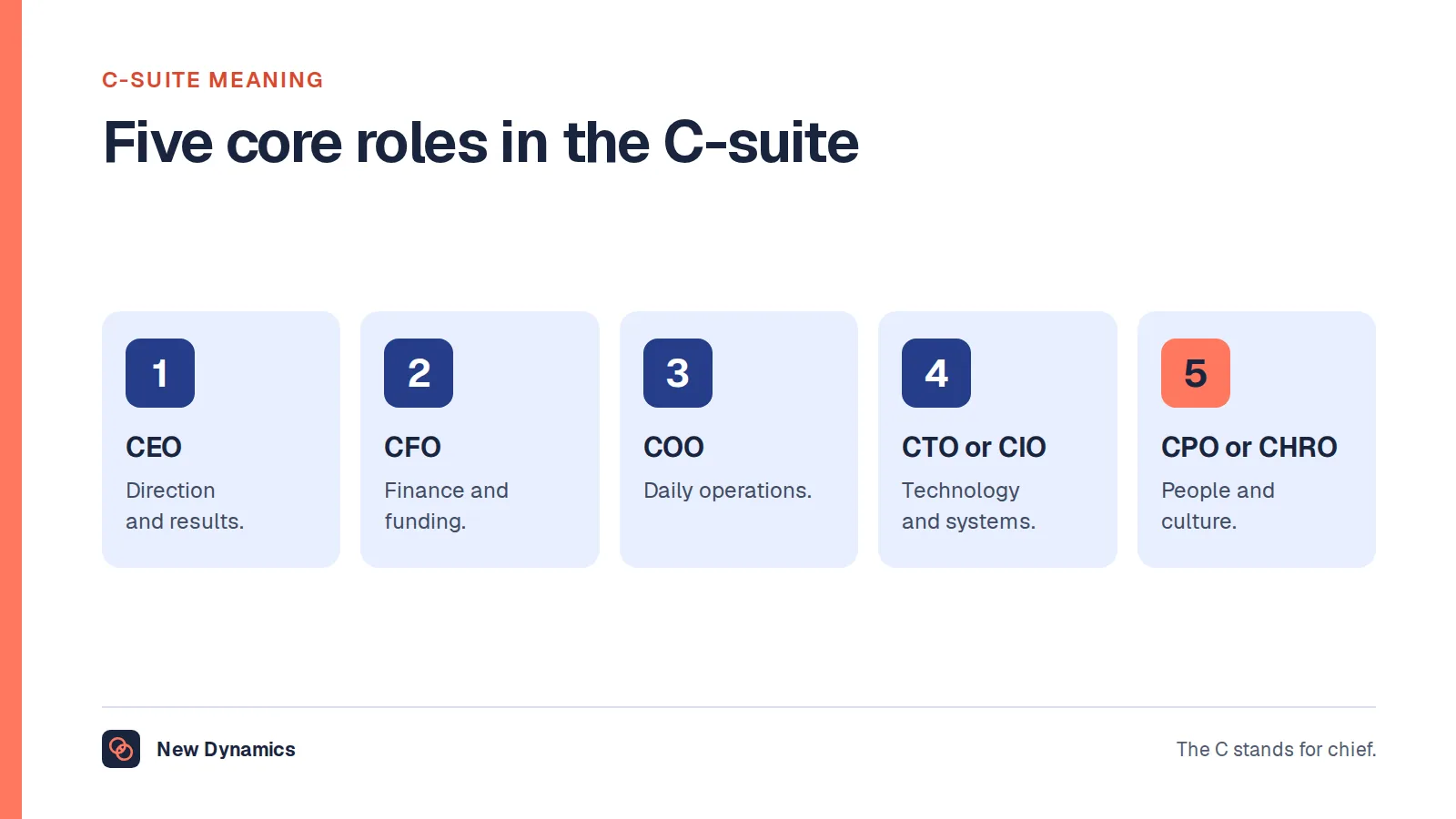
What C-suite means, the core and newer chief officer roles, how the C-suite differs from the board and from directors, and what a small company actually needs.
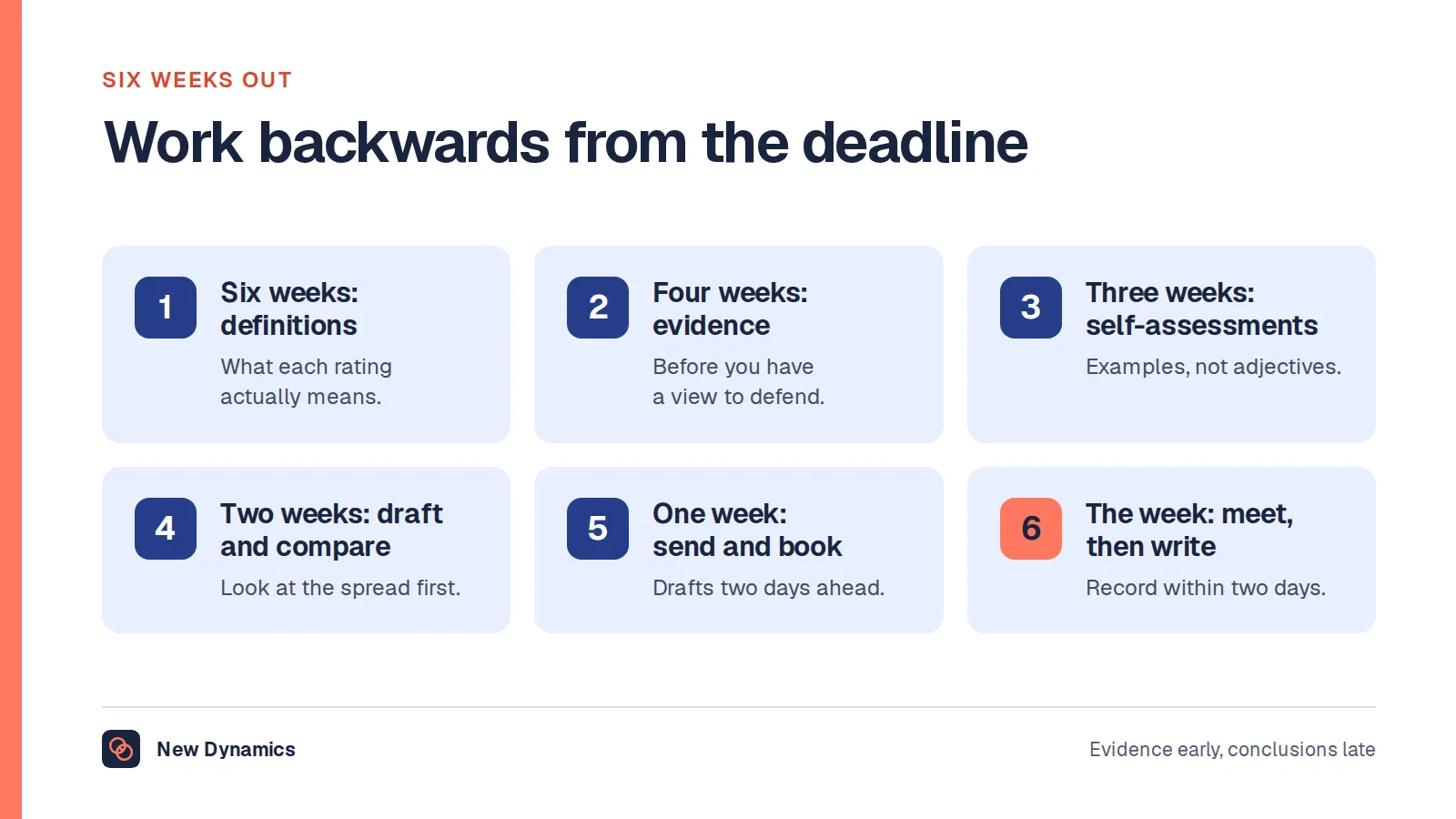
A six-week countdown for a new manager's first review round: what to ask for before you start, where evidence comes from when you only saw half the year, what to expect from calibration, and the five mistakes first-time managers make.
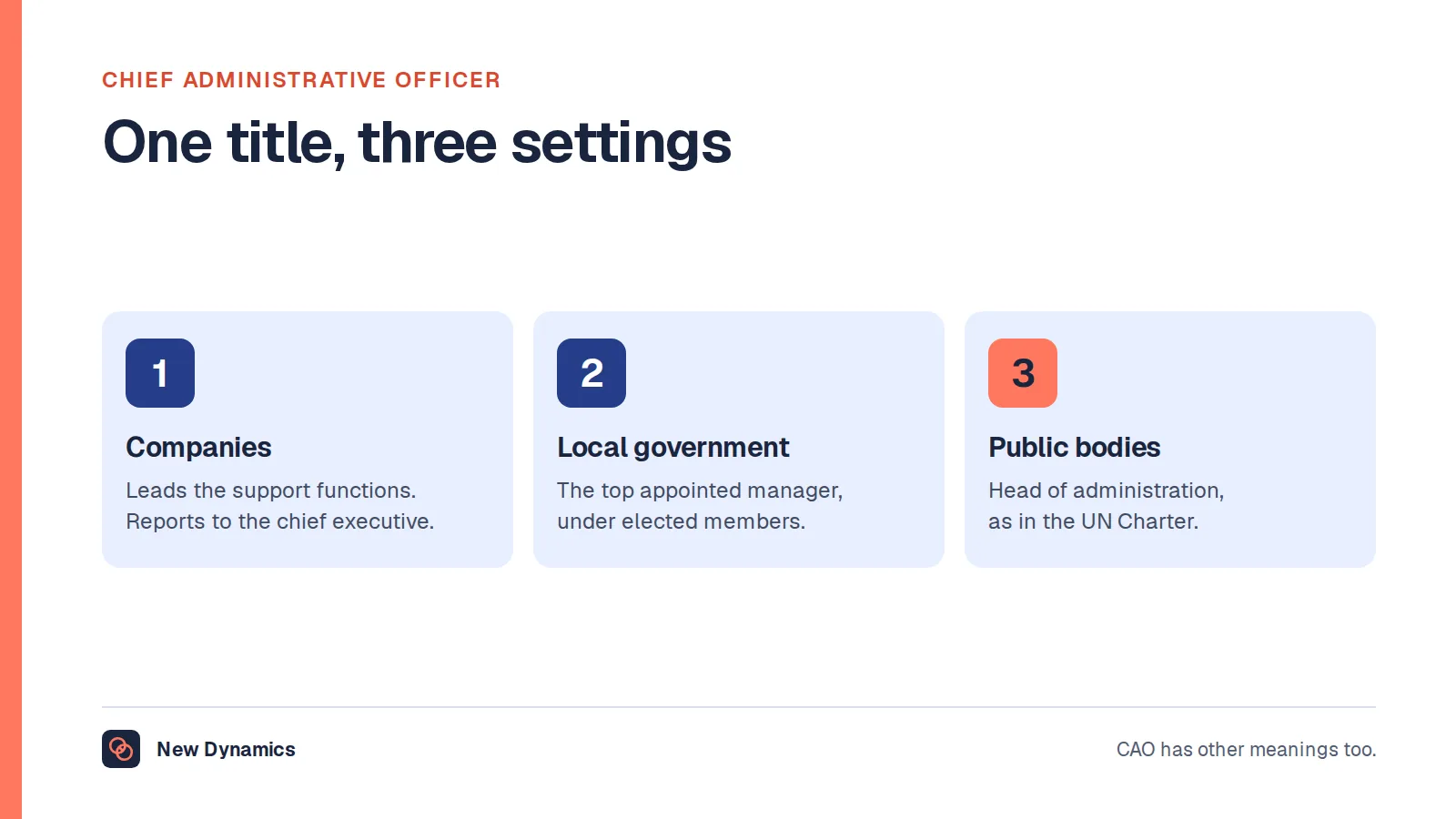
What a chief administrative officer is, what a CAO does in companies and in government, how the role differs from a COO and a CHRO, and when you need one.