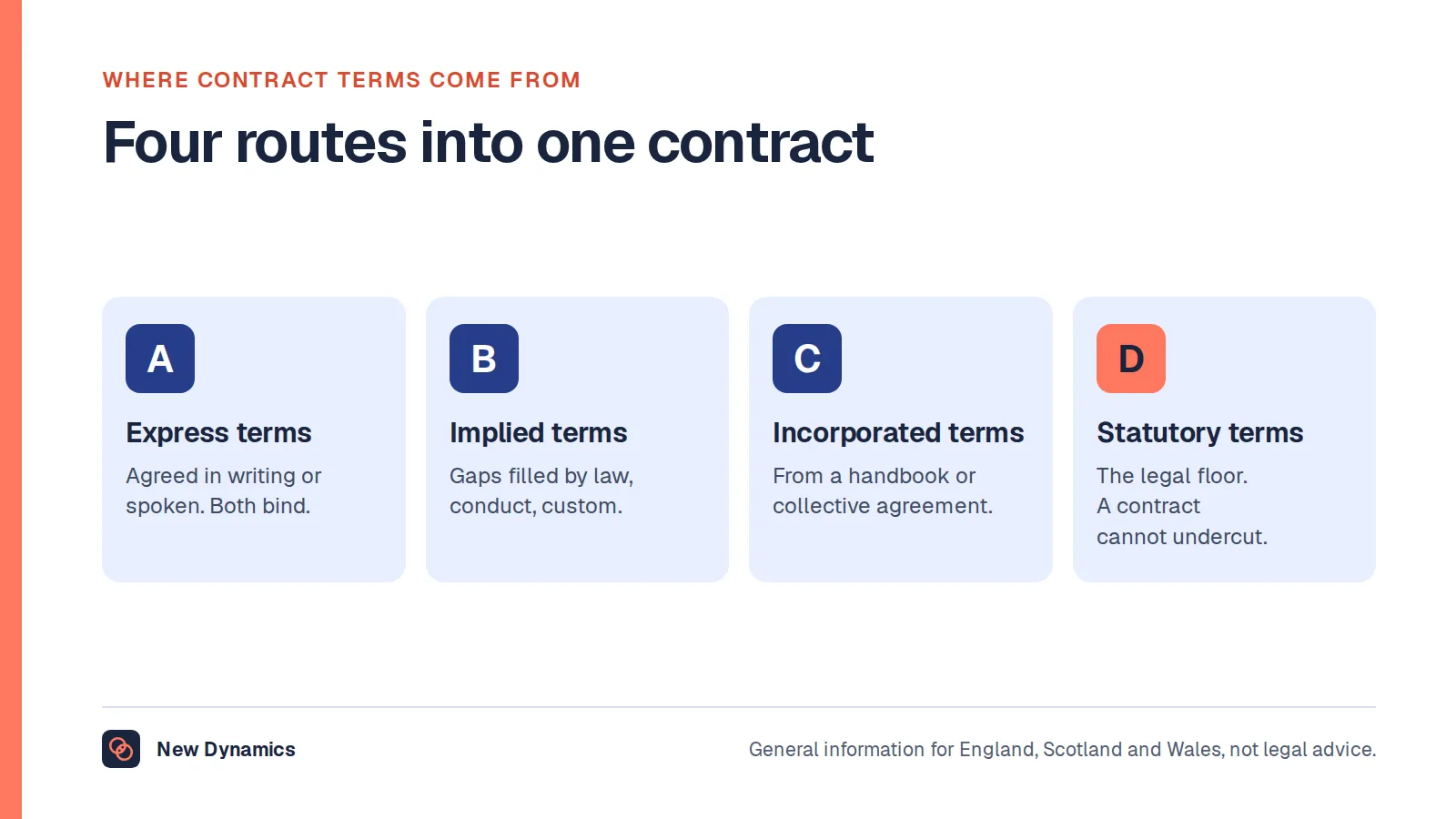
A contract of employment exists as soon as a job offer is accepted, signed or not. What an employment contract is, the five places its terms come from, what the written statement must say, and how to change a term lawfully.
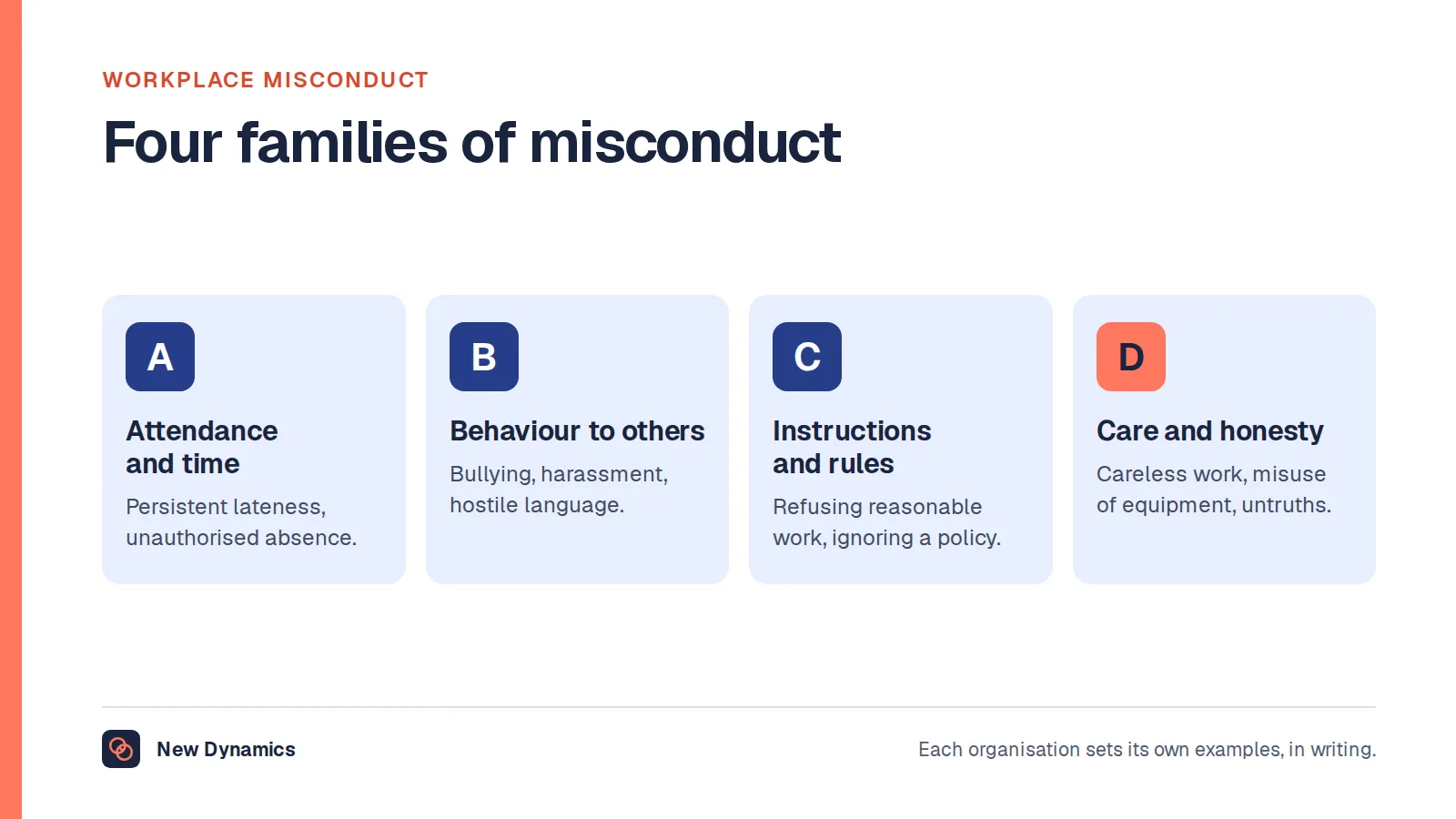
What misconduct in the workplace means, the four families it falls into, how conduct differs from capability, what belongs in a conduct policy, the warning ladder and how long warnings last, and when behaviour outside work counts.
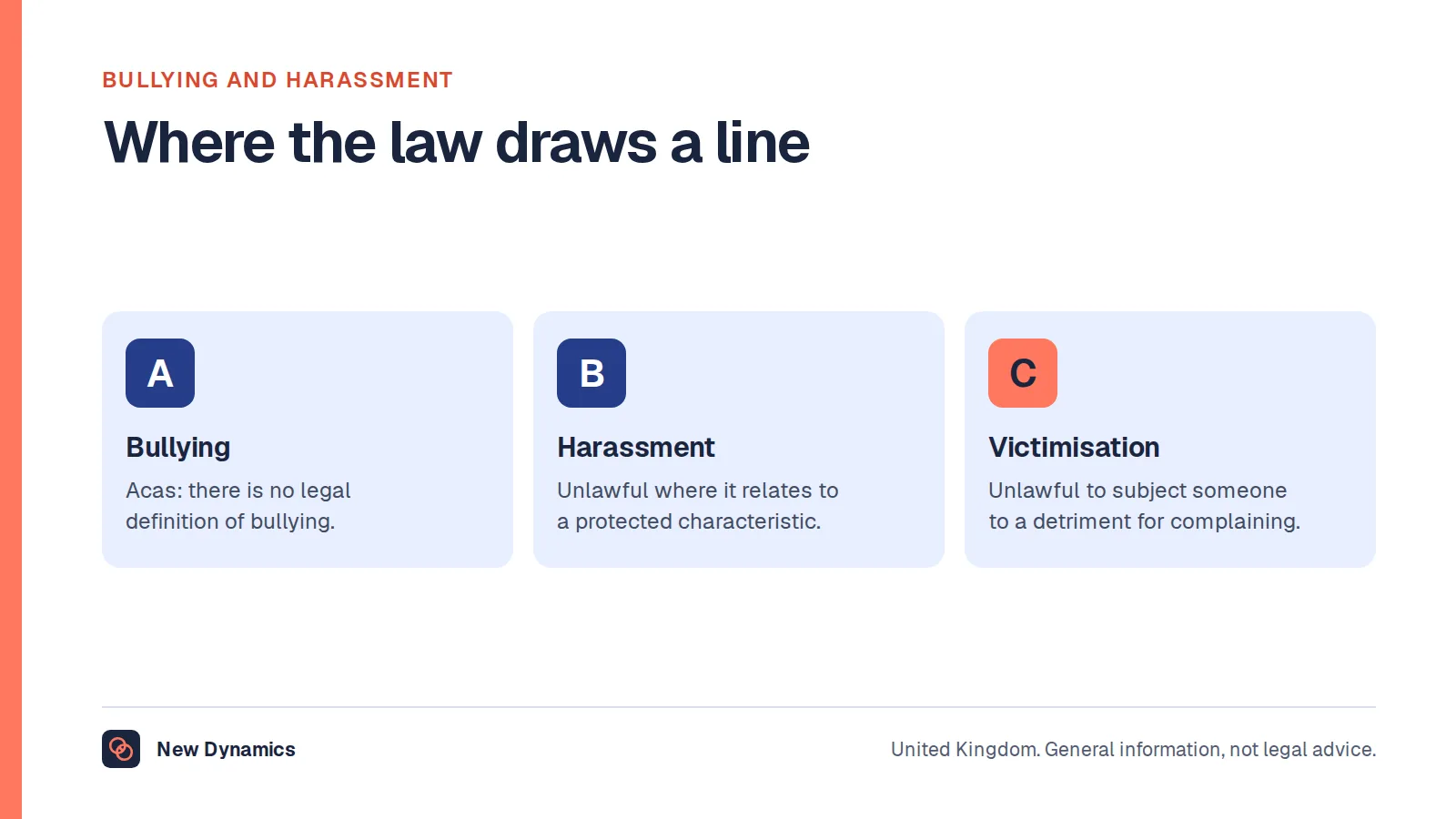
What workplace bullying is, why UK law has no definition of it, where it becomes unlawful harassment under the Equality Act 2010, what to do if it is happening to you, and what a manager or HR must do when it is reported.
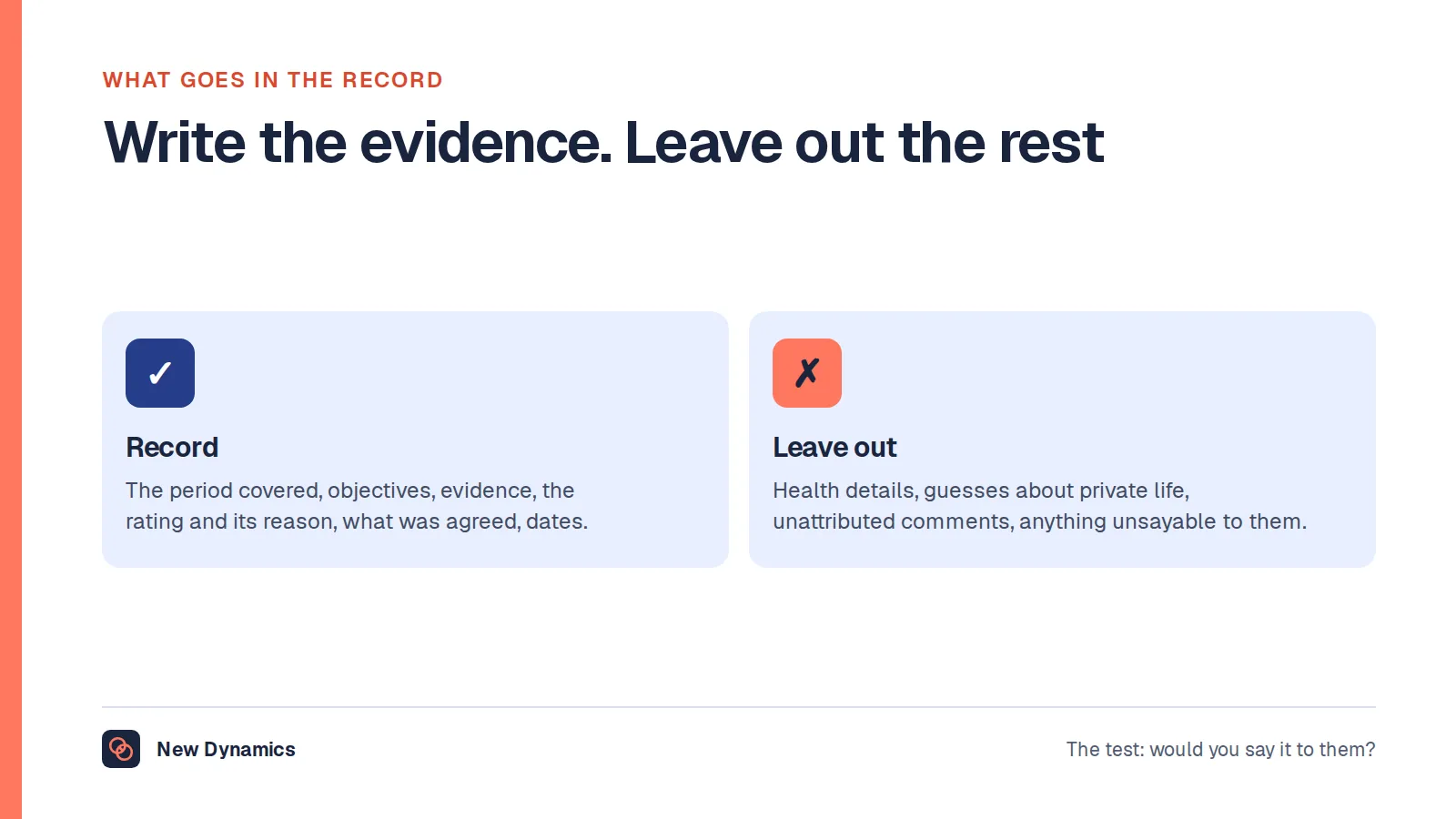
What belongs in a performance record and what does not, who is allowed to read it, how long to keep performance reviews, and how to set a retention schedule you can actually justify.
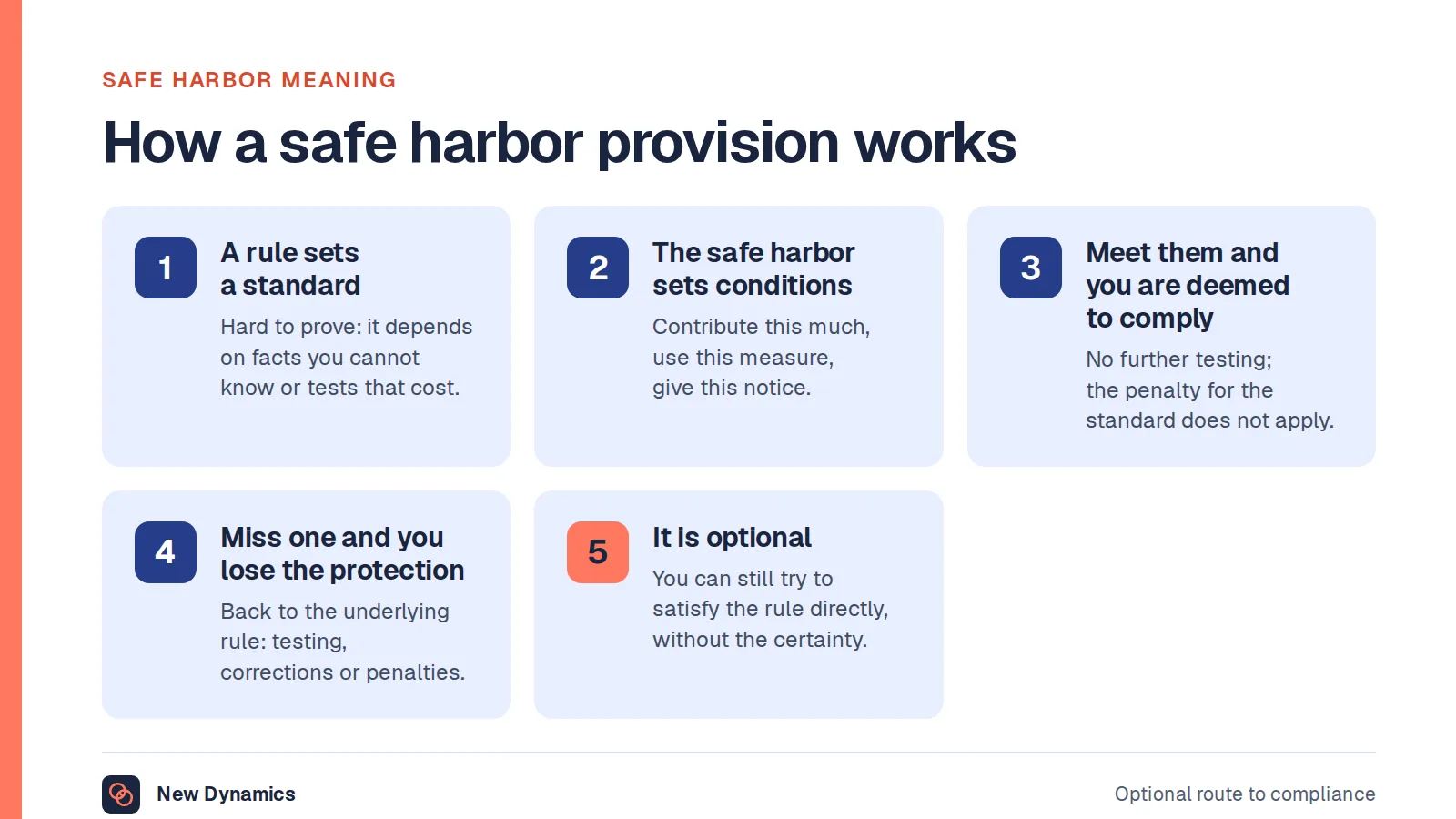
What safe harbor means in law, how a safe harbor provision works, the safe harbor 401(k) plan and the ACA affordability safe harbors as the IRS describes them, and what the term means for employers outside the United States.
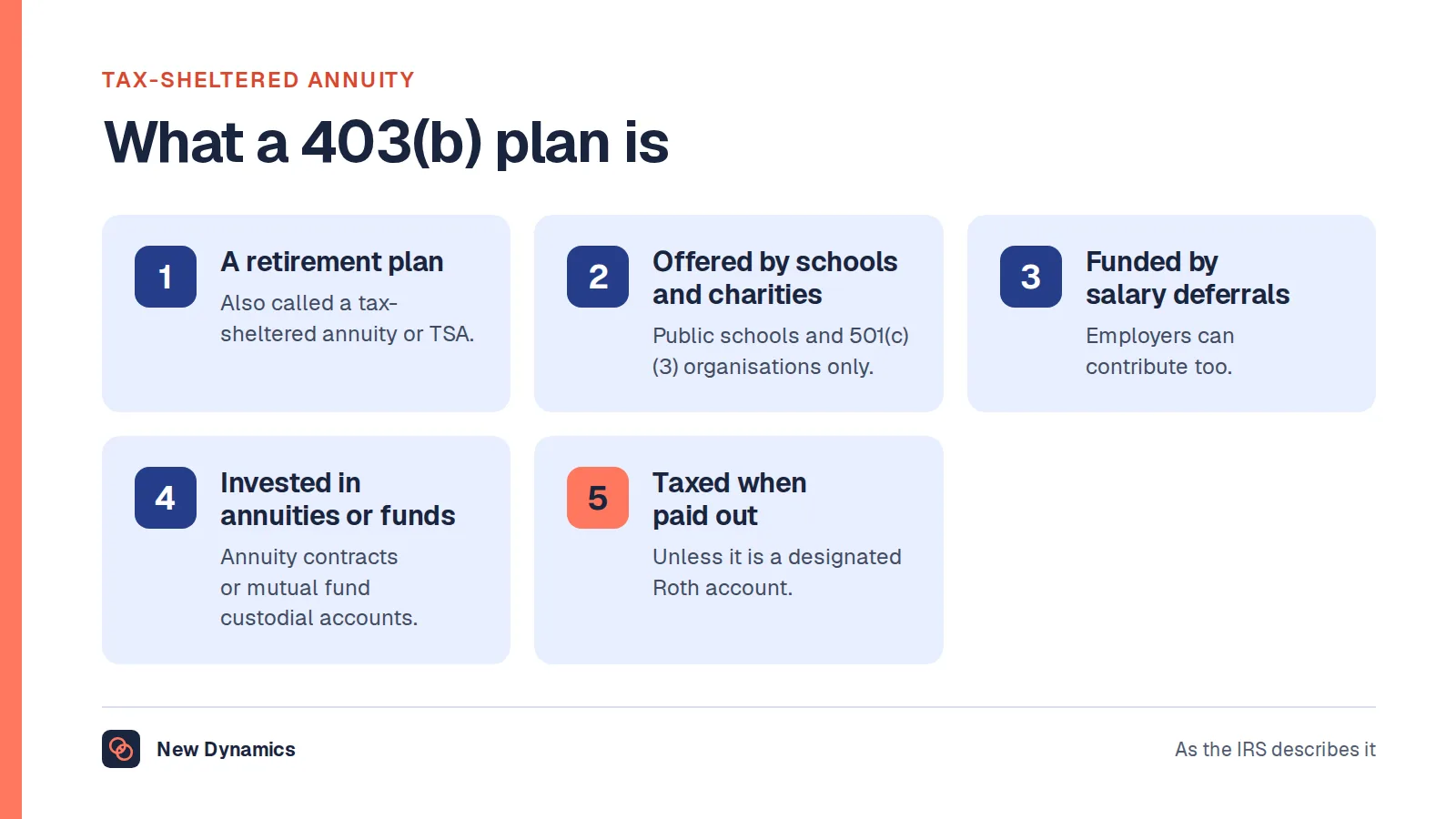
What a tax-sheltered annuity or 403(b) plan is, which employers can offer one, how it compares with a 401(k), the 2026 contribution limits and the universal availability rule, as the IRS describes them, and what HR must do to run one.
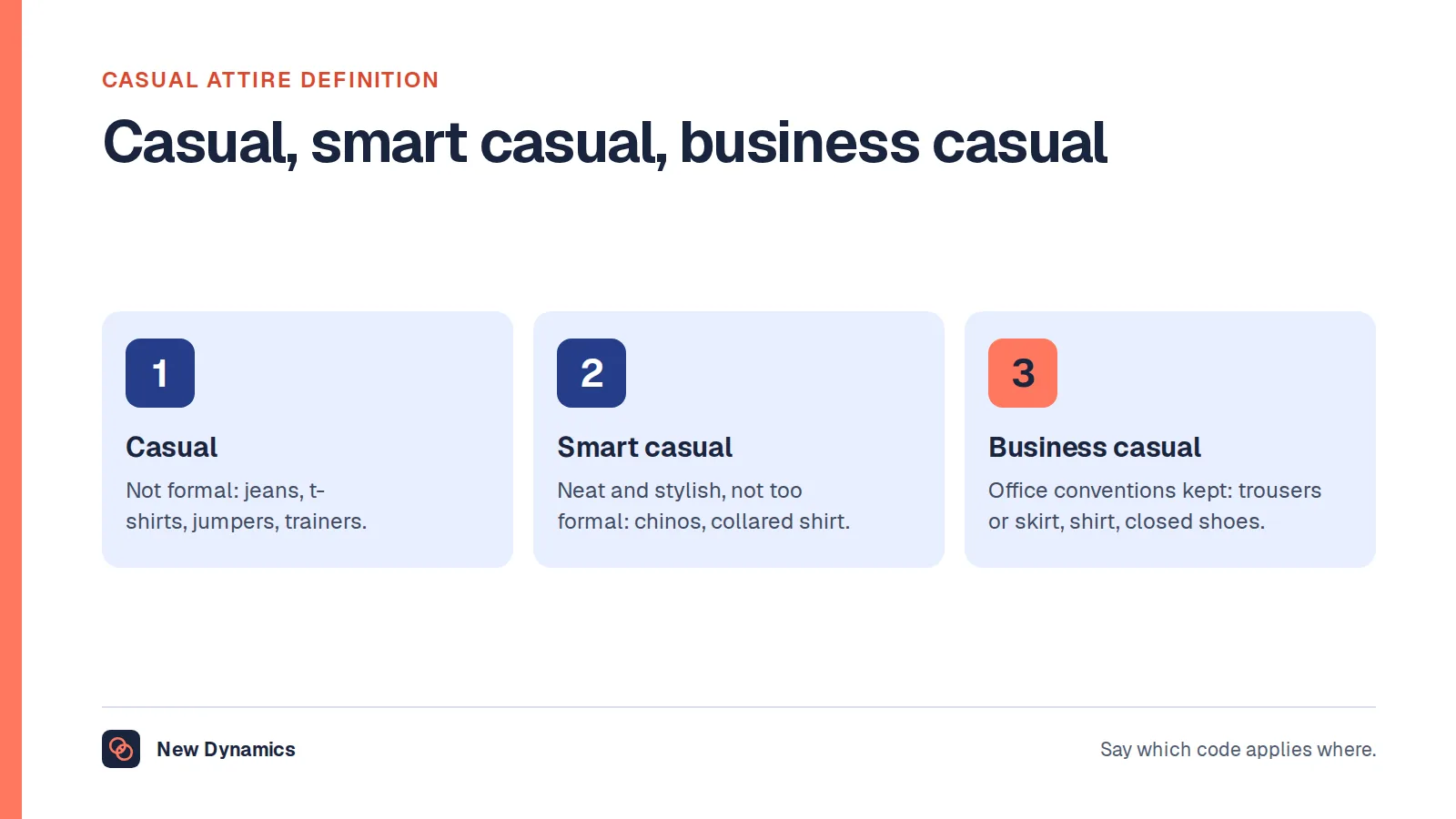
The definition of casual attire, what it usually includes and excludes at work, how casual differs from smart casual and business casual, the UK rules a dress code must follow and a template casual dress code.
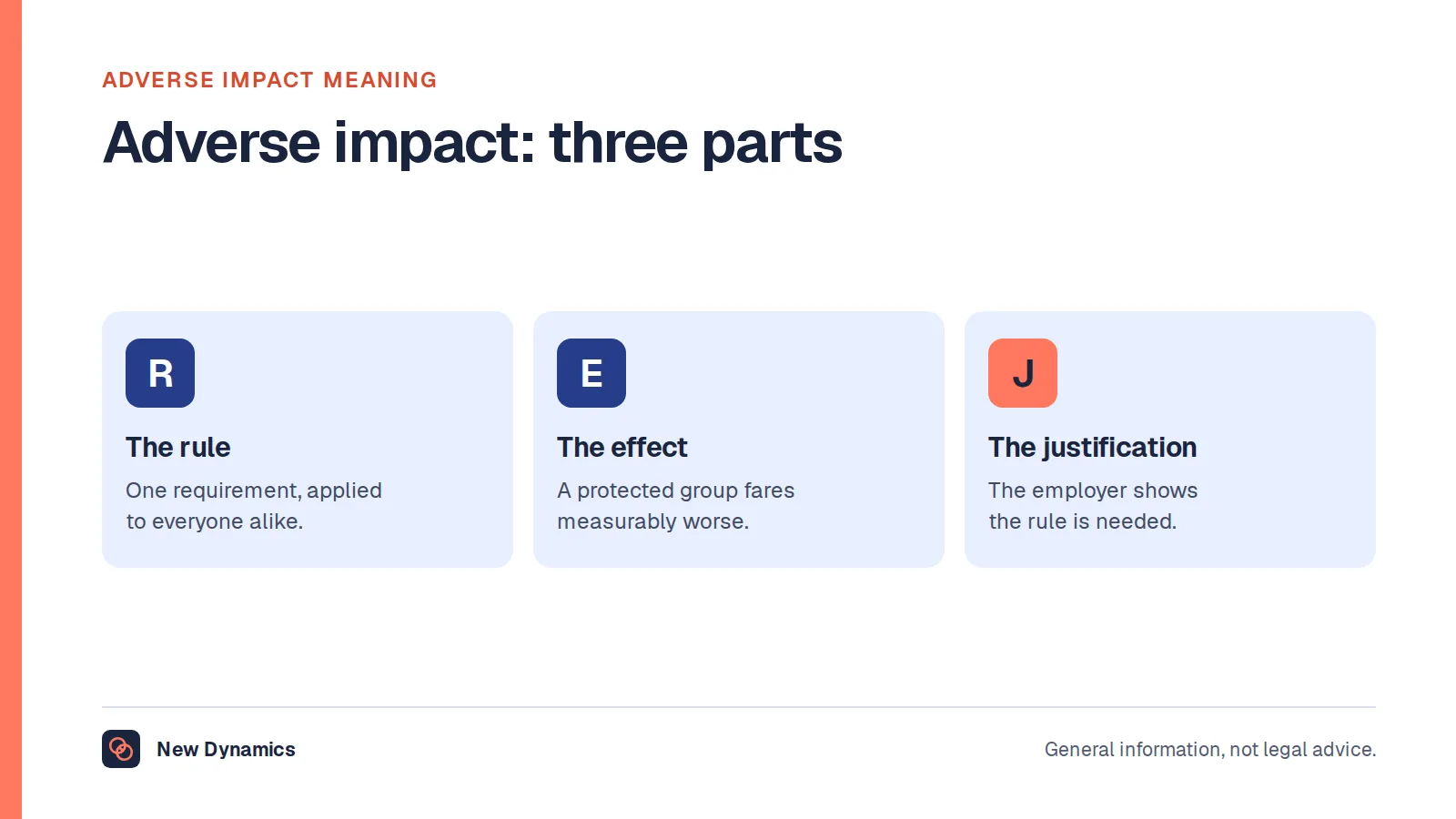
What adverse impact means, what the four-fifths rule actually says (and does not), indirect discrimination under section 19, clear examples and a five-step analysis you can run.
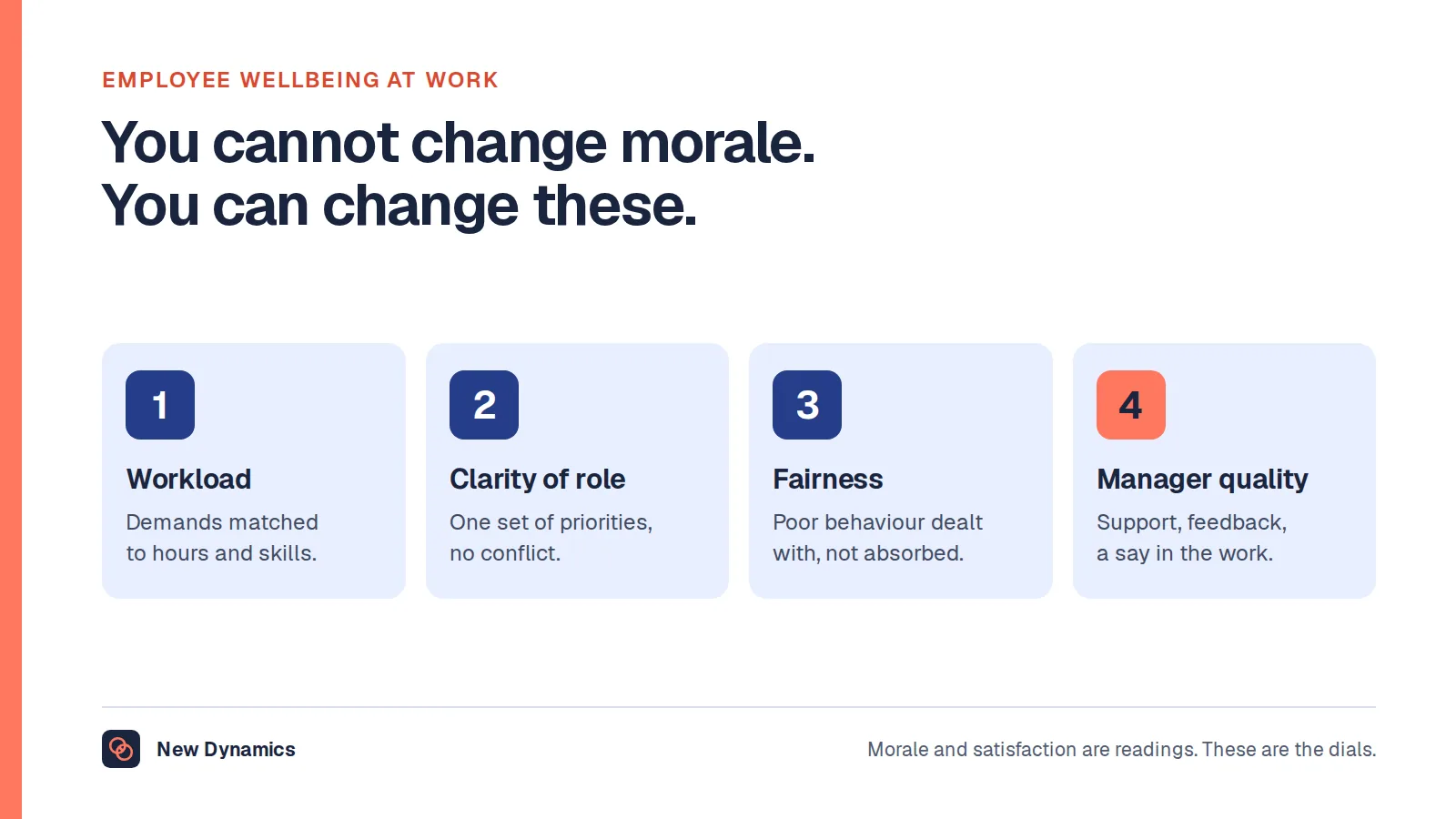
Morale and job satisfaction are outcomes, not inputs. See what the law requires on work-related stress, the six HSE areas to change, and what to measure instead.
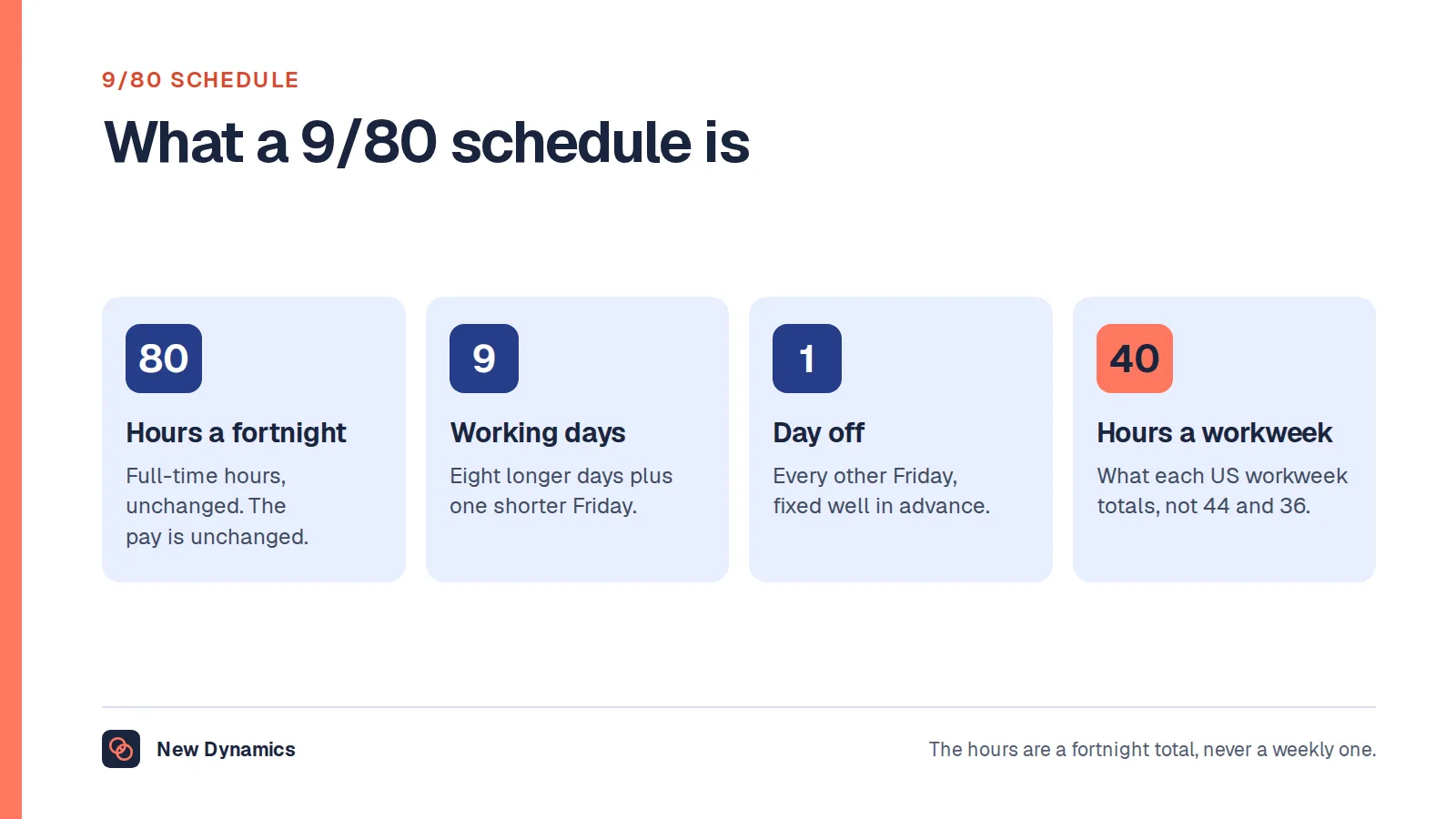
What a 9/80 work schedule is, with the fortnight worked hour by hour, the US workweek boundary that creates overtime, the UK rest and holiday rules, and how to trial one.
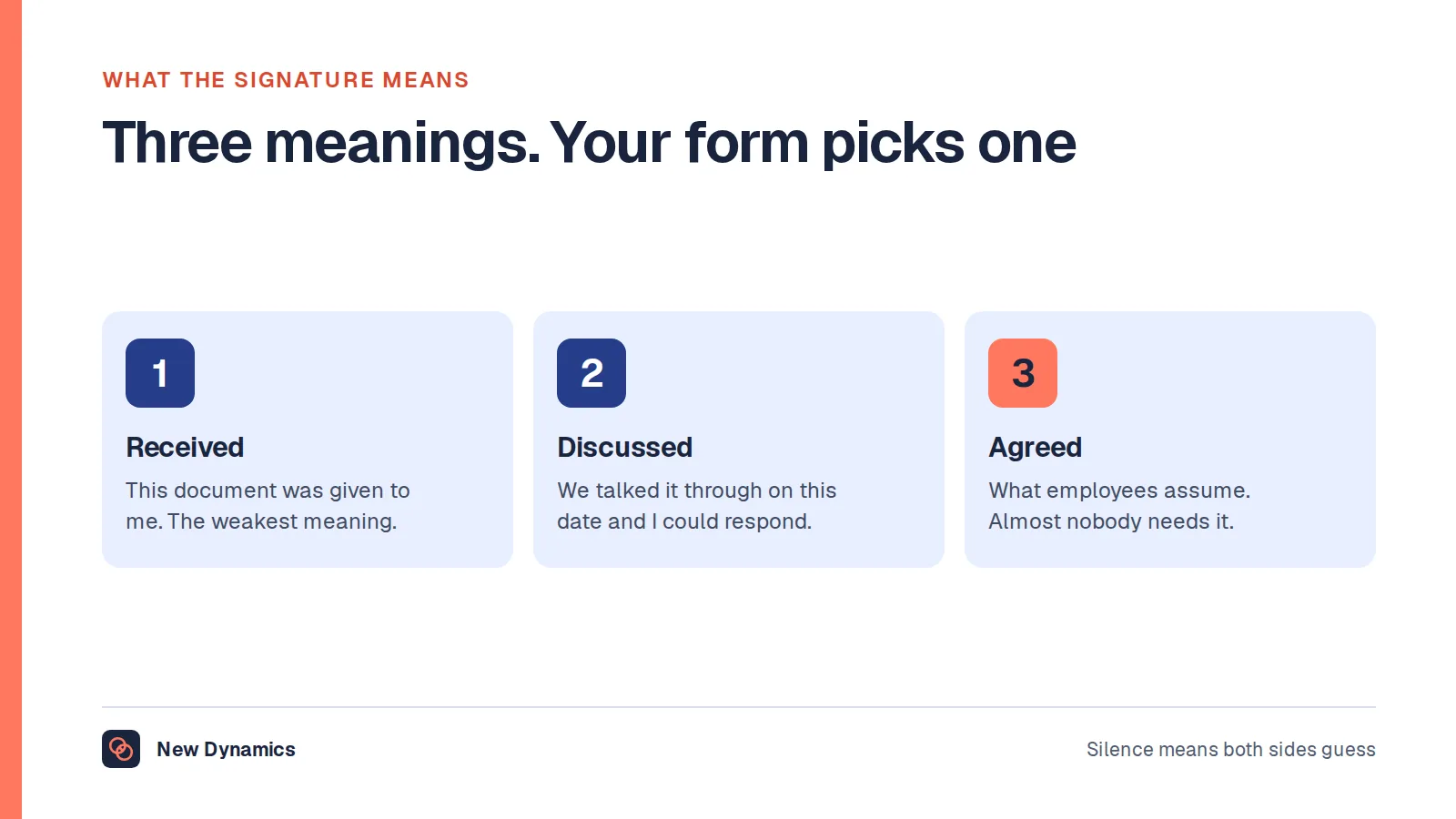
What a signature on a performance review actually means, what to do in the ten minutes after someone declines to sign, the wording to put on your form, and how the same question works for a digital acknowledge button.
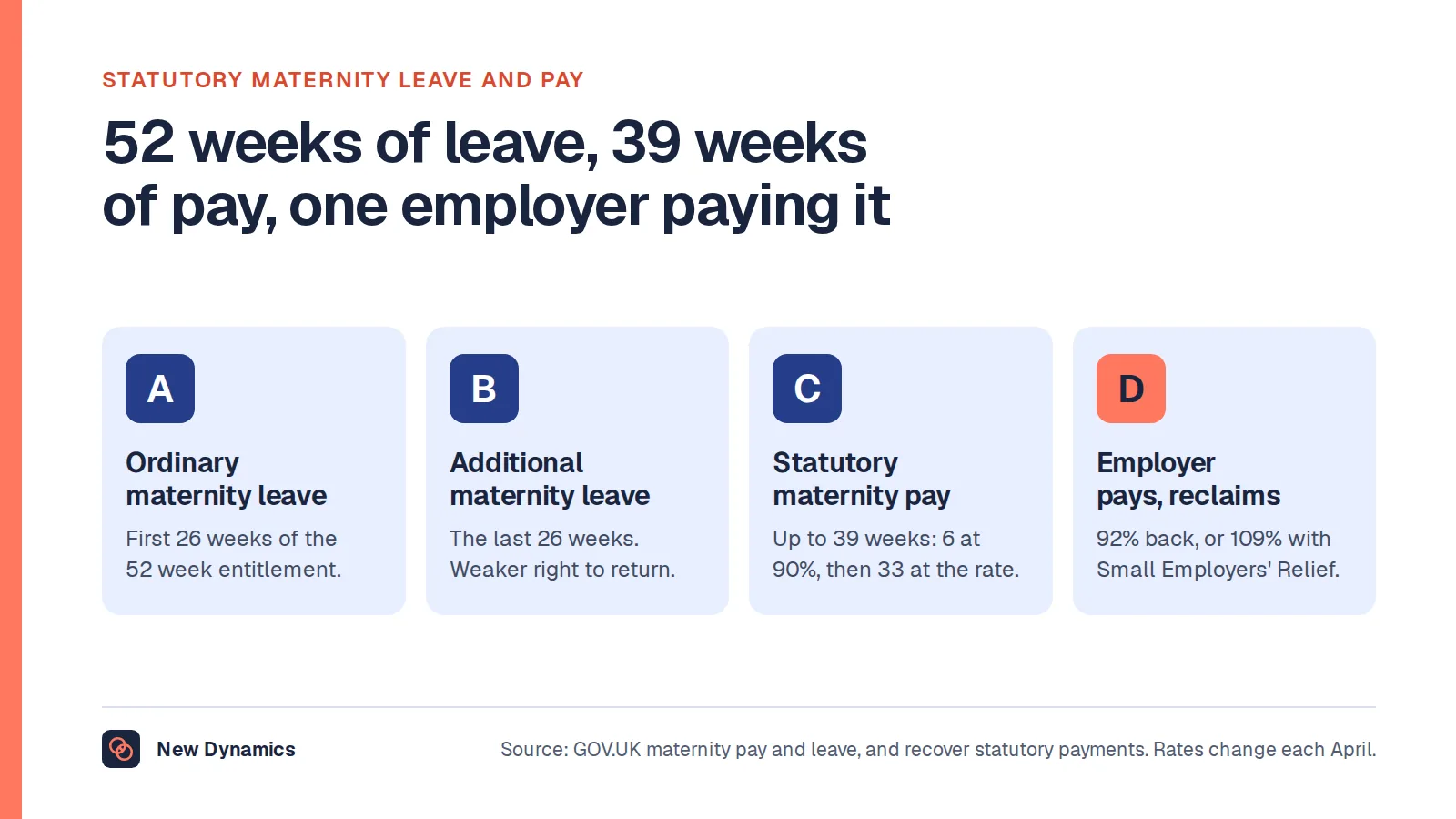
Statutory maternity leave and pay set out for employers: the 52 weeks, the 39 weeks of SMP, the current weekly rate, what you reclaim from HMRC, the notice and MATB1 deadlines, and how to plan cover and the return.
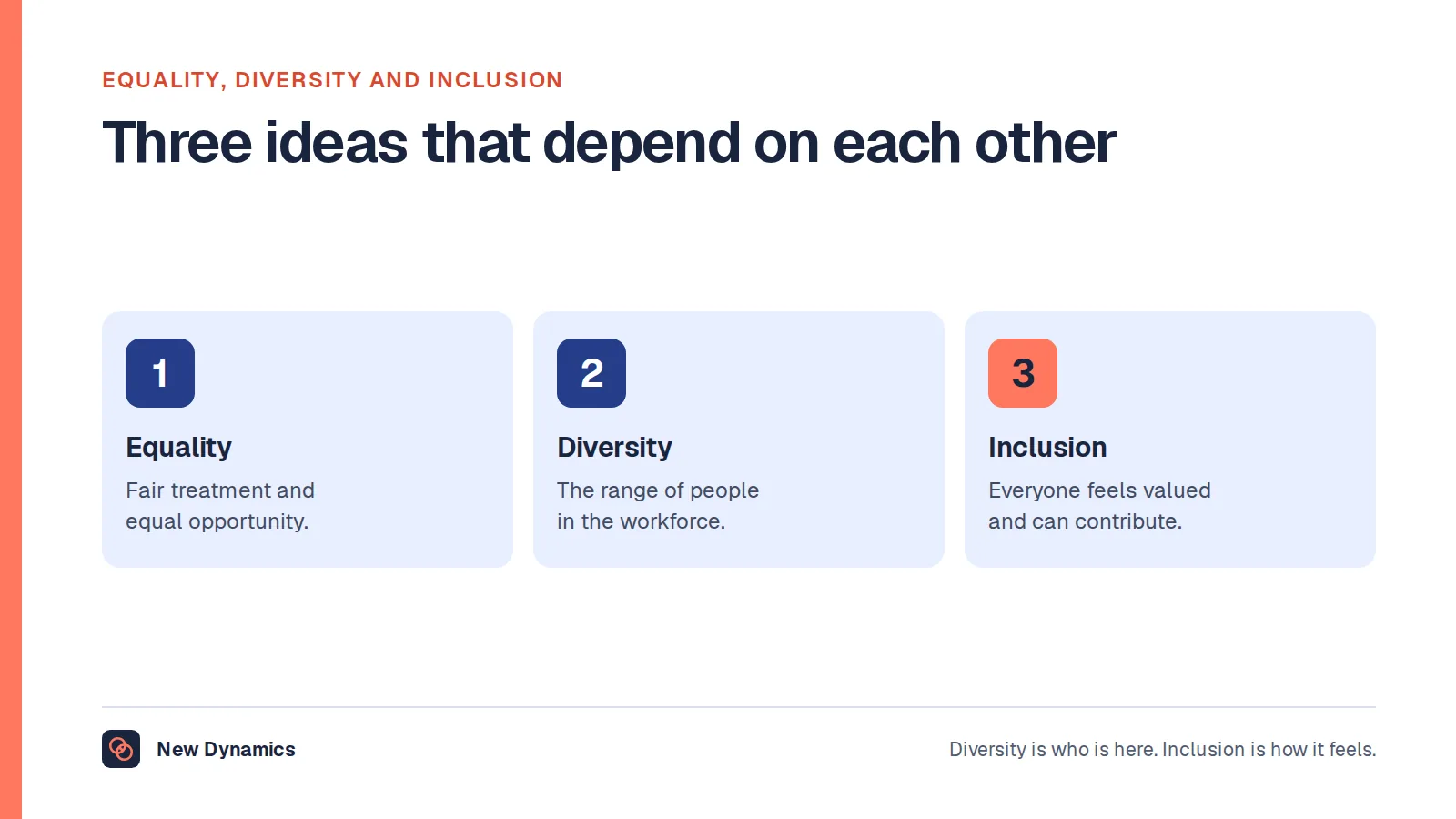
What diversity in the workplace means, how it differs from equality and inclusion, the benefits Acas identifies, common pitfalls and six practical steps for employers.
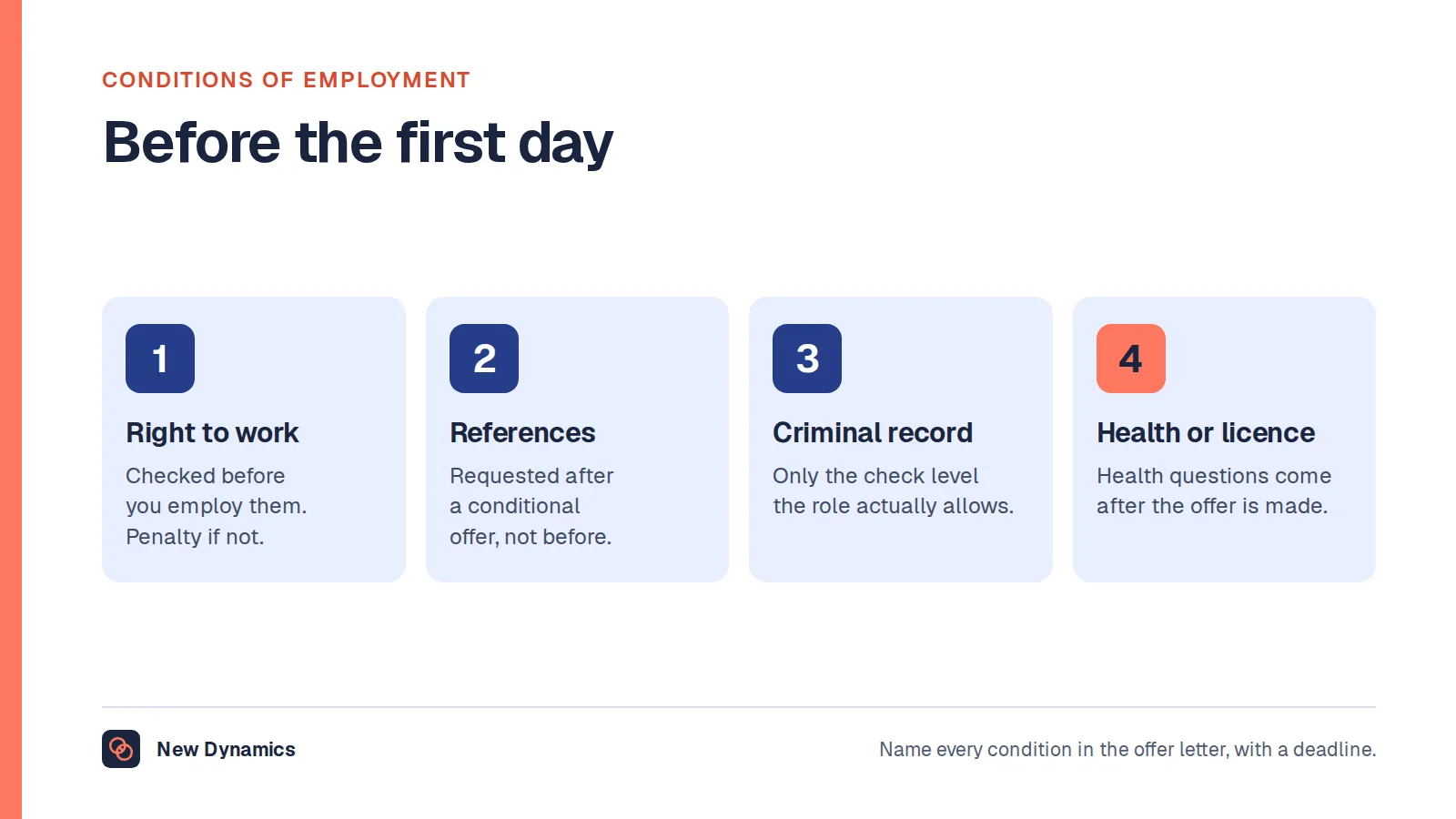
Conditions of employment means two different things: the conditions someone must satisfy before employment begins, such as a right to work check or a reference, and the terms and conditions that govern the job once it has. Both explained, with the offer wording, the written statement deadline and what to do when a condition fails.
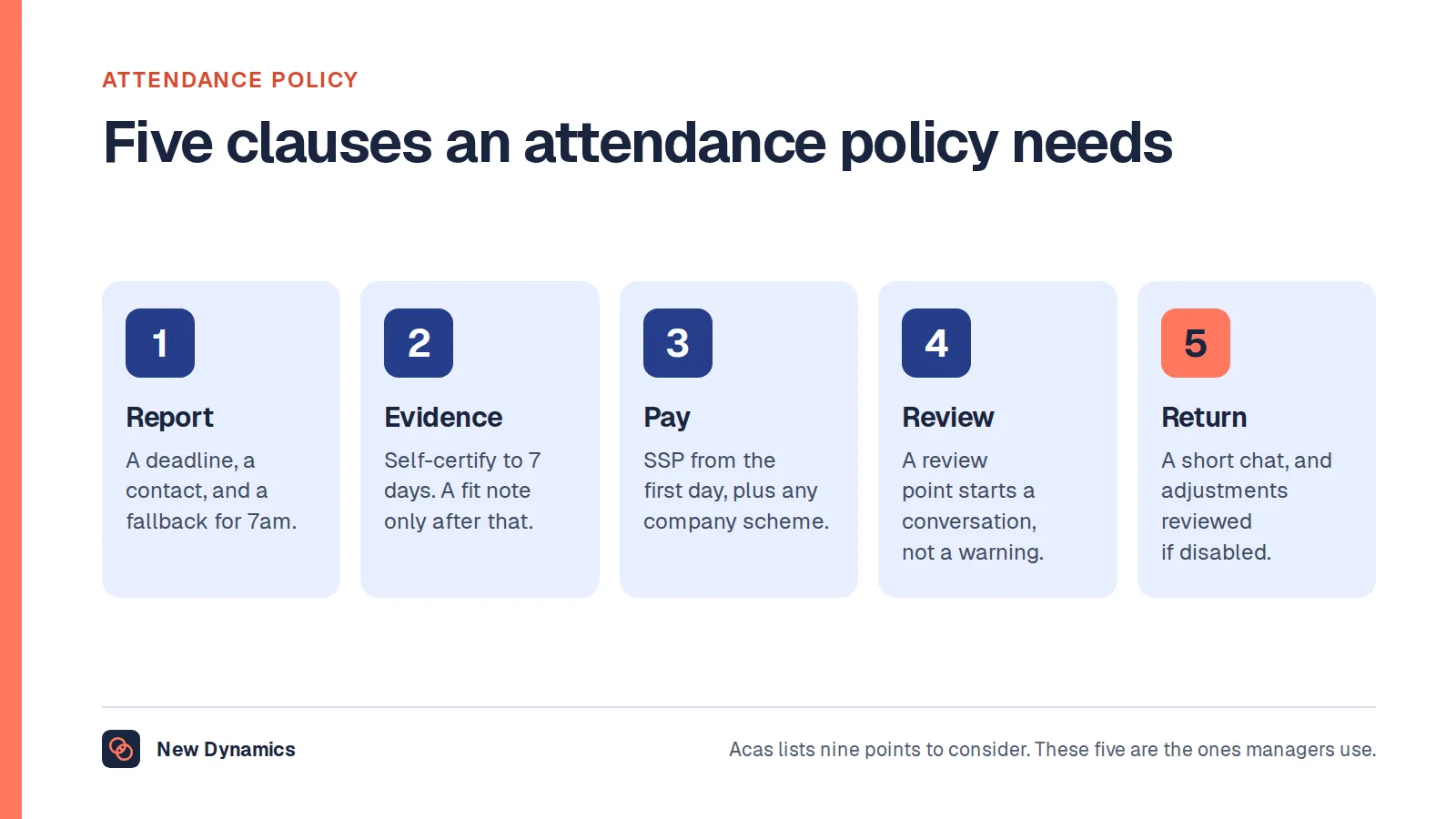
What an attendance policy must say, clause by clause: reporting, evidence and fit notes, pay, trigger points, return to work, lateness and unauthorised absence, and the line between capability and conduct.
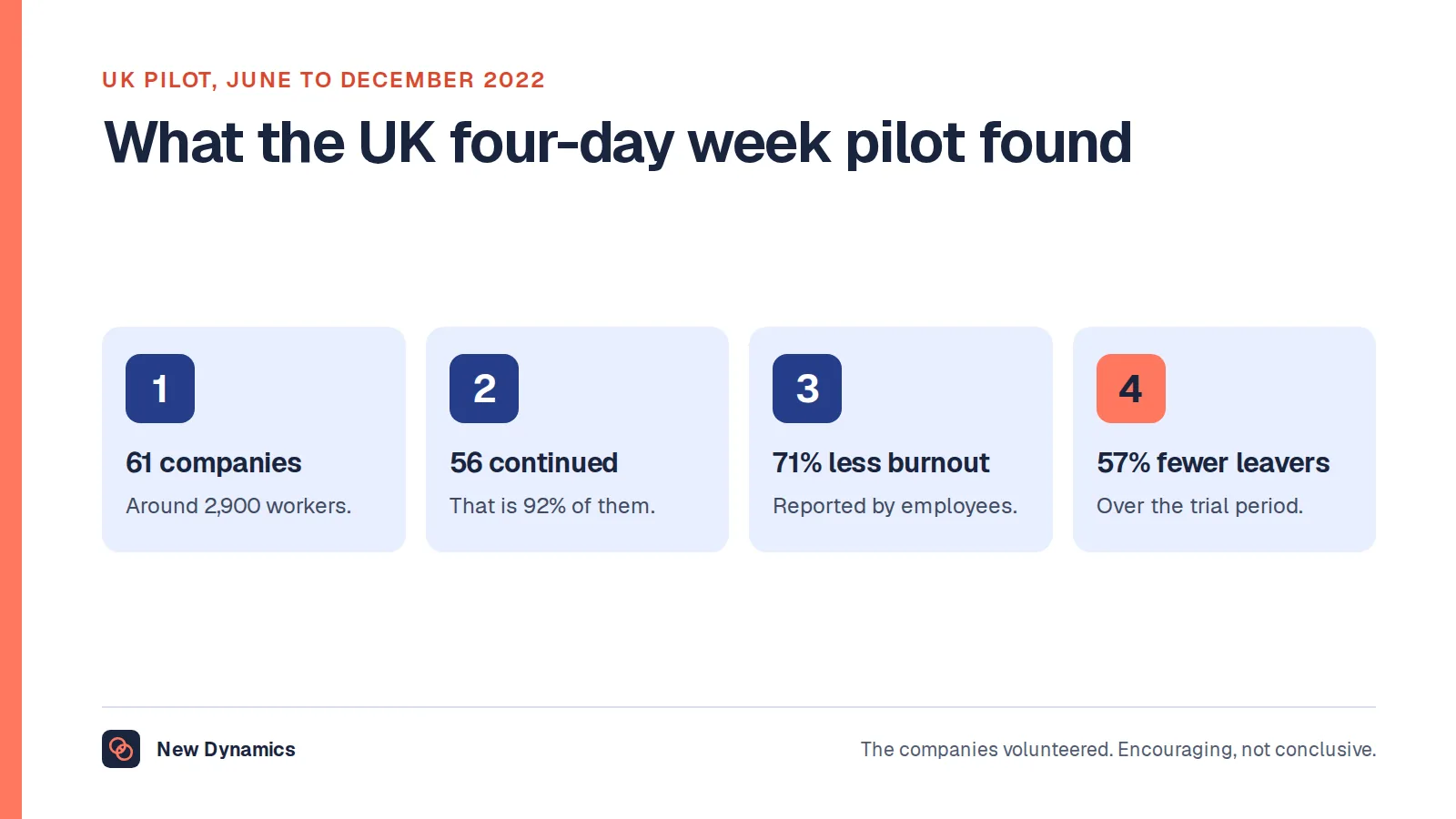
The benefits of a four-day work week, with figures from the UK pilot, the drawbacks employers report, the main models and six steps to run a fair trial of your own.
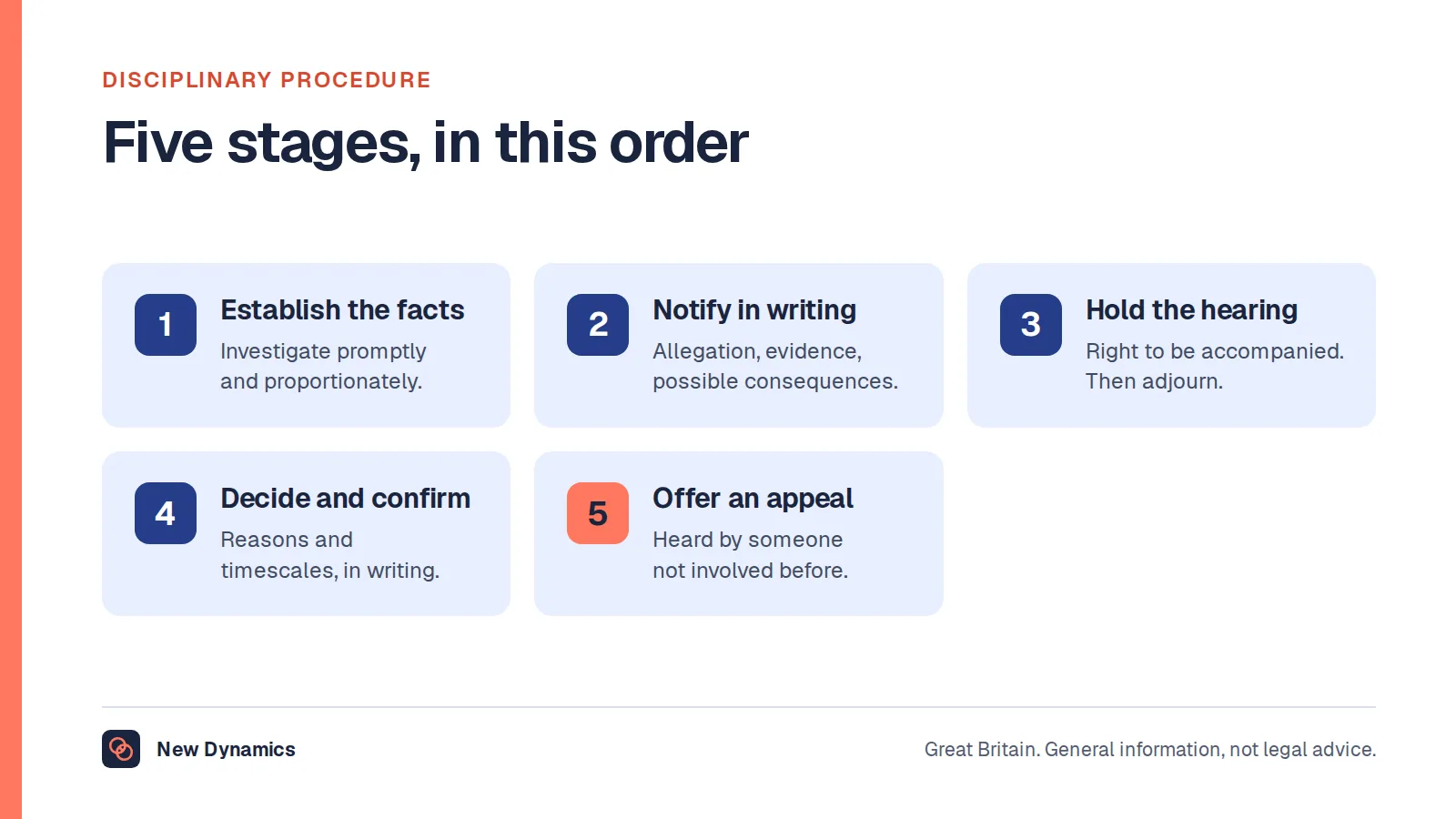
How to run a disciplinary procedure under the Acas Code: investigate, notify in writing, hold a hearing, decide, confirm and appeal, plus insubordination, instant dismissal, suspension and records.
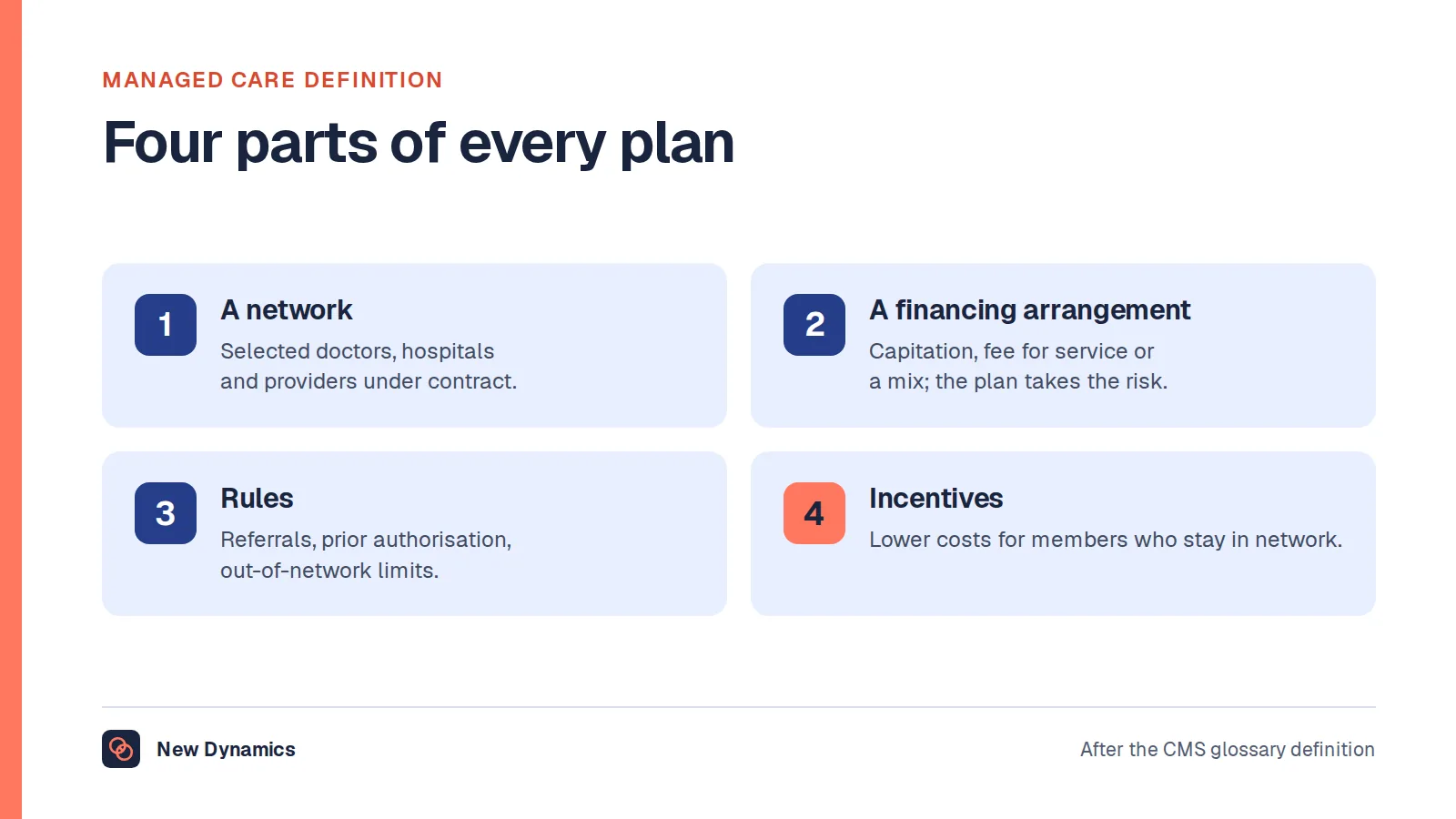
Define managed care: what it is, what a managed care organization (MCO) is, how HMO, PPO and point-of-service plans differ, how networks, prepayment and referrals control cost, as the CMS glossary describes them, and what HR teams offering US health plans need to know. Not benefits or legal advice.
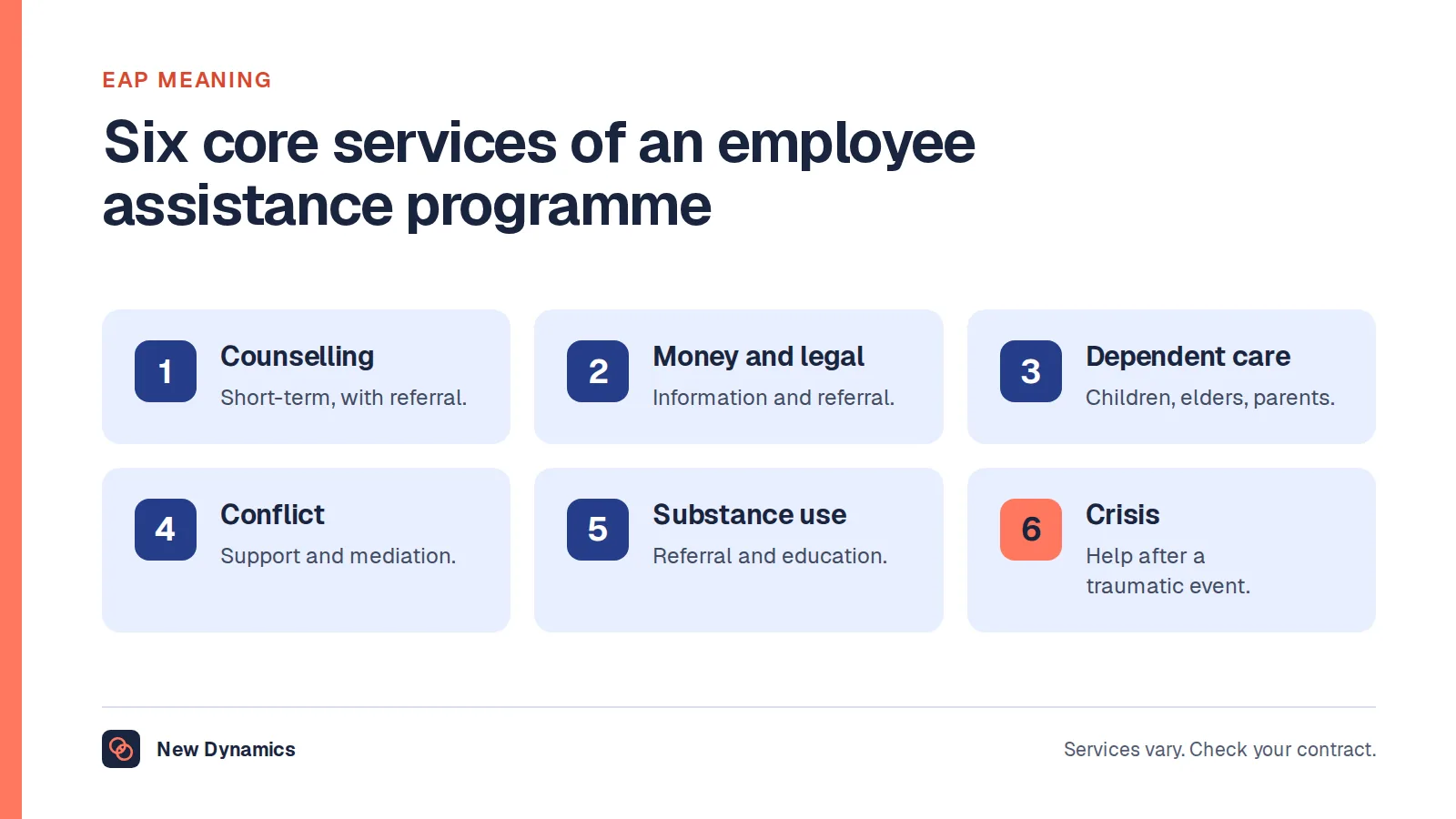
What EAP means at work: a plain definition, the six core services, three ways to run one, what stays confidential, how managers should refer people and how to judge it.
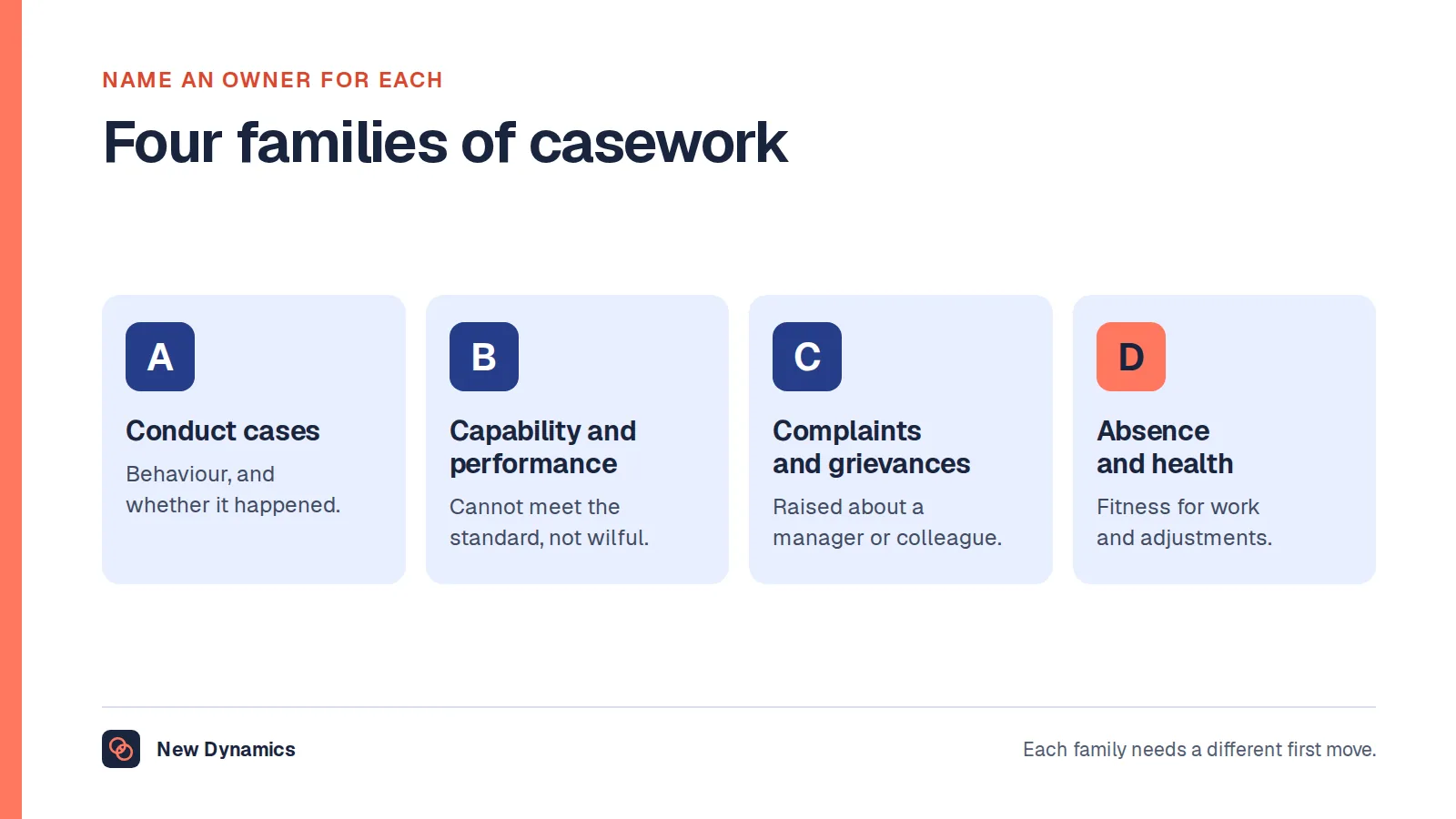
How an employee relations function works in practice: the case types it carries, the split between the manager who decides and the specialist who advises, the casework lifecycle and record, informal versus formal, consistency, confidentiality and three measures worth keeping.
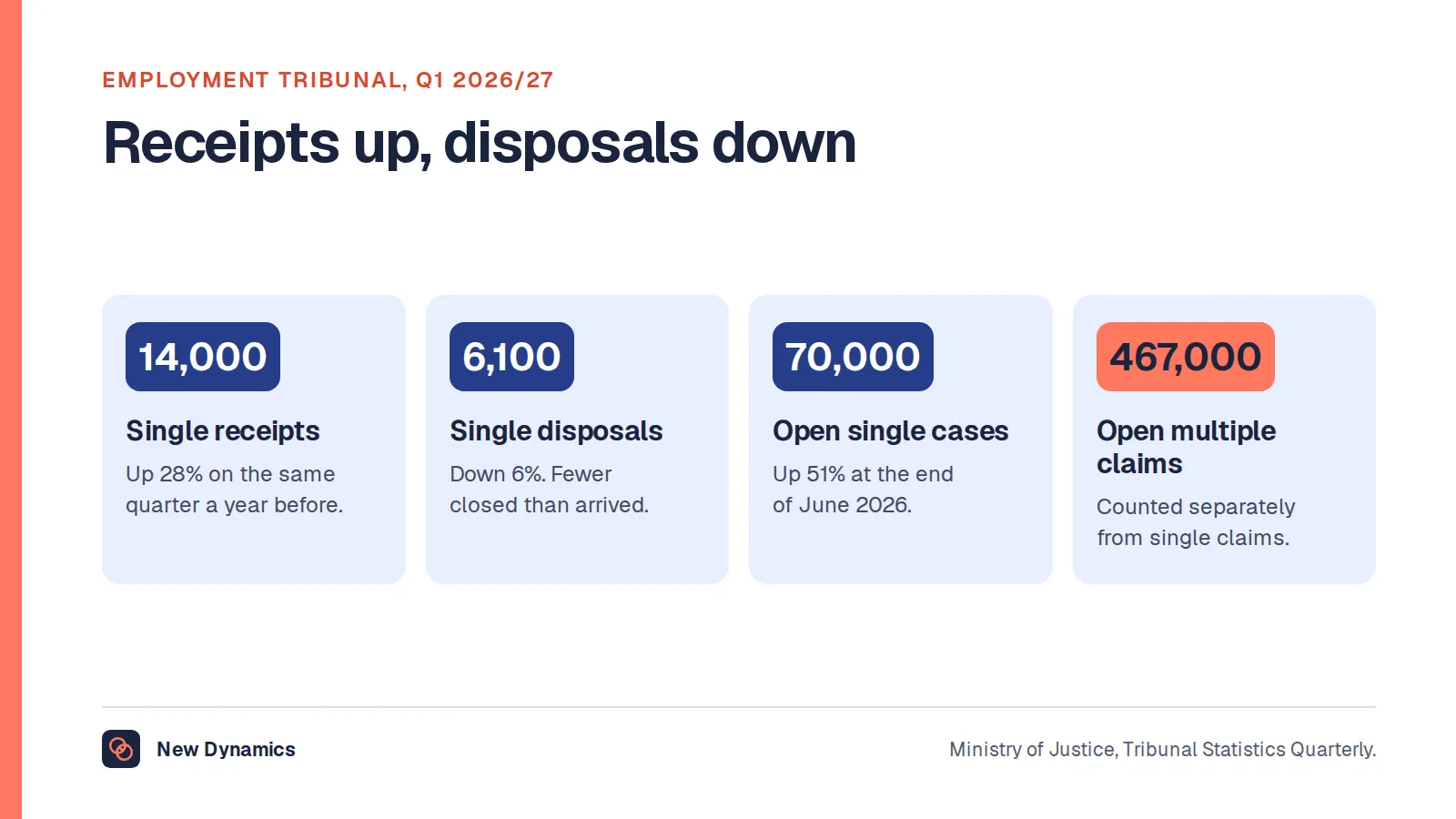
The official UK employee relations figures, checked at source: employment tribunal receipts and open caseload, Acas early conciliation outcomes, redundancy levels and the unfair dismissal qualifying period. Plus the grievance and disciplinary numbers nobody collects, and what to measure instead.
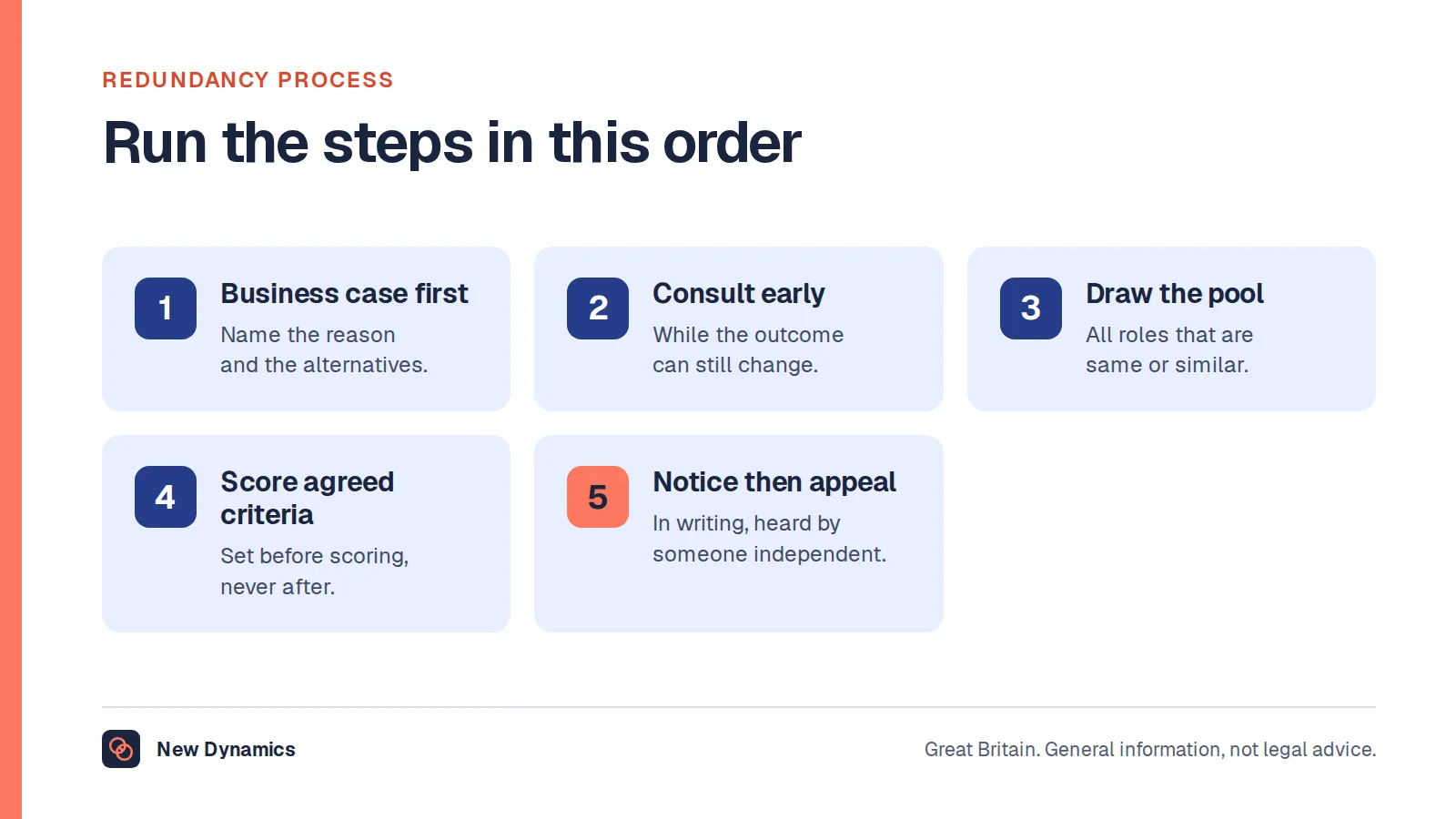
How the UK redundancy process works in order: the business case, consultation, pools, selection criteria, notice, pay and appeals, with the rules quoted from GOV.UK and Acas and the evidence a tribunal looks for.
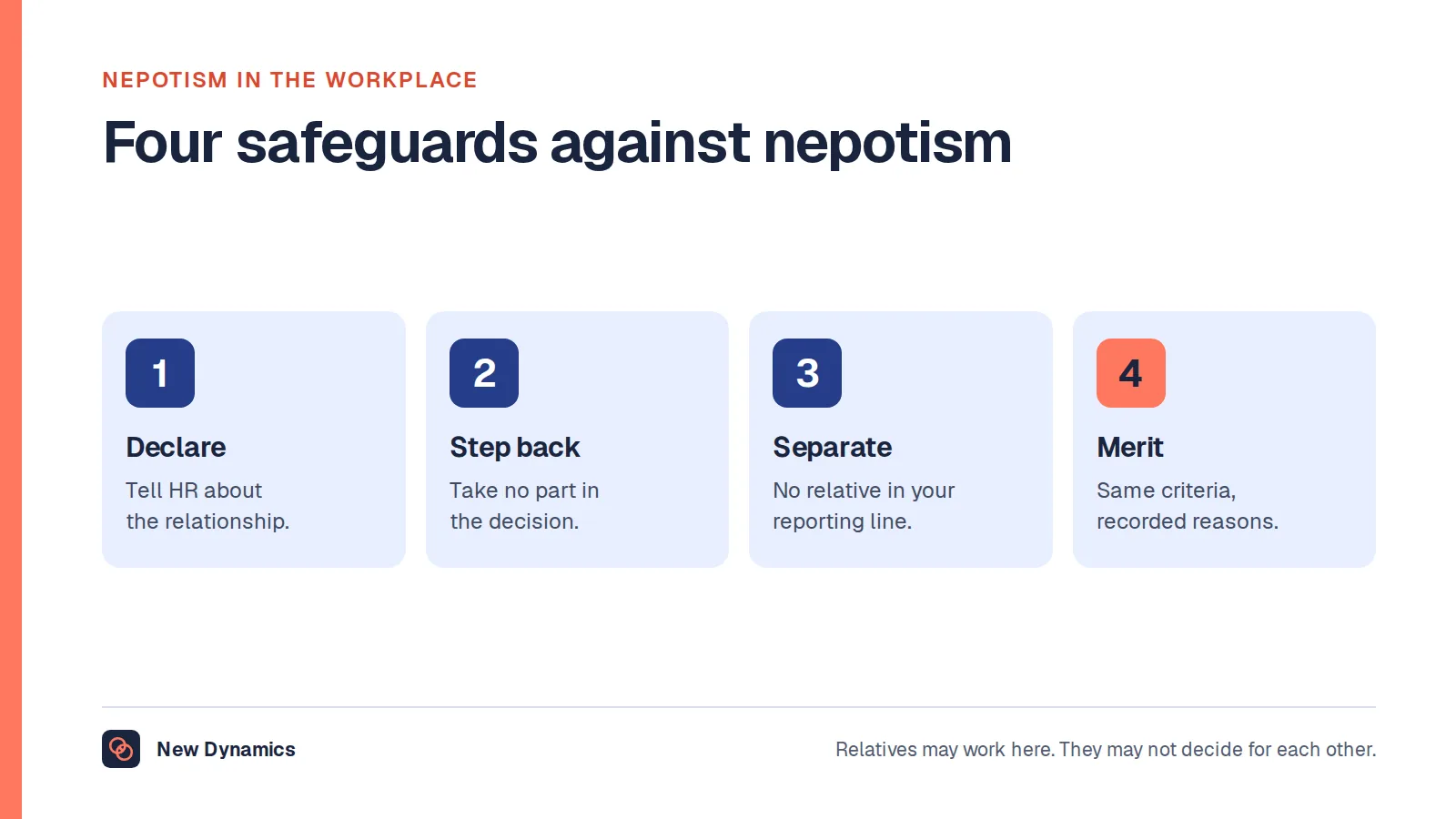
What nepotism in the workplace means, examples, how it differs from favouritism and cronyism, the legal risks, a sample policy and what to do if you see it happening.
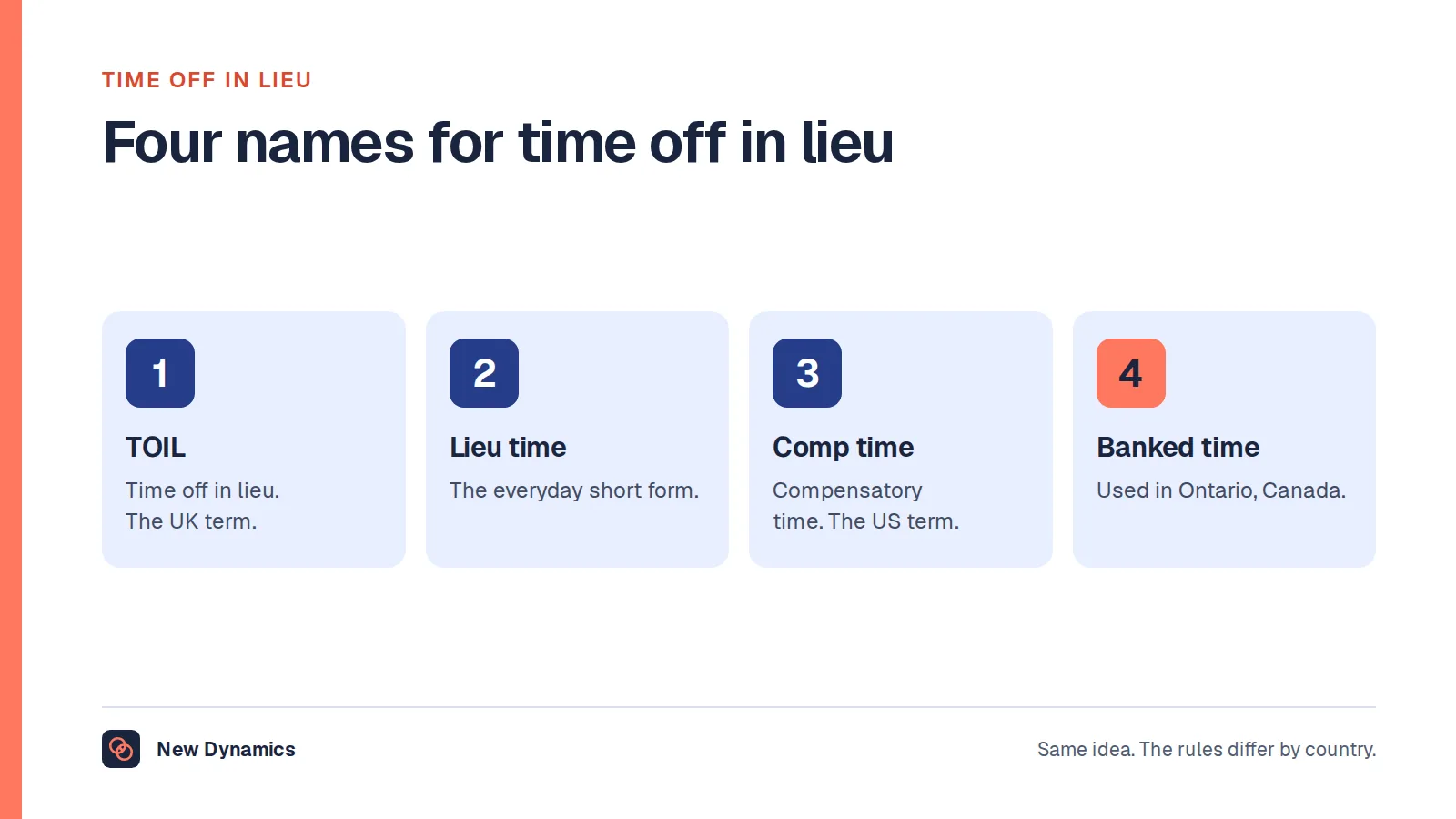
What time off in lieu means, how TOIL, lieu time and compensatory time differ, what UK, Ontario and US rules say, and a six-part policy that keeps it fair.