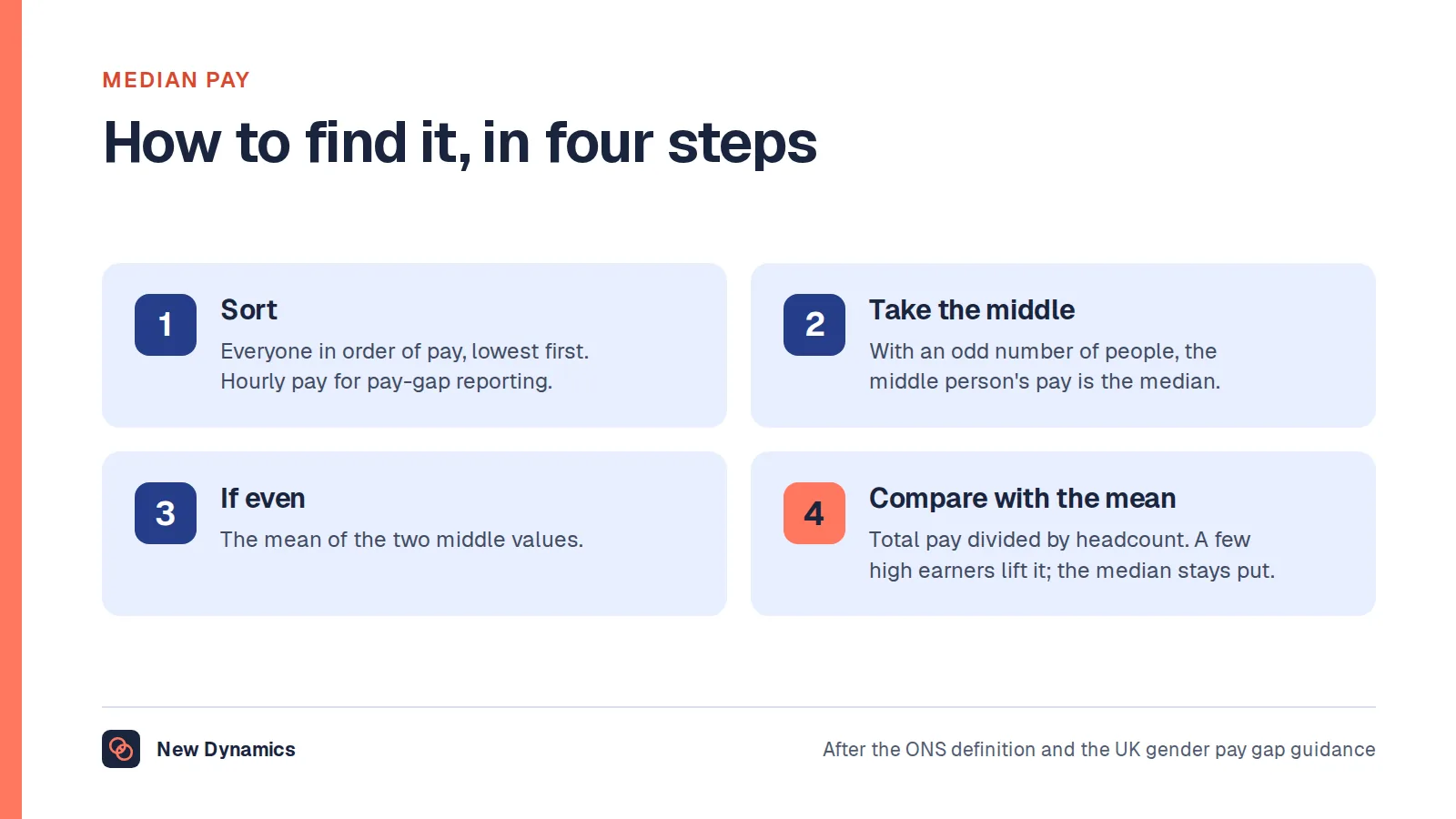
What median pay means, as the ONS defines it and the UK pay gap guidance calculates it: the middle earner's pay, how it differs from the mean, a worked example, quartiles and percentiles, and how HR uses the median in benchmarking, pay gap reporting and pay bands.
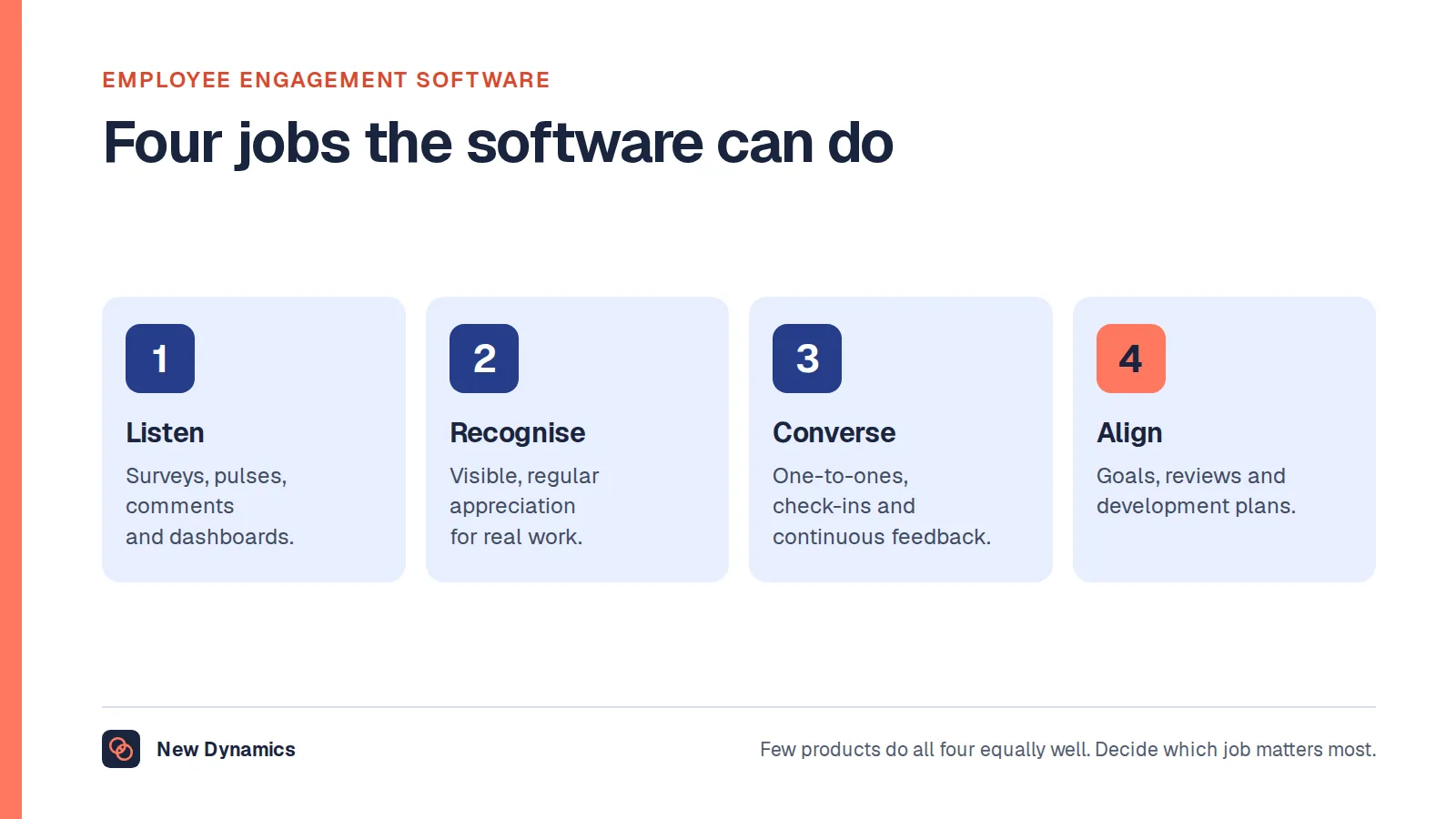
Choose employee engagement software with confidence: what it does, what it cannot fix, 10 evaluation criteria and 15 vendor questions. Build your shortlist.
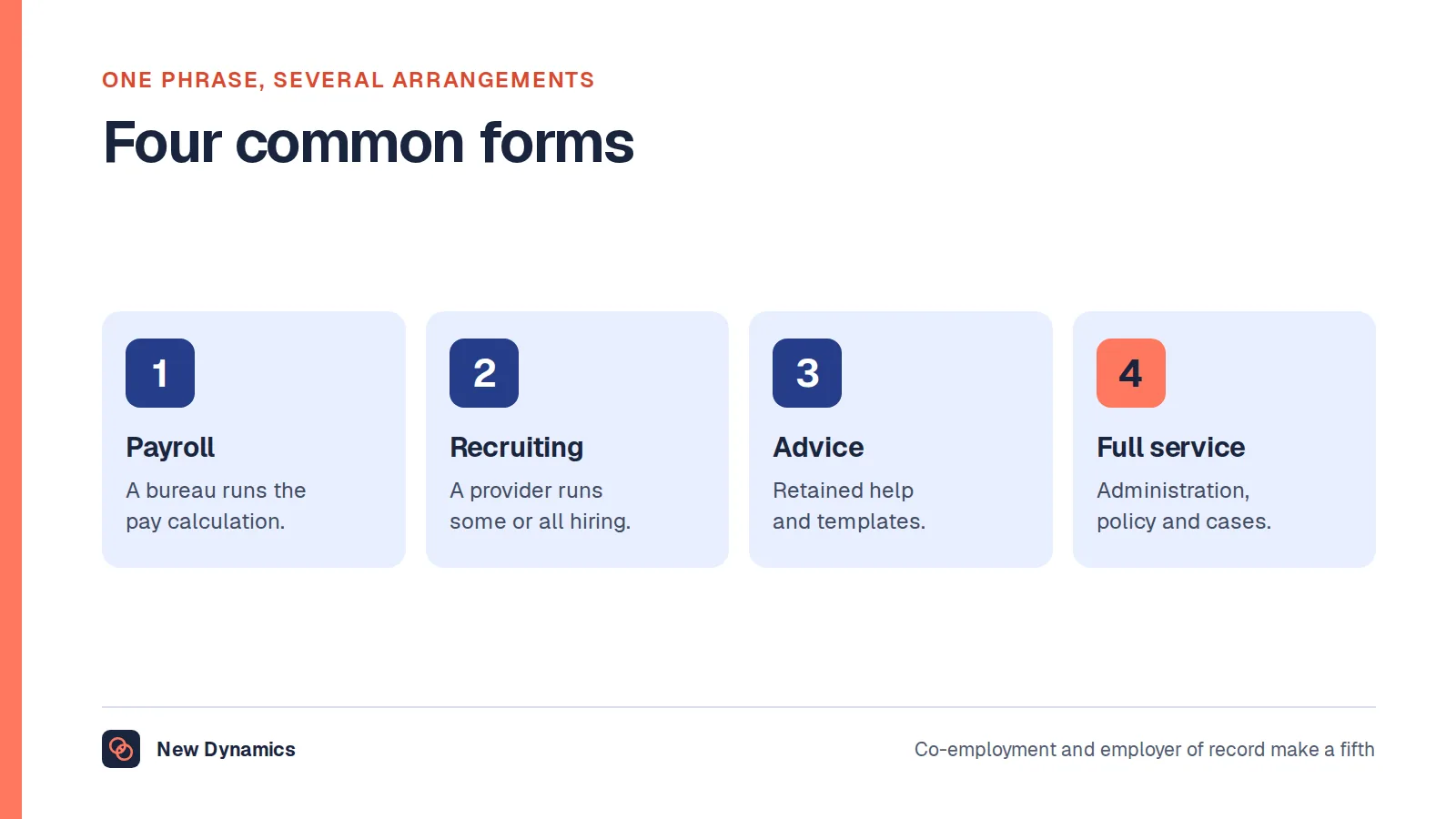
What HR outsourcing means, the five common arrangements, the one question that separates them, the duties that stay with the employer, and what to check in a contract.
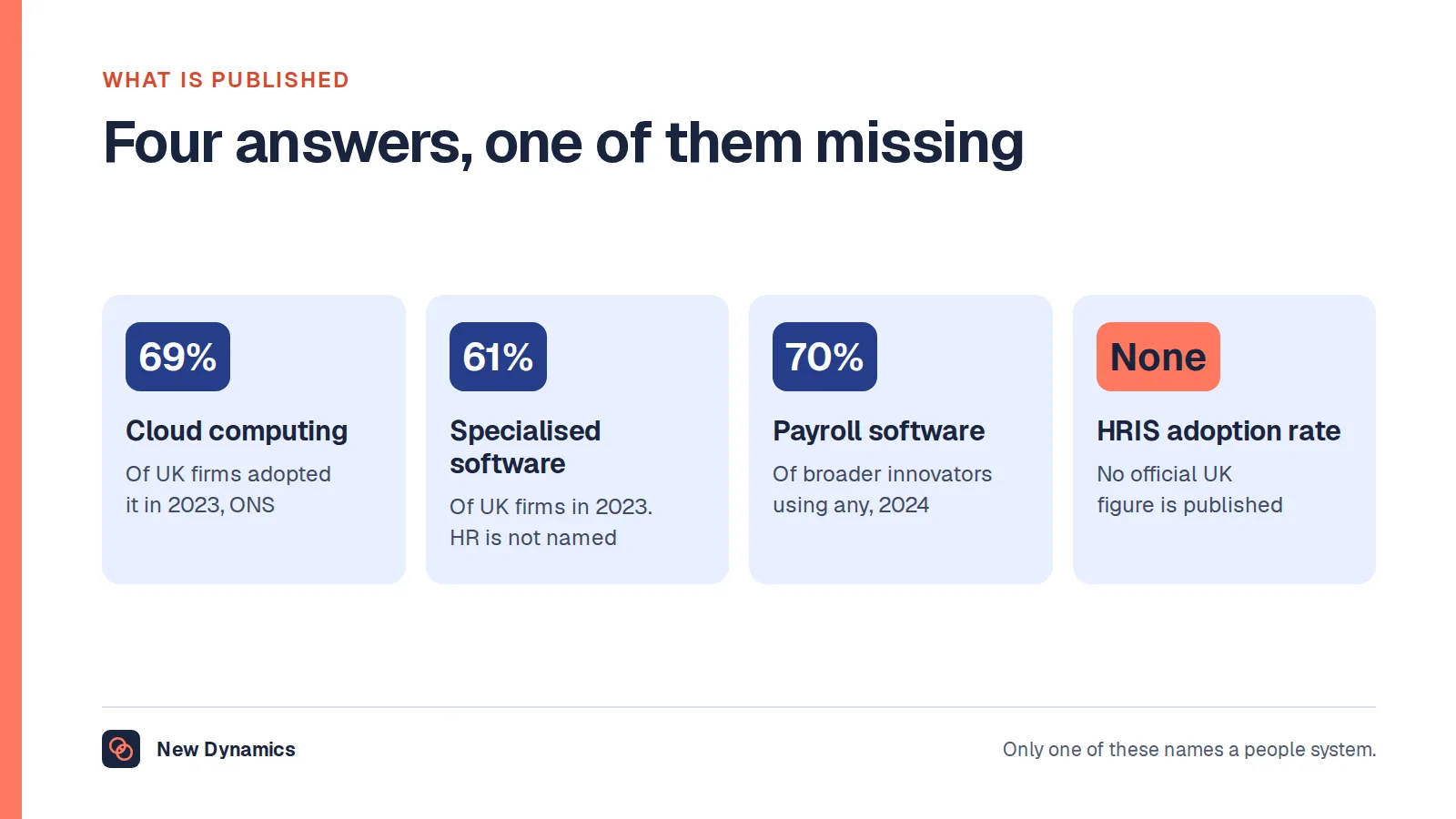
There is no official UK statistic for HRIS adoption. Here is what the ONS and DSIT do publish on business software, cloud and AI adoption, why nobody measures the time HR spends on admin, and how to measure your own.
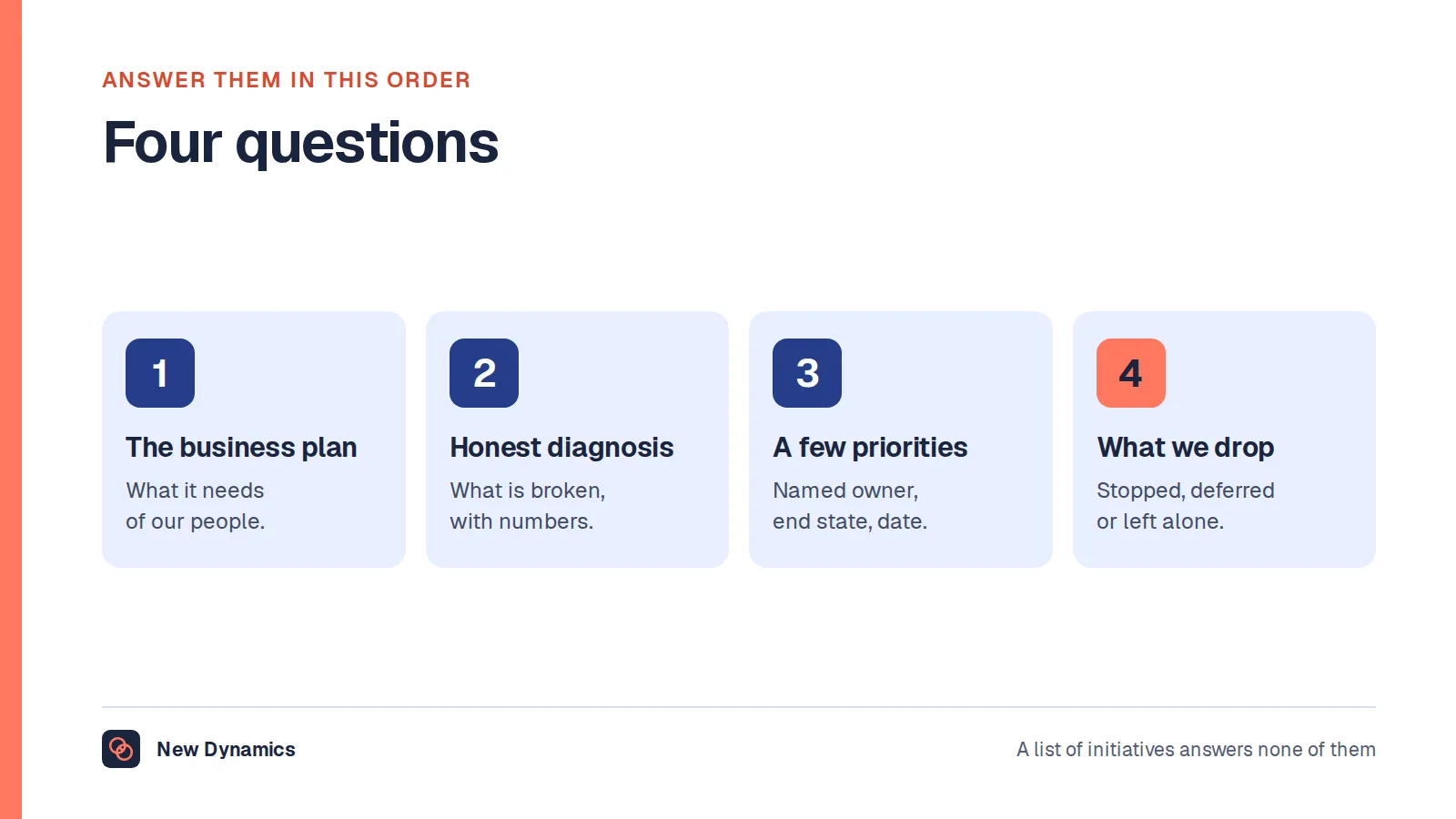
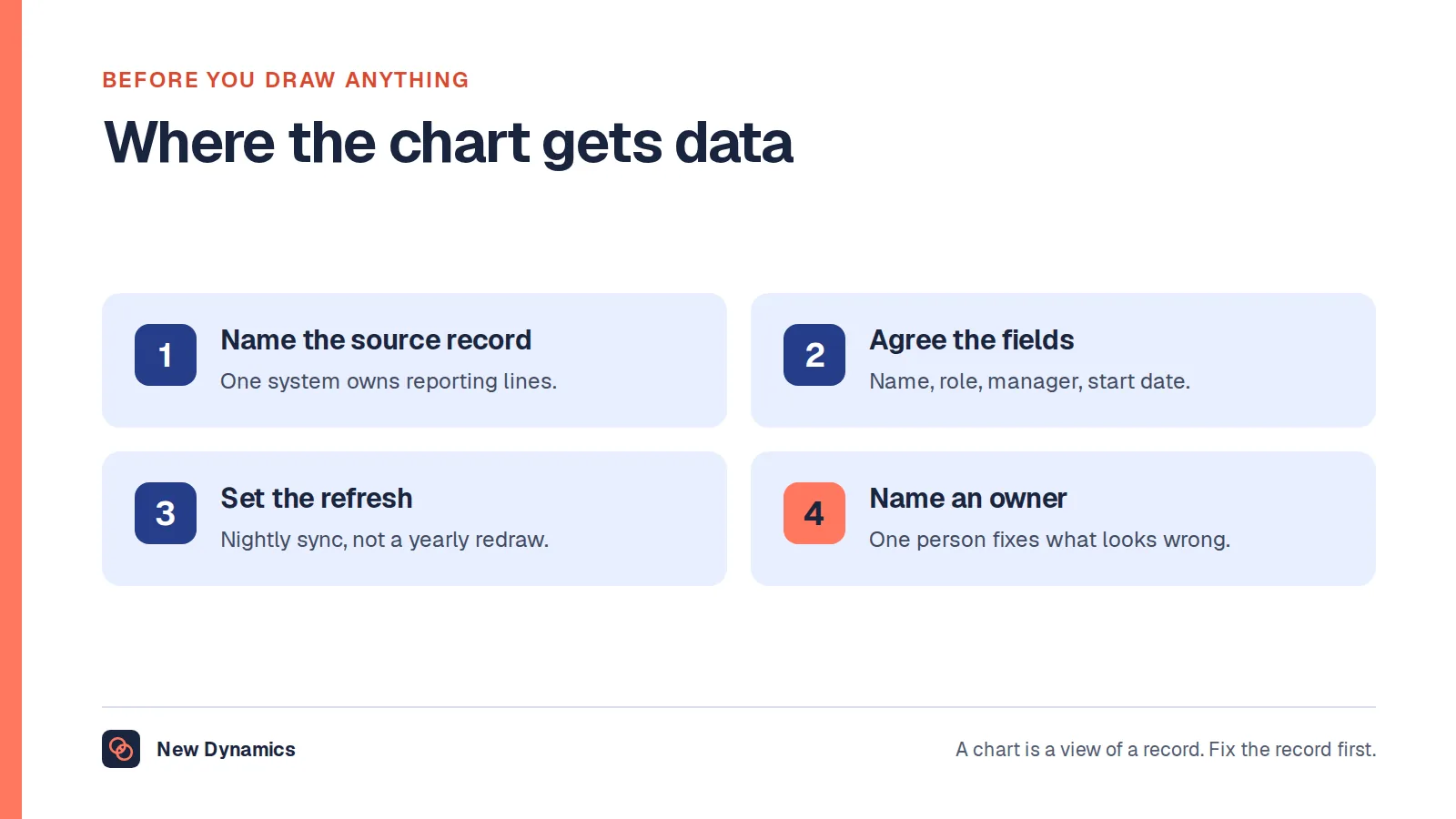
How to write an HR strategy that makes choices instead of listing ambitions: starting from the business plan, diagnosing with data you already hold, naming what you will drop, and a section-by-section outline you can copy.
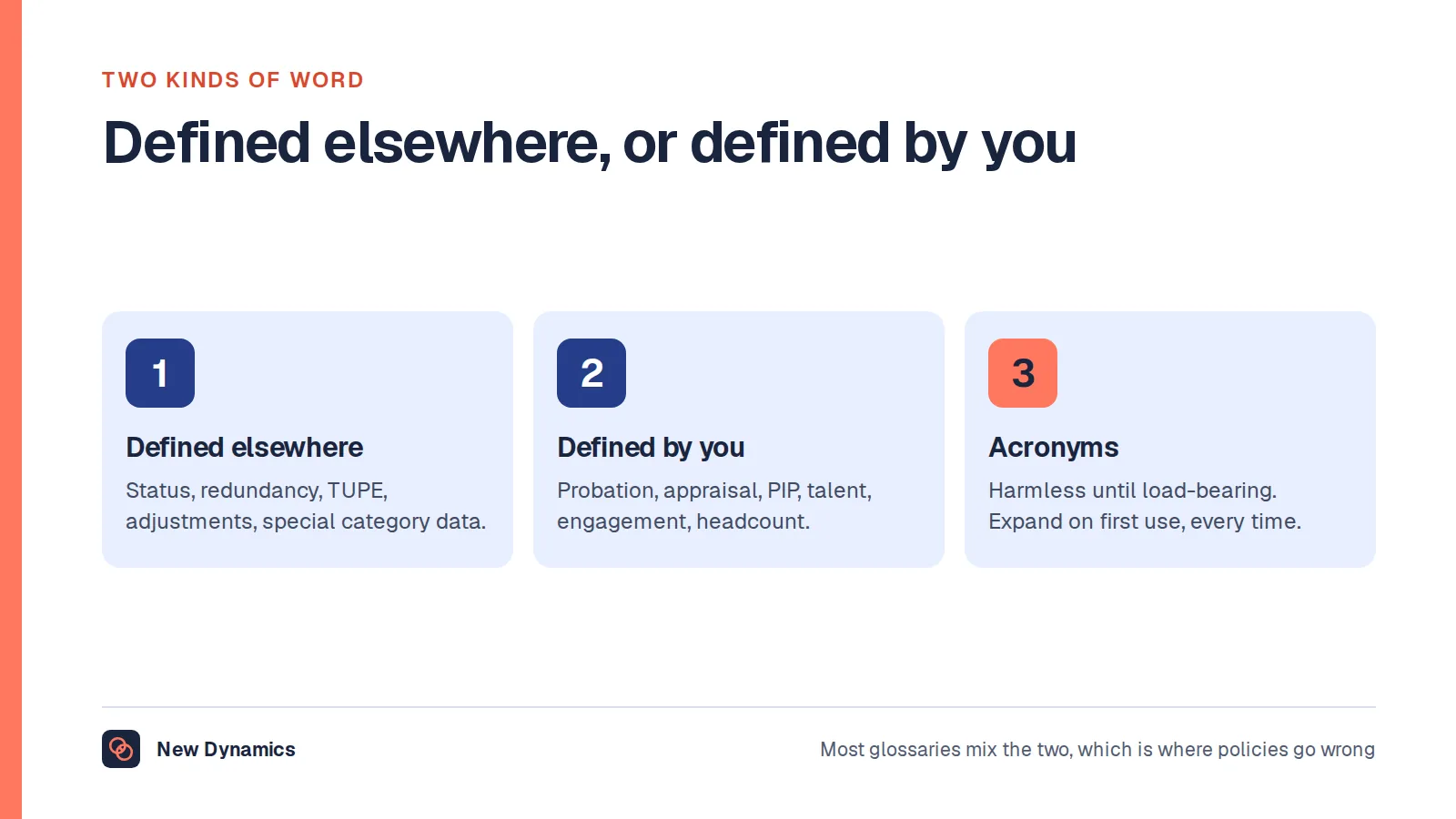
HR definitions that can be checked: the terms with a legal meaning in the UK, each with its source, the terms every employer defines differently, the acronyms expanded, and how to tell which kind of word you are reading.
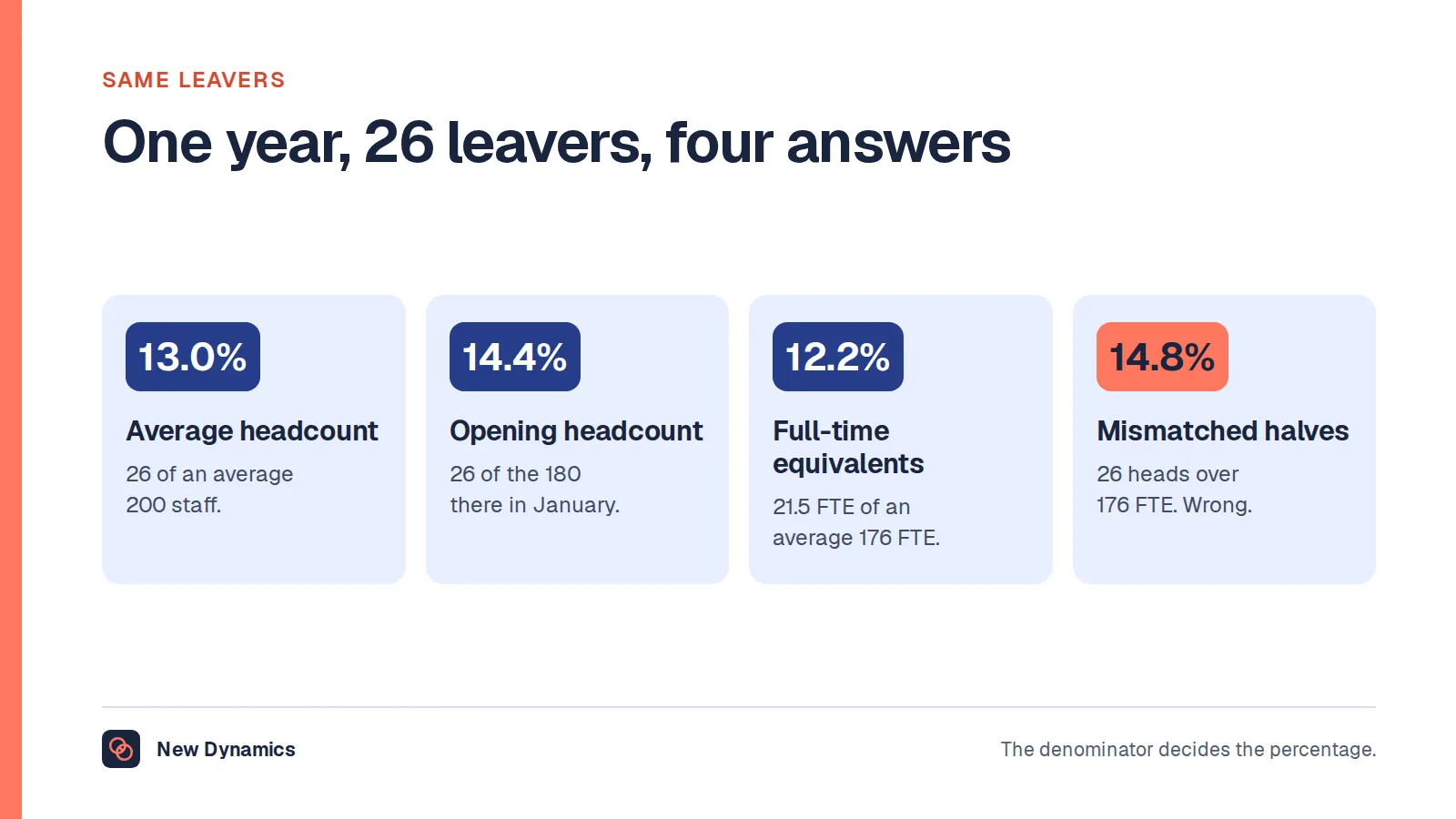
How the employee turnover calculation actually works: the formula, the three denominators run through one worked example, attrition against turnover, annualising a part-year figure, and a checklist for your own data.
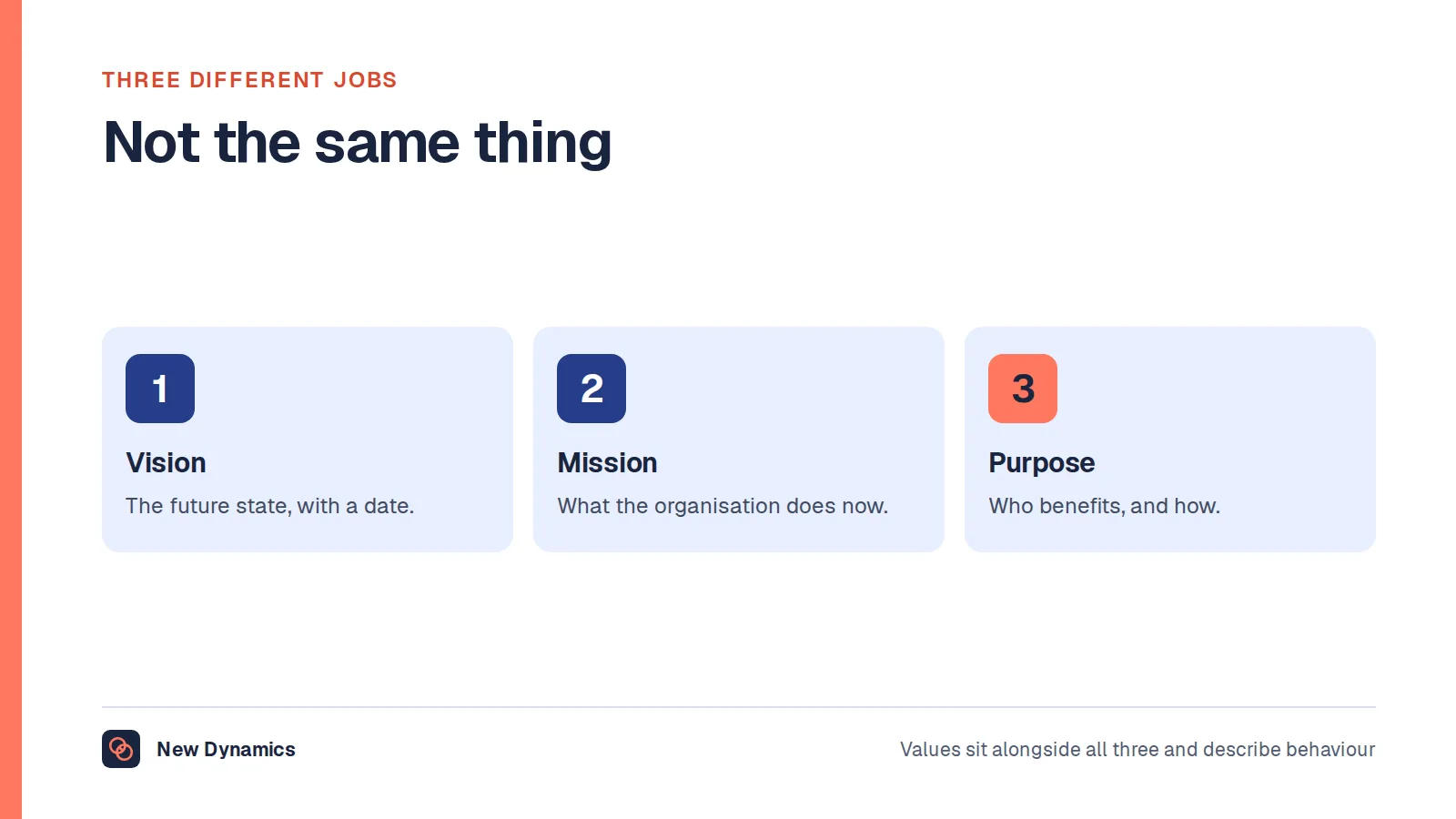
What a vision statement is, how it differs from a mission, two real published examples read closely, the test that separates a vision from a slogan, and a template.
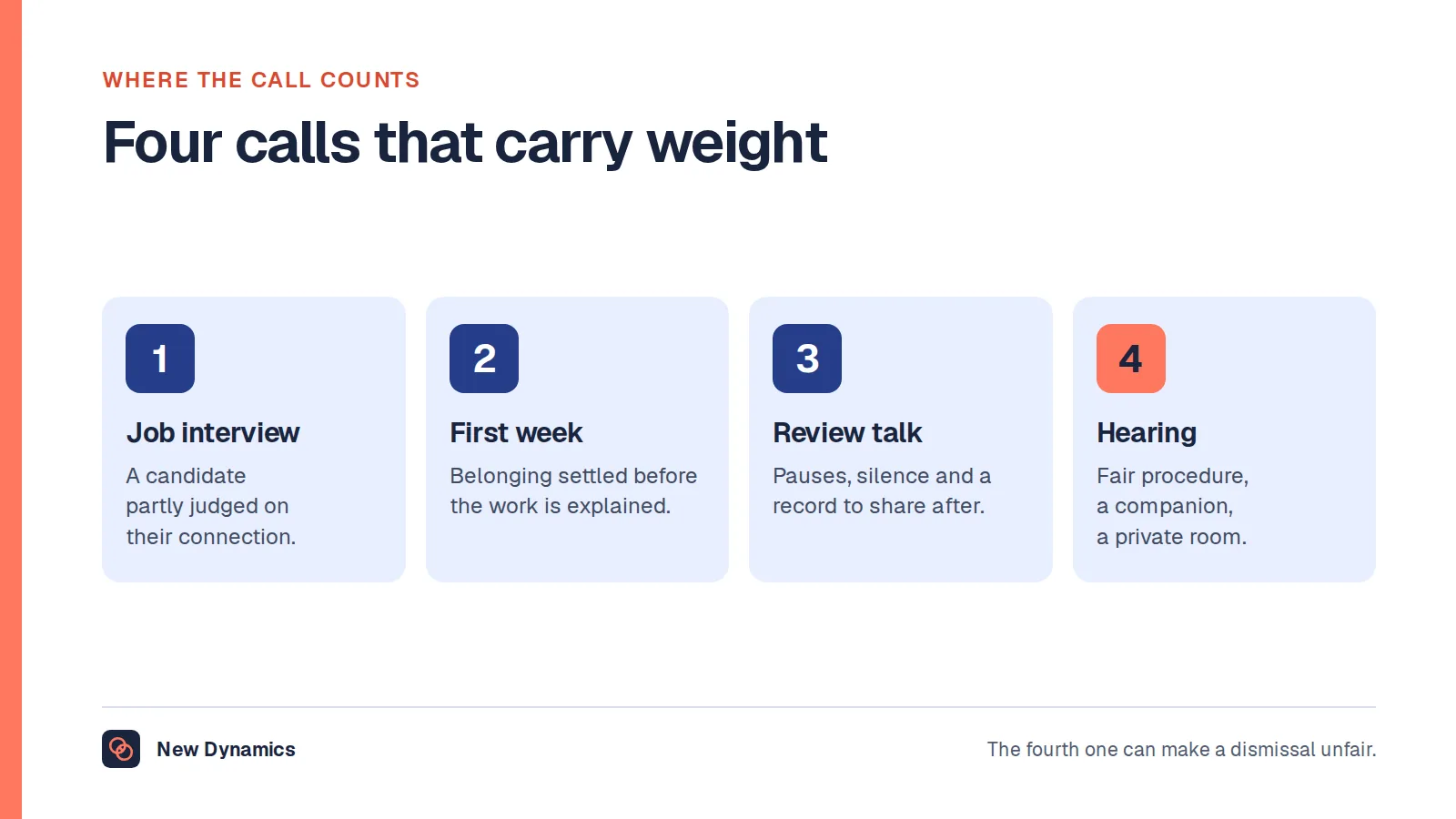
A vendor-neutral guide to video conferencing software for HR: the four workplace calls that carry real weight, what each demands of the tool and the organiser, recording and consent, accessibility, and what to check before you standardise.
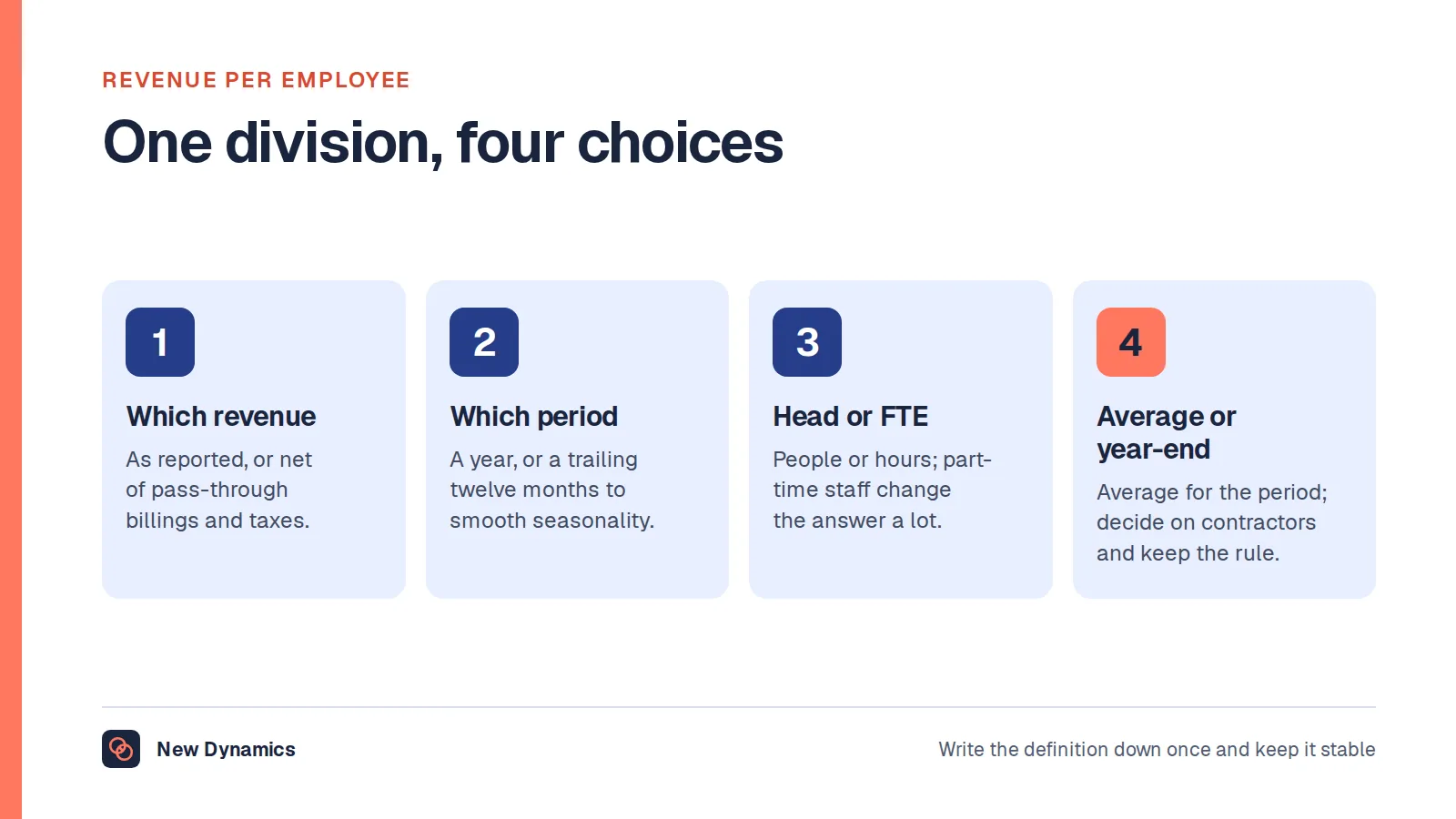
What revenue per employee means and how to calculate it: the formula and the four choices behind it, a worked example, how it relates to the ONS's productivity measures, what moves the number and what does not, why it cannot be compared across industries or business models, five good uses, three bad ones, and how to put it on a KPI tracker with a paired safeguard.
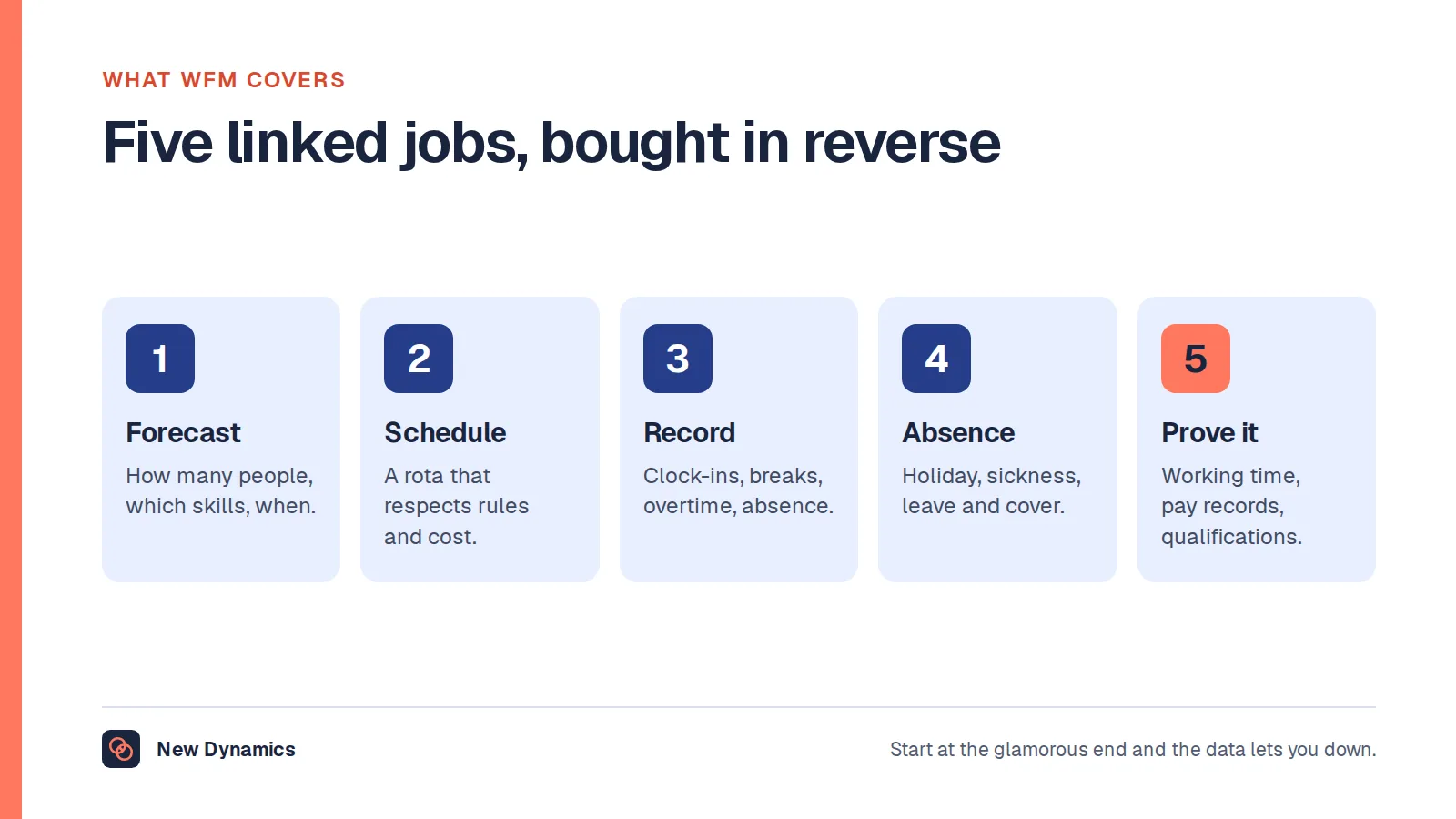
What workforce management software includes beyond rotas: demand forecasting, scheduling, time and attendance, absence and compliance. The fatigue duty that sits above the rules, what to buy in what order, and the questions to ask.
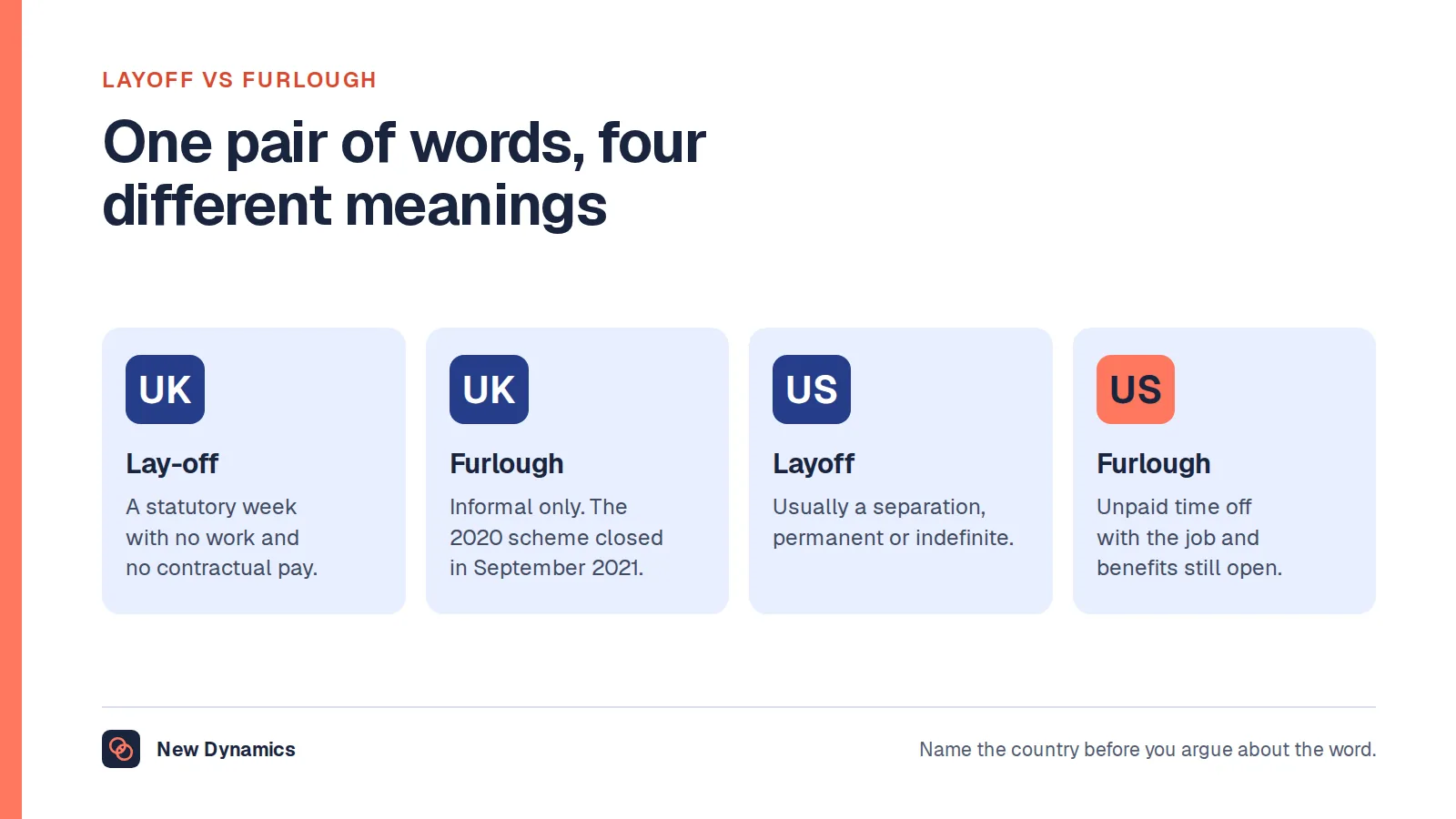
Lay-off and furlough mean different things in the UK and the US. The statutory UK lay-off thresholds, guarantee payments, the closed furlough scheme, and the US WARN notice rule, with the official wording.
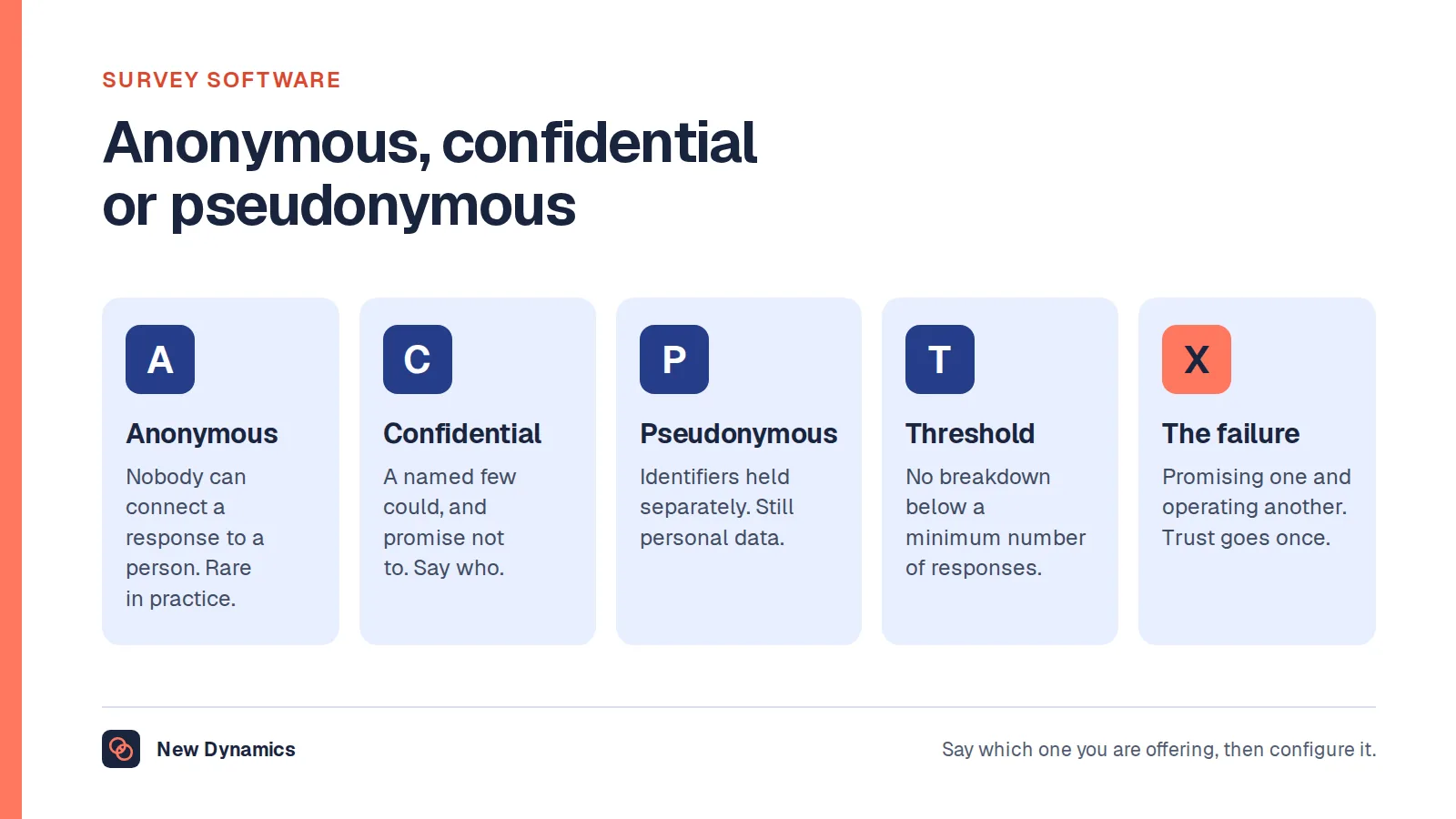
How to choose employee survey software without a vendor list: whether anonymous really means anonymous, the small-team problem, what pulse tools get right and wrong, the reports that matter, and the questions to ask before you buy.
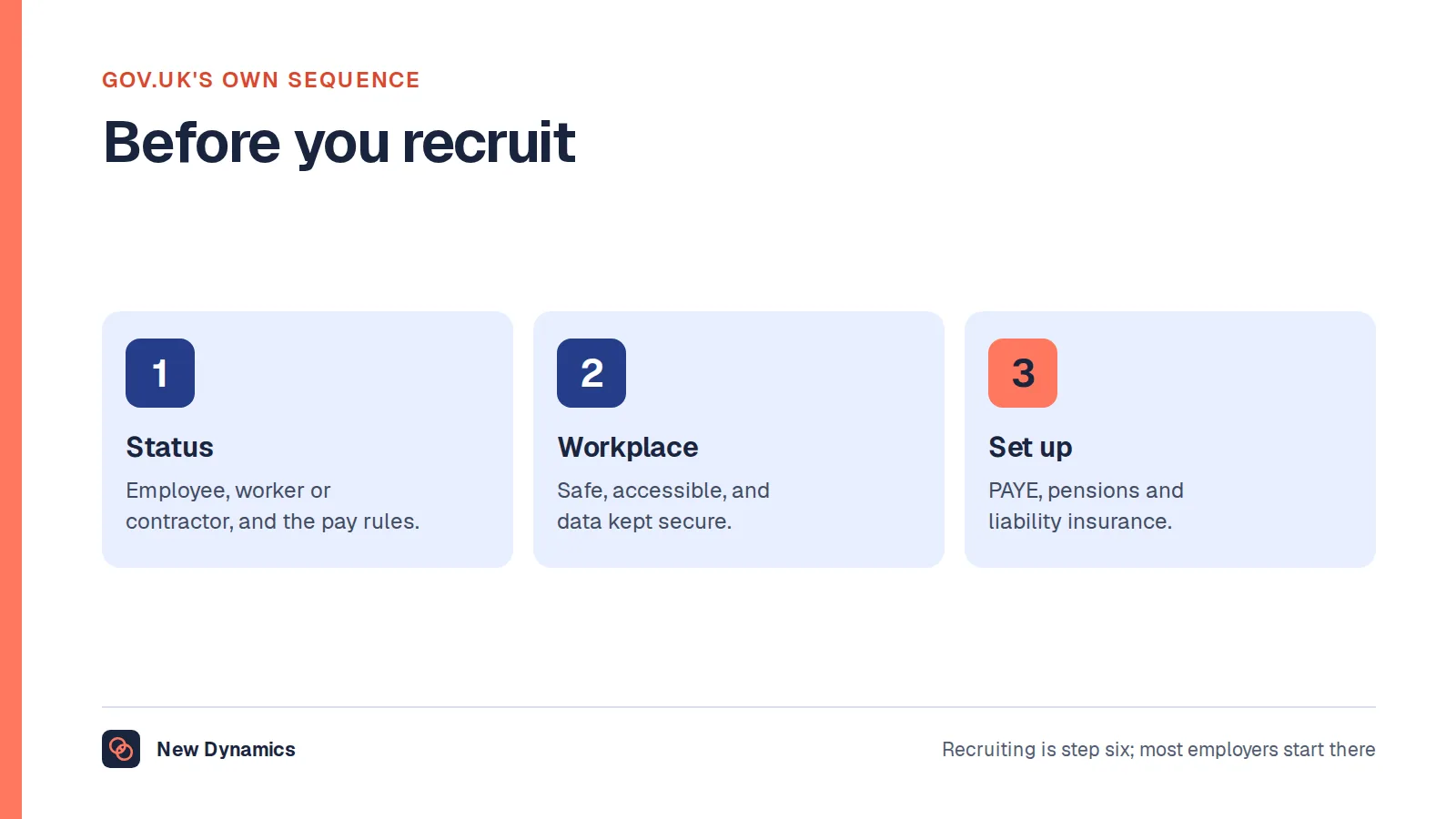
What HR compliance actually requires: the government's six steps to employing someone, the day-one written statement, right to work checks, PAYE, pensions and insurance.
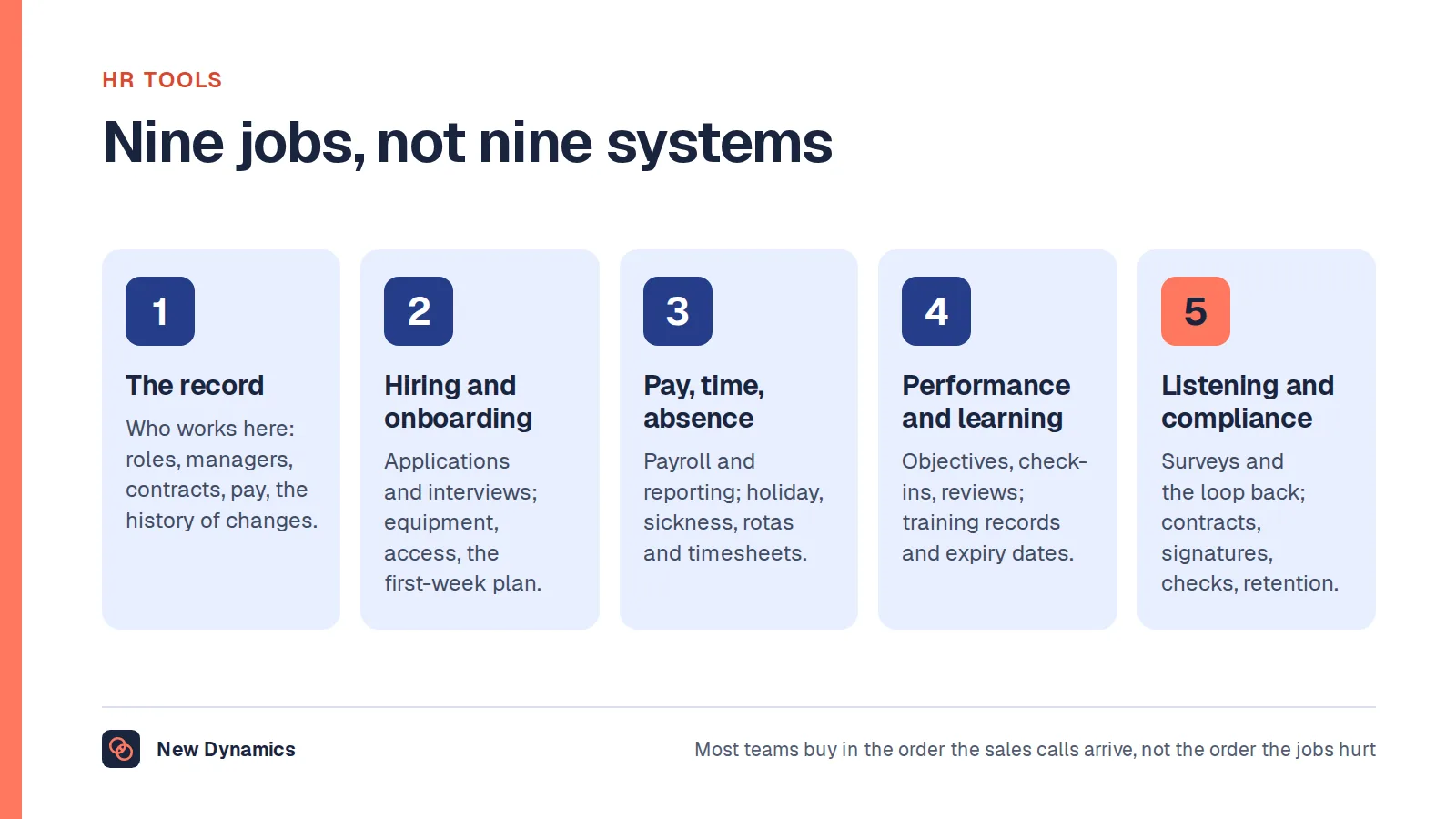
A map of HR tools by the job they do: the record, hiring, onboarding, pay, time and absence, performance, learning, listening, and documents and compliance. What a team of ten, fifty and two hundred actually needs, what belongs in a spreadsheet, the four questions to ask before buying, and the data protection duties that come with every tool.
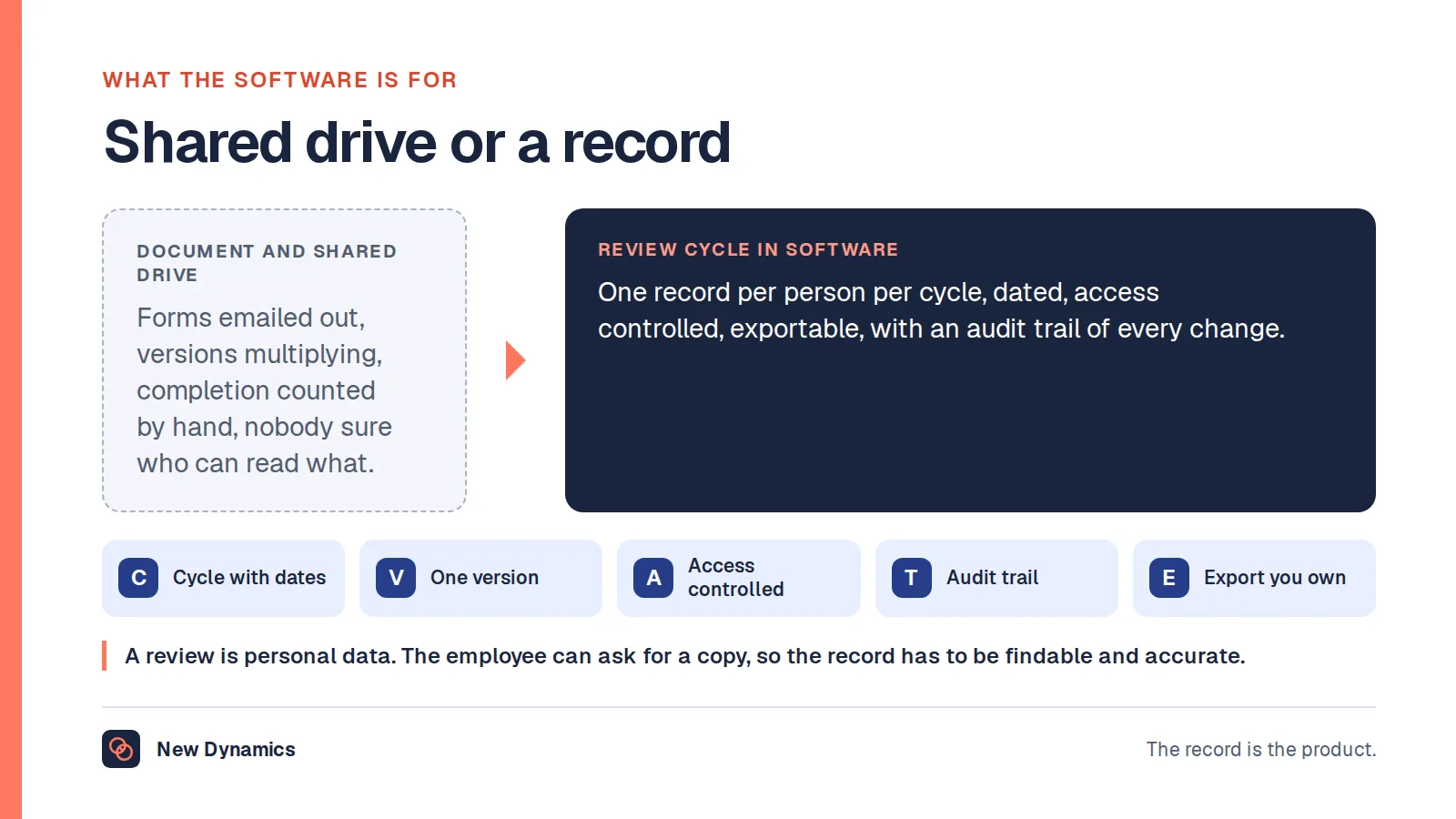
What performance review software has to do that a document cannot: cycle setup, self and manager review, calibration, sign off and the audit trail, what breaks in practice, and what to make a supplier show you live. Start with your own cycle.
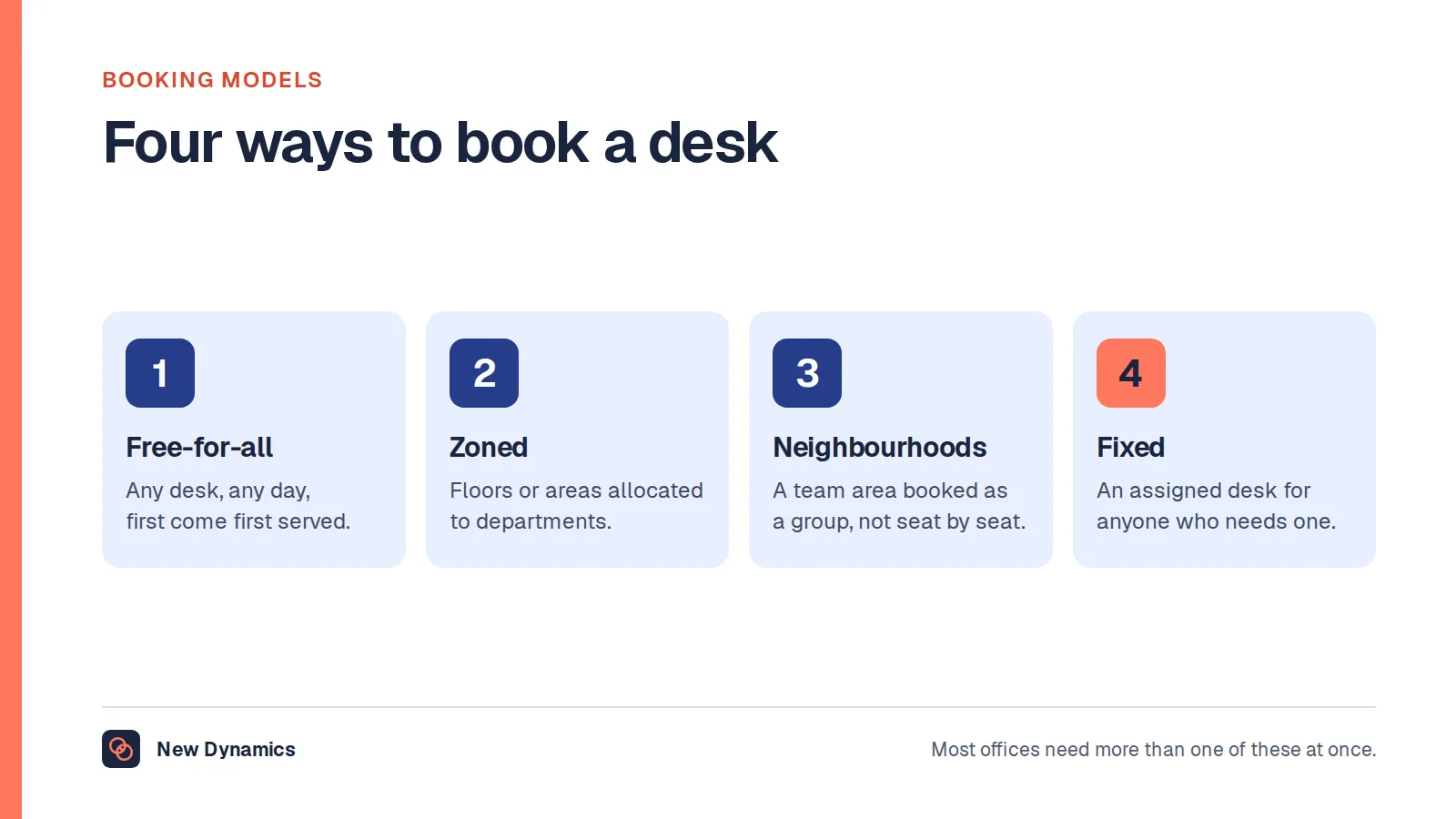
A vendor-neutral guide to desk booking software: the people-to-desks ratio underneath the purchase, four booking models, the accessibility problems nobody lists, what the data can honestly tell you, and the UK duties on booking records.
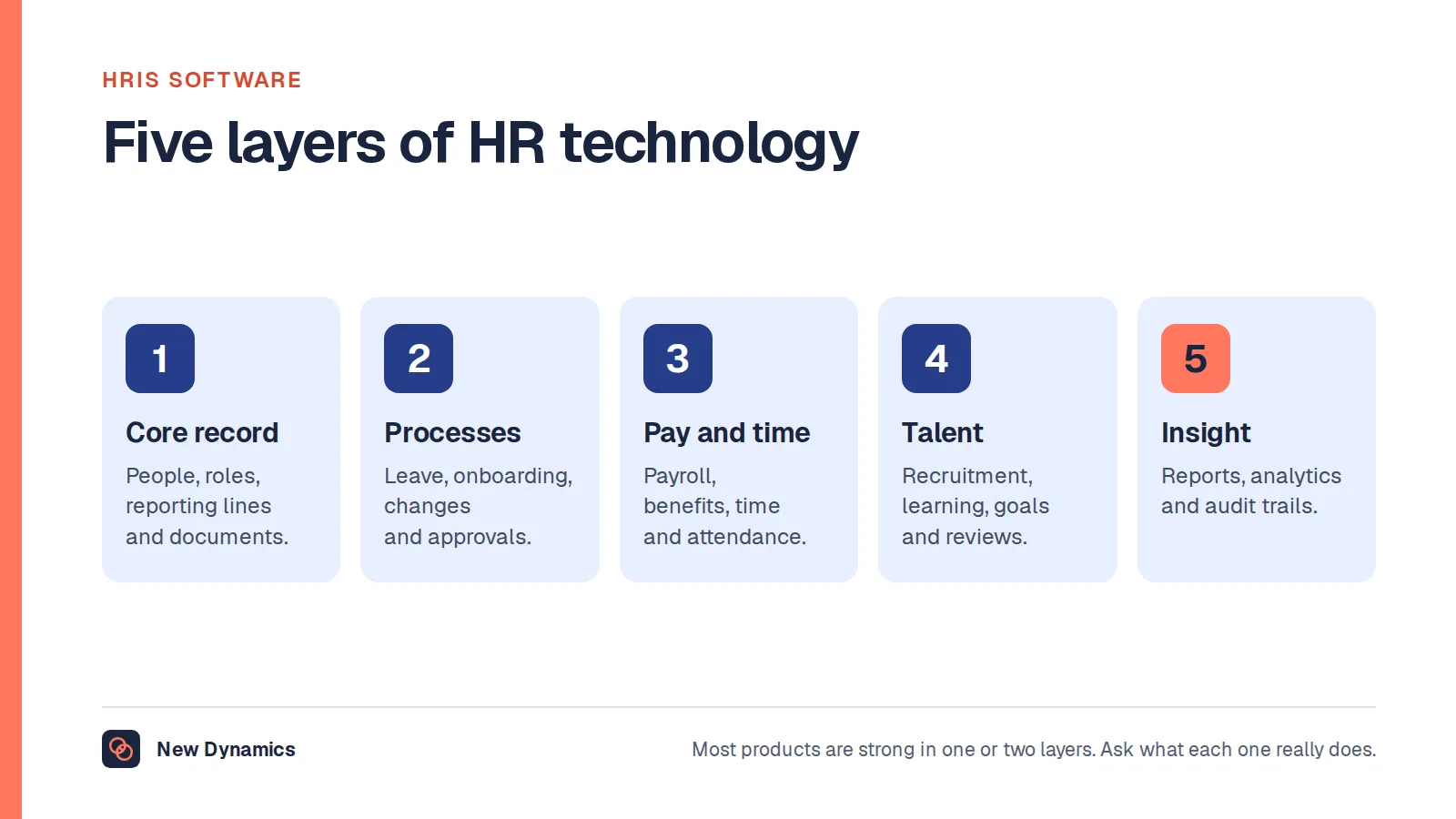
What HRIS software is, how HRIS, HRMS and HCM differ, the modules and types of HR systems with examples, and how to build a shortlist. Start with your needs.
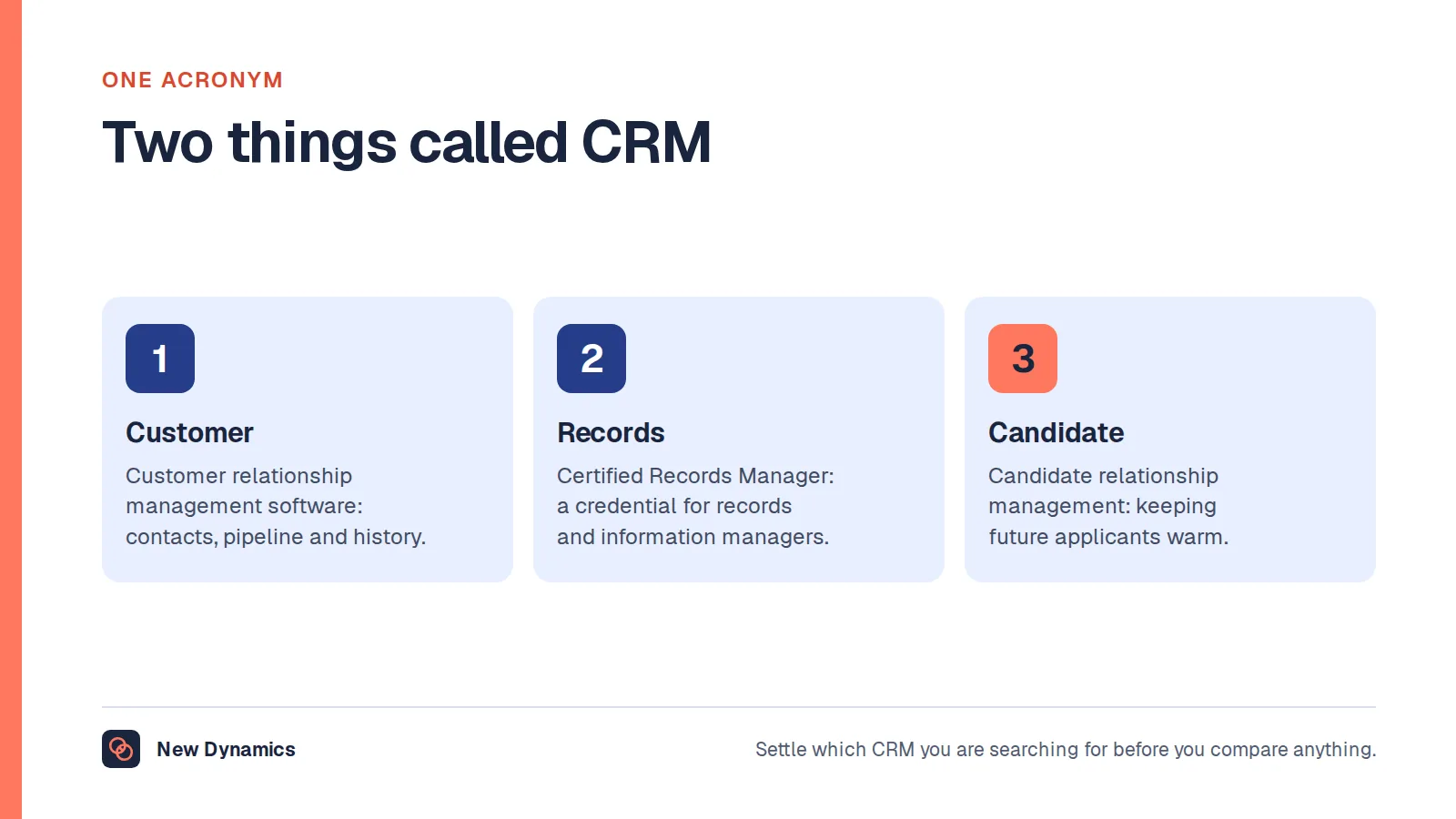
What CRM software does, why CRM also means the Certified Records Manager credential, the UK rules on customer data, and how to build your own shortlist.
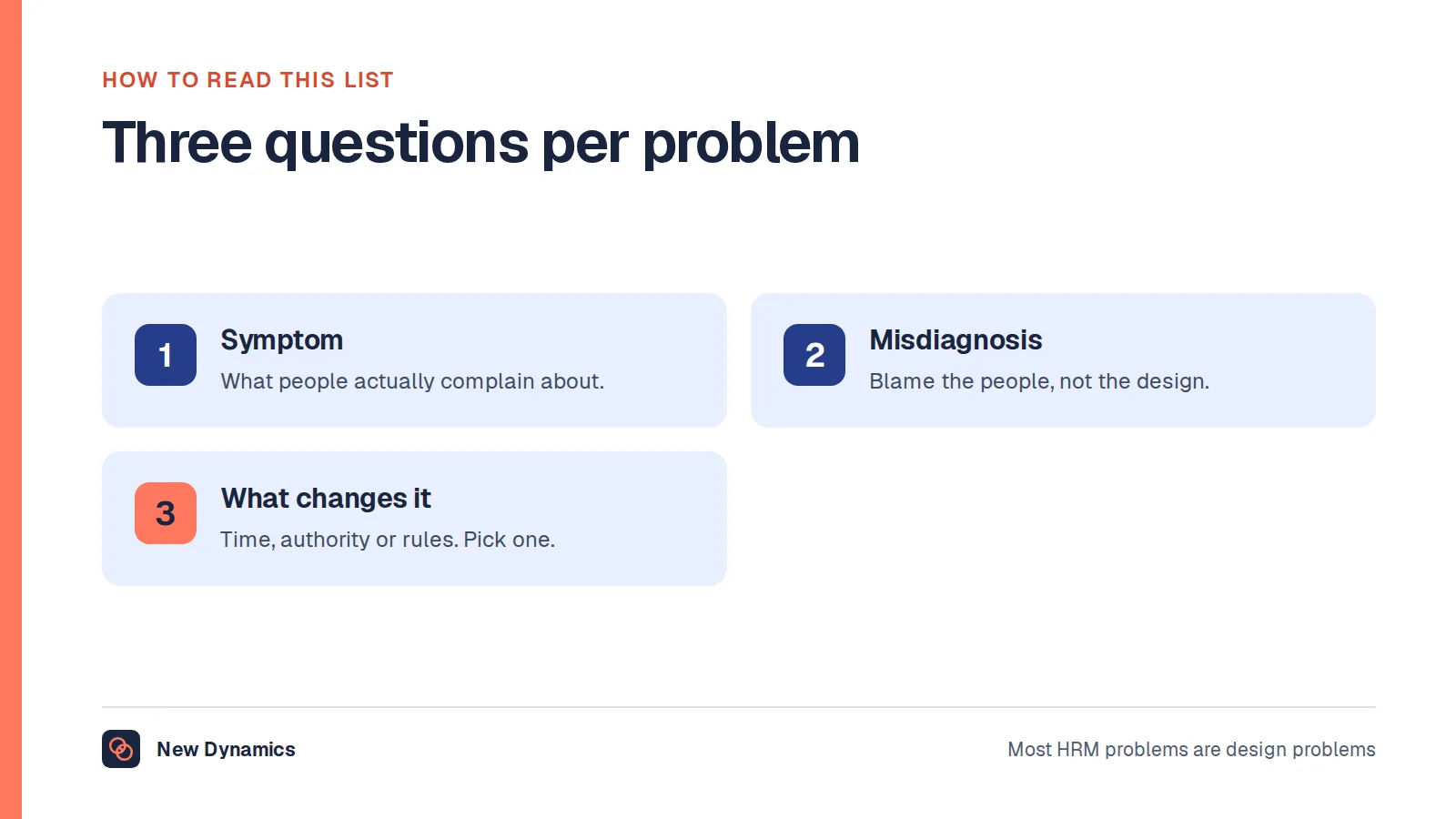
The eight problems HR directors actually name, from policing and admin overload to no seat at the table and the two-master problem. Symptom, usual misdiagnosis and what changes each one.
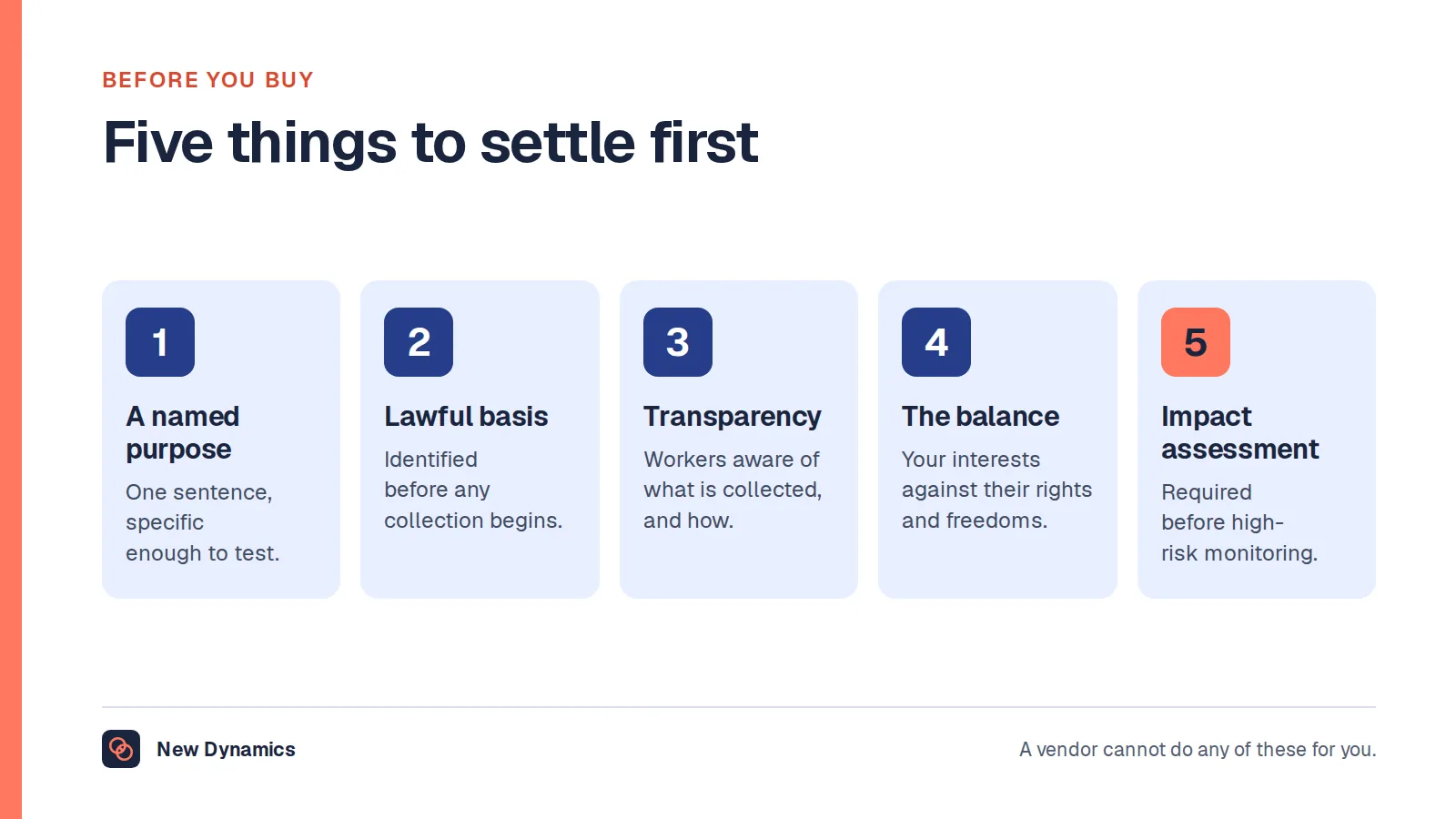
What employee monitoring software actually measures, the UK data protection duties that come first, when an impact assessment is required, what monitoring does to trust and output, and the proportionate alternatives worth trying first.
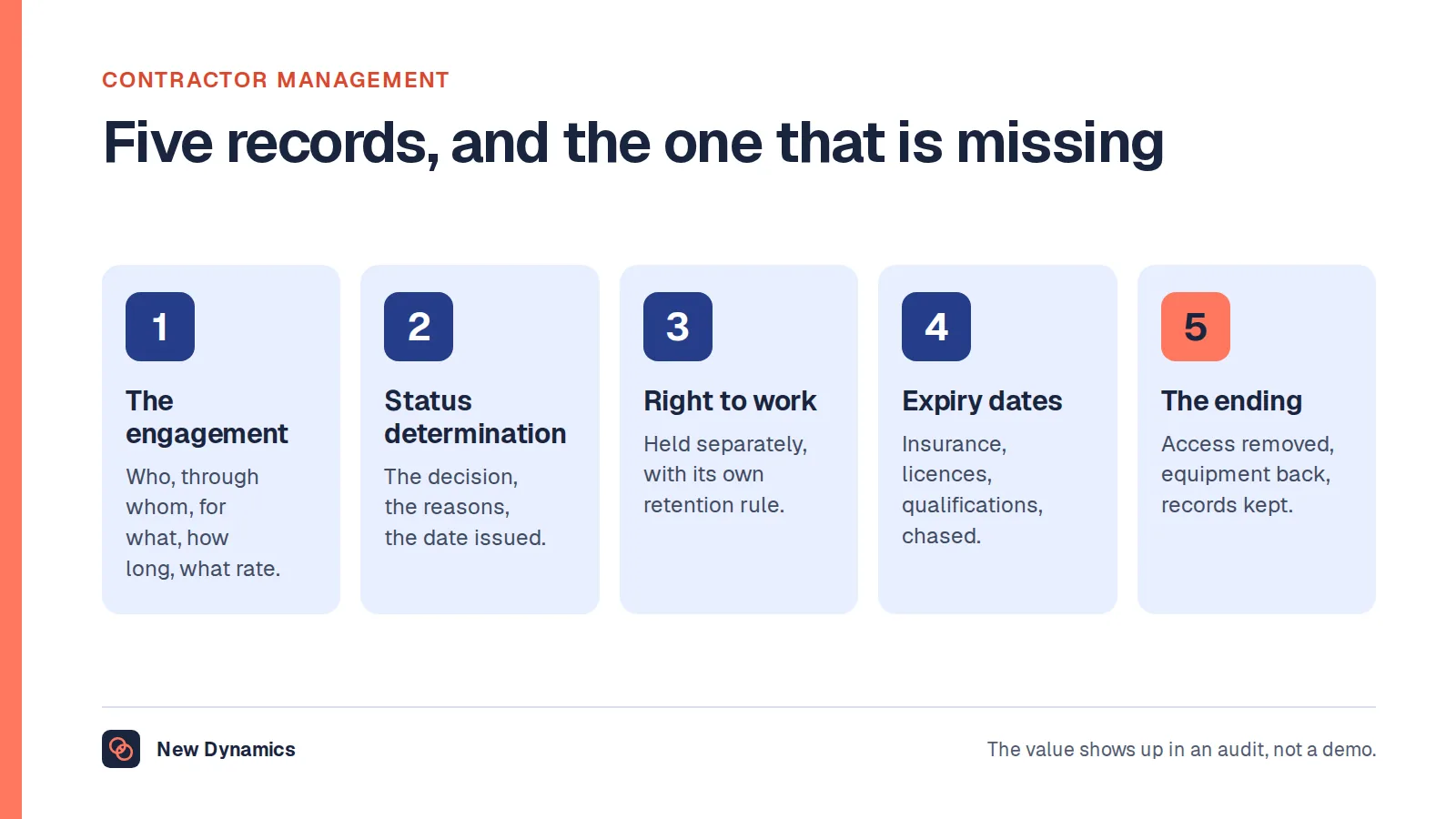
What contractor management software has to handle in the UK: employment status for tax and the status determination statement, right to work, insurance and qualification expiry, onboarding without treating contractors as employees, and the questions to ask.
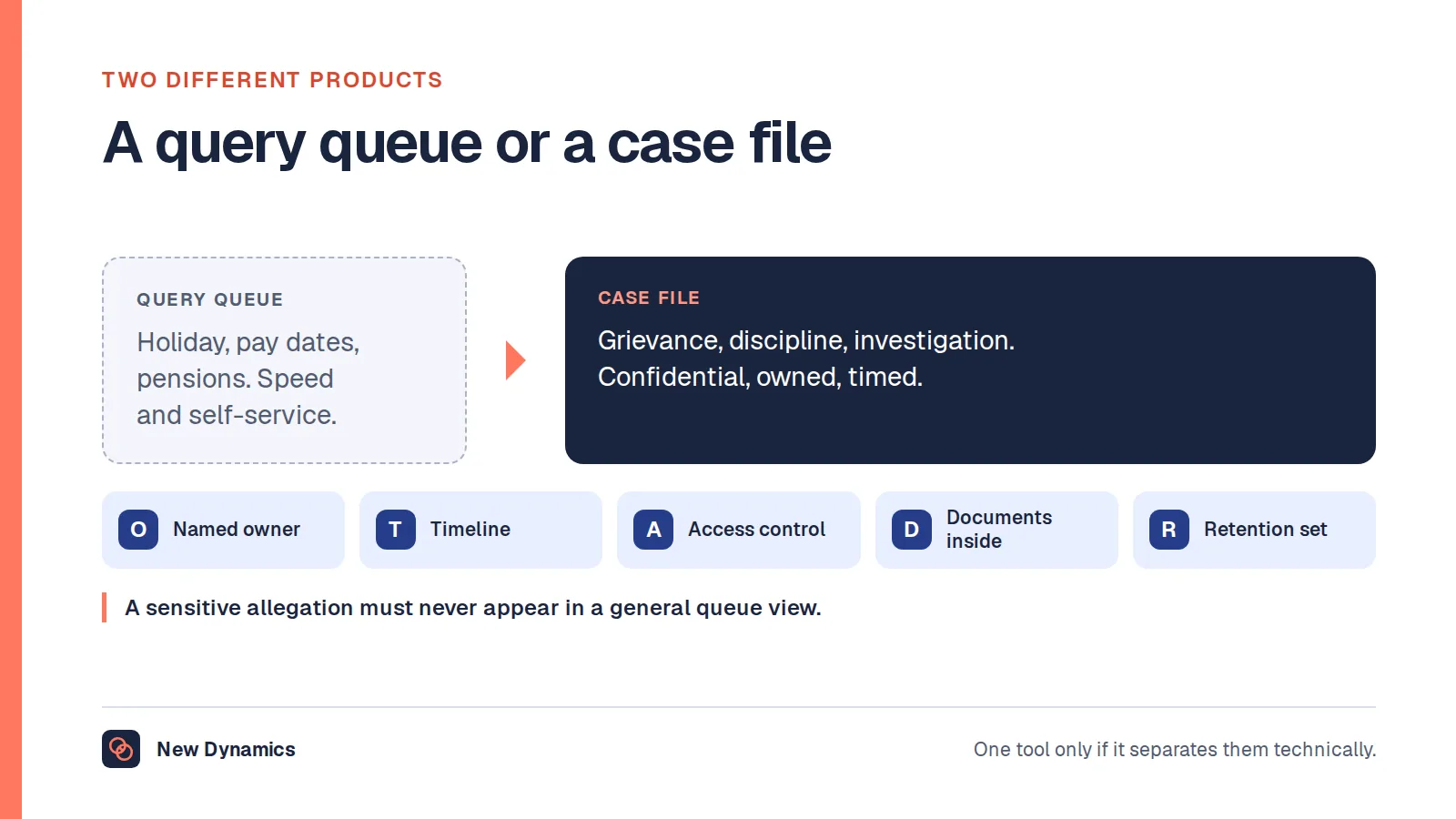
What HR case management and ticketing software has to handle: the difference between a query and a case, the record a grievance or investigation has to leave, confidentiality and access, retention, and the questions to ask before buying.