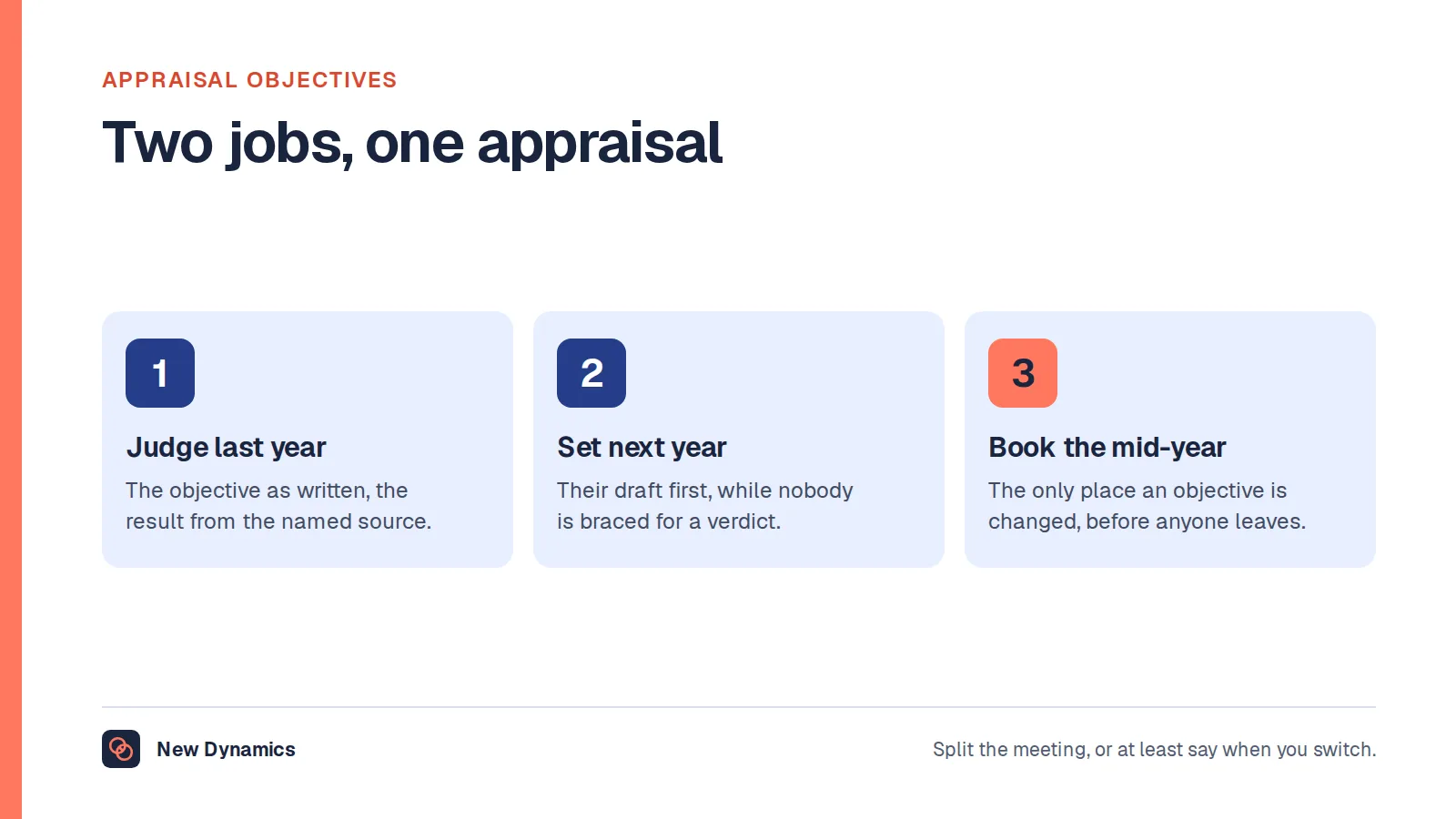
Set appraisal objectives for the year ahead while reviewing last year's: how many to set, how to write one that can still be judged in December, and worked sets for five roles.
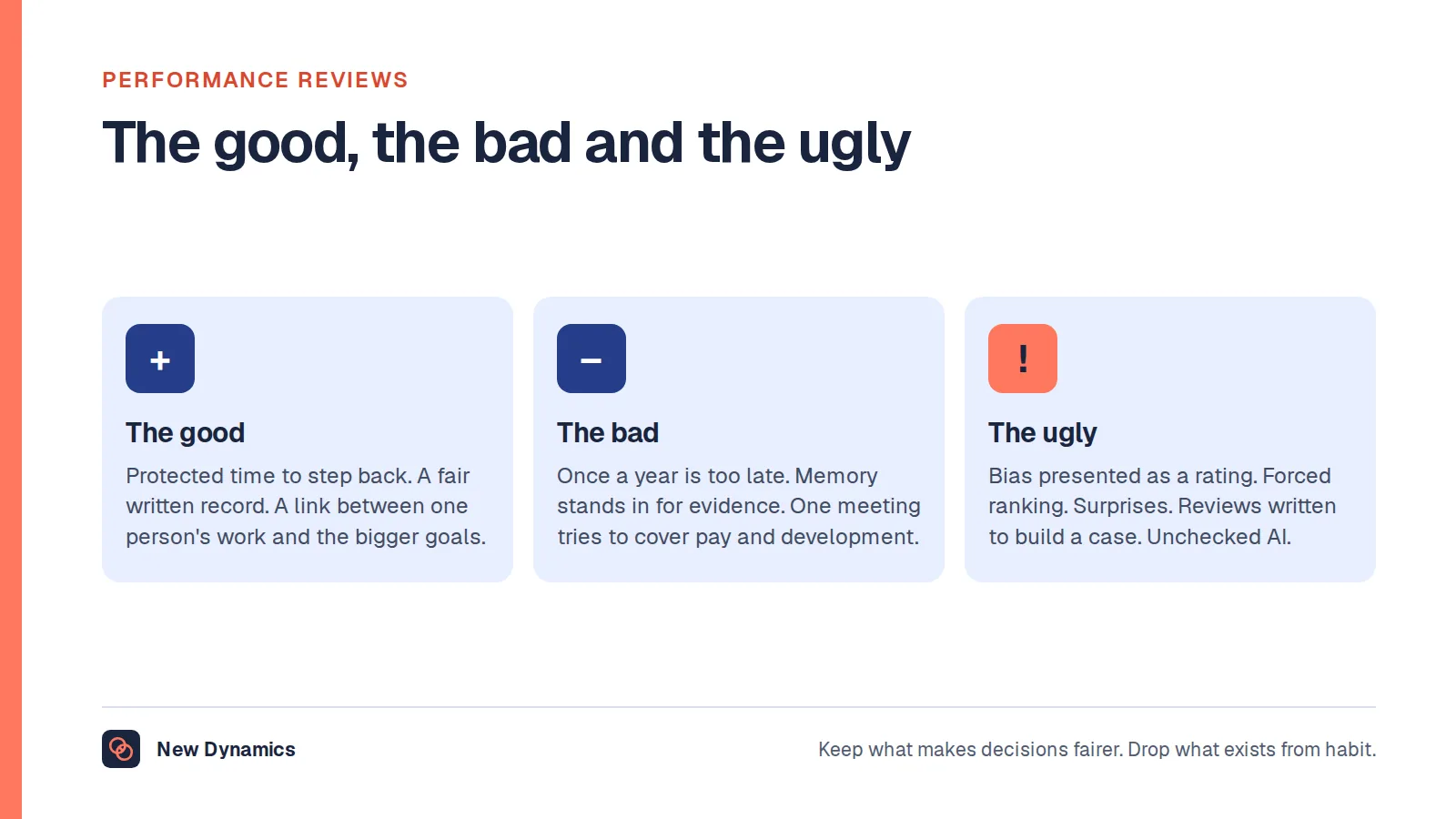
Performance reviews can build trust or wreck it. See what still works, what wastes time and what does harm, with a manager checklist. Fix your next review.
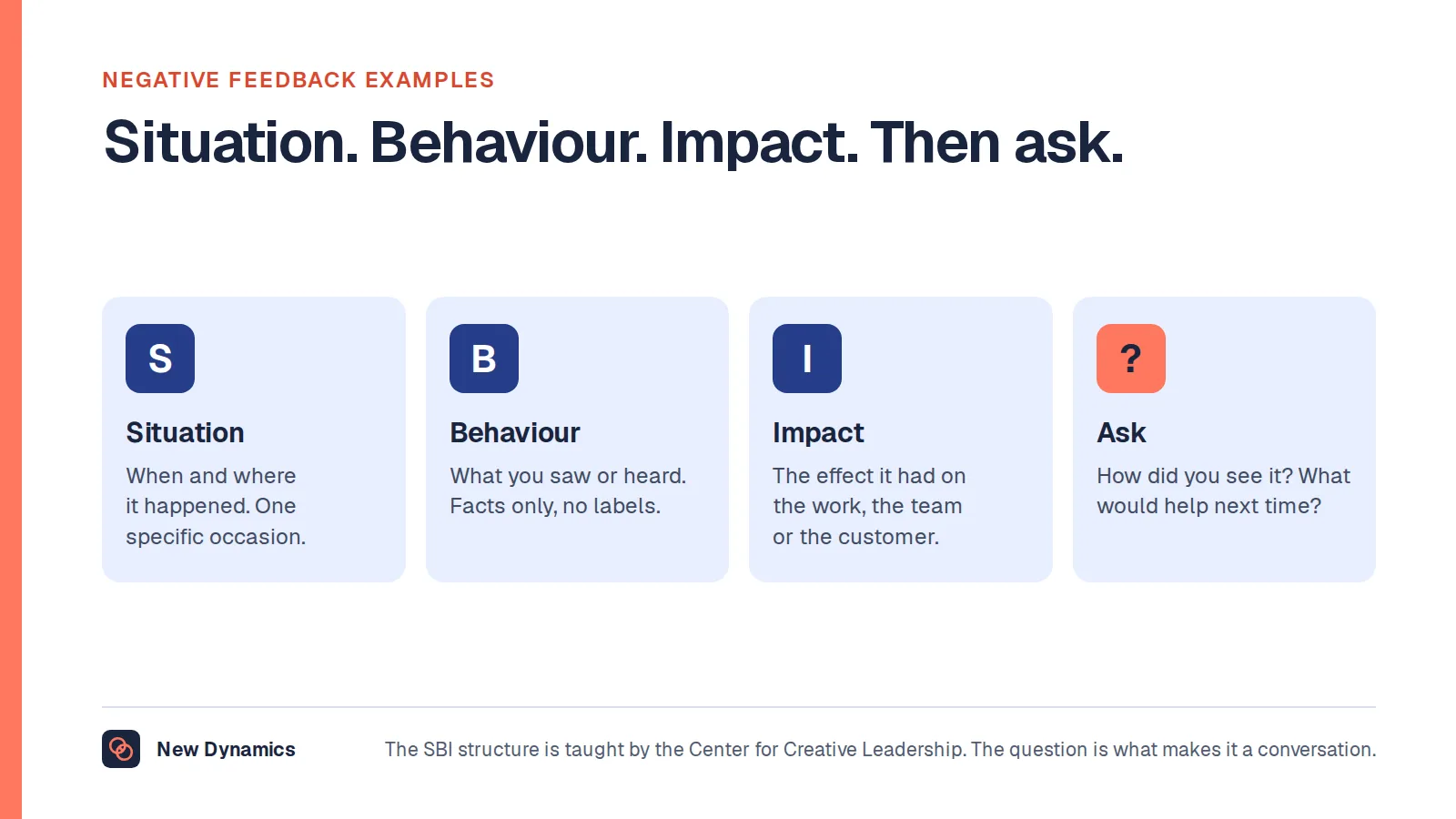
Use 30 negative feedback examples written as constructive feedback, with the SBI model, a seven-step method and tips for receiving it. Find your wording.
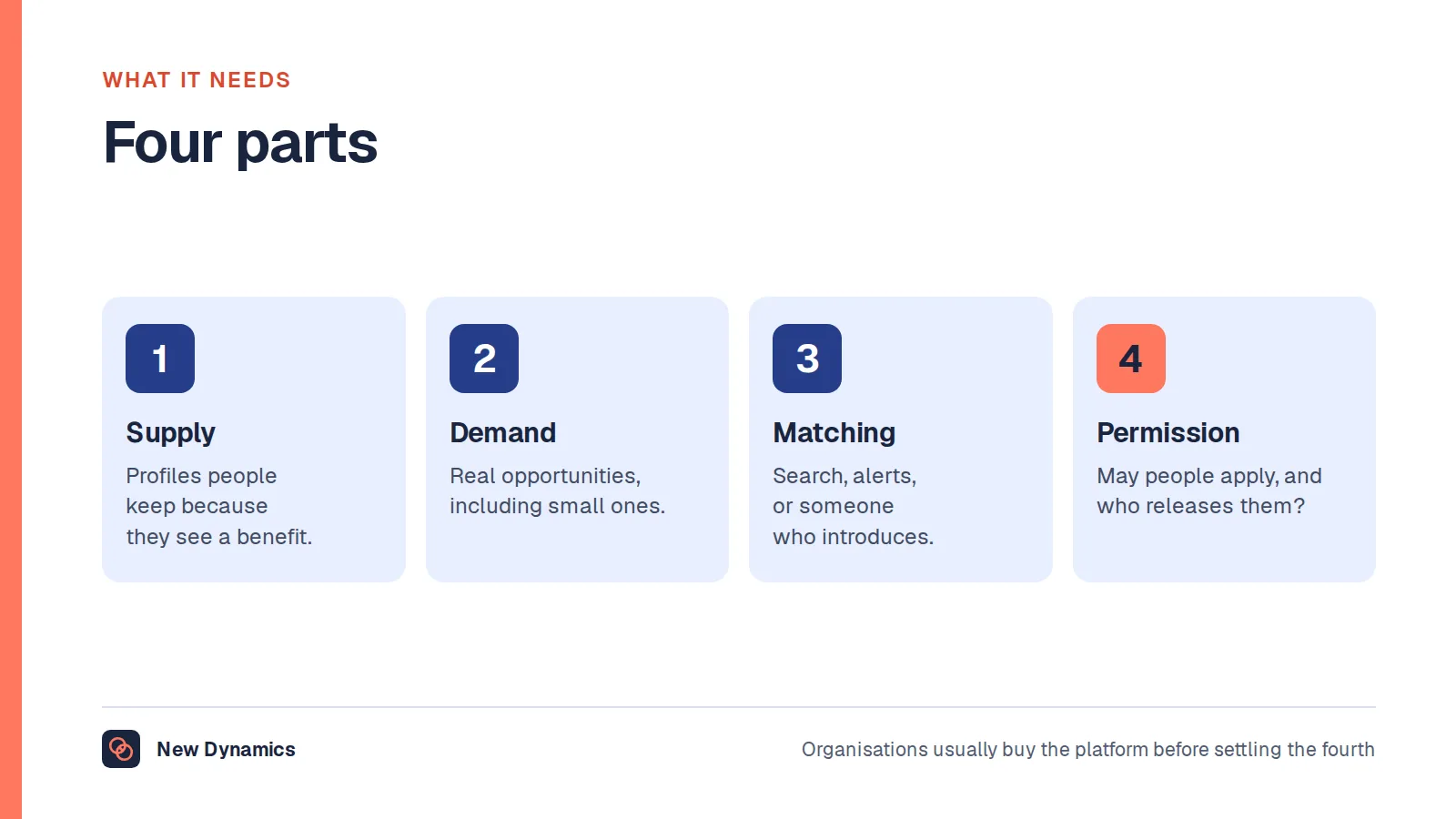
What an internal talent marketplace is, the four things it needs, the manager-hoarding problem that blocks it, how redeployment differs, and how to start without buying a platform.
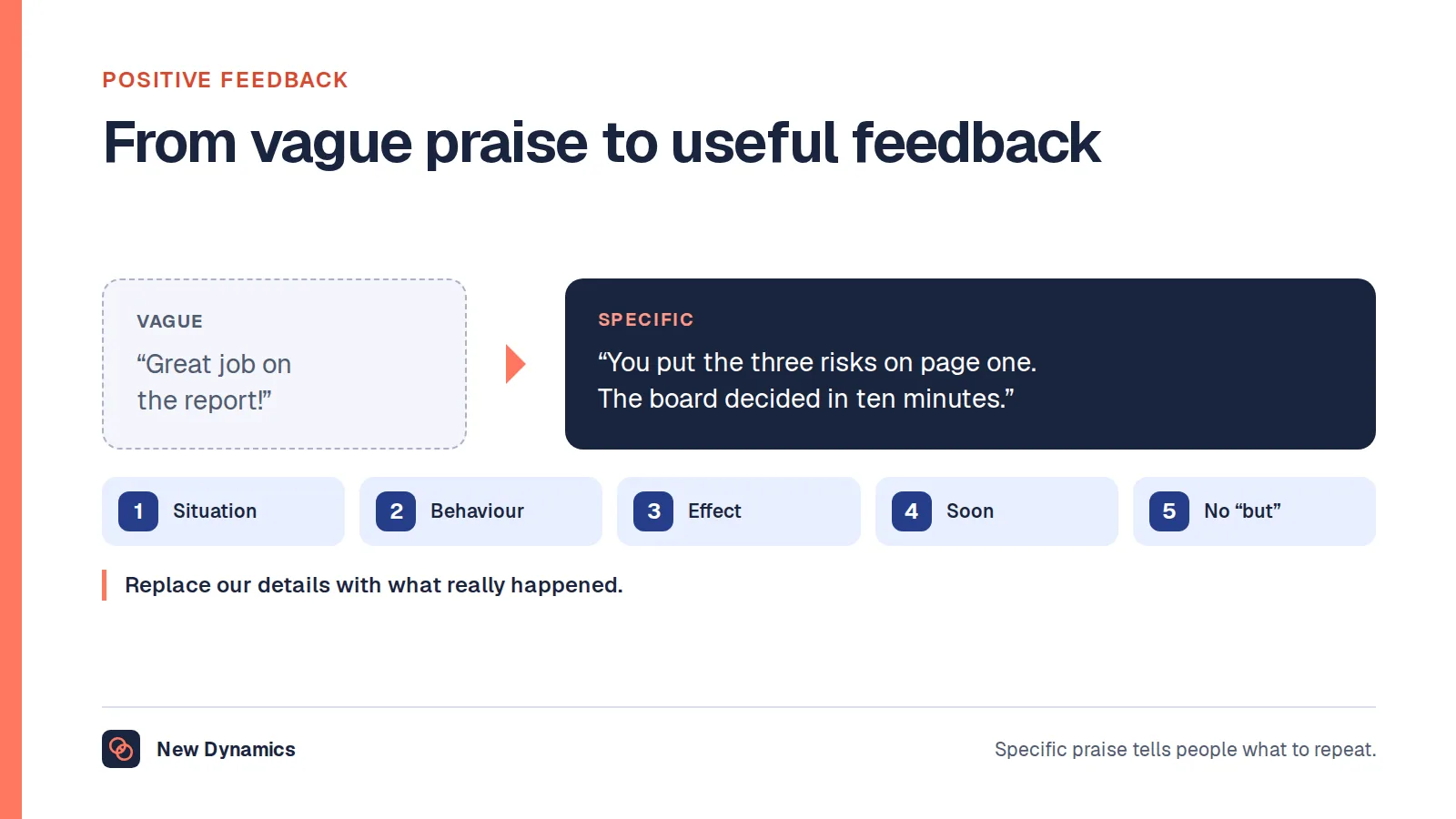
Use 50 positive feedback examples for employees, grouped by situation, with a simple structure that makes praise specific, six steps and mistakes to avoid.
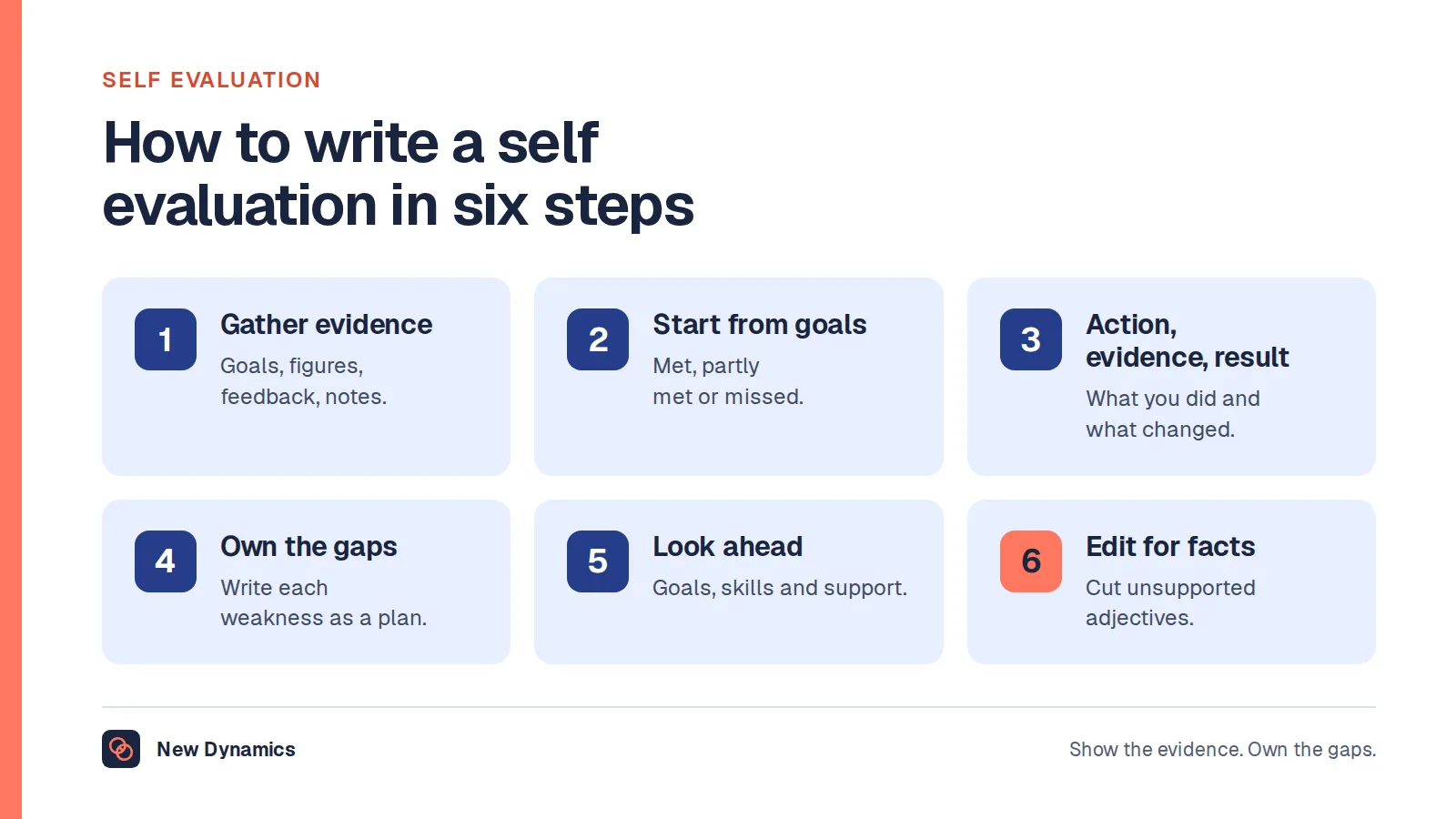
Write a confident self evaluation for your performance review: a six-step method, 60 example phrases by skill, honest ways to cover weaknesses and a full sample.
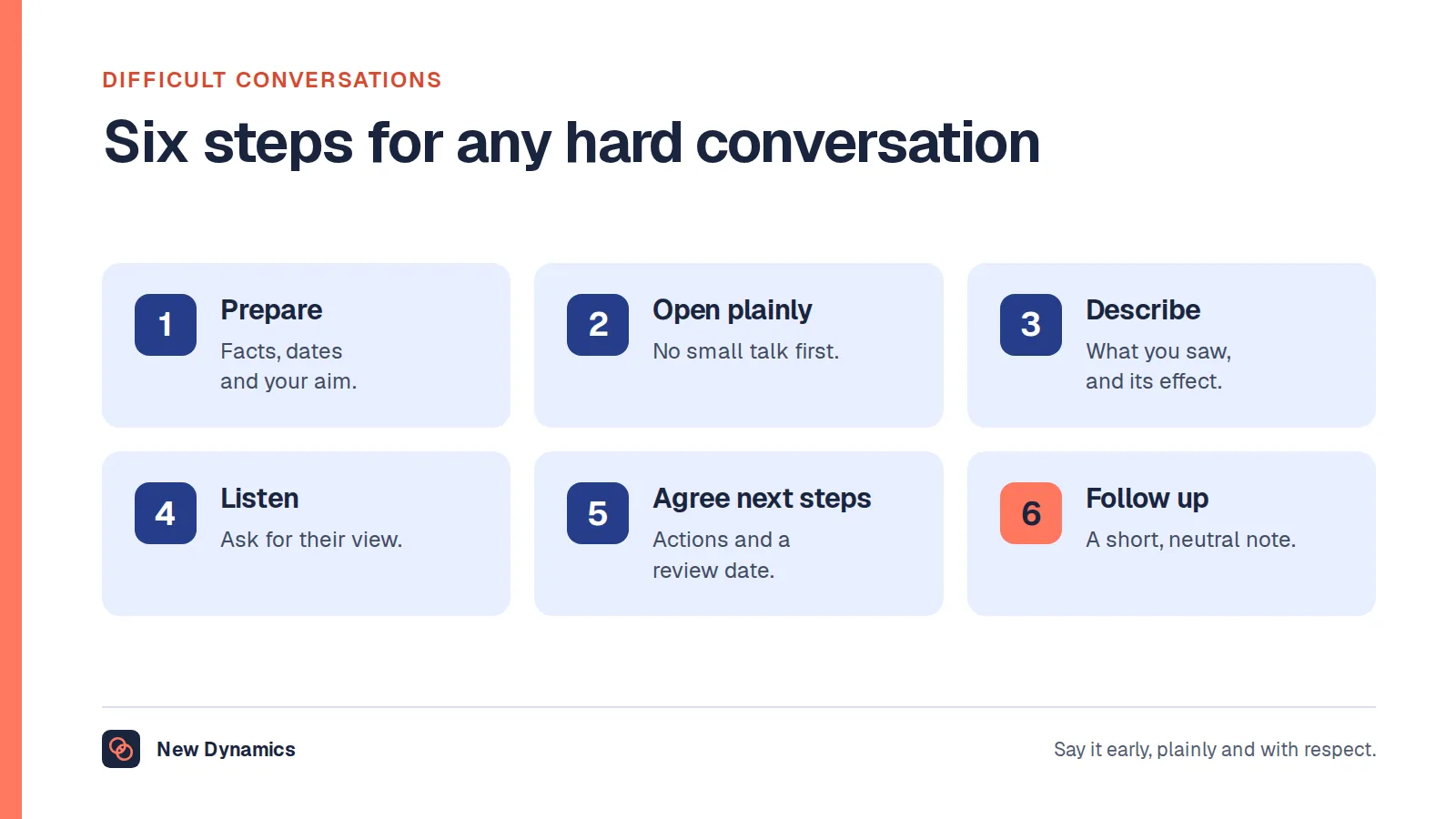
Handle difficult conversations at work with 12 examples and opening lines, a six-step structure, phrases for when it gets heated and the mistakes that make things worse.
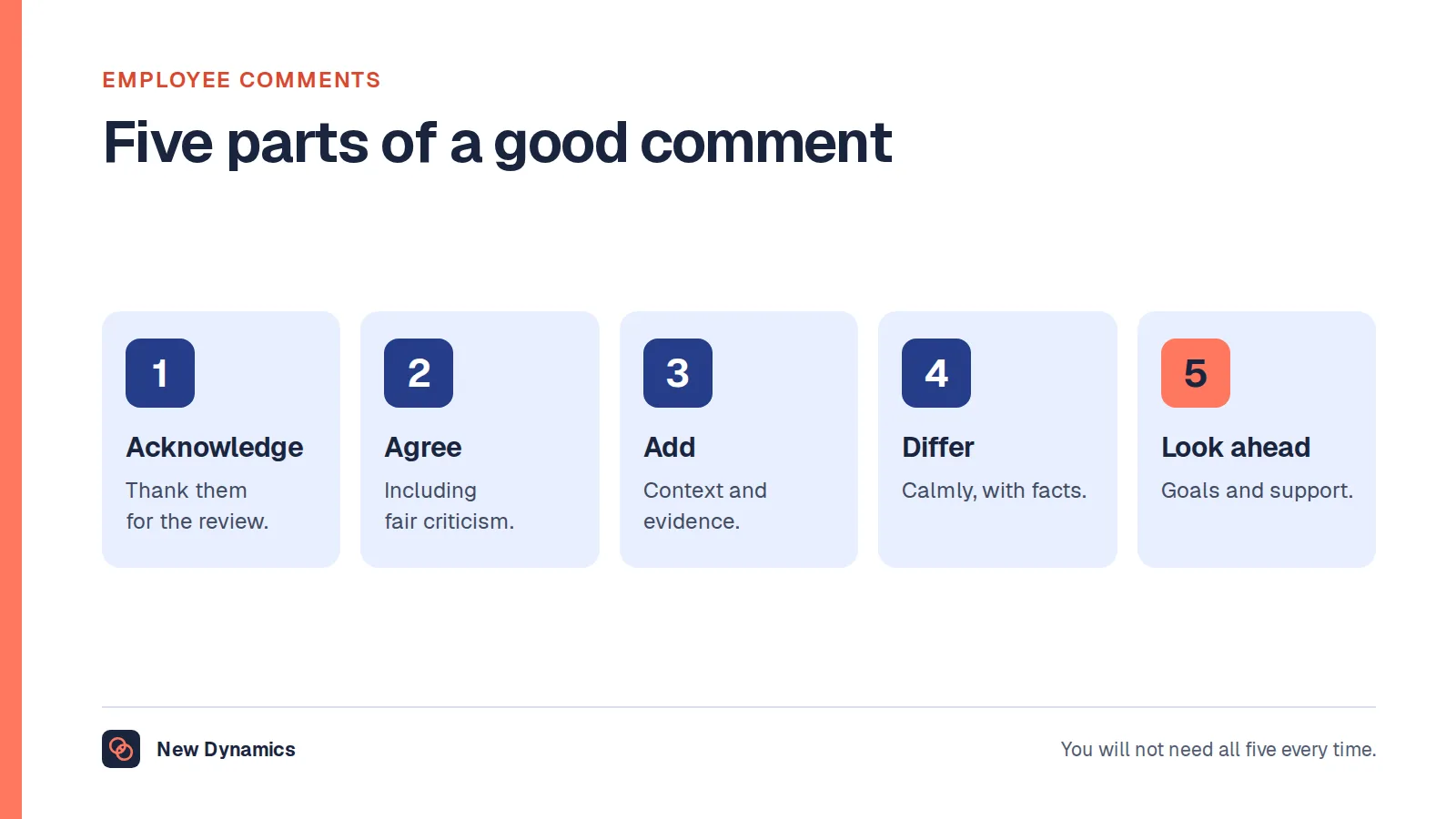
What to write in the employee comments box: 50 examples for agreeing, adding context, disagreeing respectfully, KPIs, development and sign-off, plus what signing means.
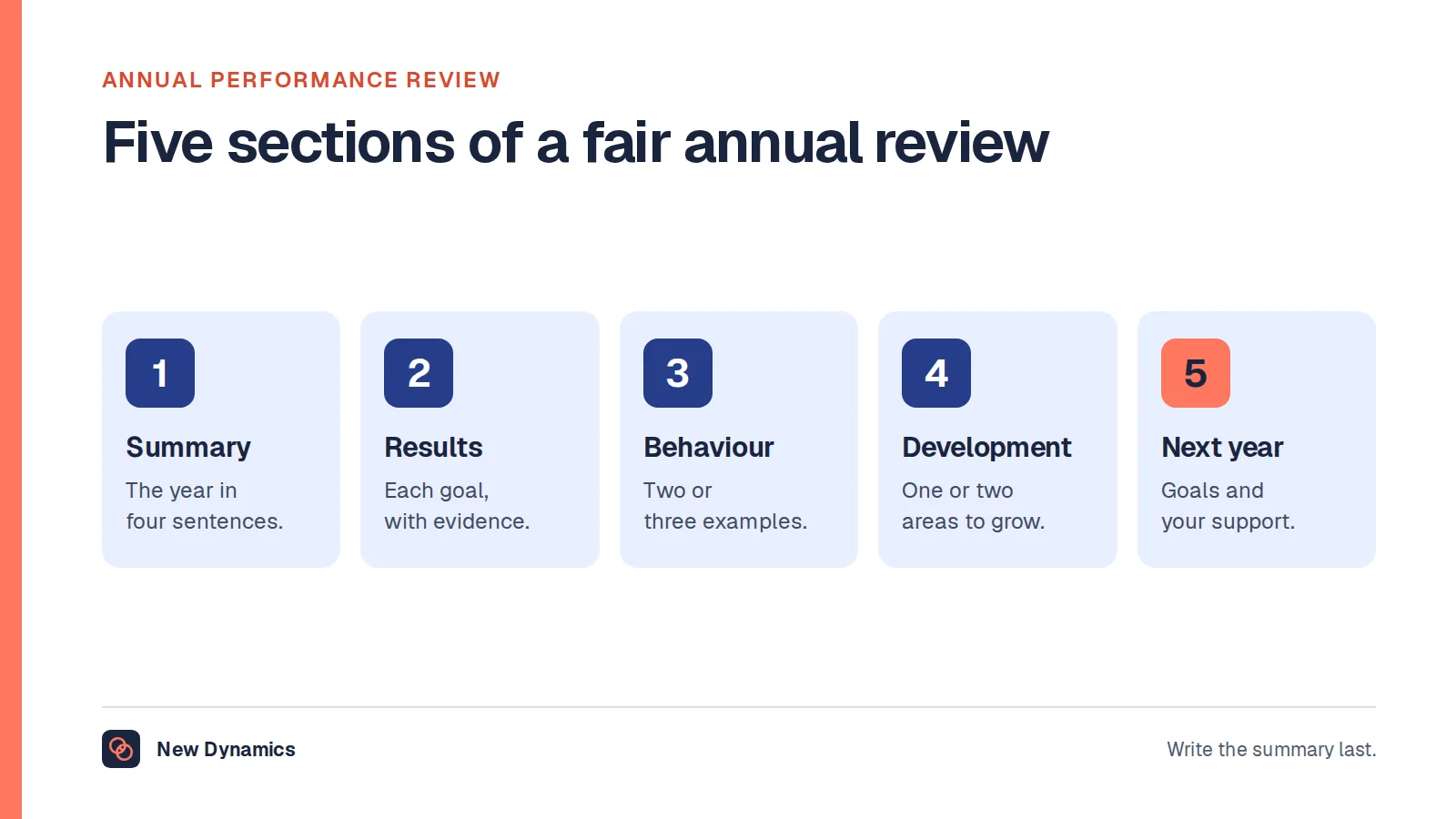
See three complete annual performance review samples, for a strong, a solid and a struggling performer, with the five sections every review needs and how to write your own.
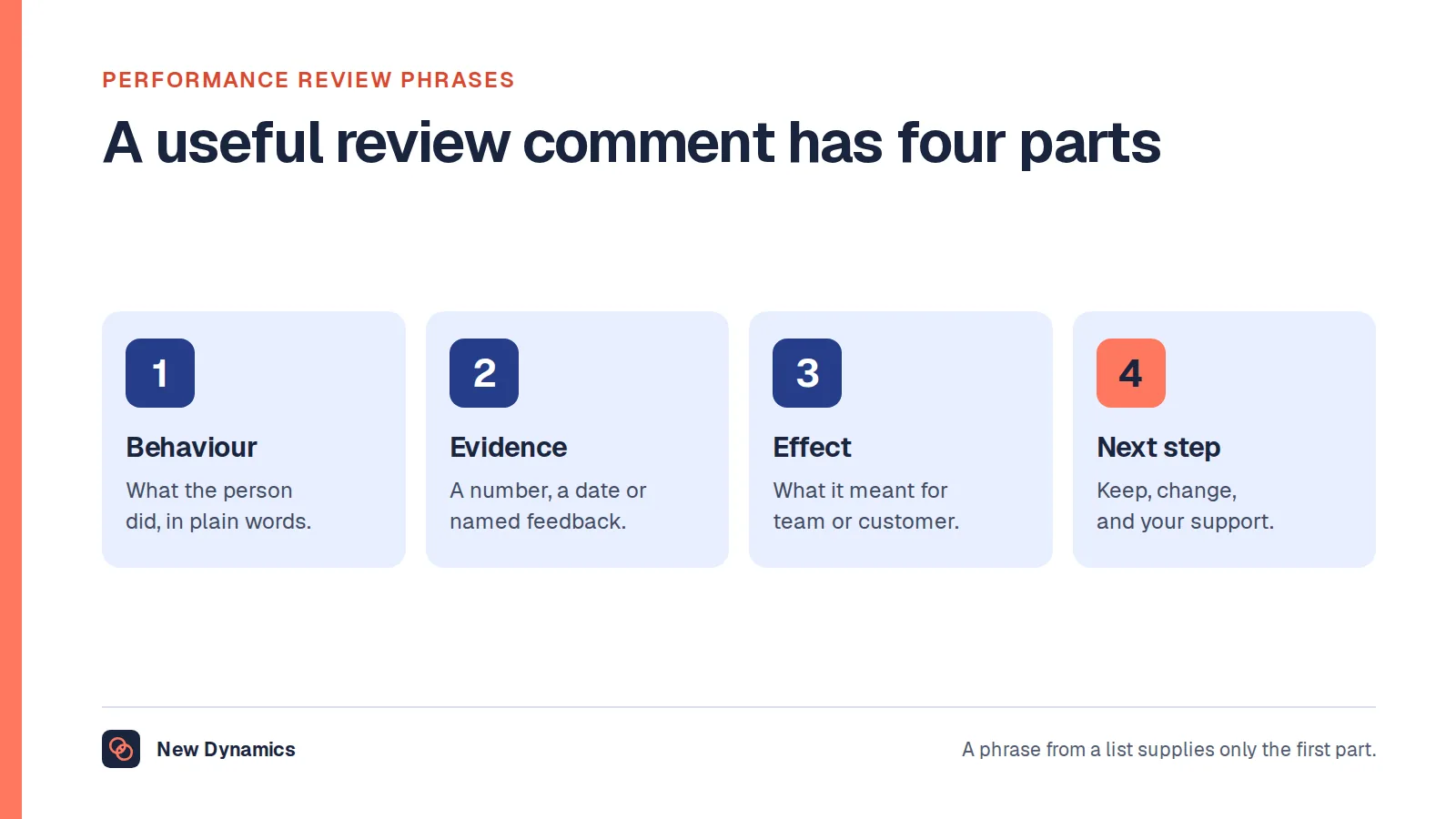
Write fair, specific reviews with 100 performance review phrases: sample comments for strengths and areas for improvement across ten skills, plus overall comments.
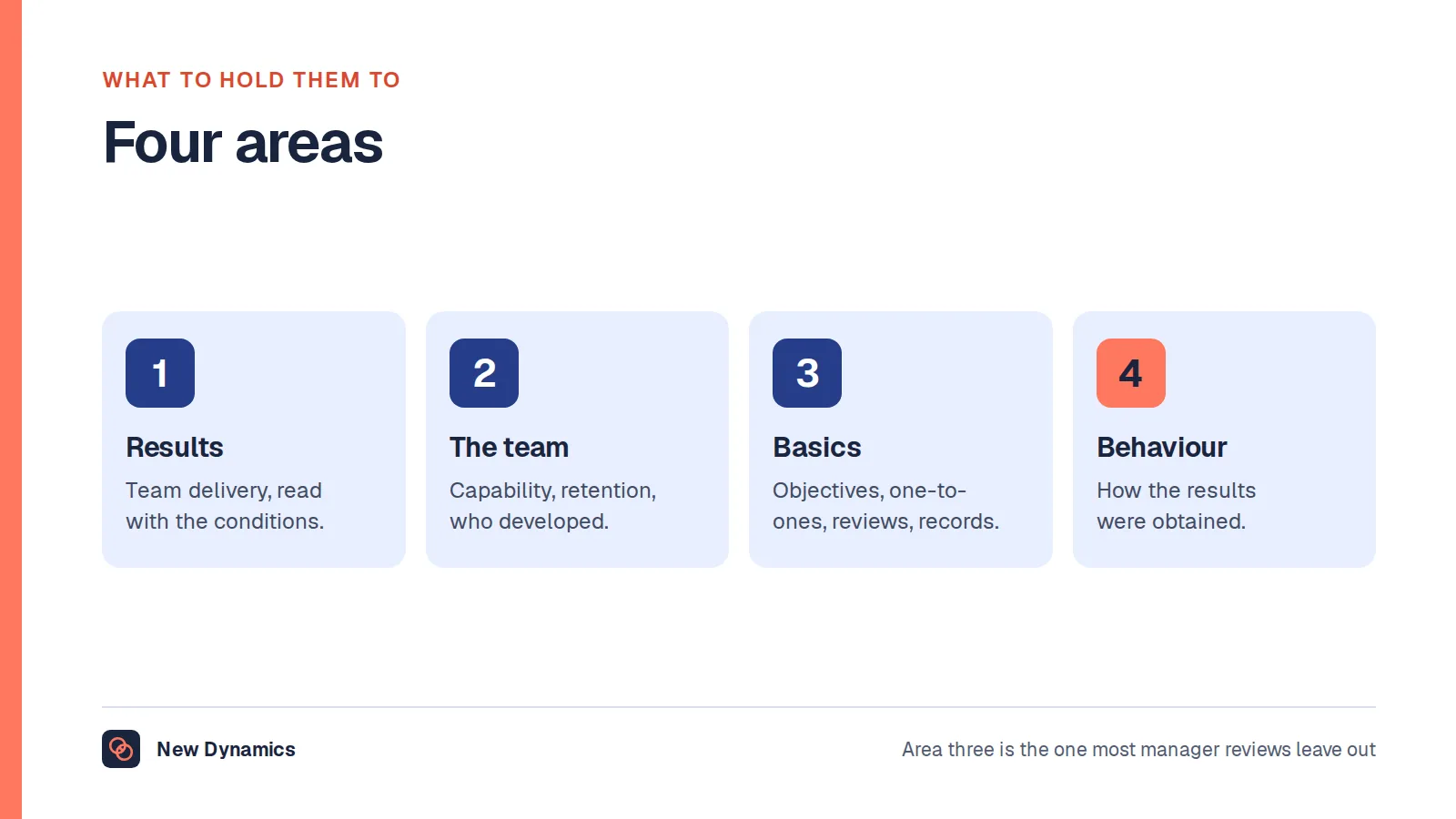
How to manage a manager's performance: the four areas they are accountable for, measures that work and ones that mislead, the capability and conduct distinction, and who to ask when reviewing a manager.
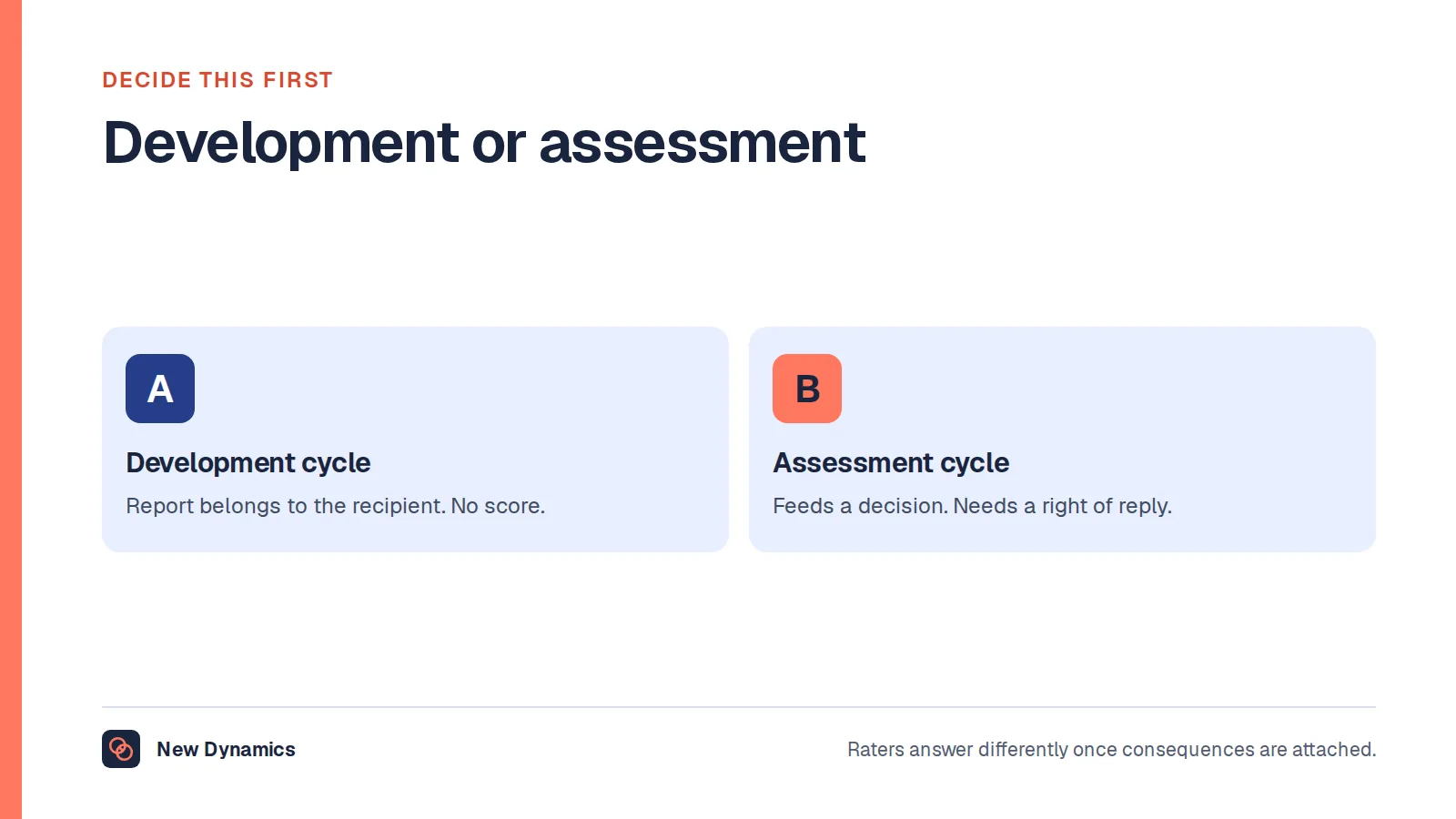
What 360 degree feedback is, the development or assessment decision that governs everything else, how to choose raters, a usable question set, a form structure and how to debrief it.
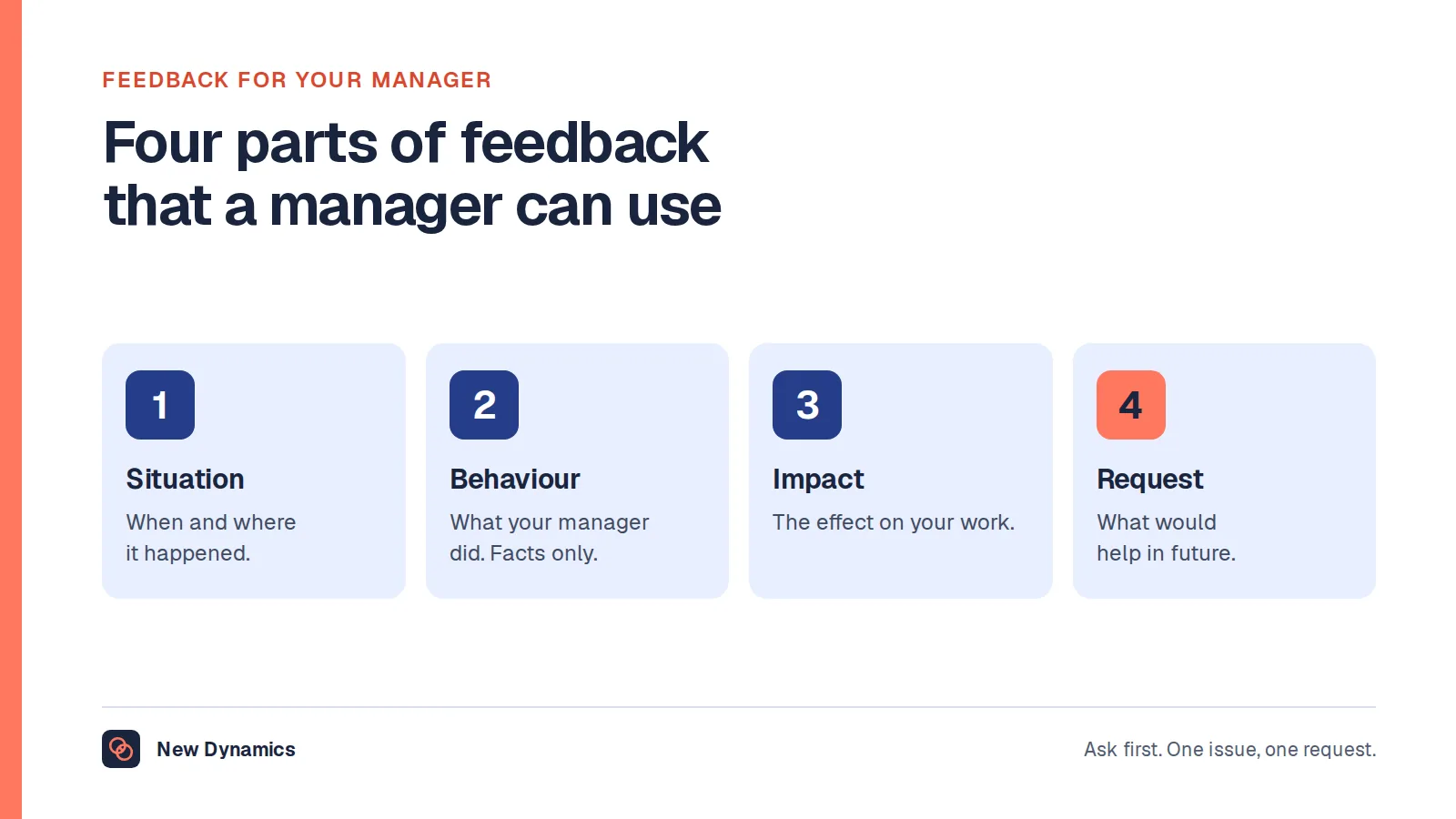
Give feedback to your manager with confidence: 40 examples of positive and constructive feedback for a boss, survey comments, what to avoid and how managers should respond.
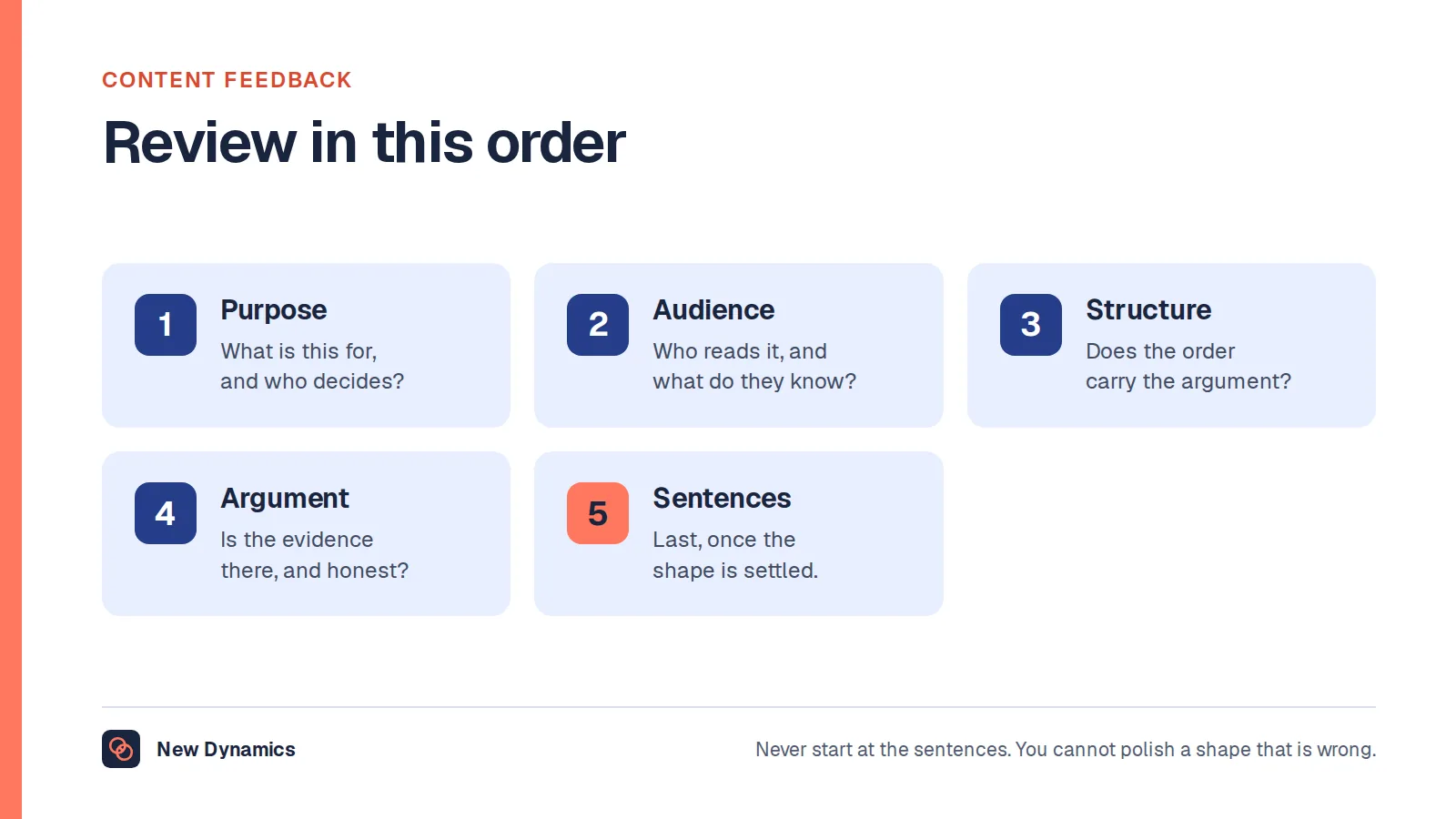
How to give feedback on a document, report, deck or draft: the order to review in, the three kinds of comment, weak and better comment examples, and who decides when reviewers disagree.
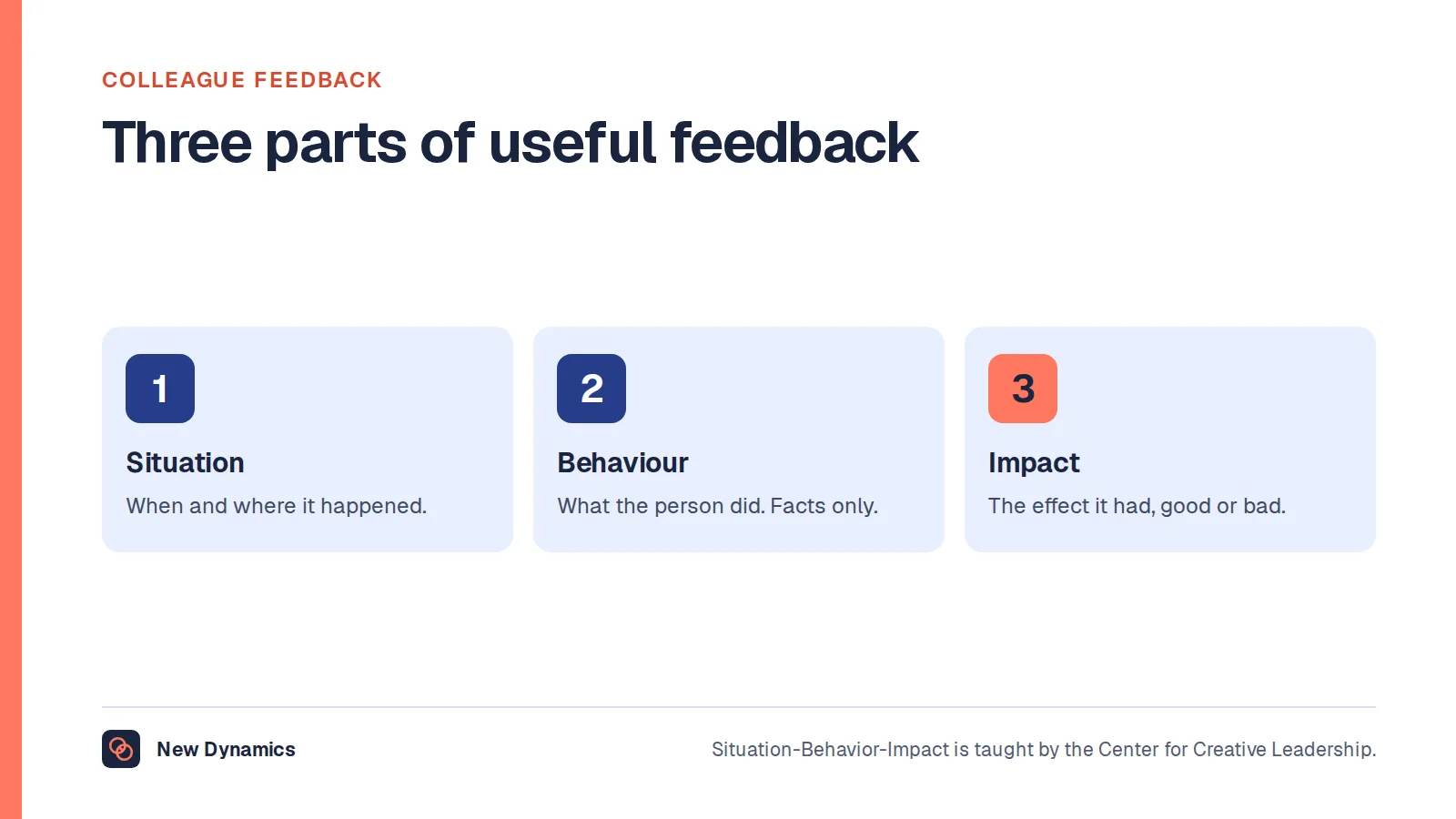
Write useful feedback for a colleague: 50 colleague feedback examples, positive and constructive, plus 20 questions to ask colleagues for feedback on your own work.
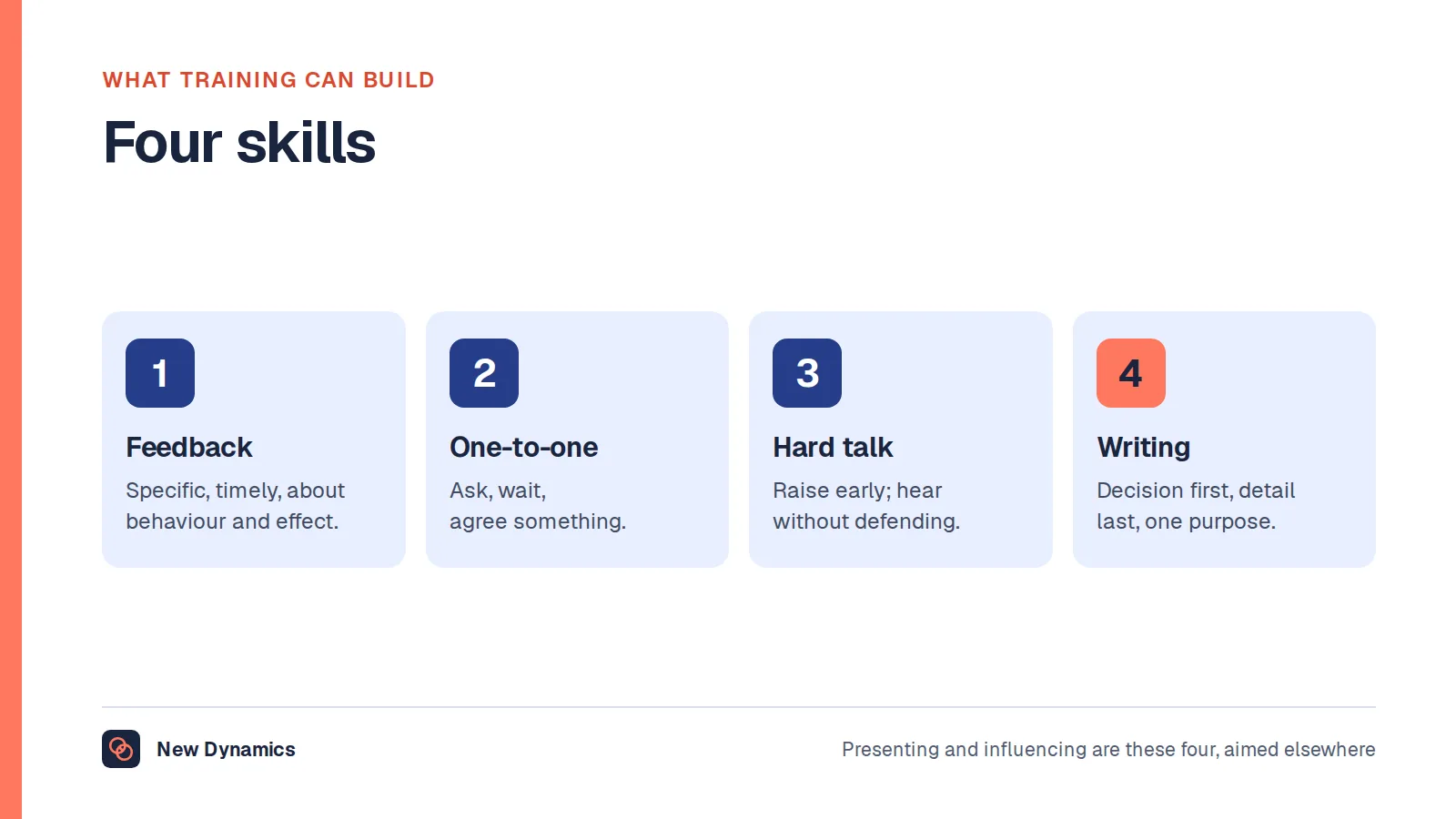
What communication skills workshops can and cannot fix, the four skills training genuinely builds, how to run a workshop that changes behaviour, and how to measure whether it worked.
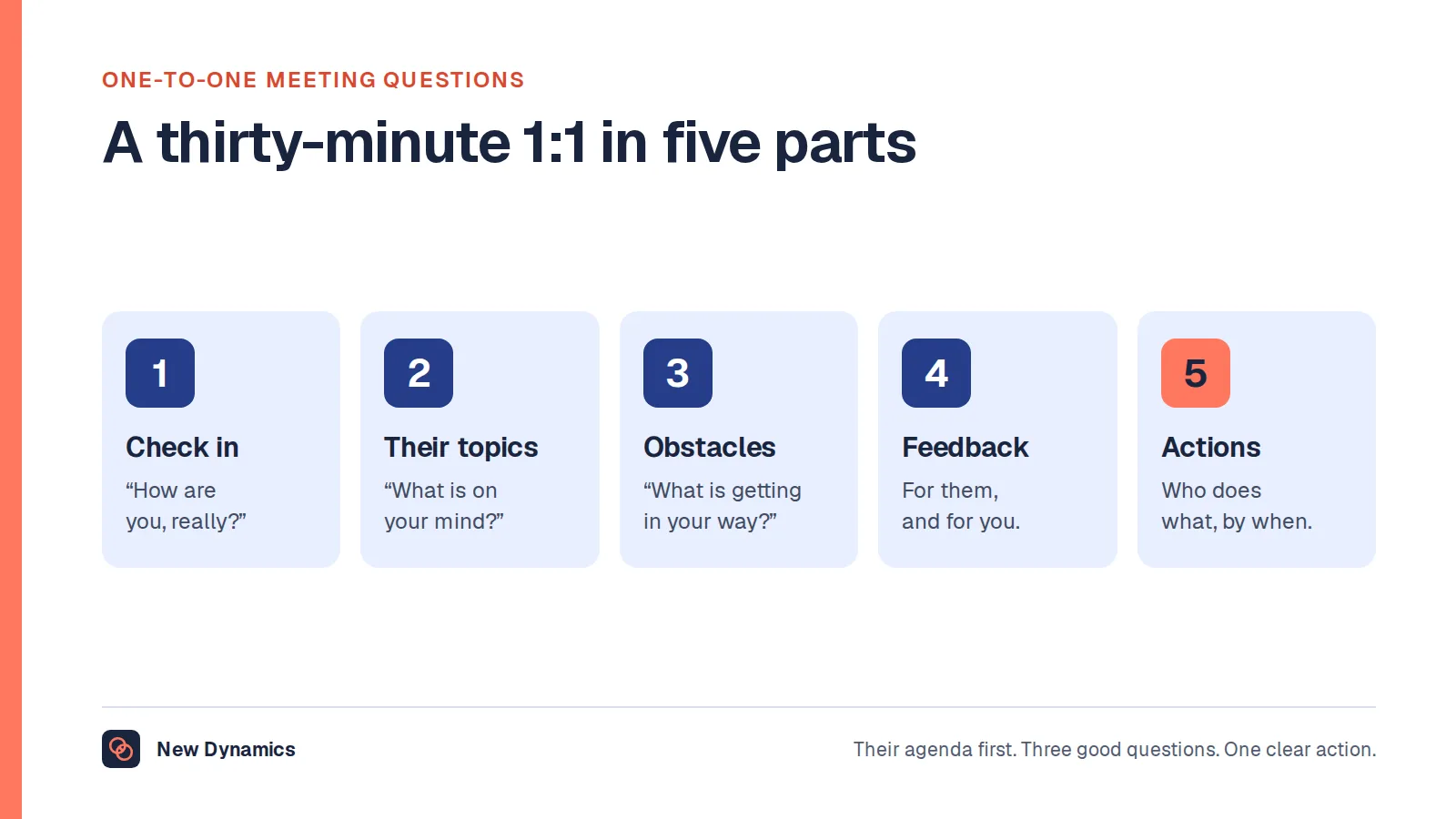
Make your one-to-ones worth the time: 85 one-to-one meeting questions for managers and employees, grouped by purpose, with a simple agenda and tips for using them well.
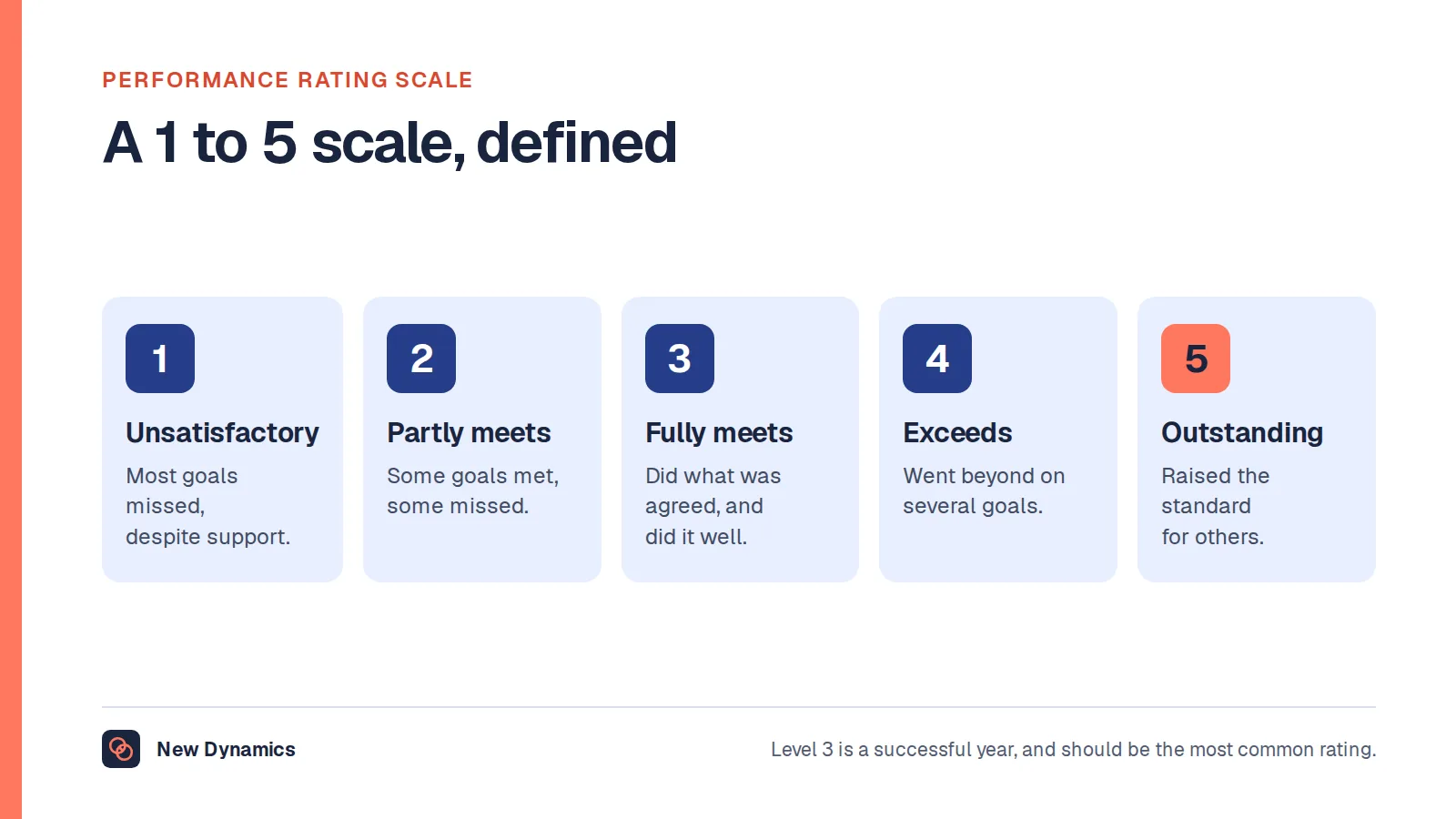
Get clear 1 to 5 rating scale definitions for performance reviews, compare 3, 4 and 5-point scales, see an anchored example and learn how to keep ratings fair.
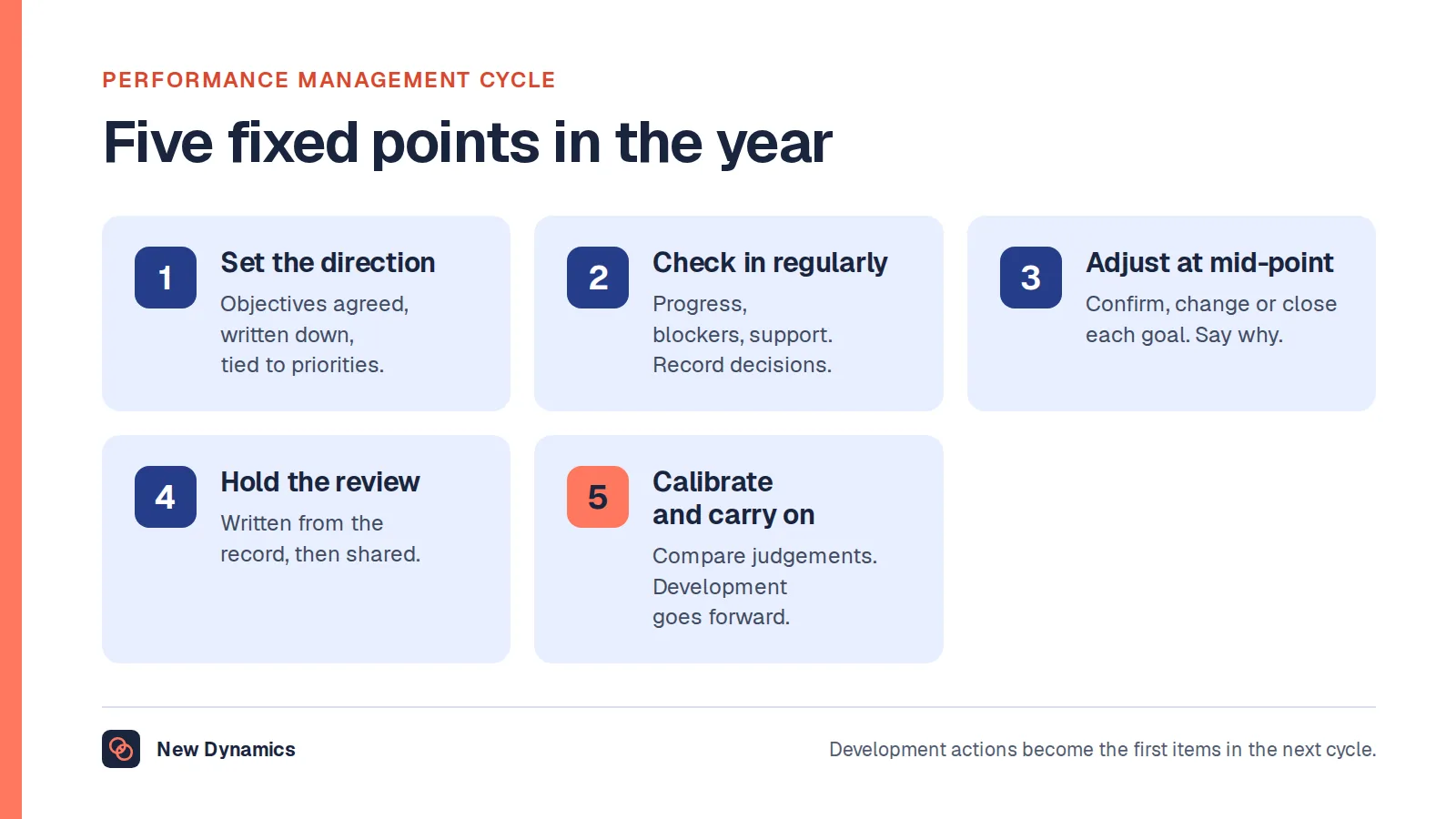
The performance management cycle stage by stage, with a worked twelve-month outline showing who does what, the design decisions most organisations make by accident, why cycles fail and how to measure one honestly.
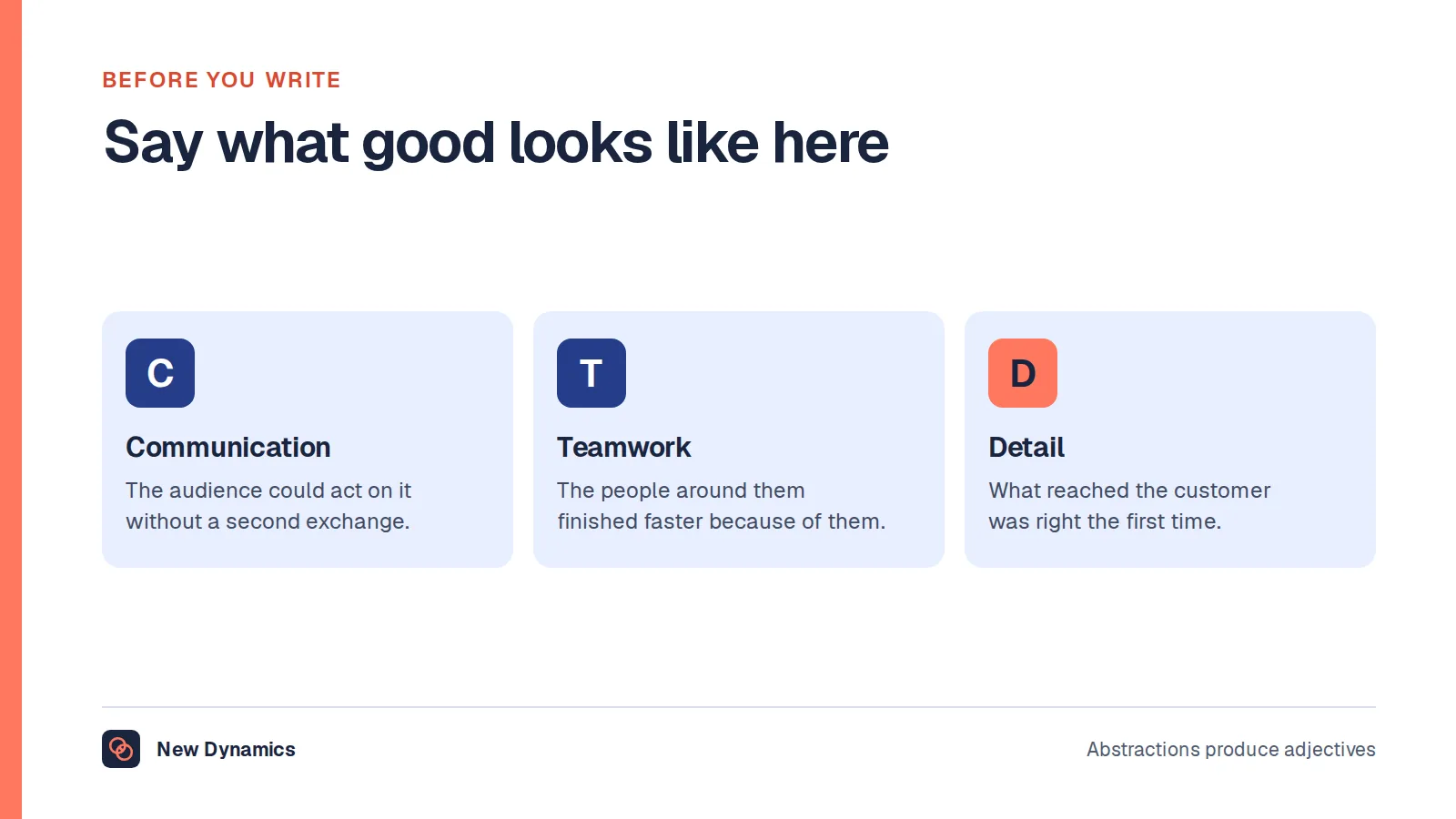
Review comments for three competencies managers get stuck on, with strengths and development wording for each, where the evidence comes from, and how to turn a vague line into one that holds up.
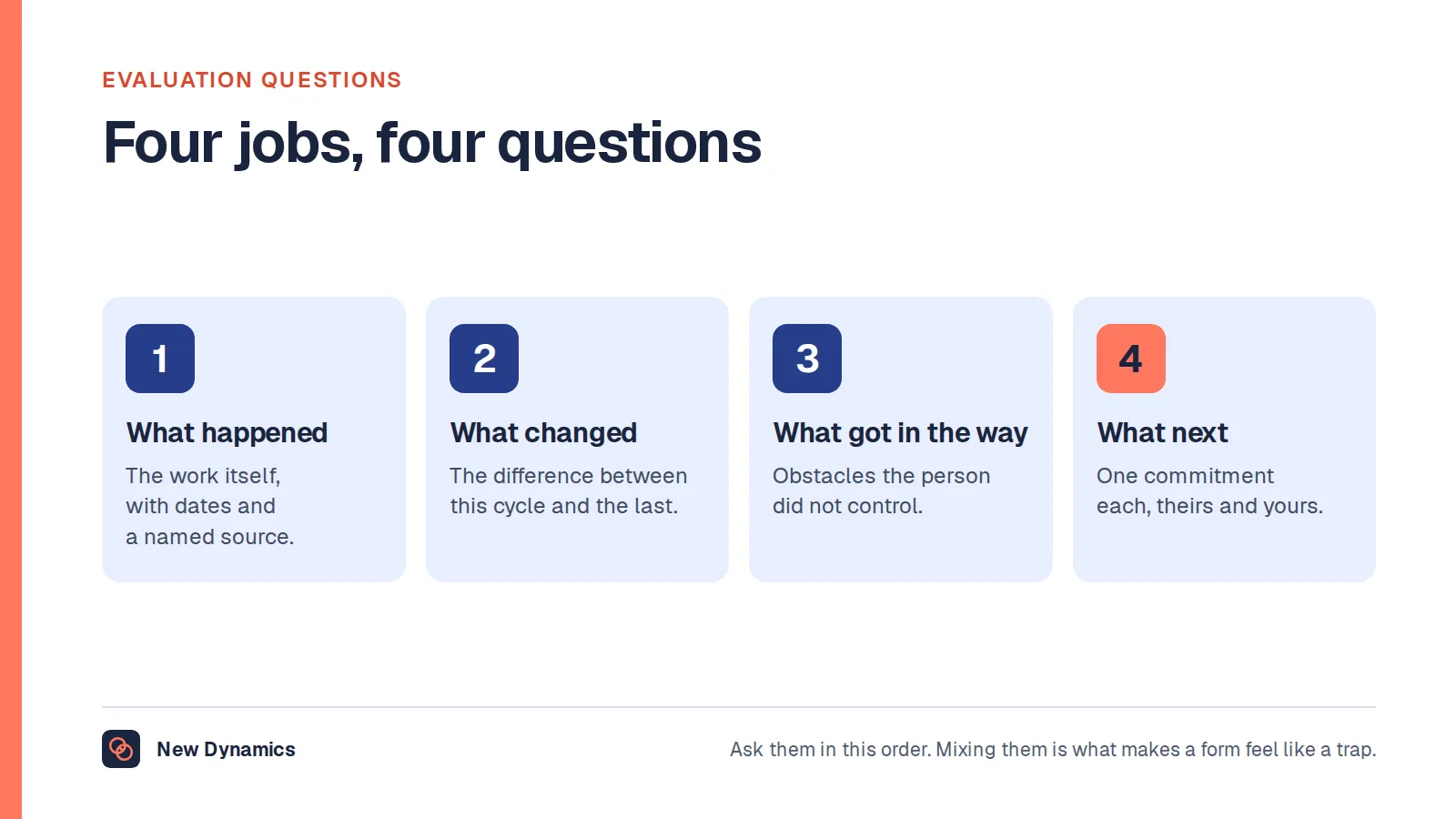
Write employee evaluation questions that produce evidence instead of opinions: questions by purpose, the ones that reliably fail, how to ask about work you never saw, and what to do with the answers.
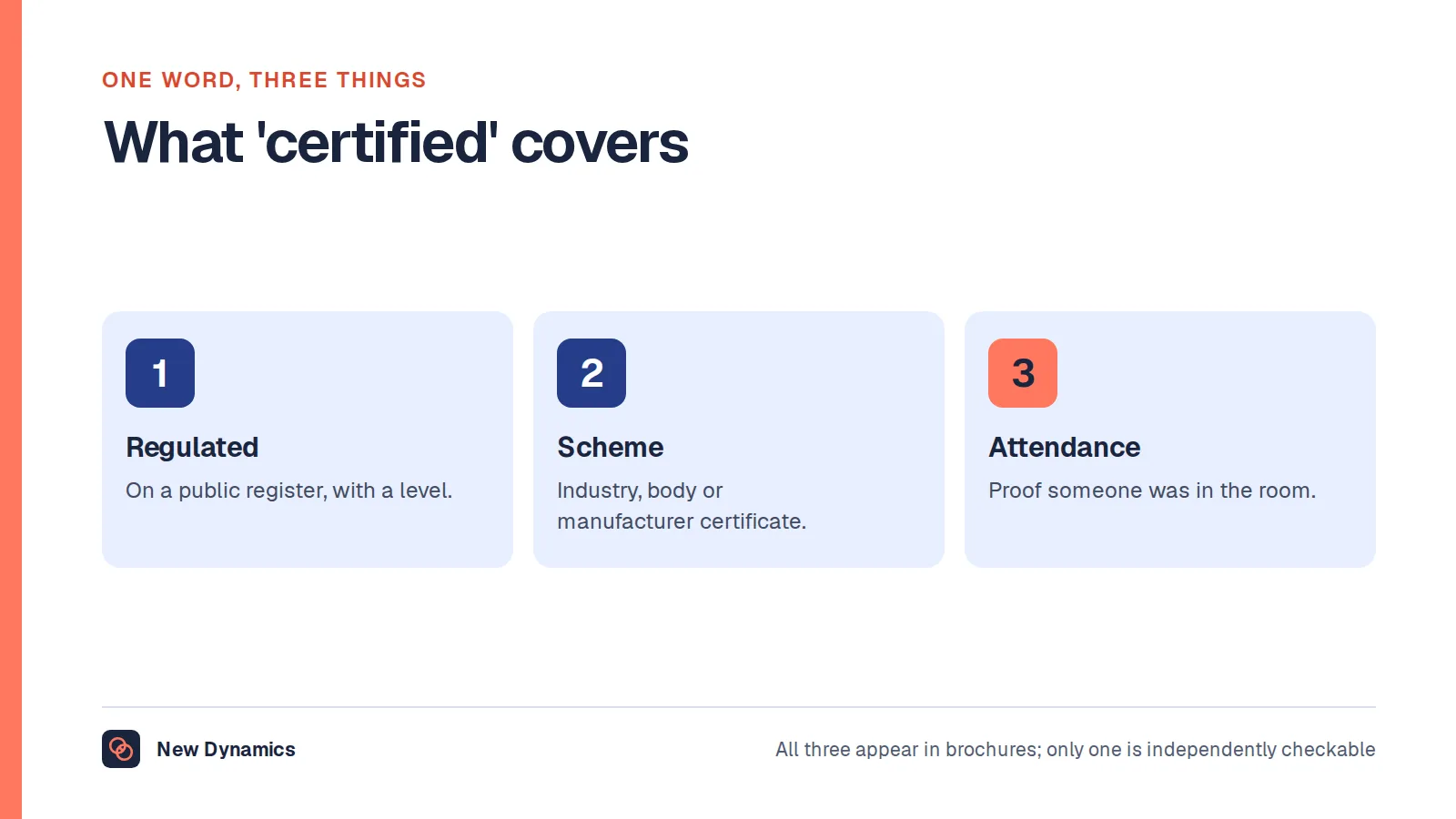
What certified training means, how to check whether a qualification is regulated, what an attendance certificate is worth, the five steps HSE sets out, and the records employers should keep.
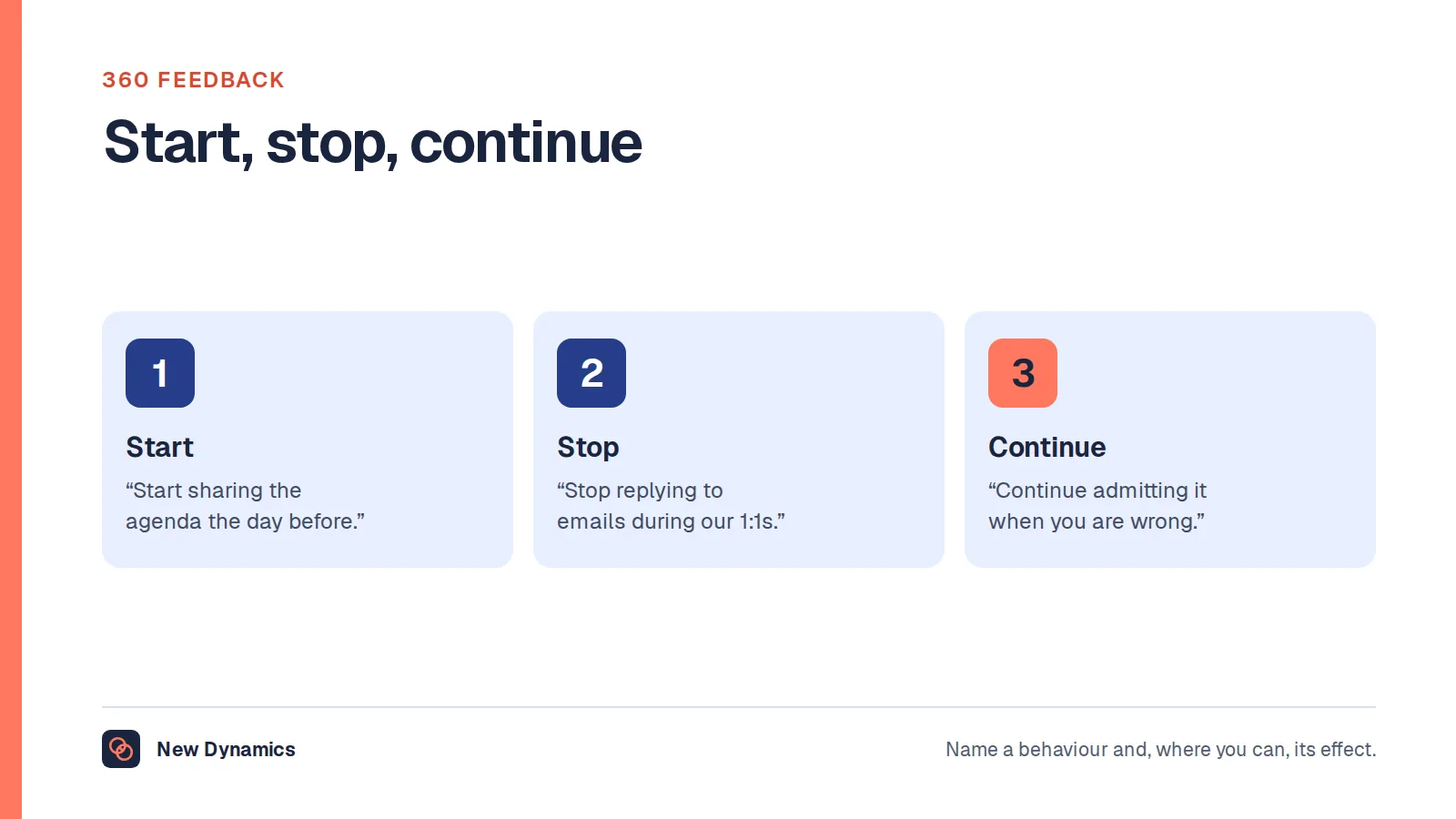
Use these 360 feedback examples: 20 survey questions, 15 start, stop, continue comments, 30 strengths and development comments by skill, and a worked 360 summary.
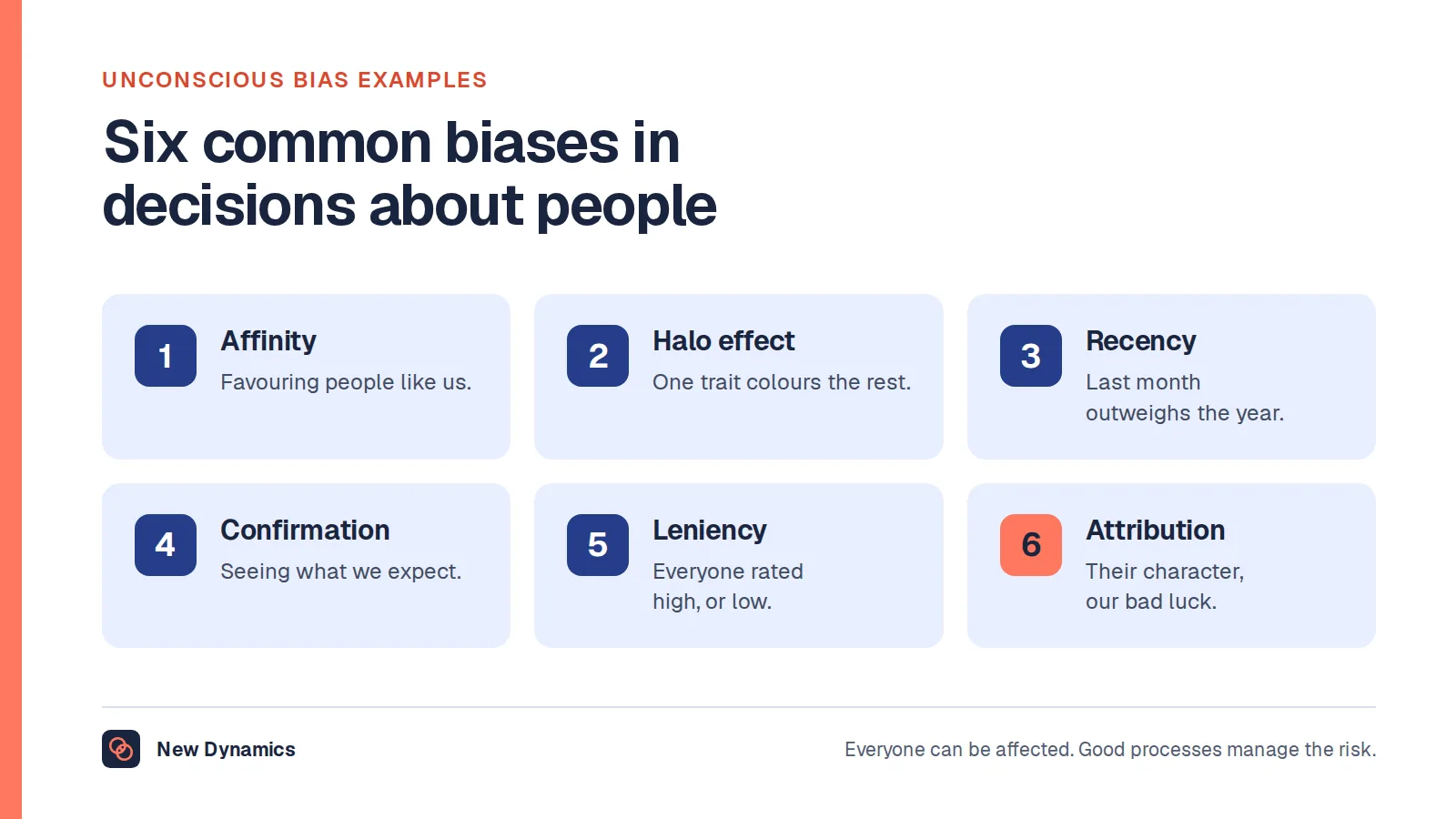
See 12 types of unconscious bias with workplace examples, how bias distorts hiring and performance reviews, and the process changes that reduce it better than training alone.