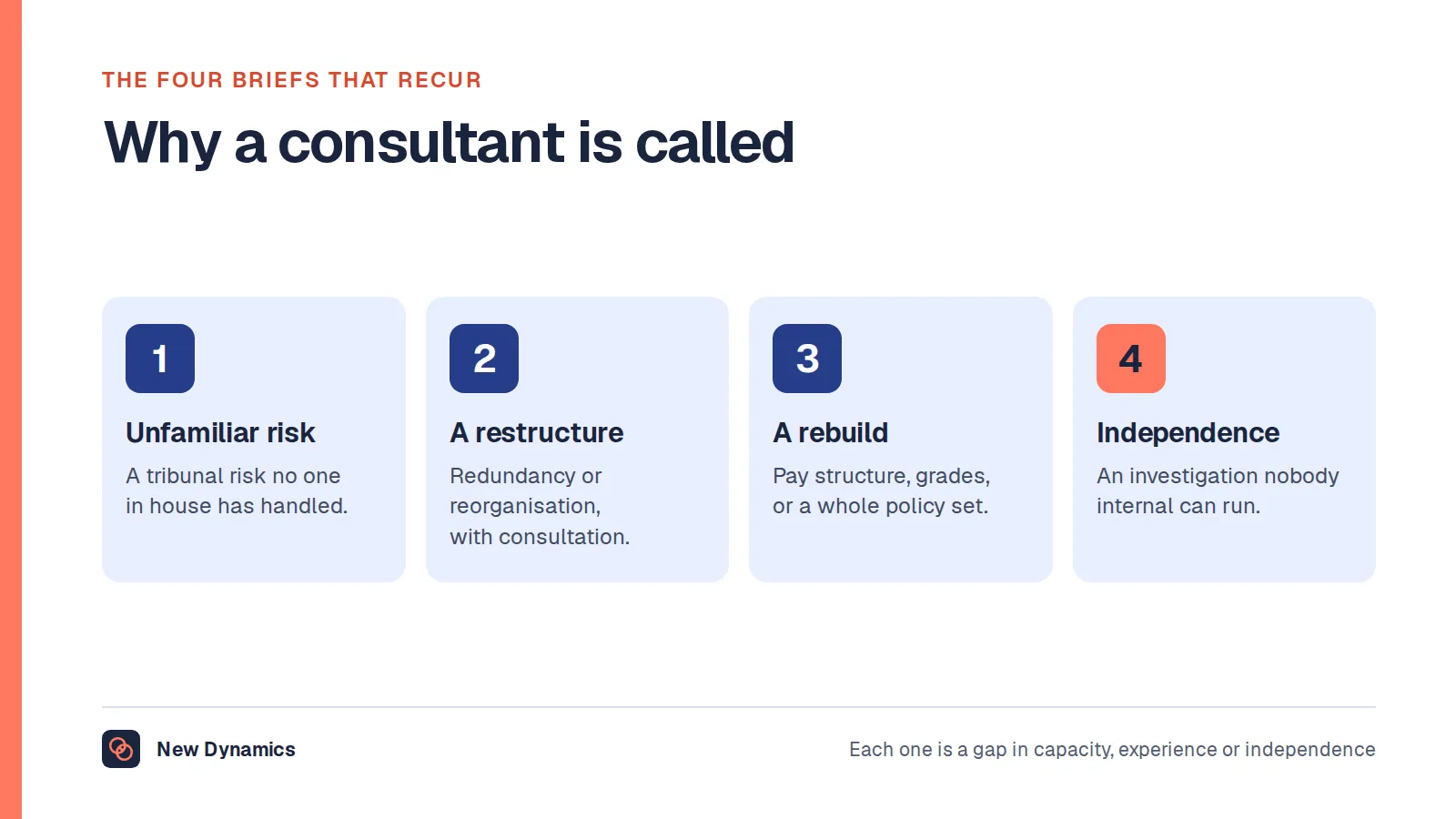
HR consulting for two readers: the employer deciding whether to bring in an HR consultant, and the HR professional thinking of becoming one. The briefs that recur, retainer versus project versus interim, independence in investigations, the ICO position on employee records, and the routes in.
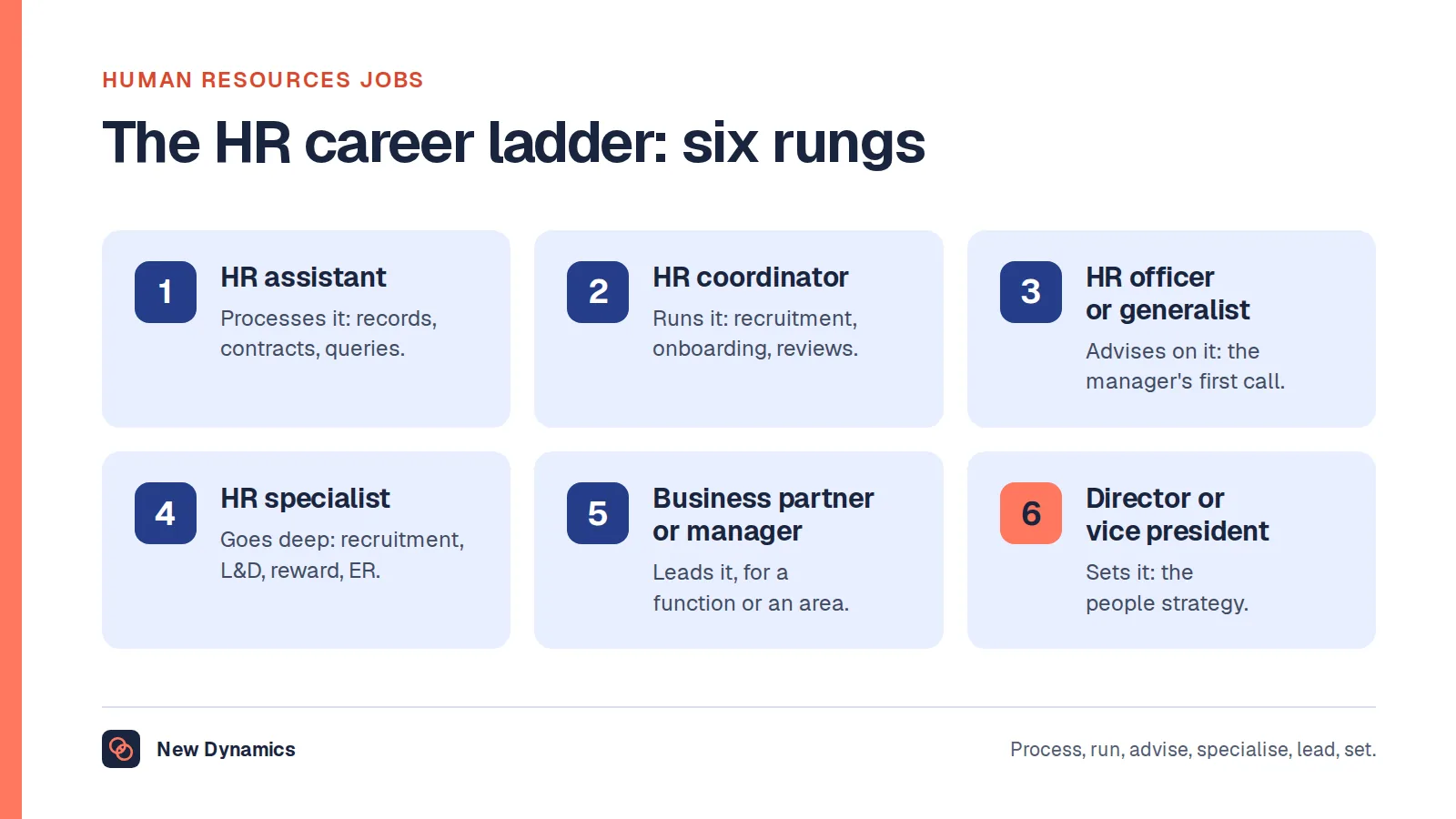
Human resources jobs and their duties at every level: HR assistant, coordinator, officer or generalist, specialist, business partner or manager, and director or vice president, with an HR assistant job description template.
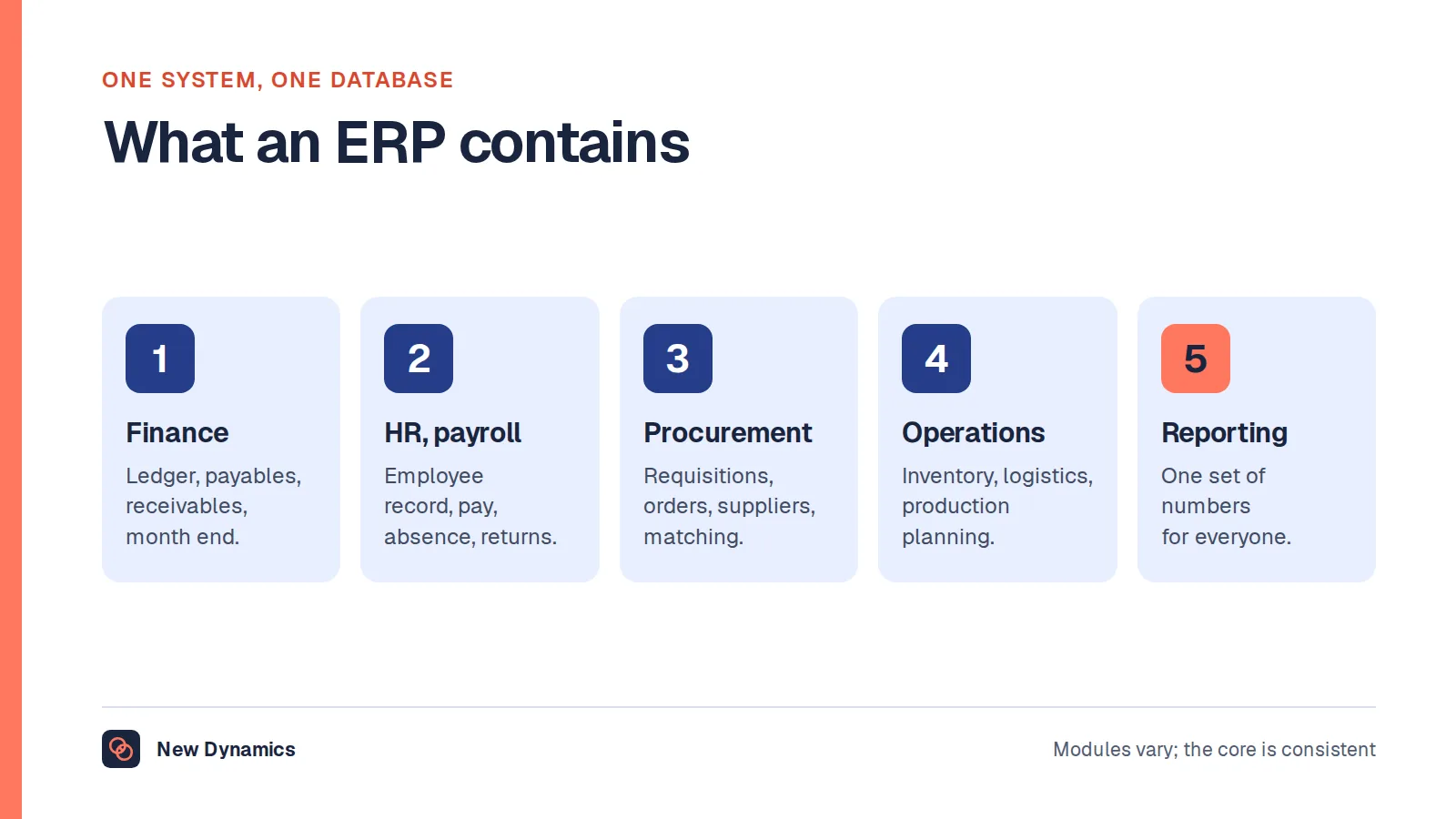
What an ERP system is and what enterprise resource planning covers, the processes it runs end to end, how it differs from CRM, MRP and an HR system, why these programmes are hard, and what to ask.
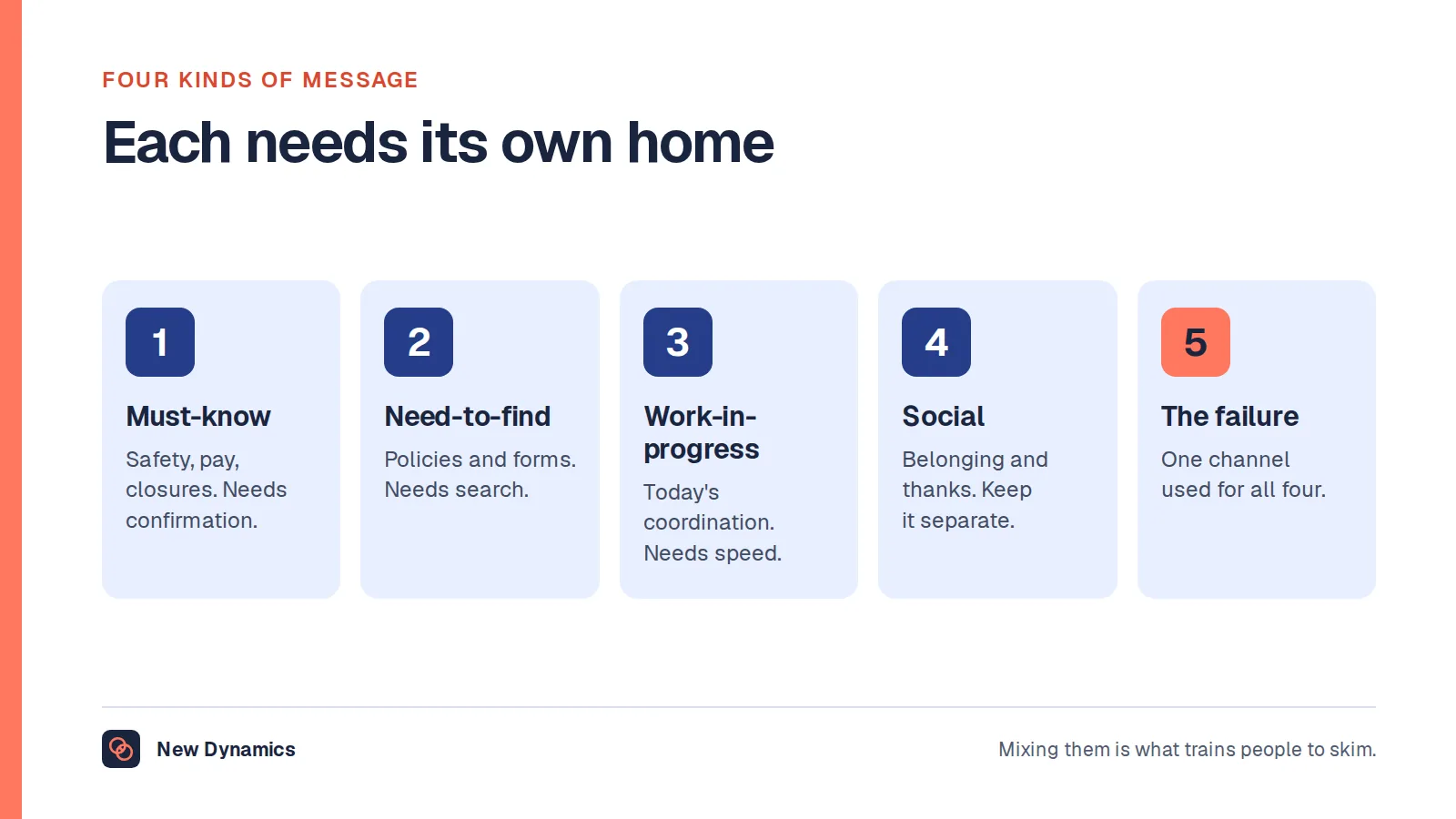
How to choose internal communication tools without adding another channel nobody reads: the four kinds of message, reaching people without a work email, the rules that stop channel sprawl, what to measure, and the questions to ask.
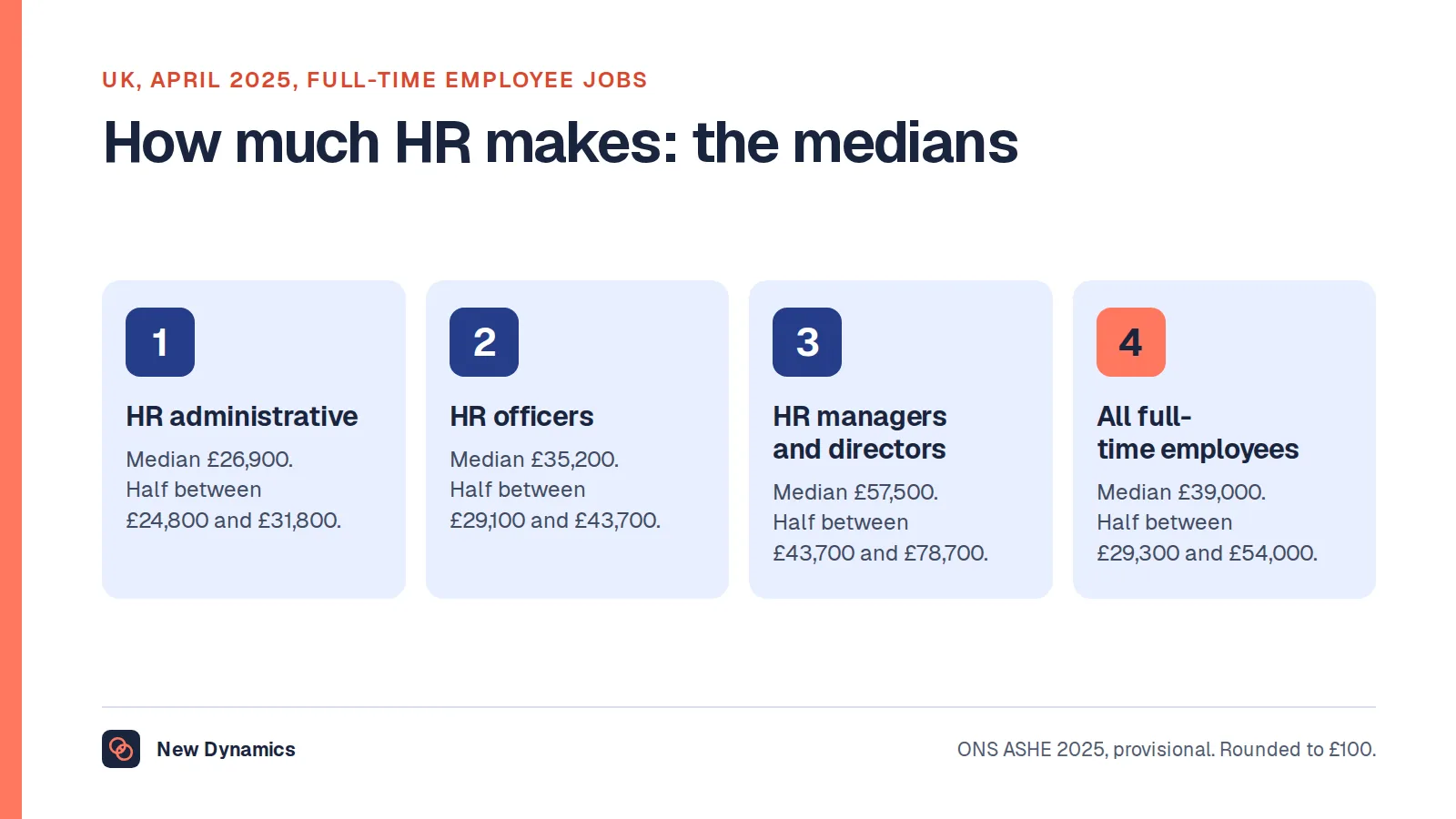
How much HR professionals make in the UK: median and percentile pay for HR administrators, officers and managers from the ONS Annual Survey of Hours and Earnings 2025, what moves HR pay, and how to compare an offer.
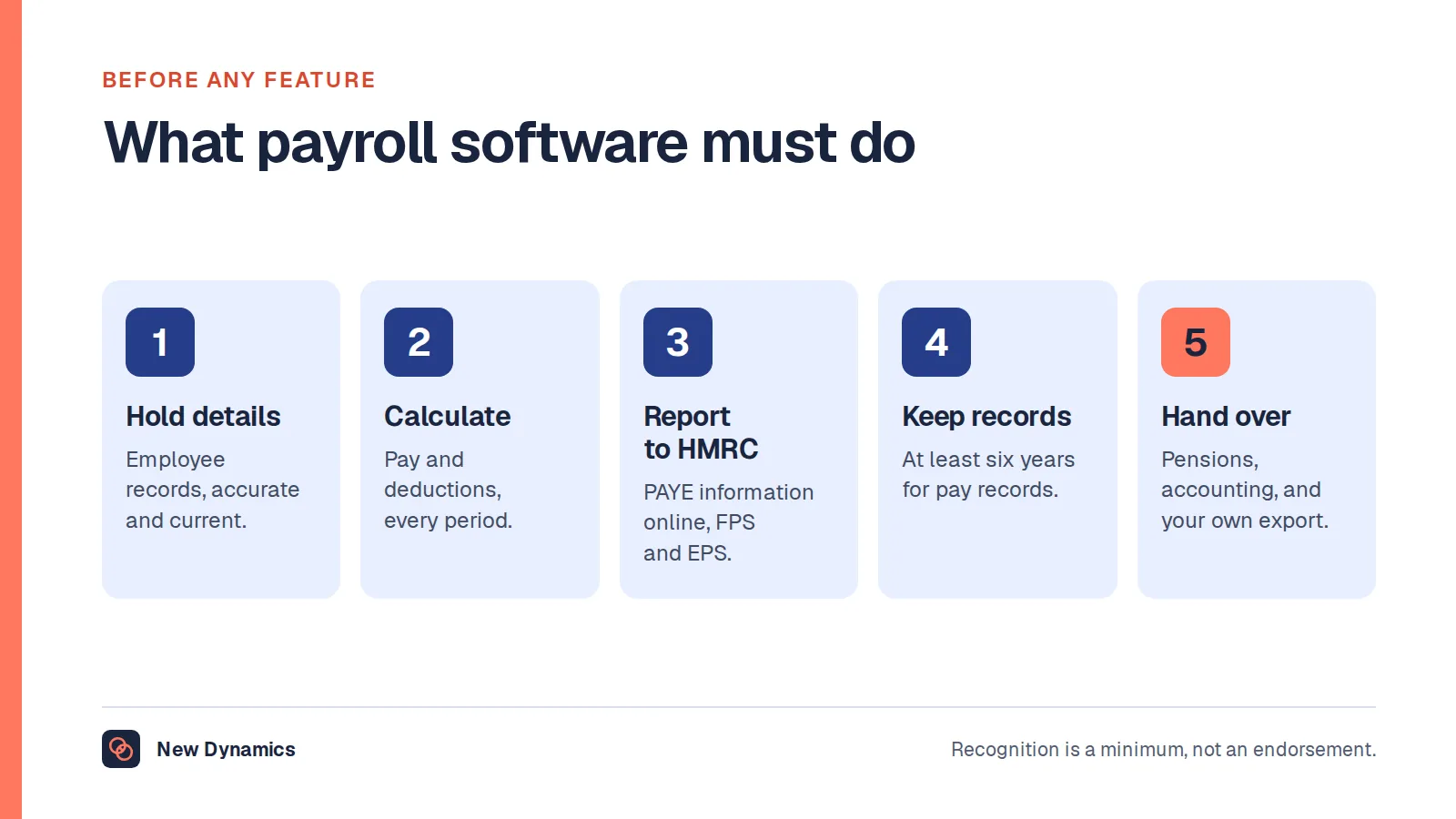
A vendor-neutral guide to choosing payroll software: the HMRC reporting it has to handle, the records you must keep and for how long, the join with time and HR data, what changes for small employers, and the questions to ask.
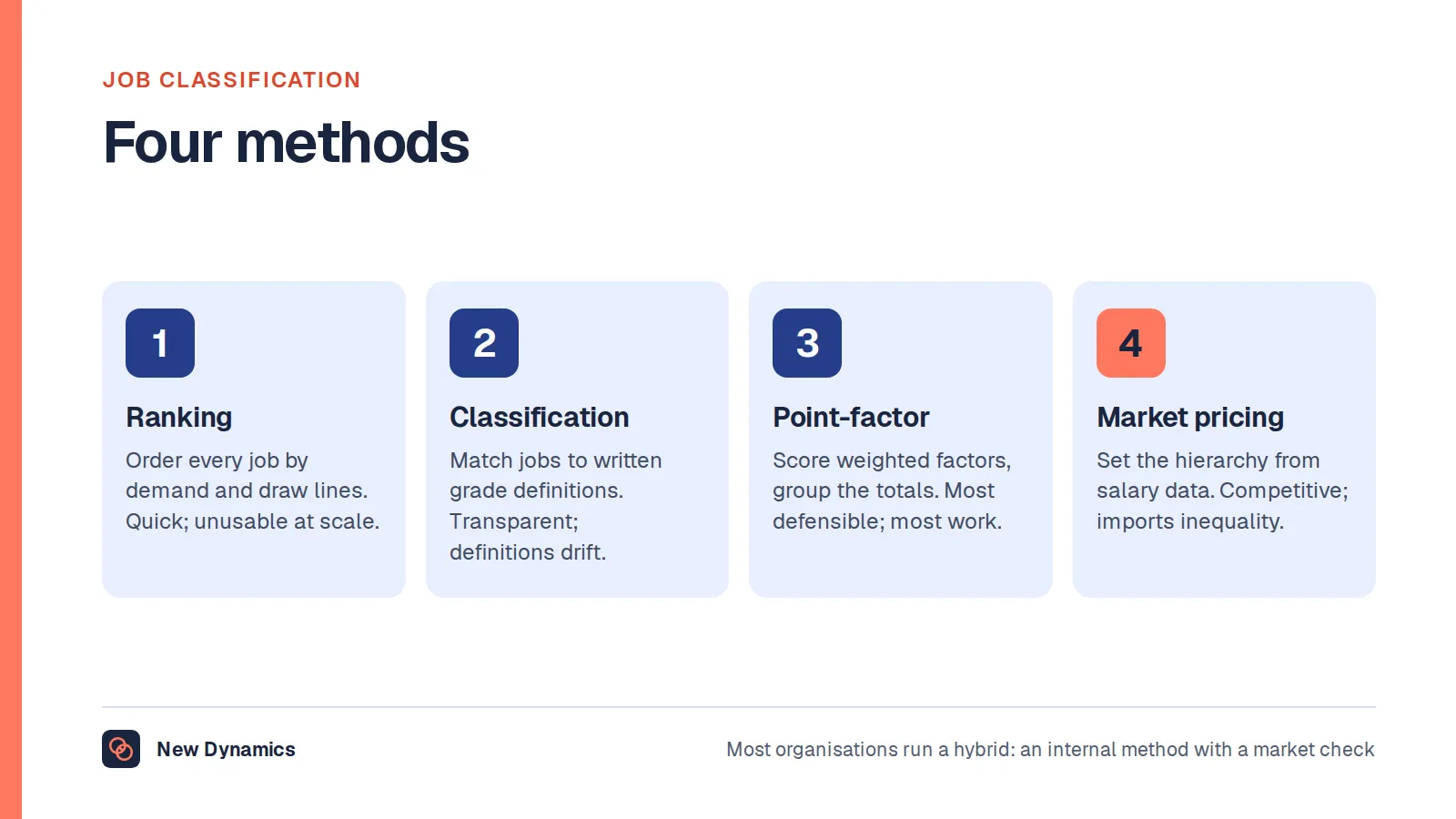
What job classification is and what it is for: the two senses of the term, the four methods from ranking to point-factor, how classification differs from job evaluation, job analysis and a job description, why equal pay law makes it matter, six steps to build or refresh a grade structure, what a grade definition should contain and the pitfalls.
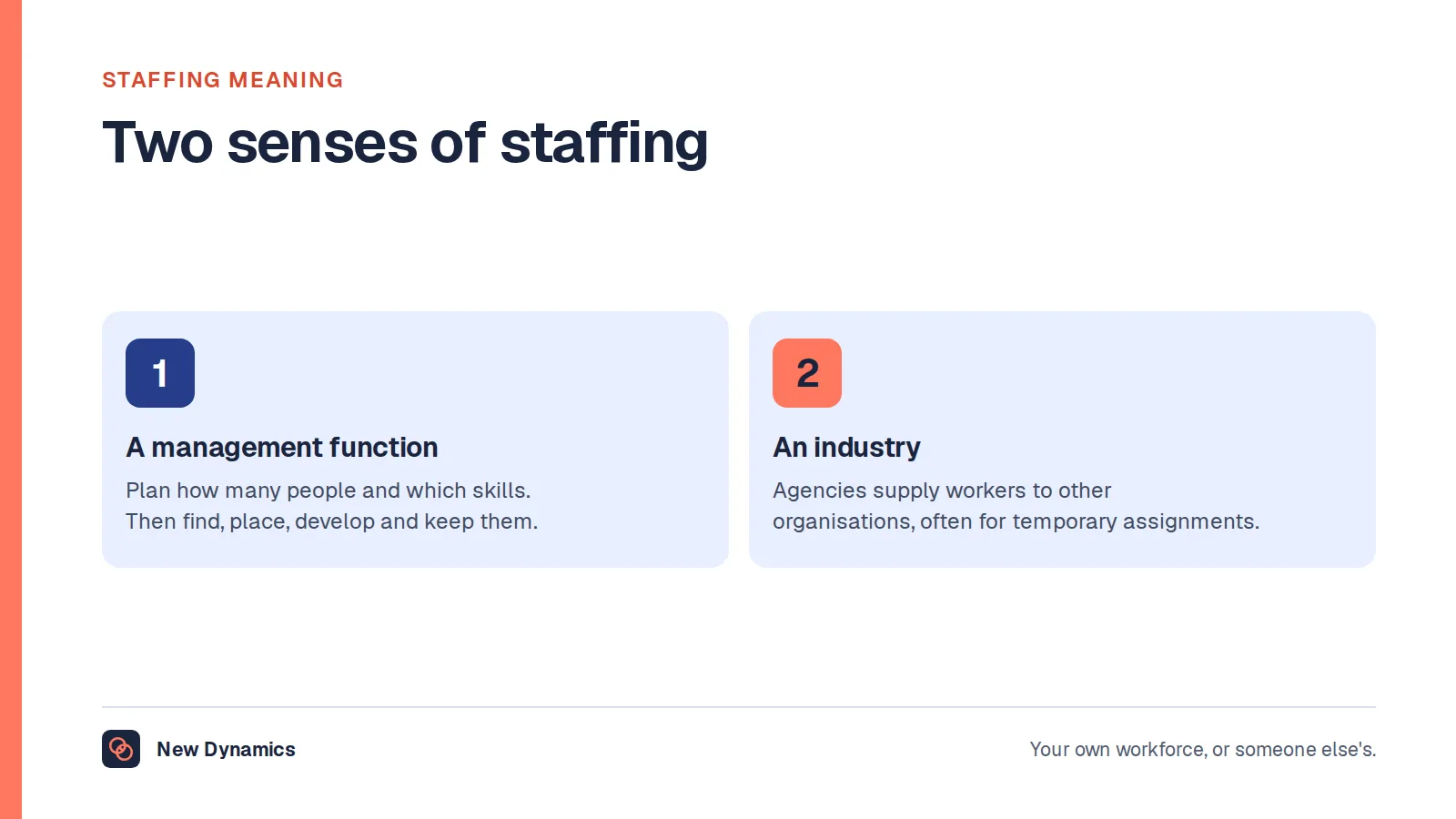
What staffing means, its two senses in management and in the agency industry, the six steps of the staffing process, five ways to fill a gap and the UK rules on agency workers.
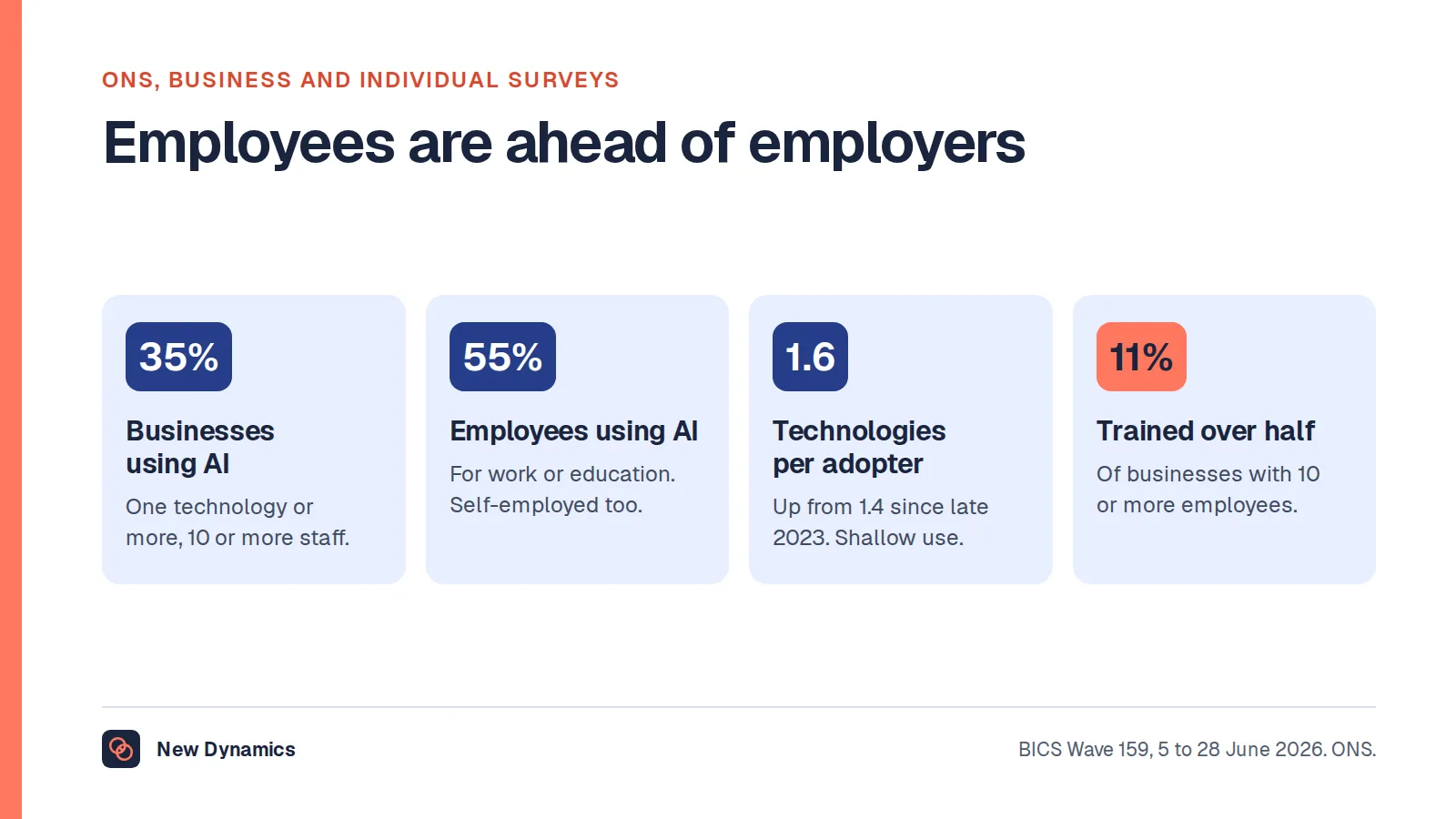
The checkable UK figures on AI at work: 35% of businesses use at least one AI technology, 55% of employees use AI for work or education, and what nobody publishes about AI inside HR.
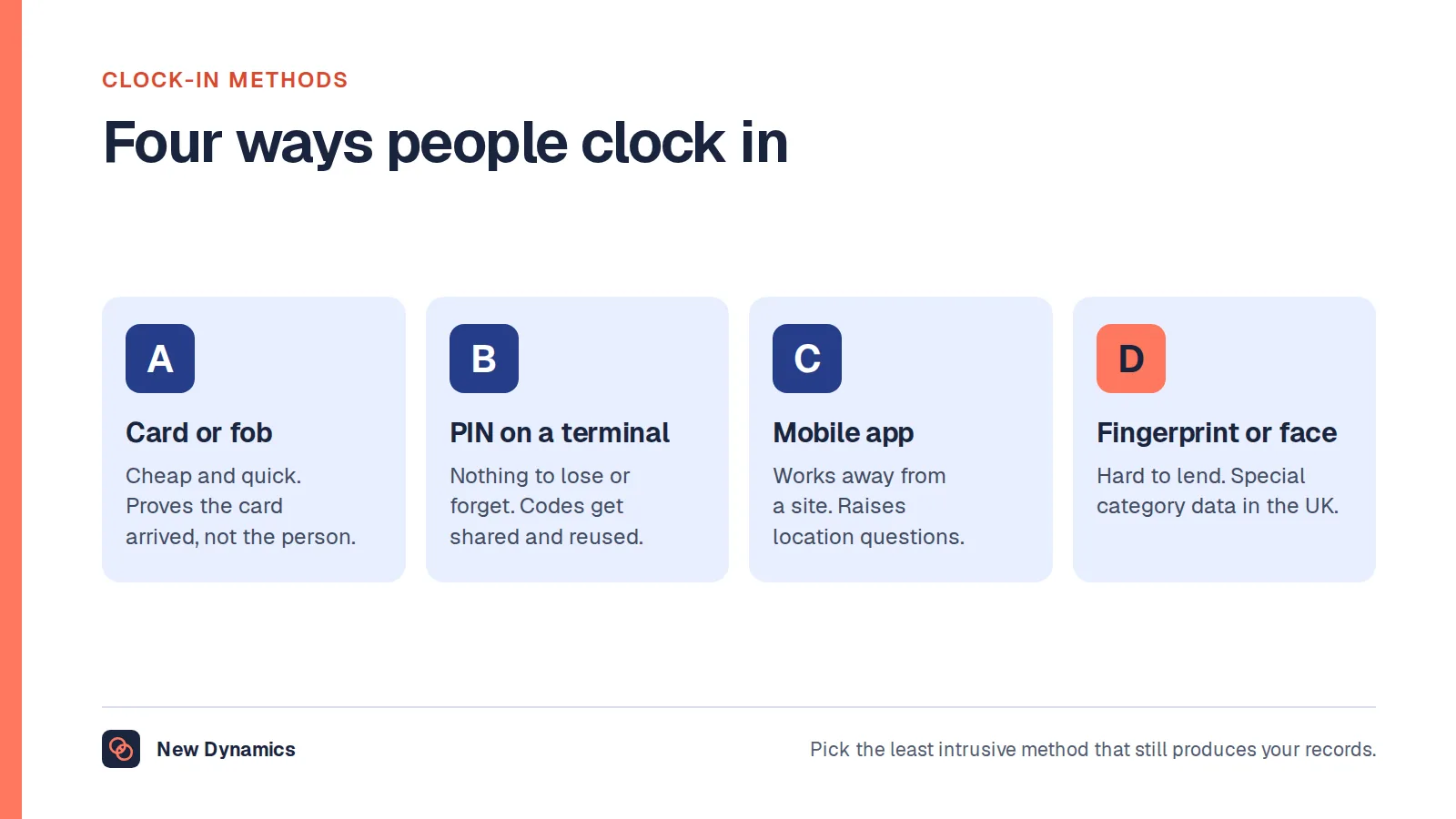
How employee time clocks work and where each method fails: cards, PINs, biometrics, mobile apps and browser clock-in, buddy punching, rounding, the UK records you must keep, the cases that break every clock, and what free really means.
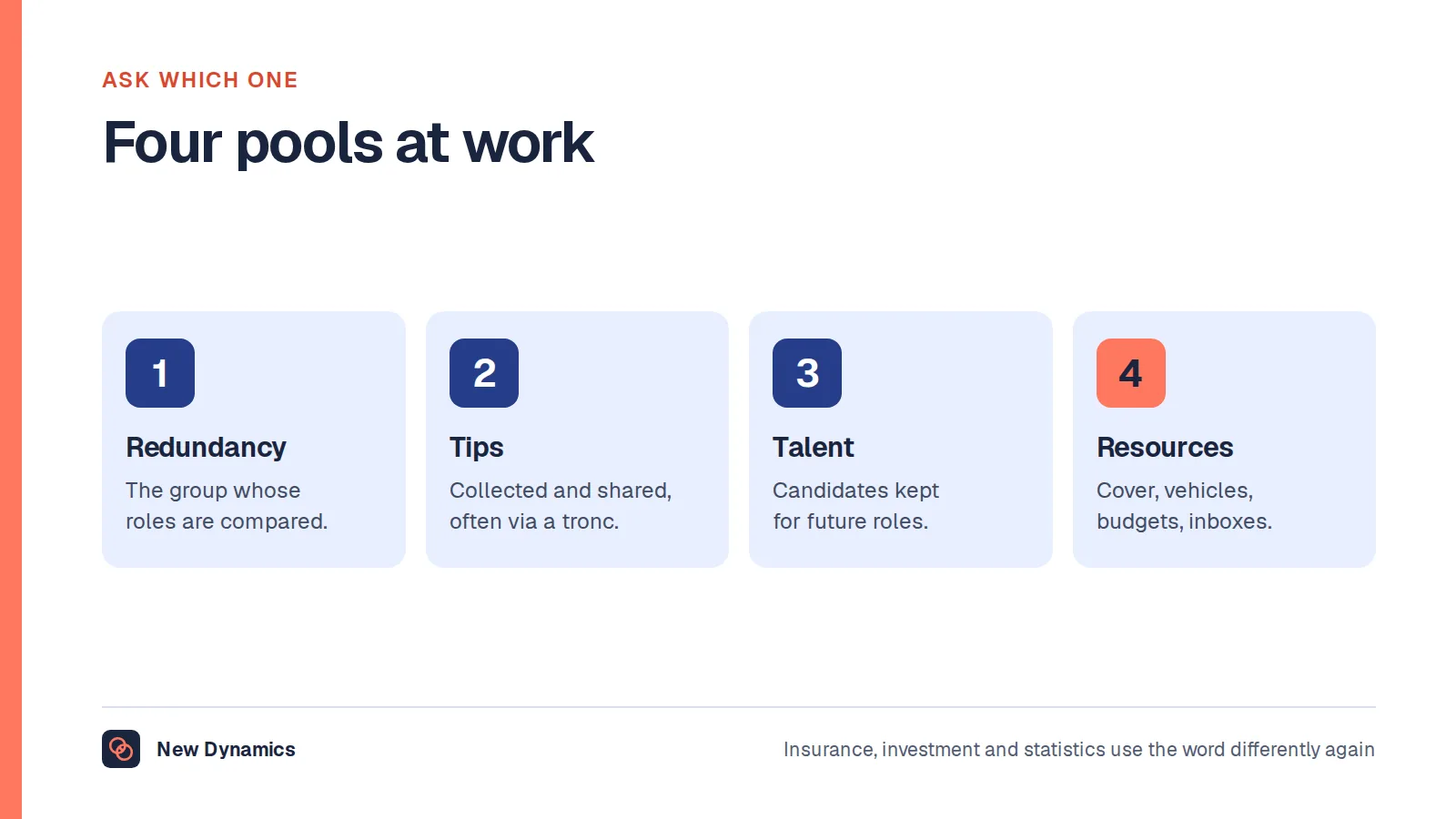
What pooling means at work: selection pools in redundancy and how they are drawn, tip pooling and the tronc, talent pools in recruitment, and the questions to ask if you are told you are in a pool.
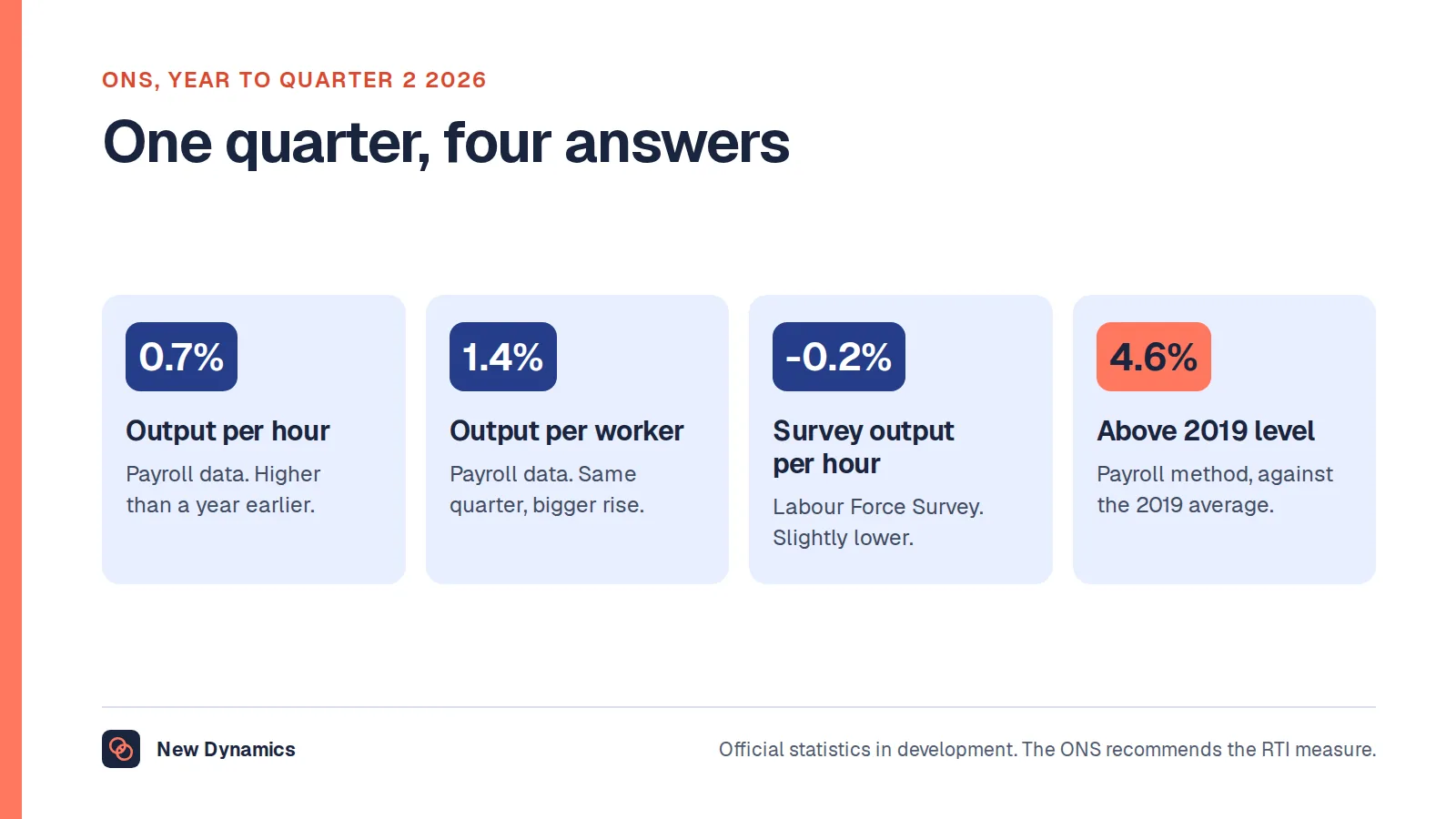
What the ONS actually publishes on UK labour productivity: output per hour worked, output per worker and output per job, each quoted with its reference period, the sector picture, and the honest internal measures to use instead. Read the figures, then measure your own.