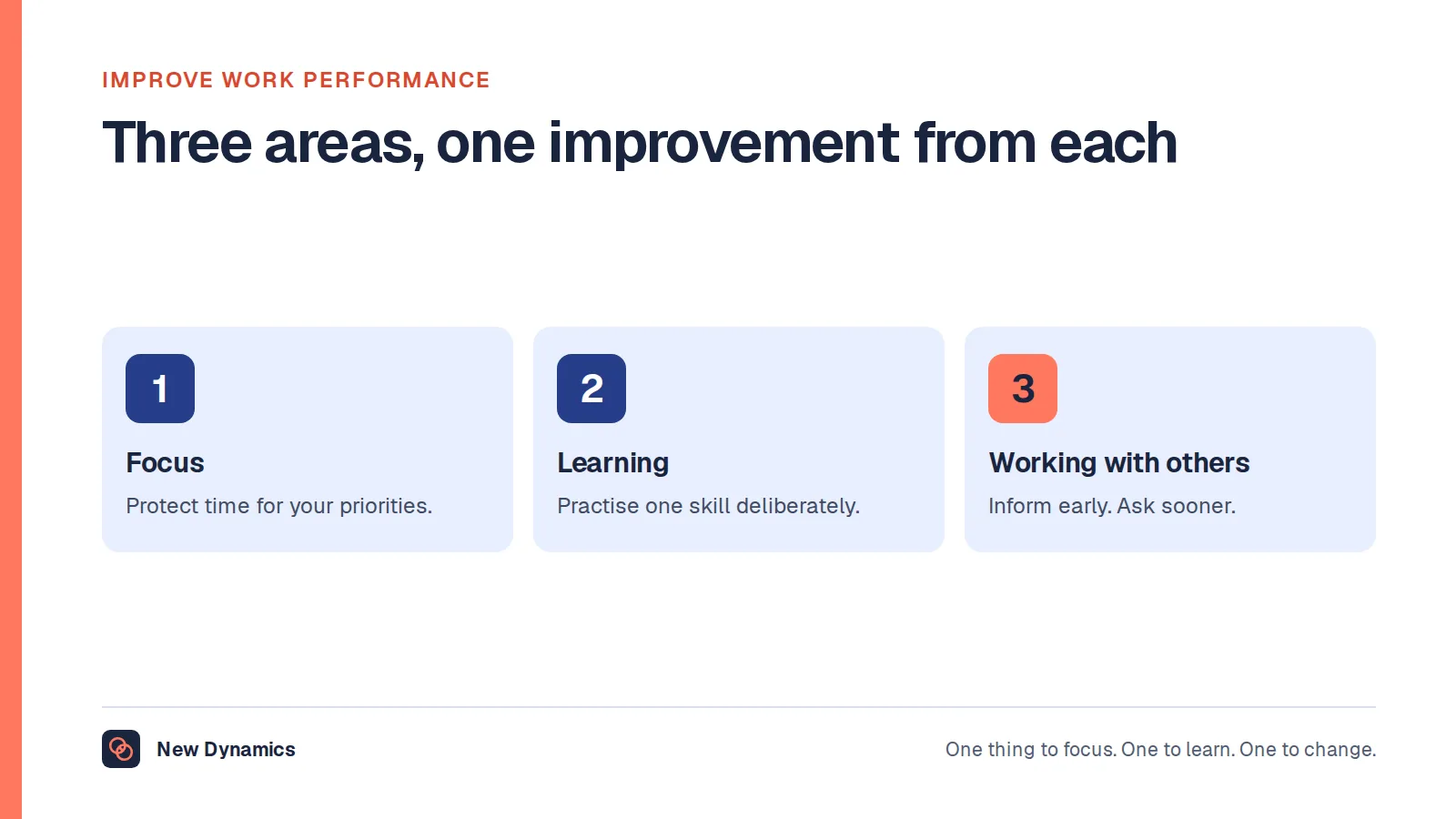
How to answer “What are three ways you can improve your work performance?” with sample answers, 20 practical ways to improve, and what managers should do when performance dips.
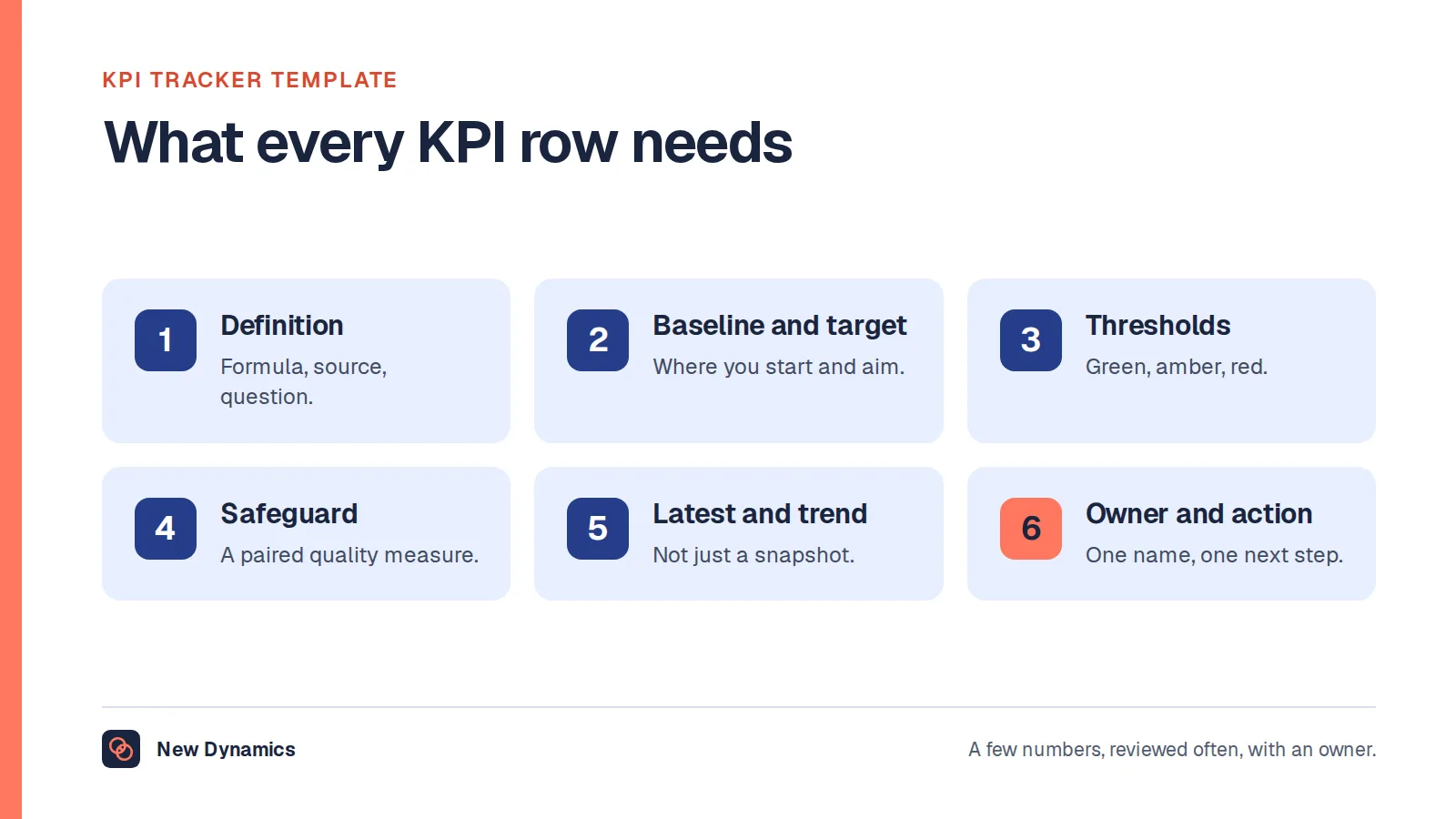
Build a KPI tracker your team will use: a free template, the ten fields every tracker needs, a worked example, a review routine and the mistakes that kill dashboards.
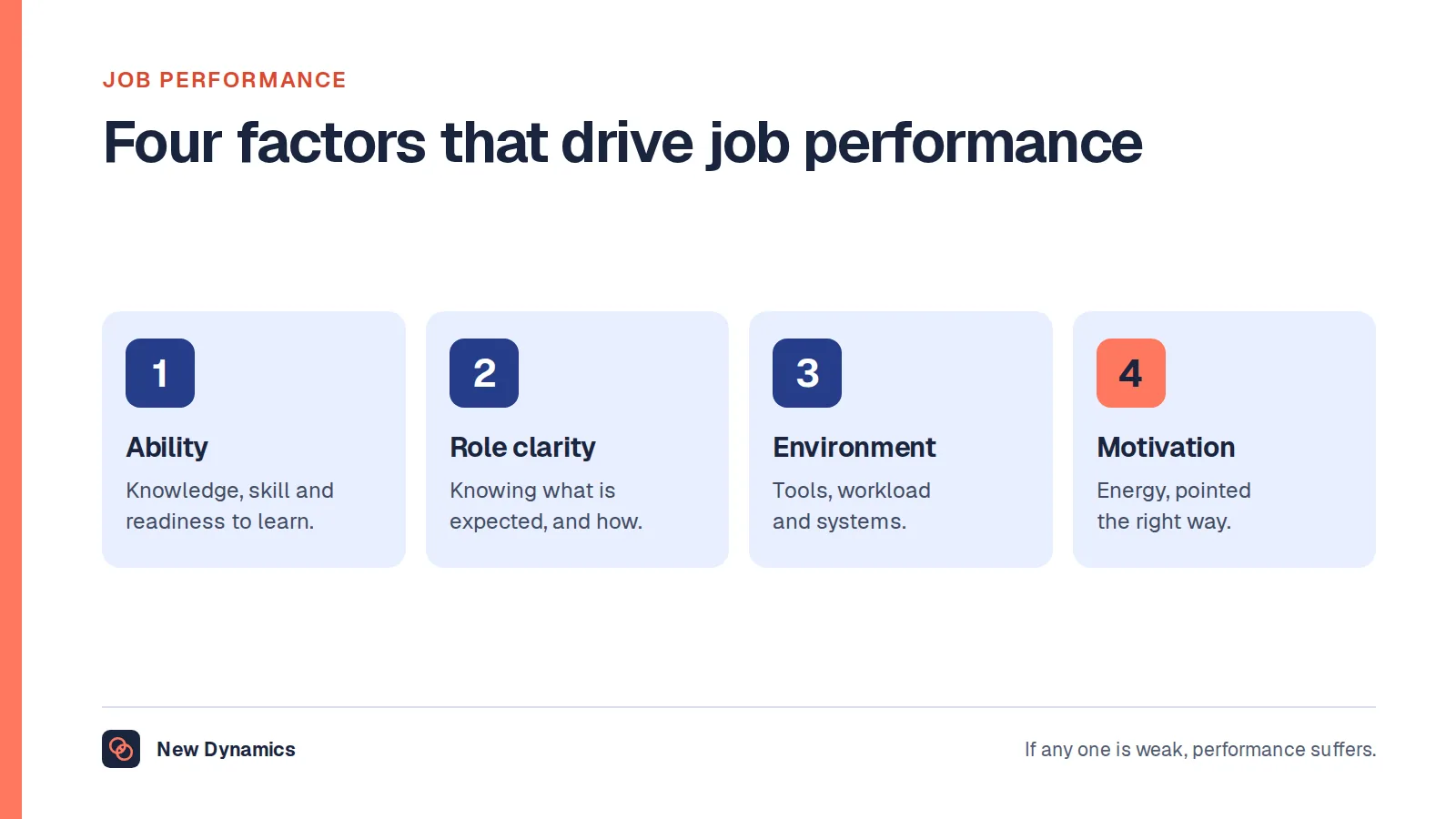
Job performance explained: a plain definition, the four factors that drive it, five ways to measure it fairly, and what to check first when performance dips.
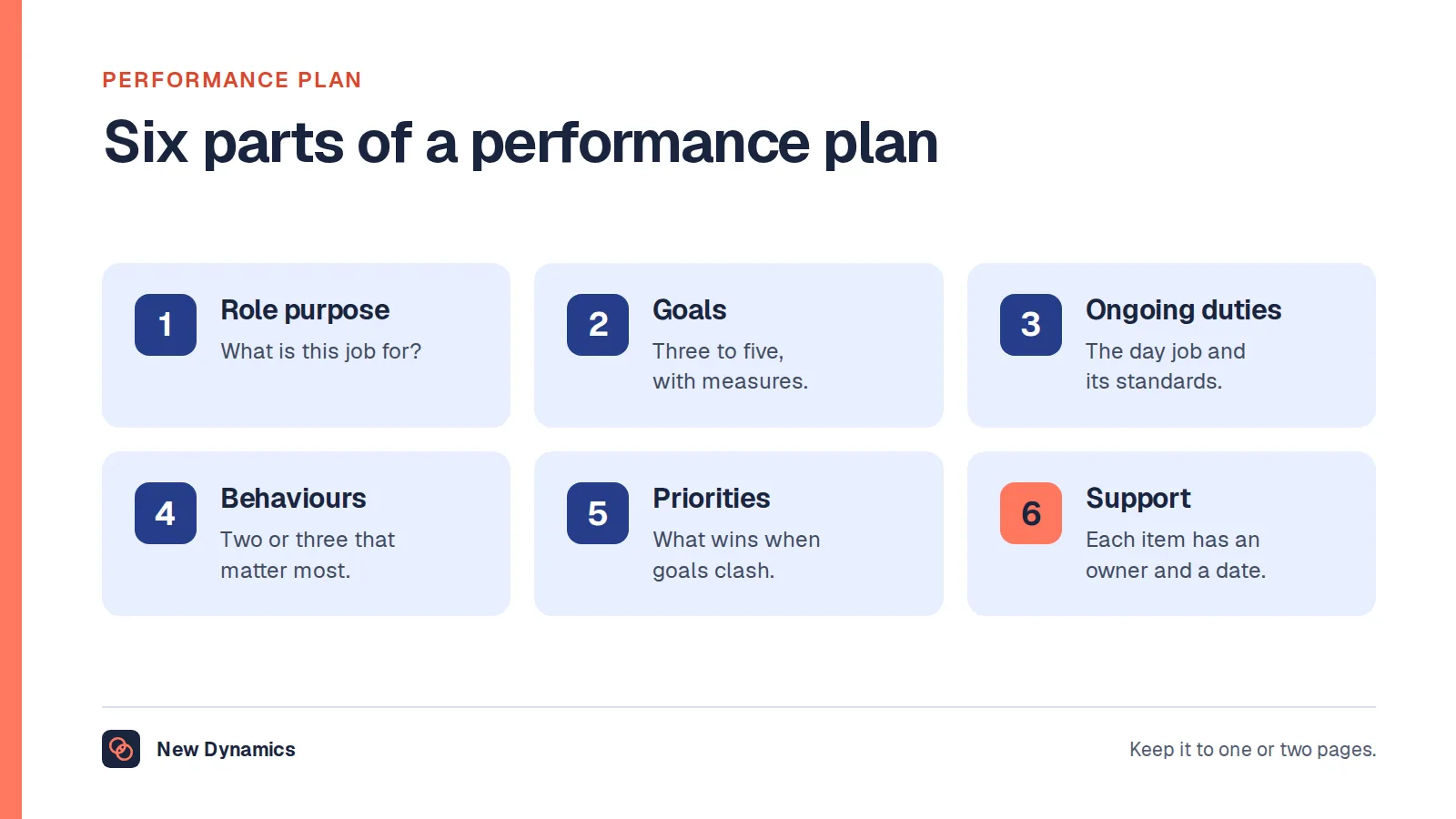
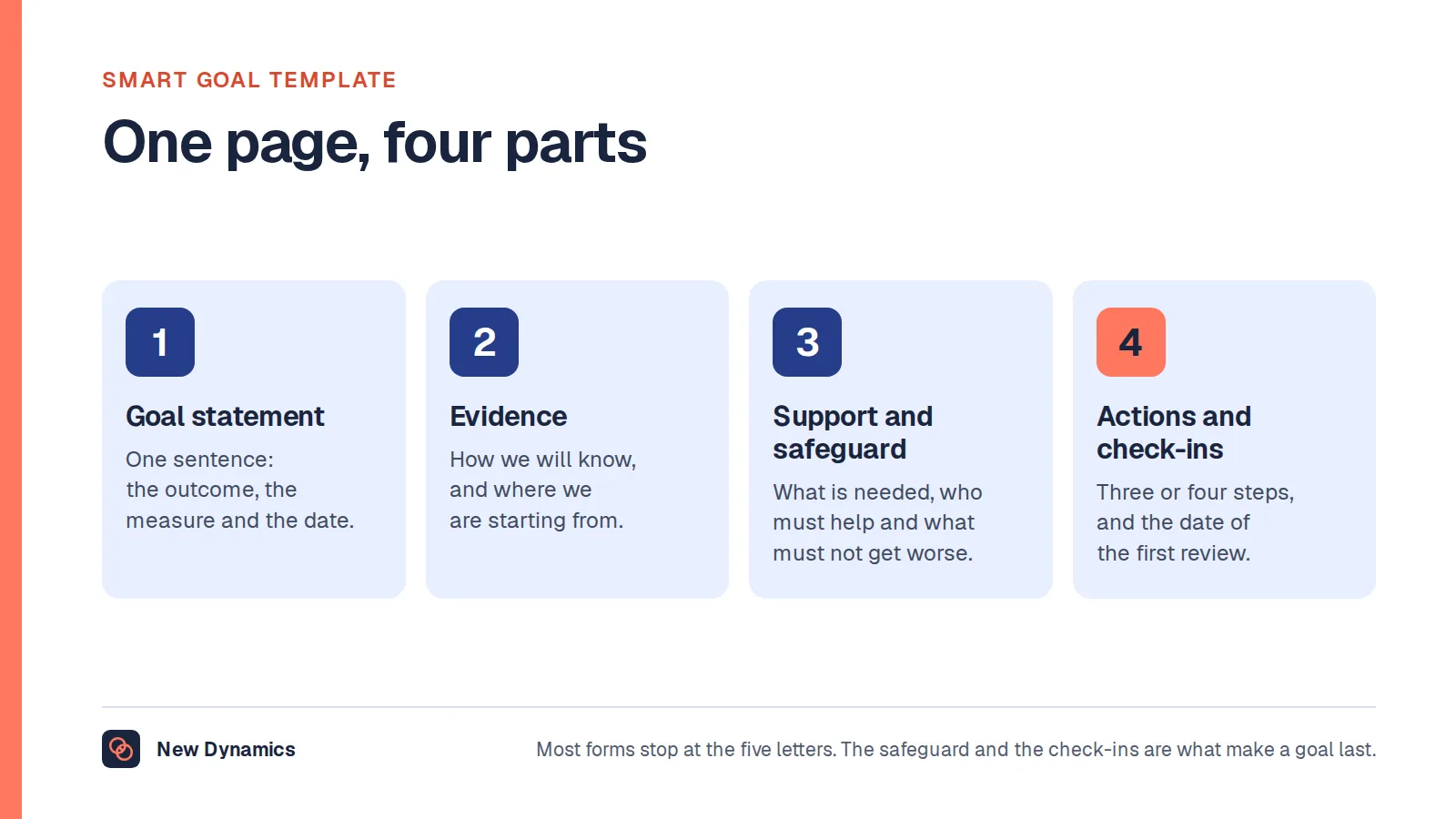
Write a performance plan that gets used: what goes in it, a free template, a worked example, a simple performance tracker and the mistakes that make plans gather dust.
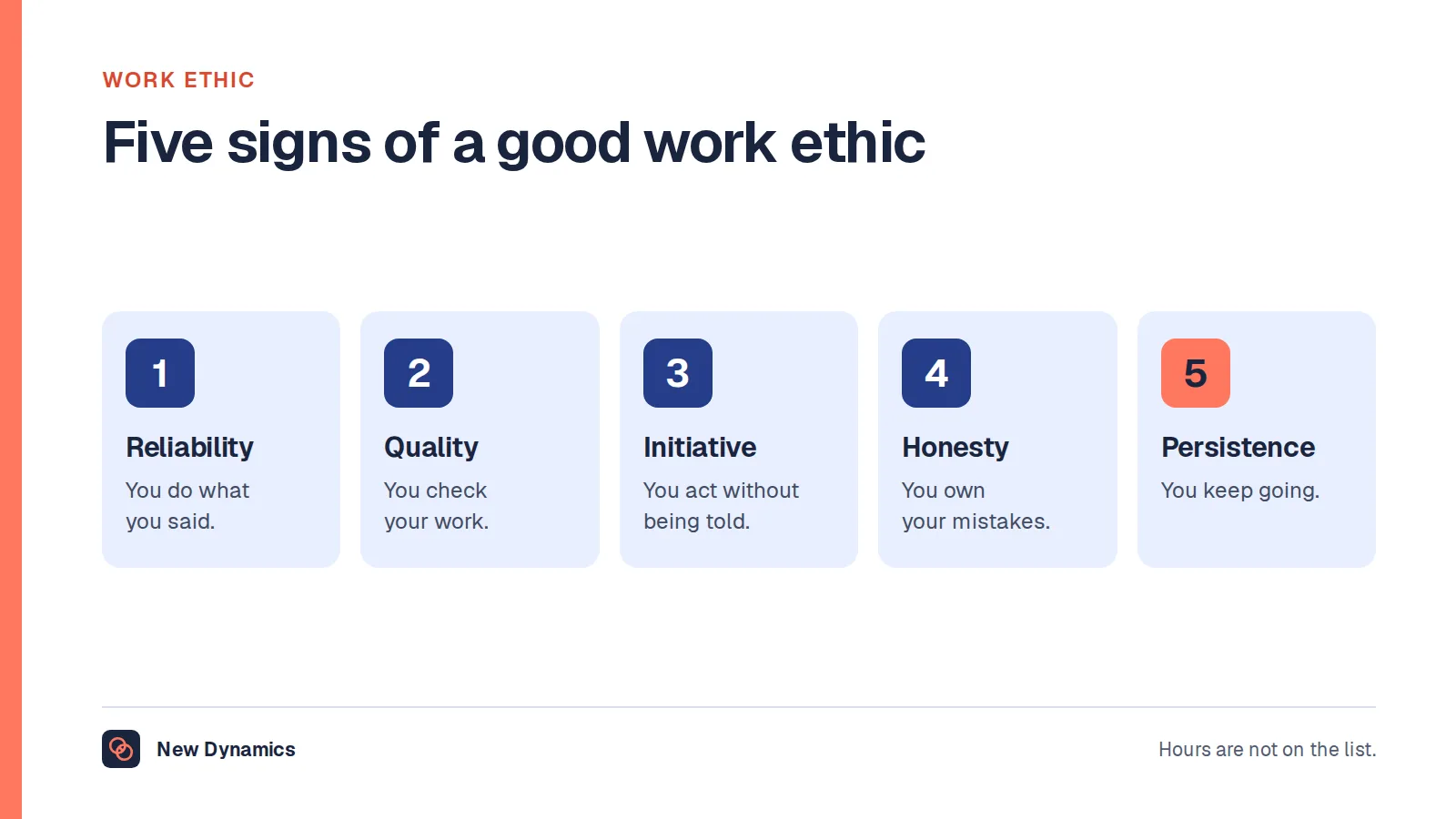
What work ethic means, five signs of a good work ethic, 15 examples, how to describe yours in a CV or interview, and why long hours are a poor measure of it.
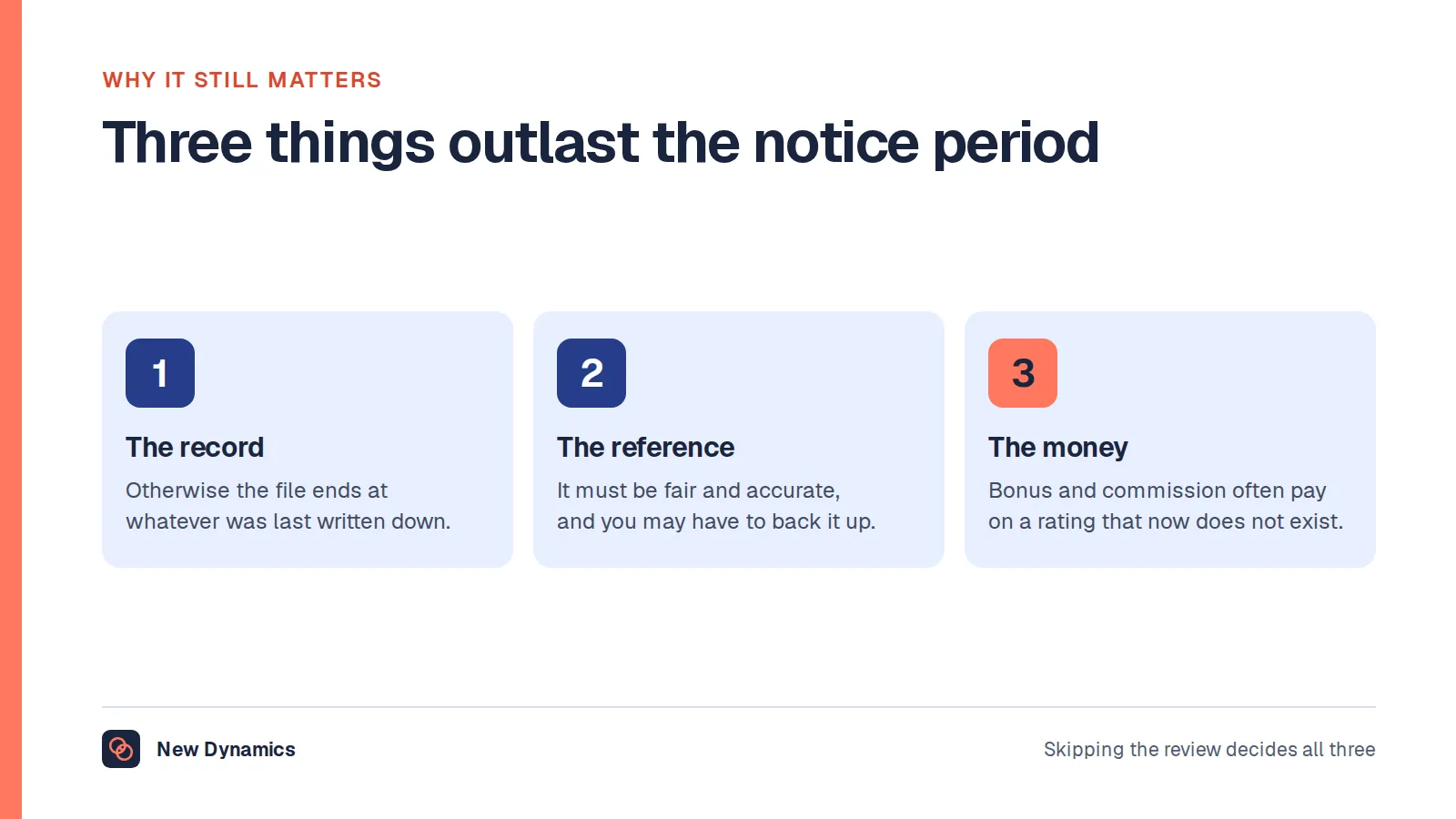
Whether to review someone who is leaving, what the review should still cover and what it should drop, how the record feeds the reference, and why resignation and redundancy notice need handling differently.
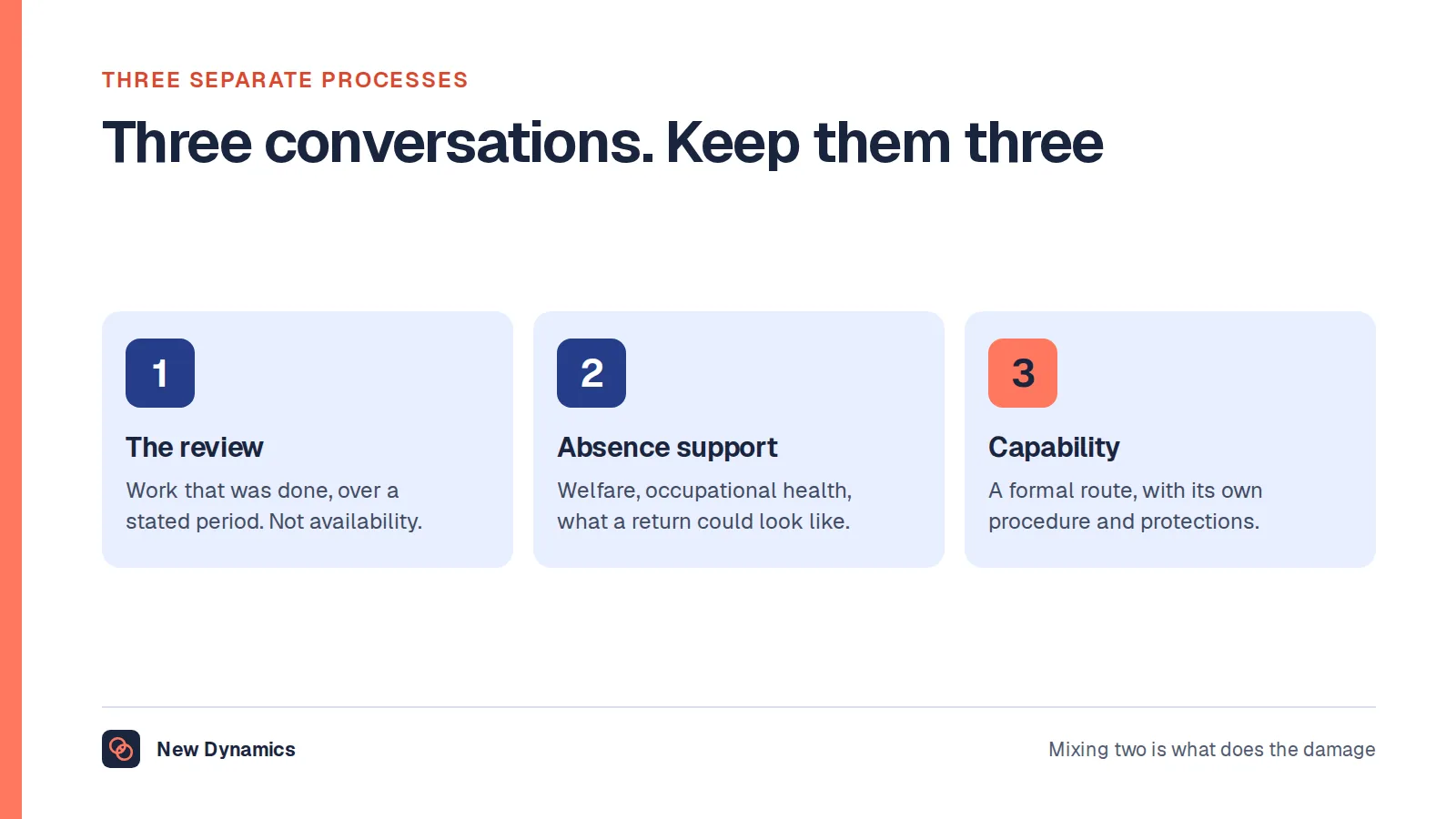
Whether to run the performance review at all when someone is off sick for months, how to agree contact without pressure, how to rate the period actually worked, and what to do about a performance concern that pre-dates the absence.
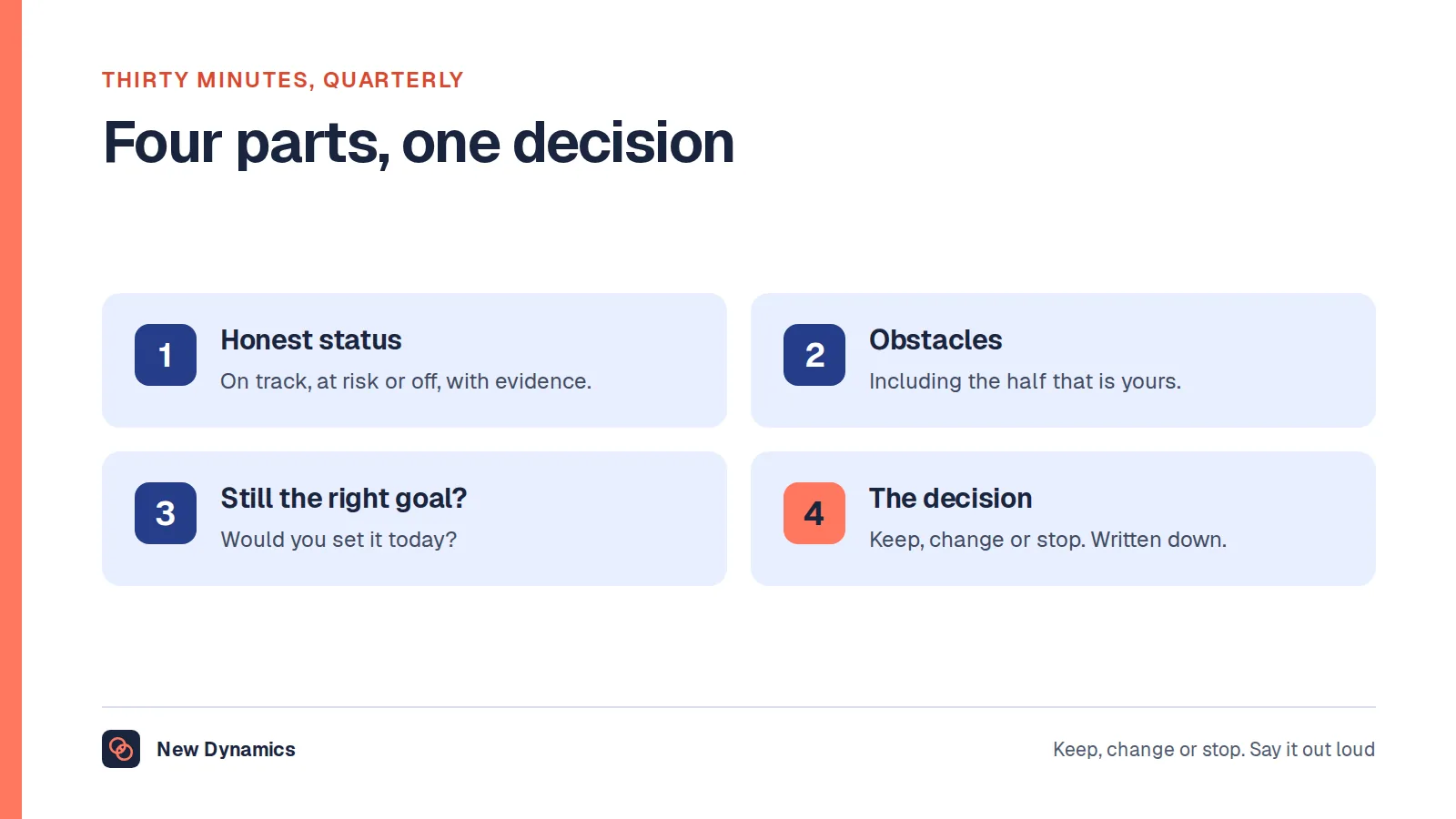
How to run a goal review meeting, the five legitimate reasons to change a goal mid-cycle and the two bad ones, how to record a change so it is not moving the goalposts, and how to close a goal that should stop.
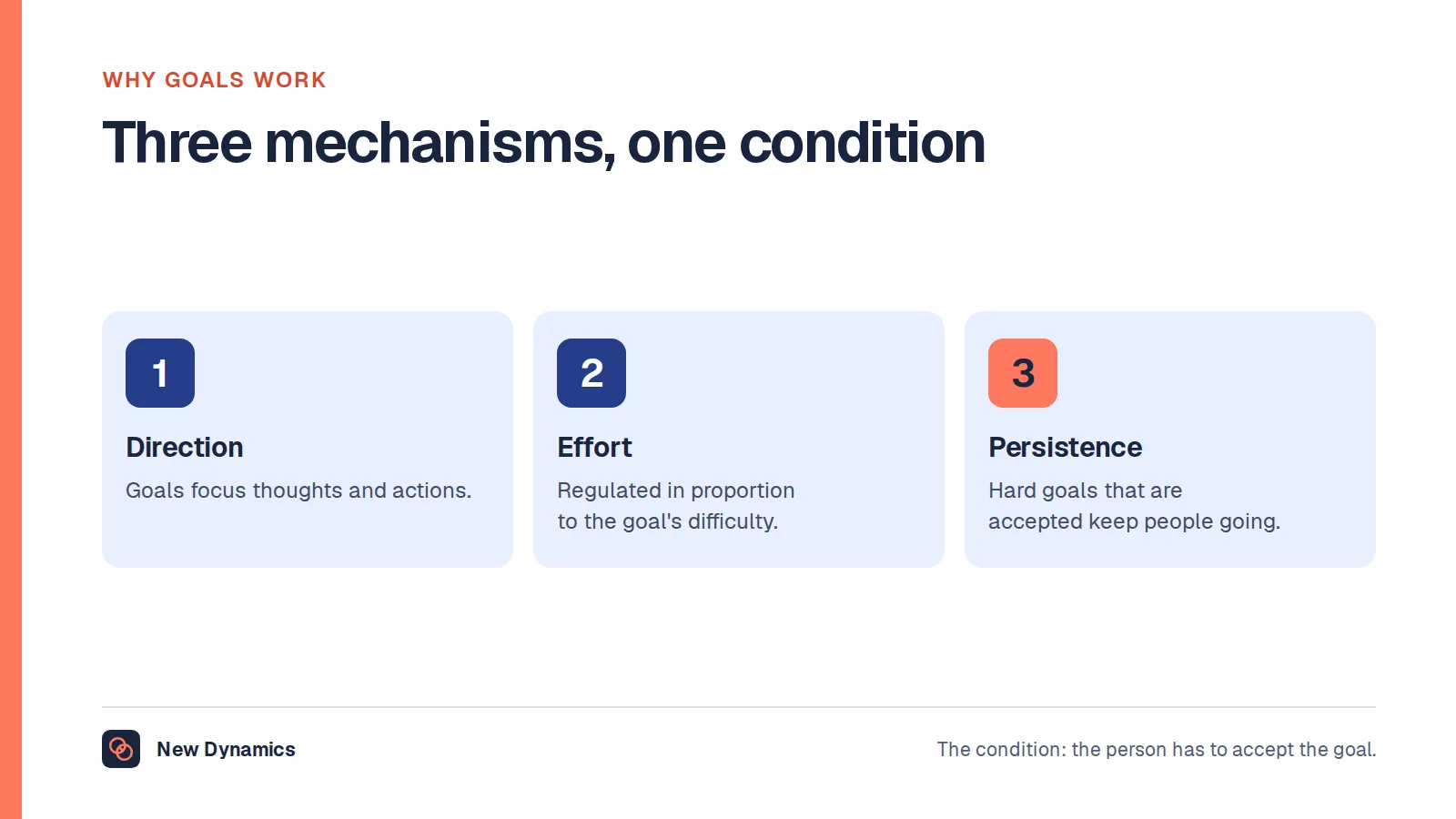
The definition of goal setting, the research from Locke and Latham that shows why specific, hard goals raise performance, the three mechanisms behind it, seven steps to set goals at work and the mistakes to avoid.
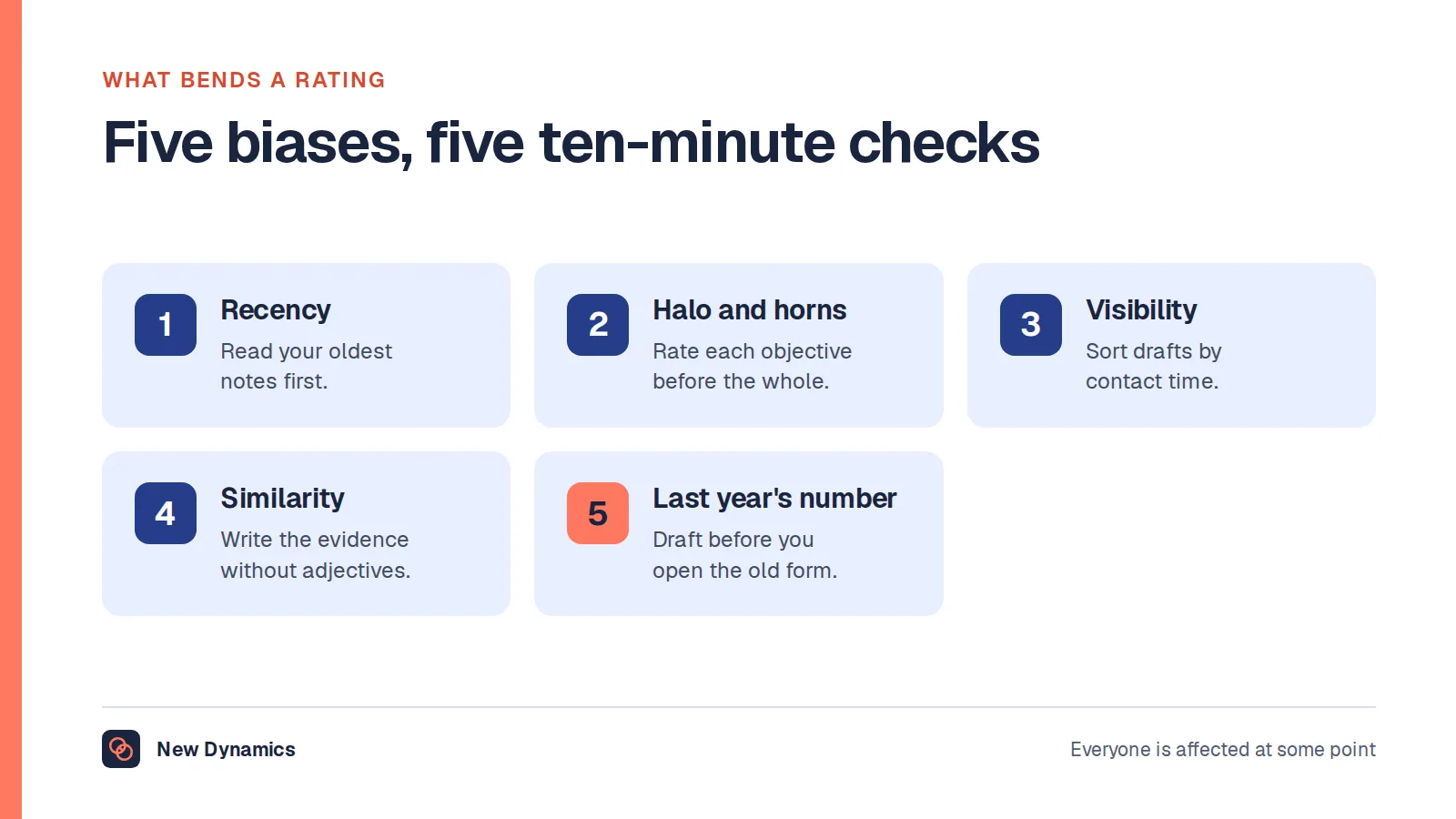
What happens to a rating between the evidence and the form: five biases with the check that catches each, why distributions go flat, what rating inflation costs, and six checks before ratings are final.
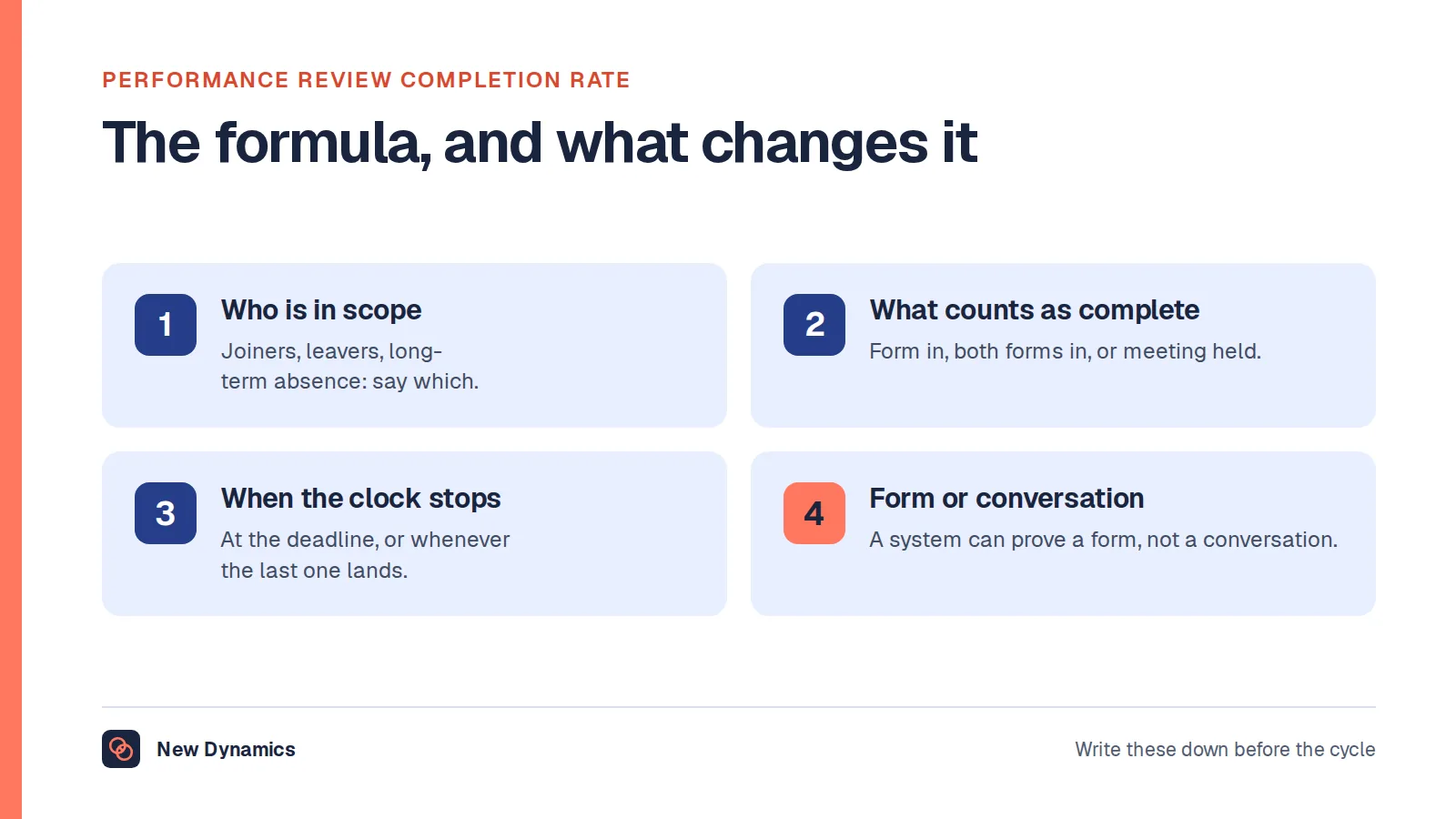
What the performance review completion rate measures, the formula and the four decisions behind it, how to report completion without flattering the number, what it cannot tell you, and how to raise it by fixing the cycle rather than chasing managers harder.
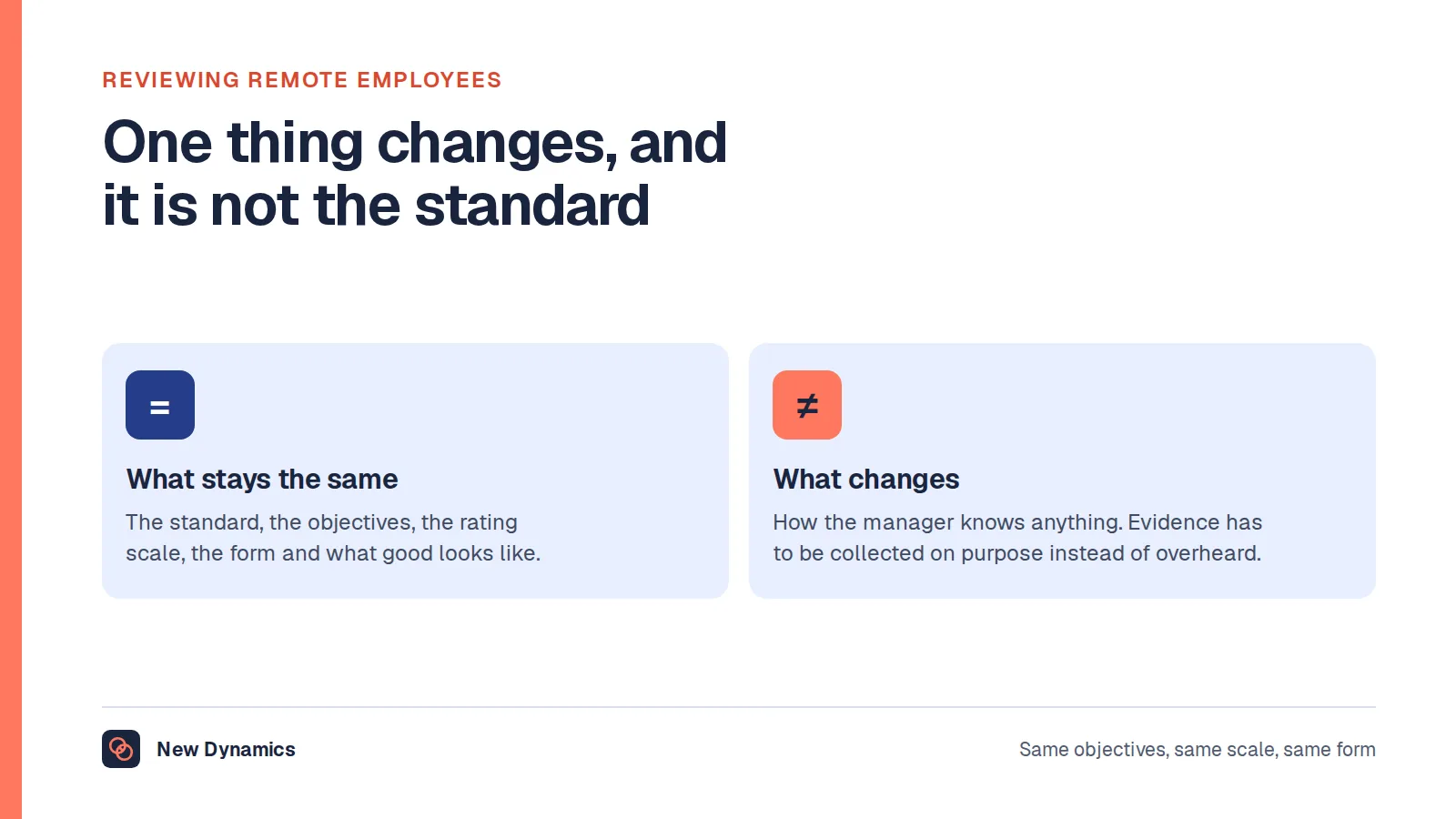
How to run a fair performance review for remote and hybrid employees: what changes and what does not, where the evidence comes from when you cannot see the work, why proximity bias carries a legal risk, what never to measure, and how to run the meeting itself.
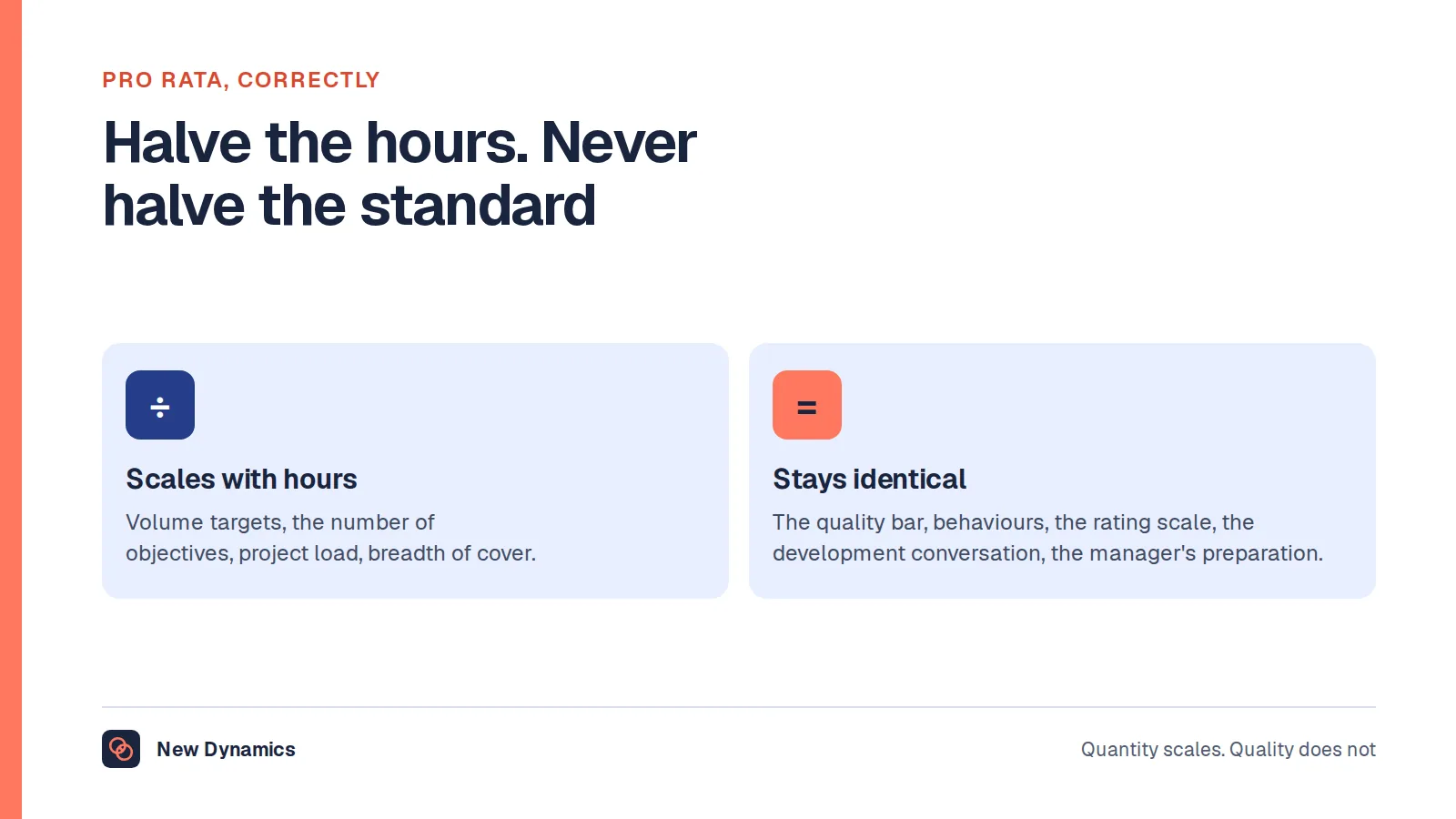
How to run a fair performance review for part-time employees, shift workers and seasonal staff: the comparison the law requires, which objectives scale with hours and which never do, when to hold the meeting for a night-shift worker, and who writes the review when nobody sees the whole person.
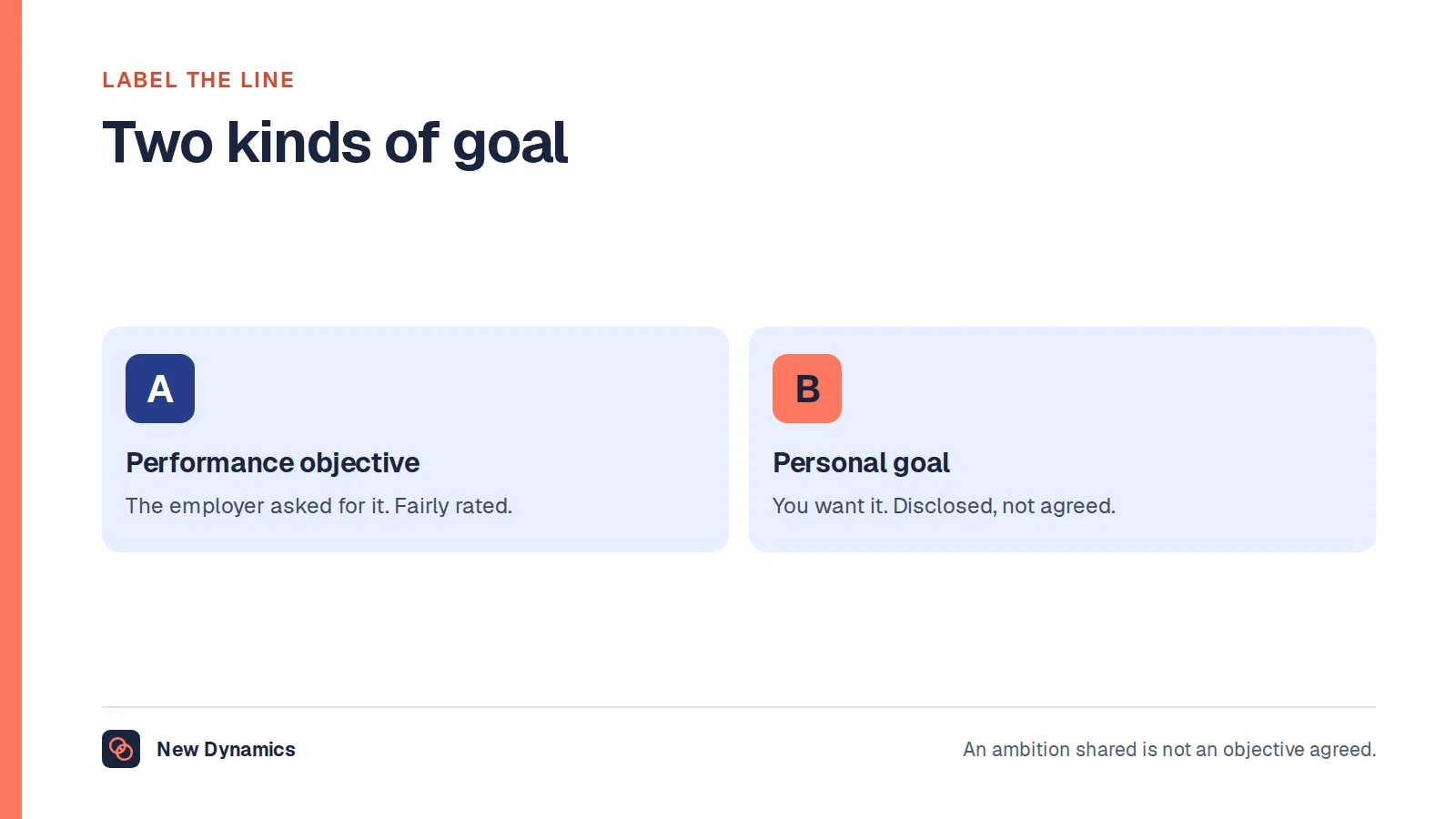
What a personal goal at work is, how it differs from a performance objective, eight worked examples including pay, balance and leaving well, and how to raise one with a manager who did not ask.
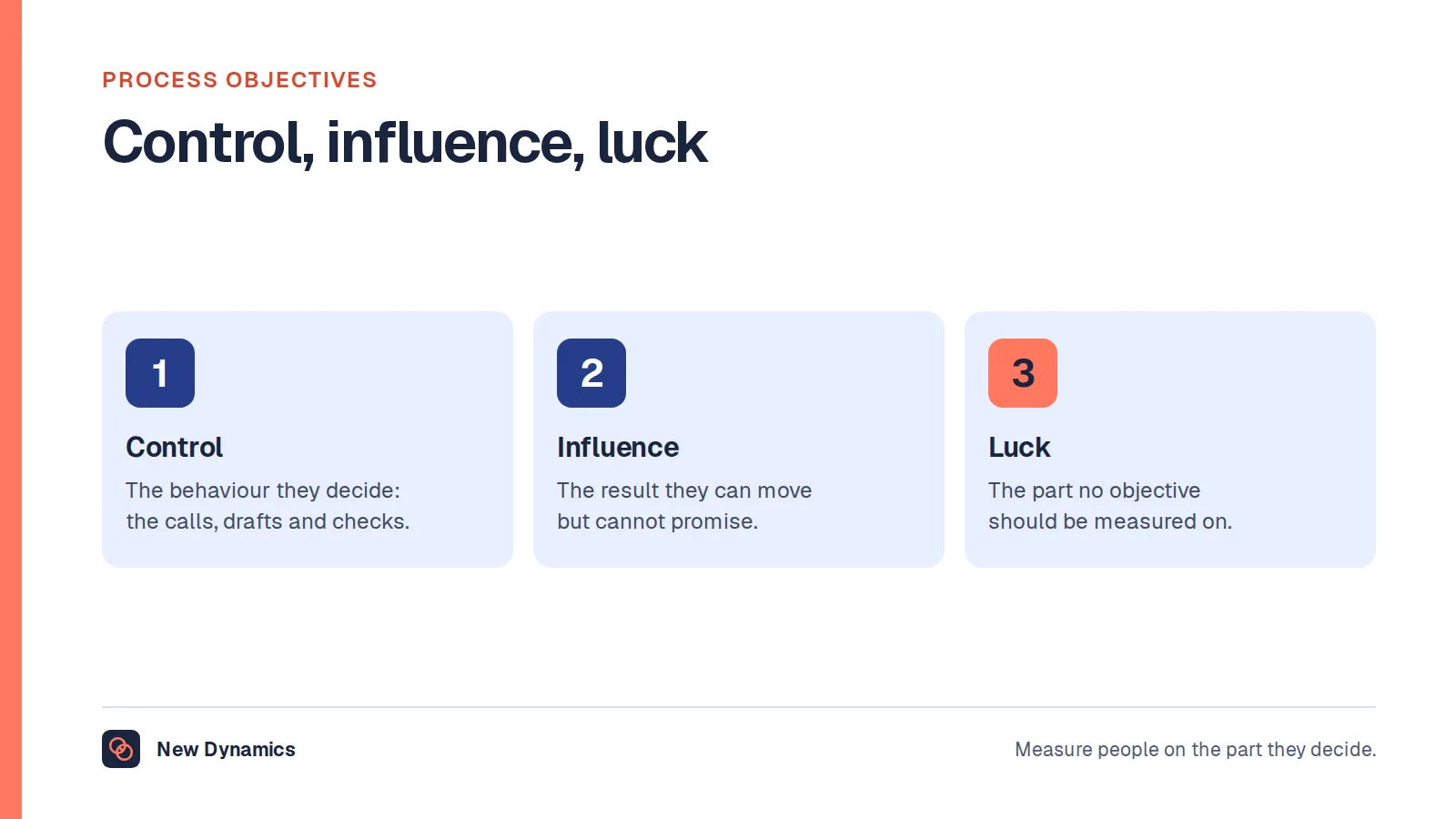
What a process objective is, how it differs from an outcome objective, worked examples across five roles, and how to write one that can actually be reviewed.
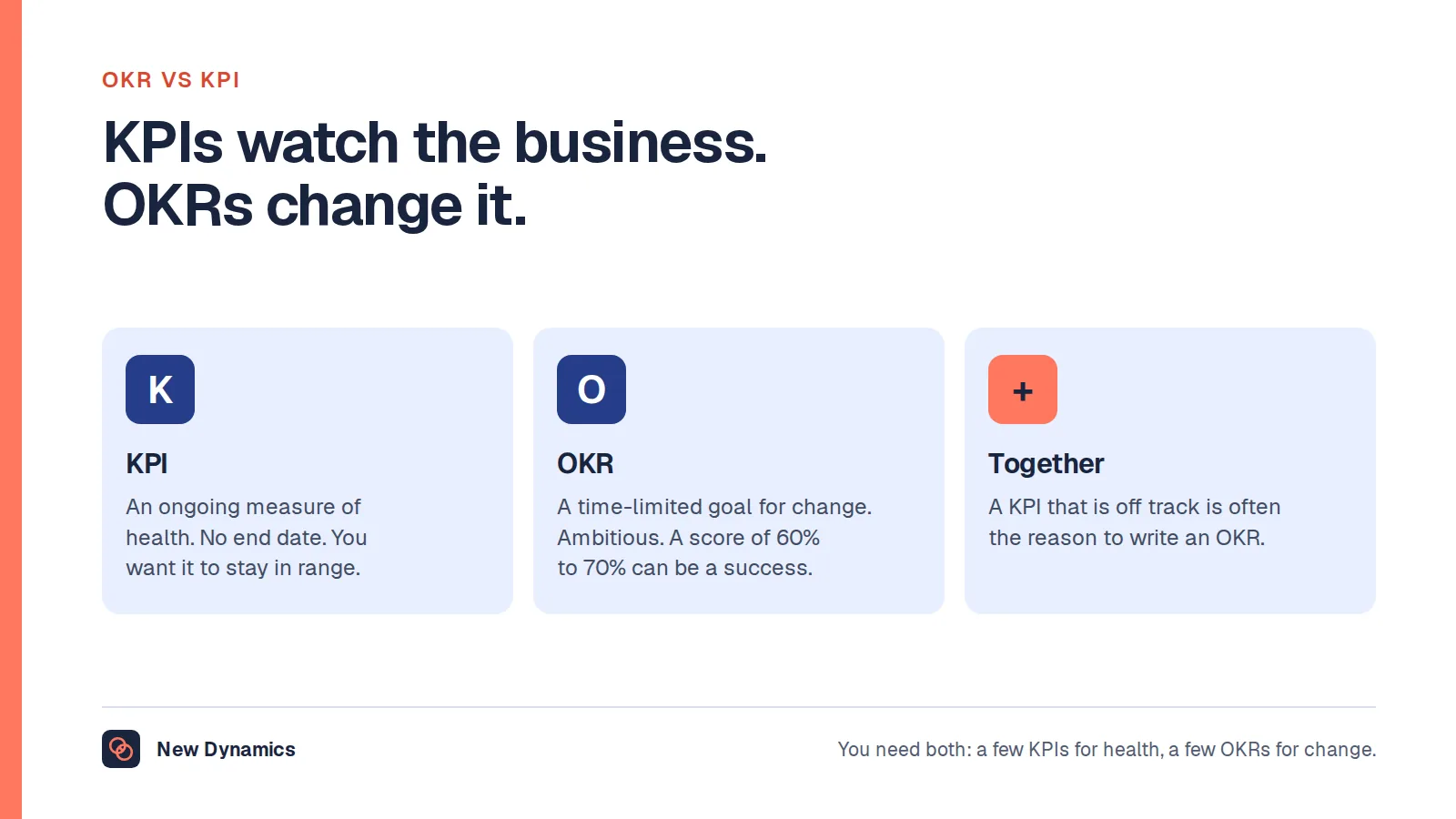
OKR vs KPI explained simply: what each one is, the key differences, examples by team and how to use both without doubling the paperwork. See the comparison.