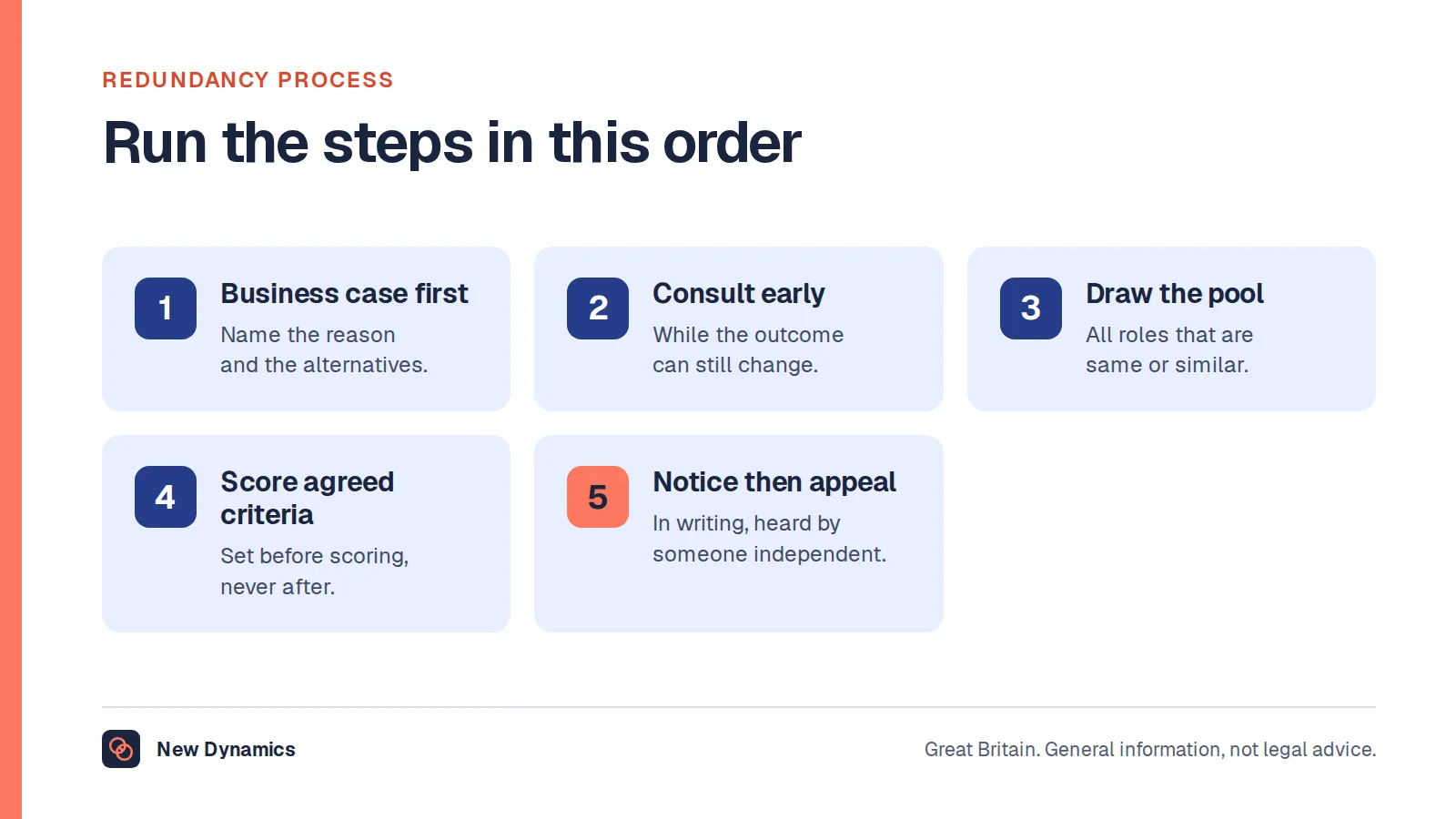
How the UK redundancy process works in order: the business case, consultation, pools, selection criteria, notice, pay and appeals, with the rules quoted from GOV.UK and Acas and the evidence a tribunal looks for.
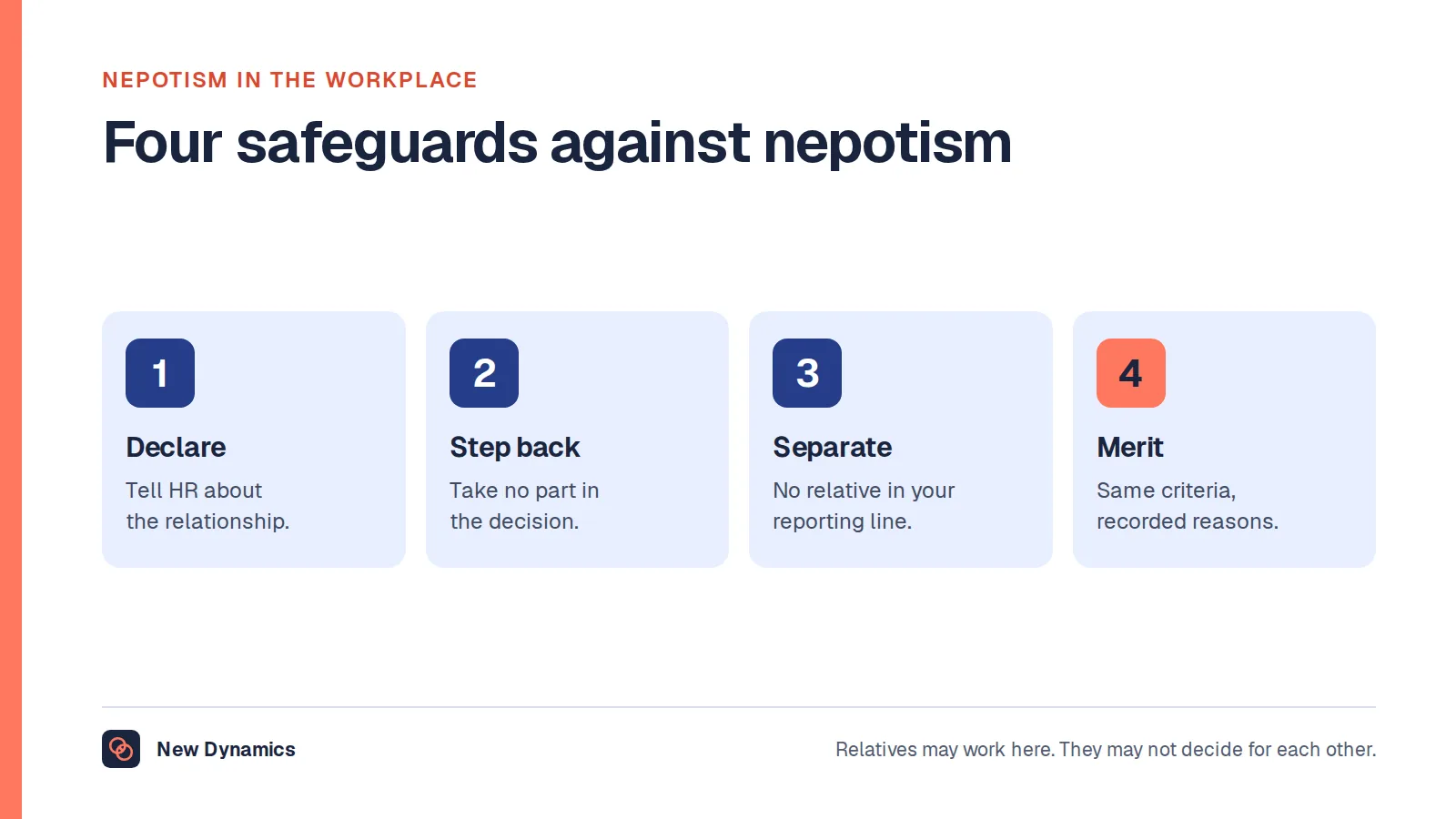
What nepotism in the workplace means, examples, how it differs from favouritism and cronyism, the legal risks, a sample policy and what to do if you see it happening.
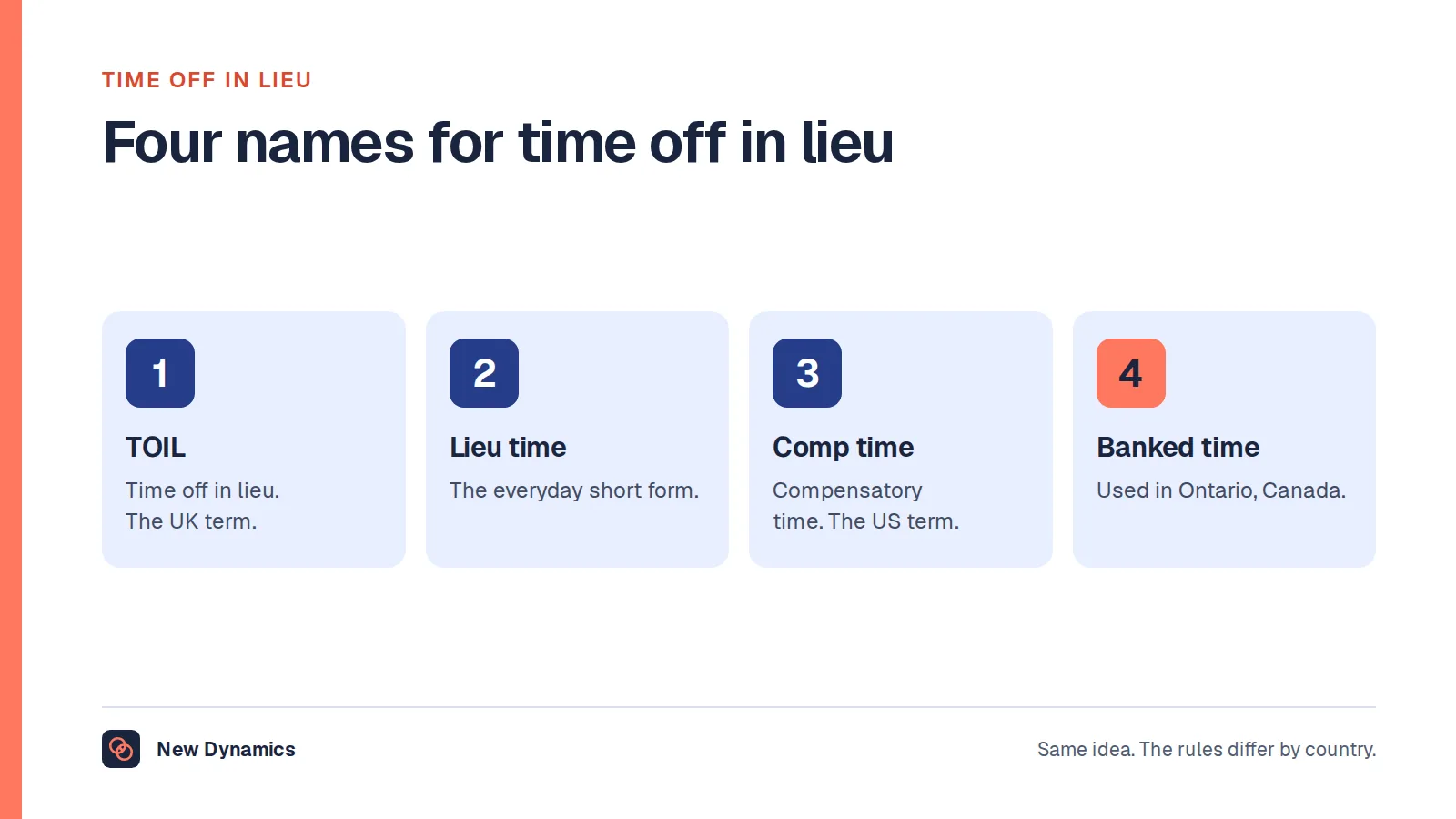
What time off in lieu means, how TOIL, lieu time and compensatory time differ, what UK, Ontario and US rules say, and a six-part policy that keeps it fair.
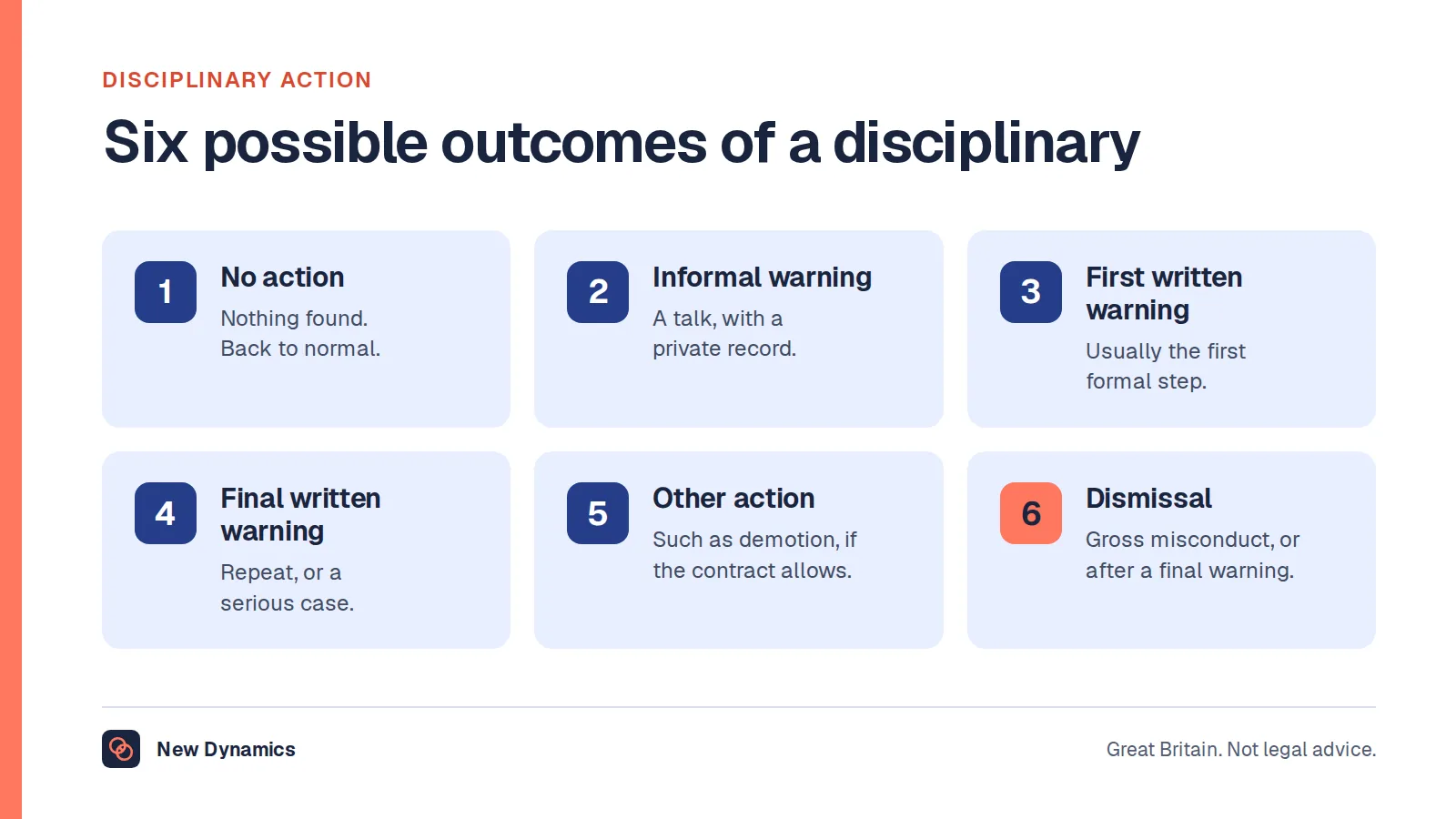
What disciplinary action means at work, the six possible outcomes from no action to dismissal, the four steps of a fair procedure under UK guidance, and what a warning must say.
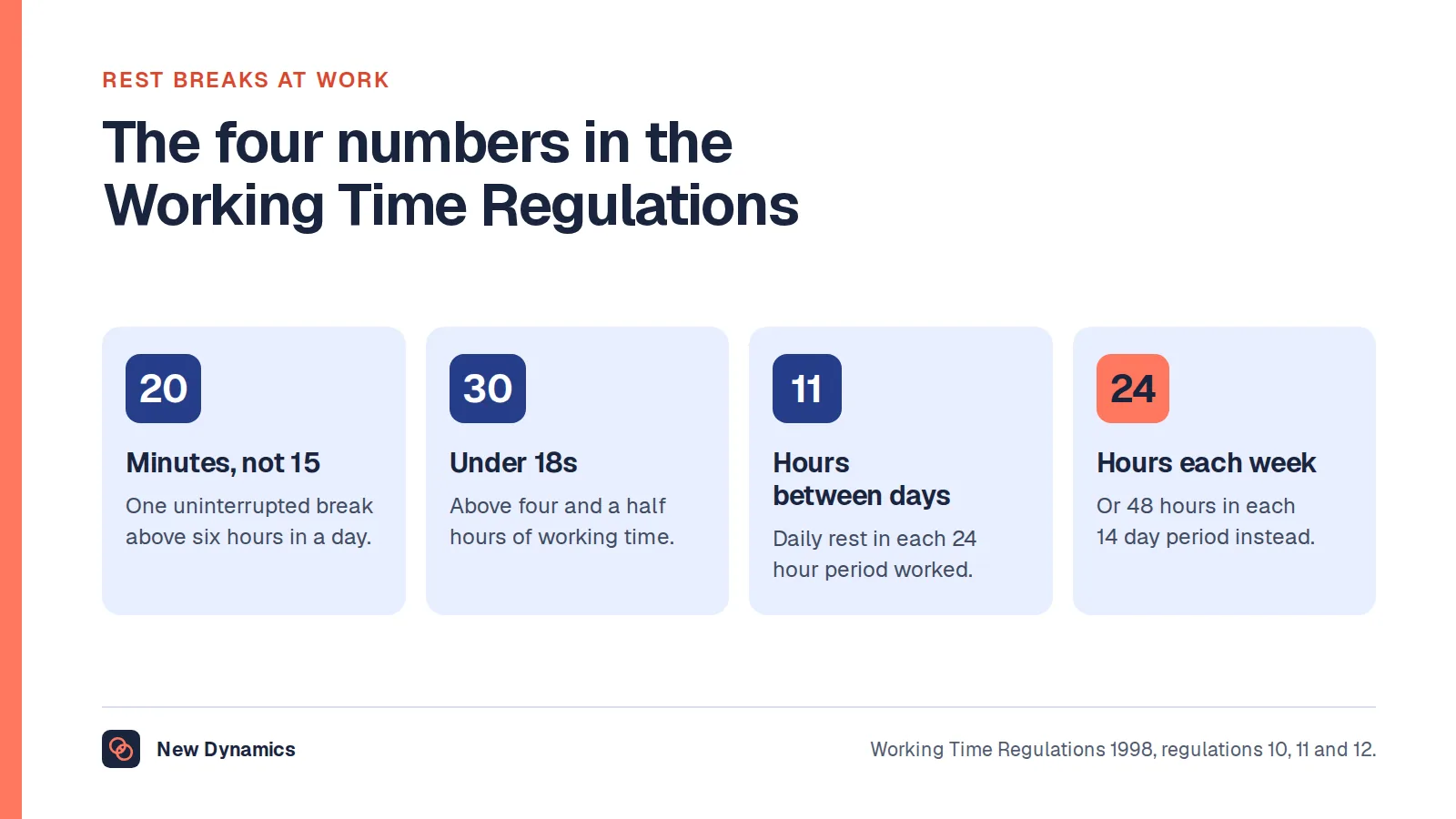
The UK has no 15 minute break rule. Regulation 12 of the Working Time Regulations 1998 gives an uninterrupted 20 minutes when daily working time is more than six hours, and 30 minutes for under 18s. What the law says about pay, timing, daily and weekly rest, excluded sectors, records, and the United States position.
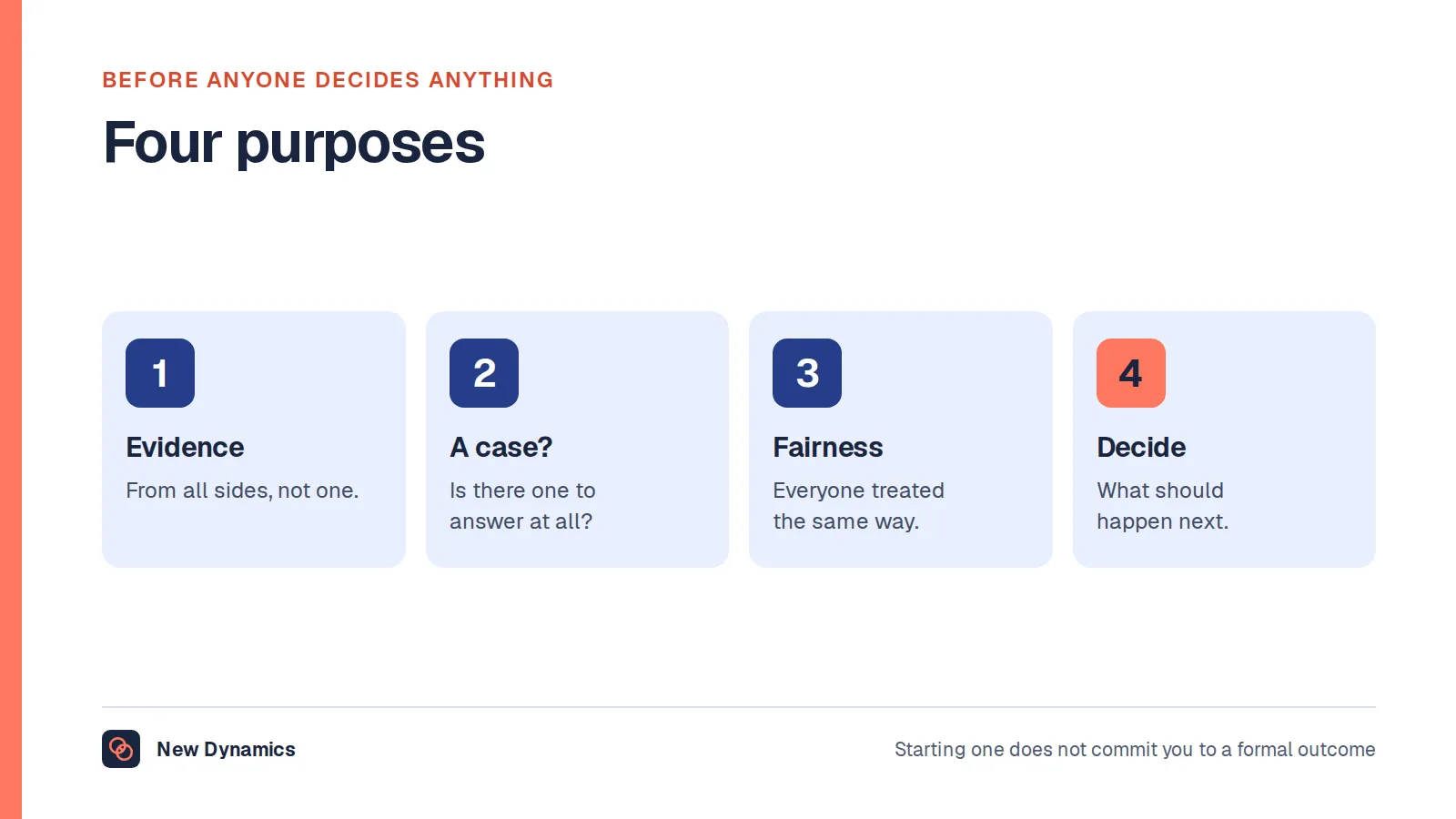
What a workplace investigation is for, who should carry it out, why the investigator is not trying to prove guilt, how long it should take, and what evidence to gather.
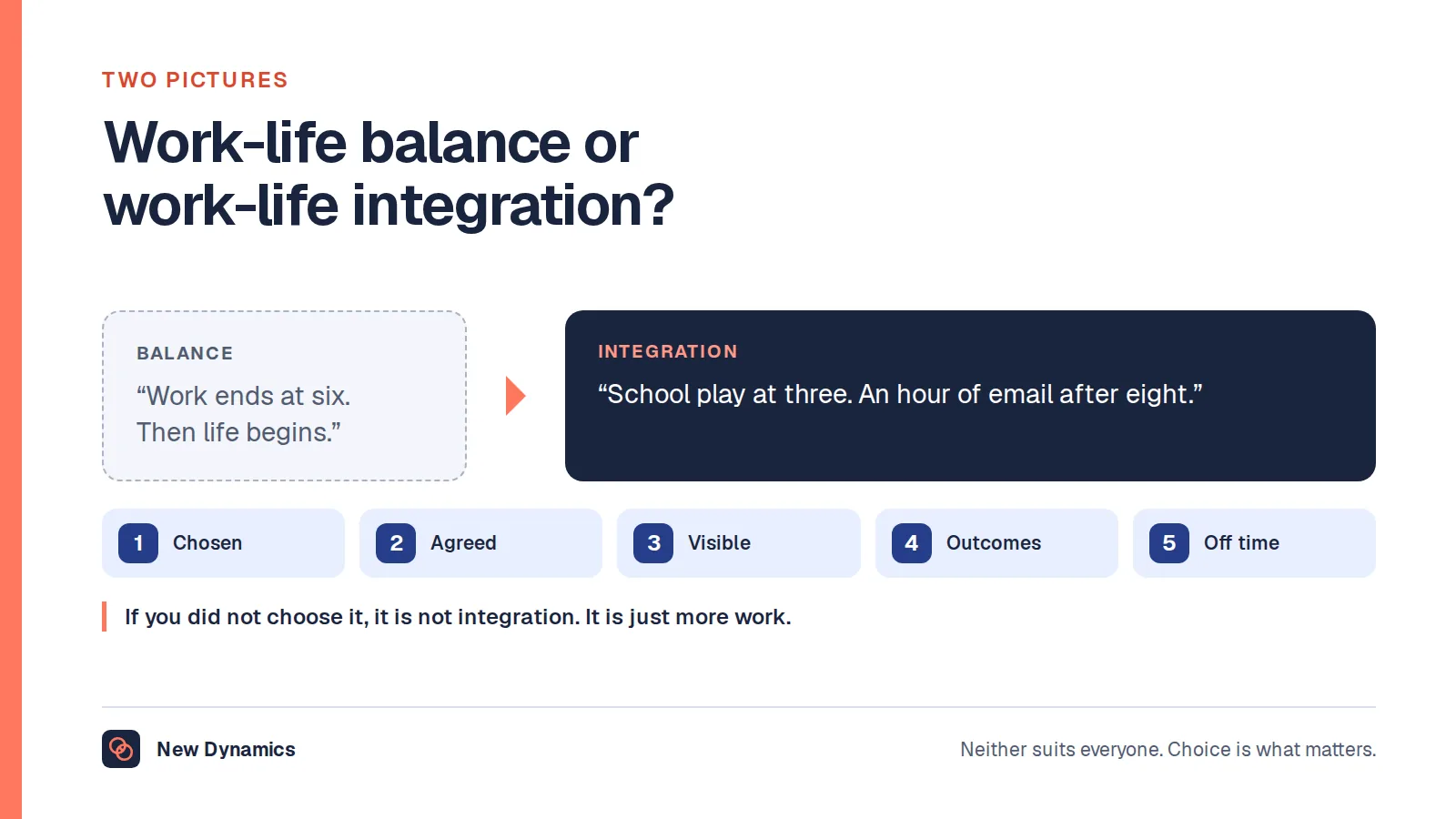
Work-life integration explained: how it differs from work-life balance, why boundary control matters, the risks of always being on, and six ways to make it work.
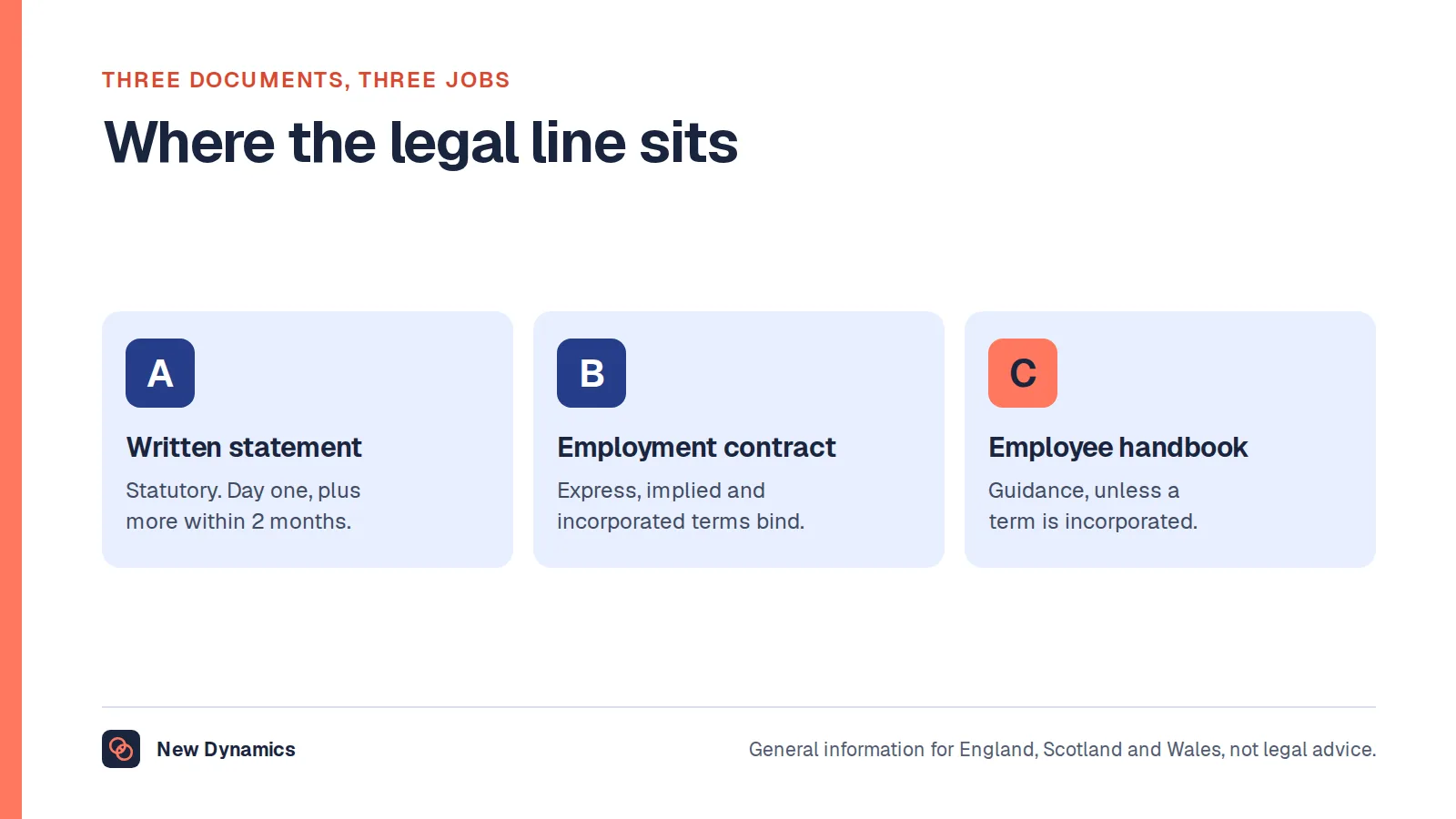
What an employee handbook is, how it differs from the statutory written statement of employment particulars, when a handbook term becomes contractual, and the sections a UK employer is expected to have written down. With a free handbook framework to download.
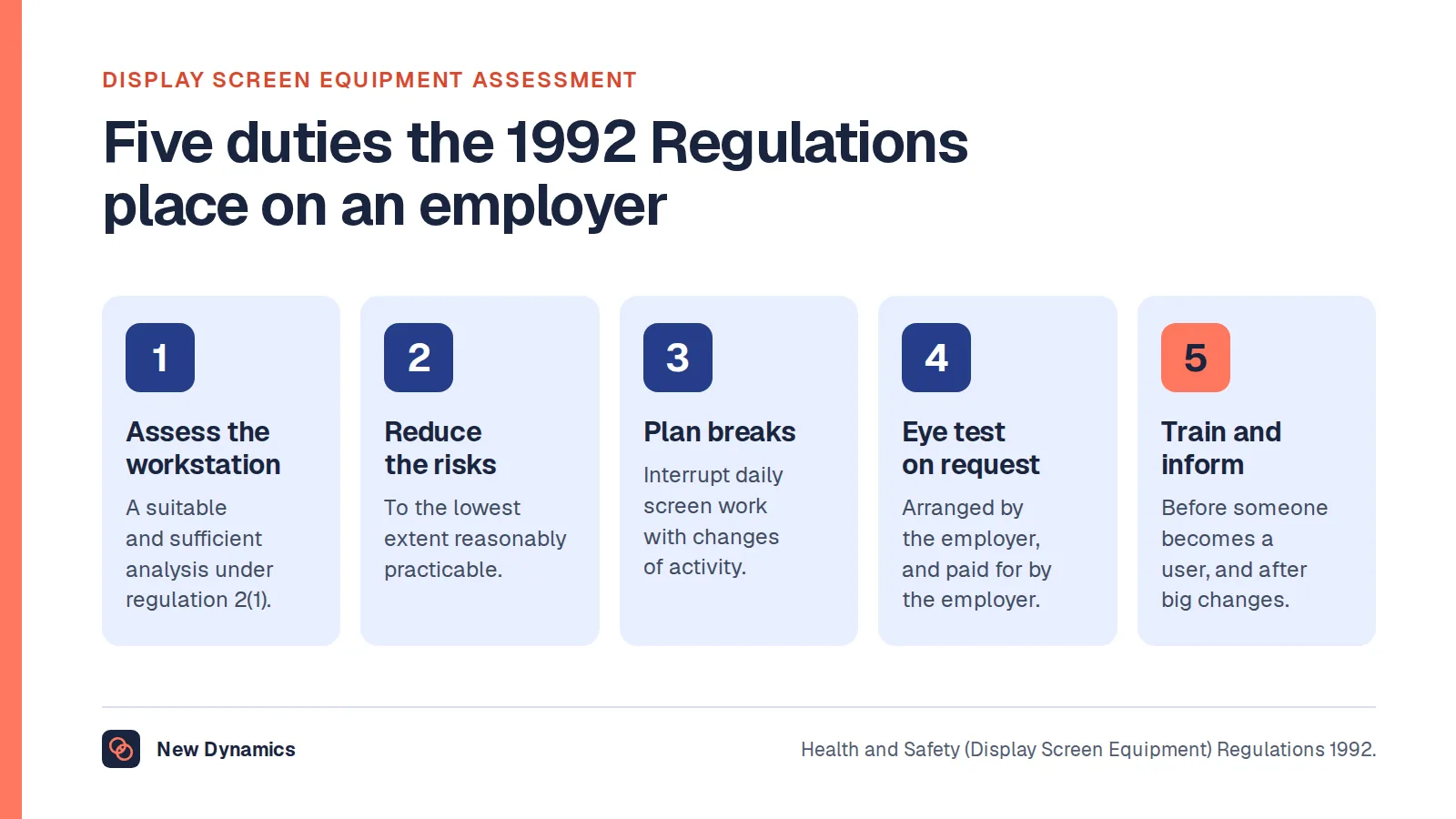
Who counts as a DSE user, what a display screen equipment assessment has to cover, whether a self-assessment checklist is enough, what an employer must pay for on eye tests and glasses, and how the Regulations reach laptops and phones in Great Britain.
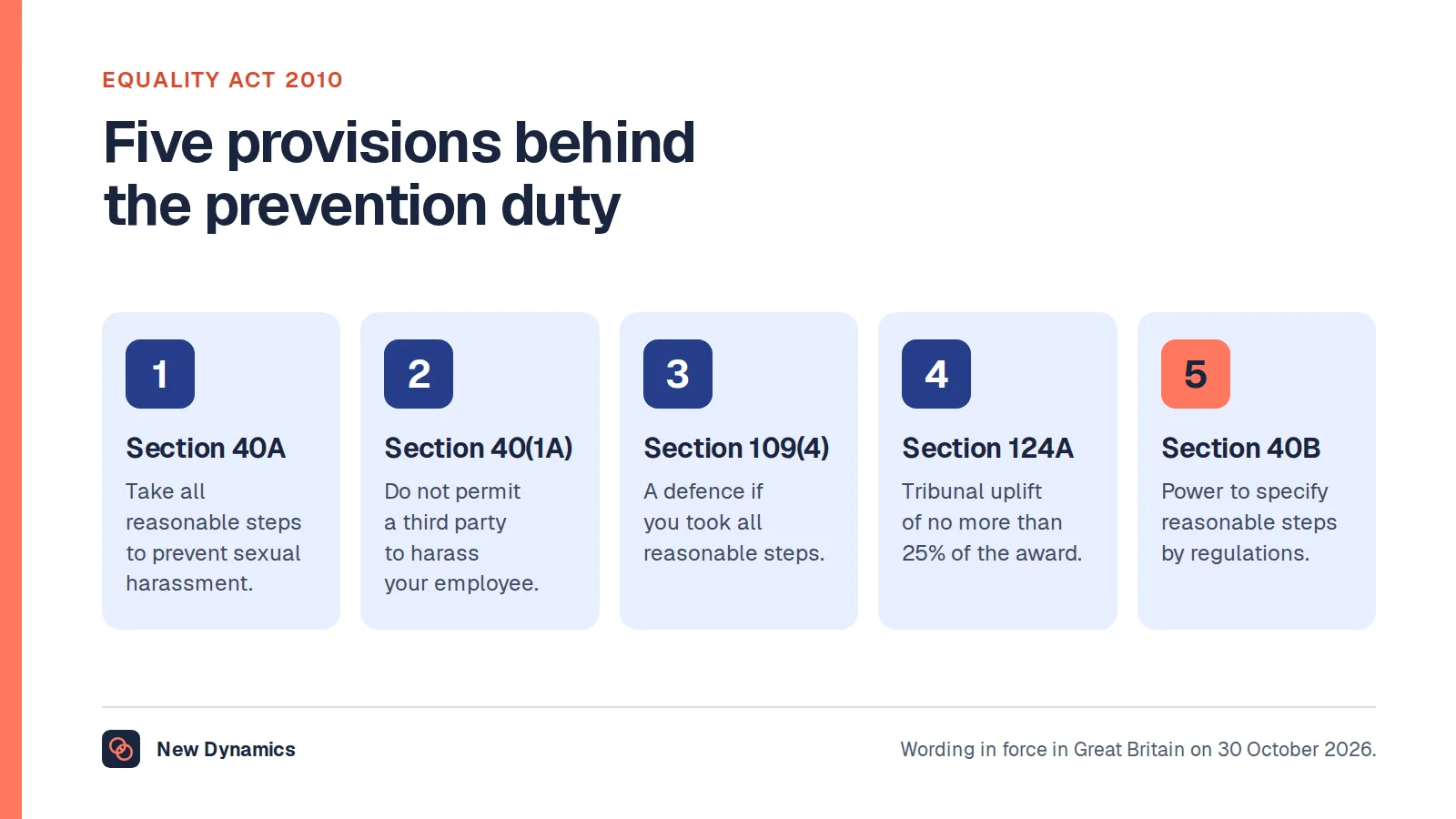
The employer duty to prevent sexual harassment in Great Britain: the wording of section 40A, the rise to all reasonable steps on 30 October 2026, the risk assessment, third party harassment and the 25% tribunal uplift.
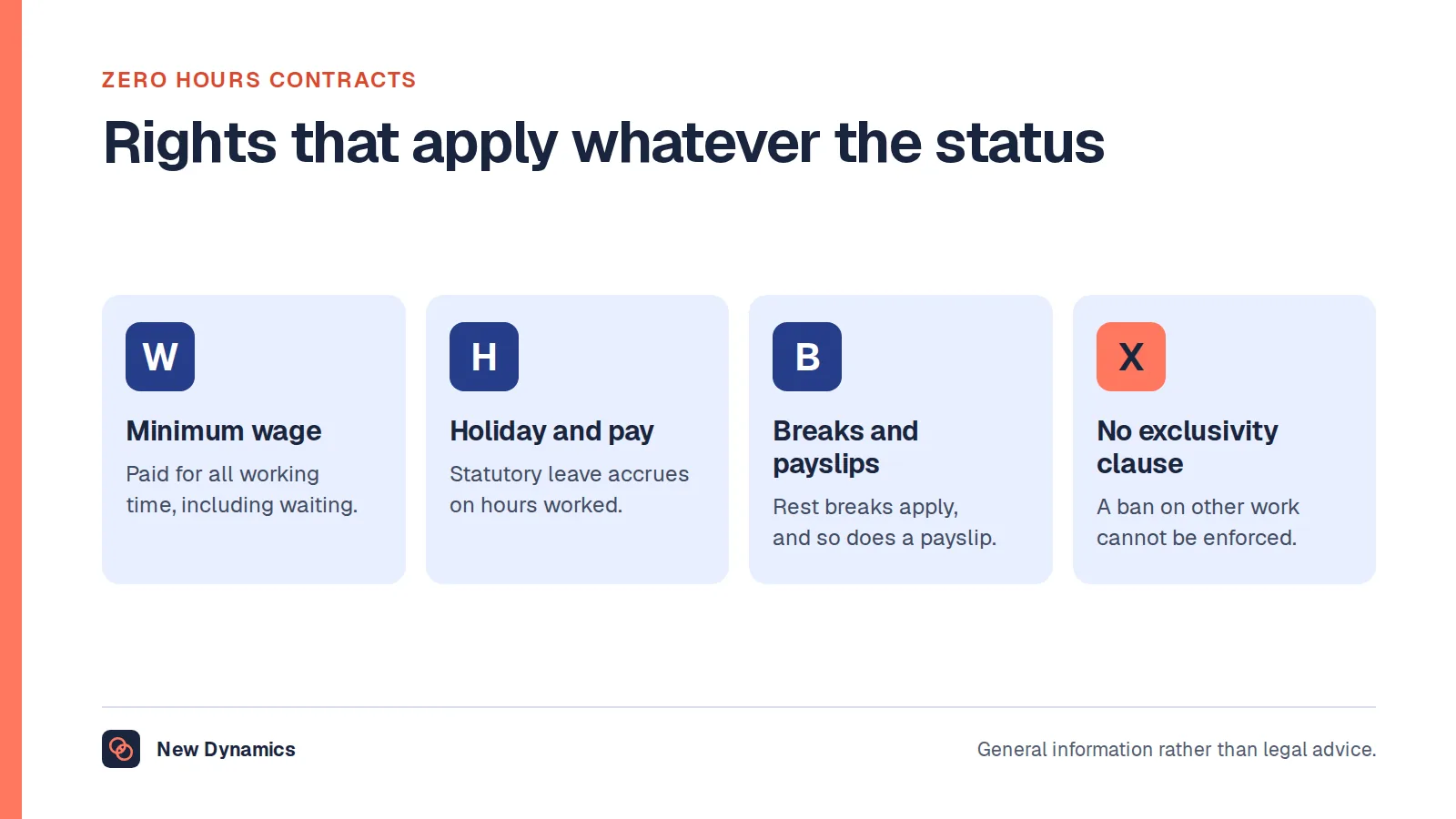
What a zero hours contract is, why it is lawful in the UK, the rights that apply whatever the employment status, the sick pay and notice position, what the Employment Rights Act changes, and how to schedule and include casual staff fairly.
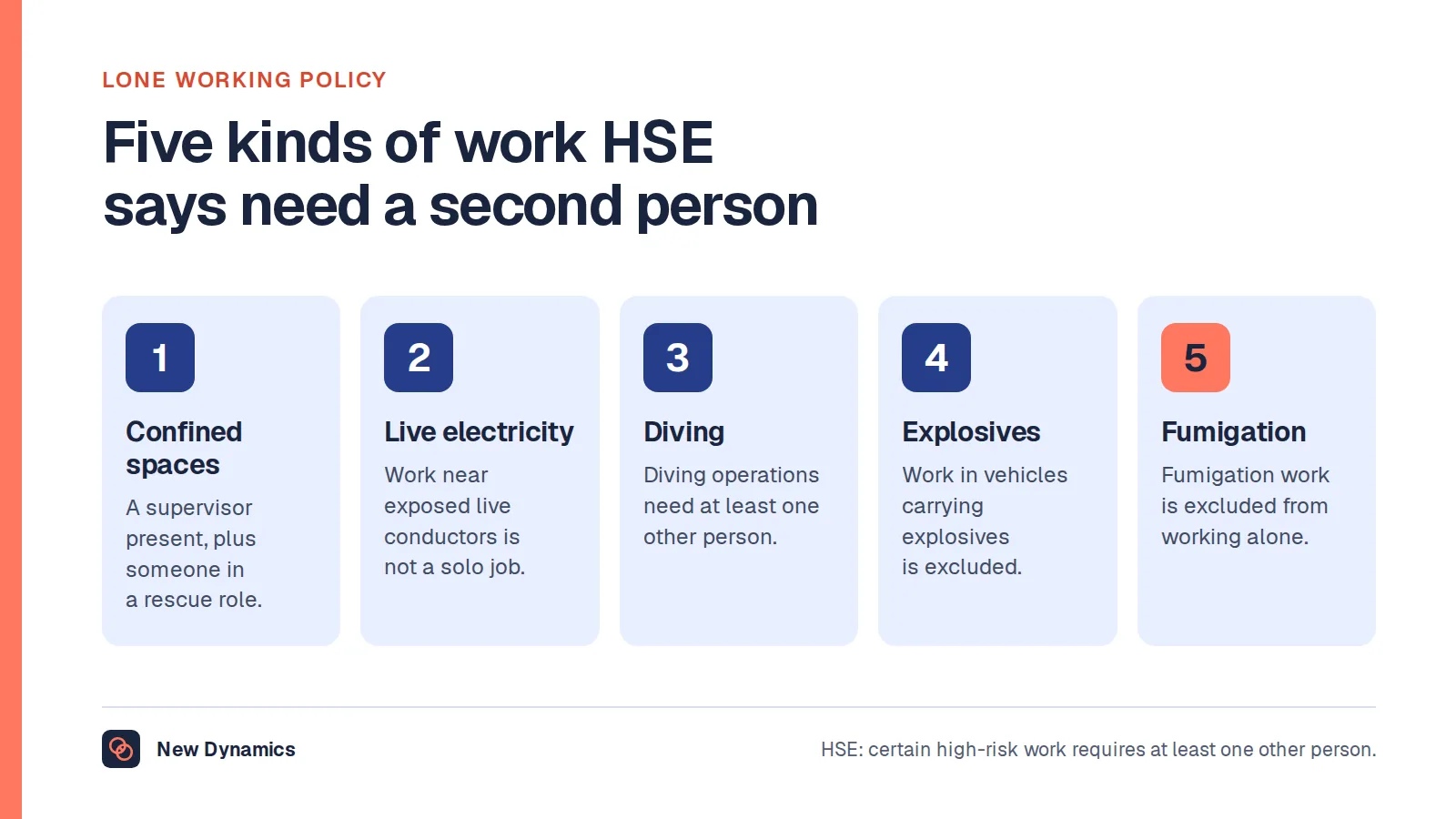
What a lone working policy must cover in Great Britain: the HSE definition of a lone worker, the general duty under the Health and Safety at Work etc. Act 1974, the risk assessment duty in the Management of Health and Safety at Work Regulations 1999, the high-risk work that needs a second person, and how check-in arrangements are supposed to work.
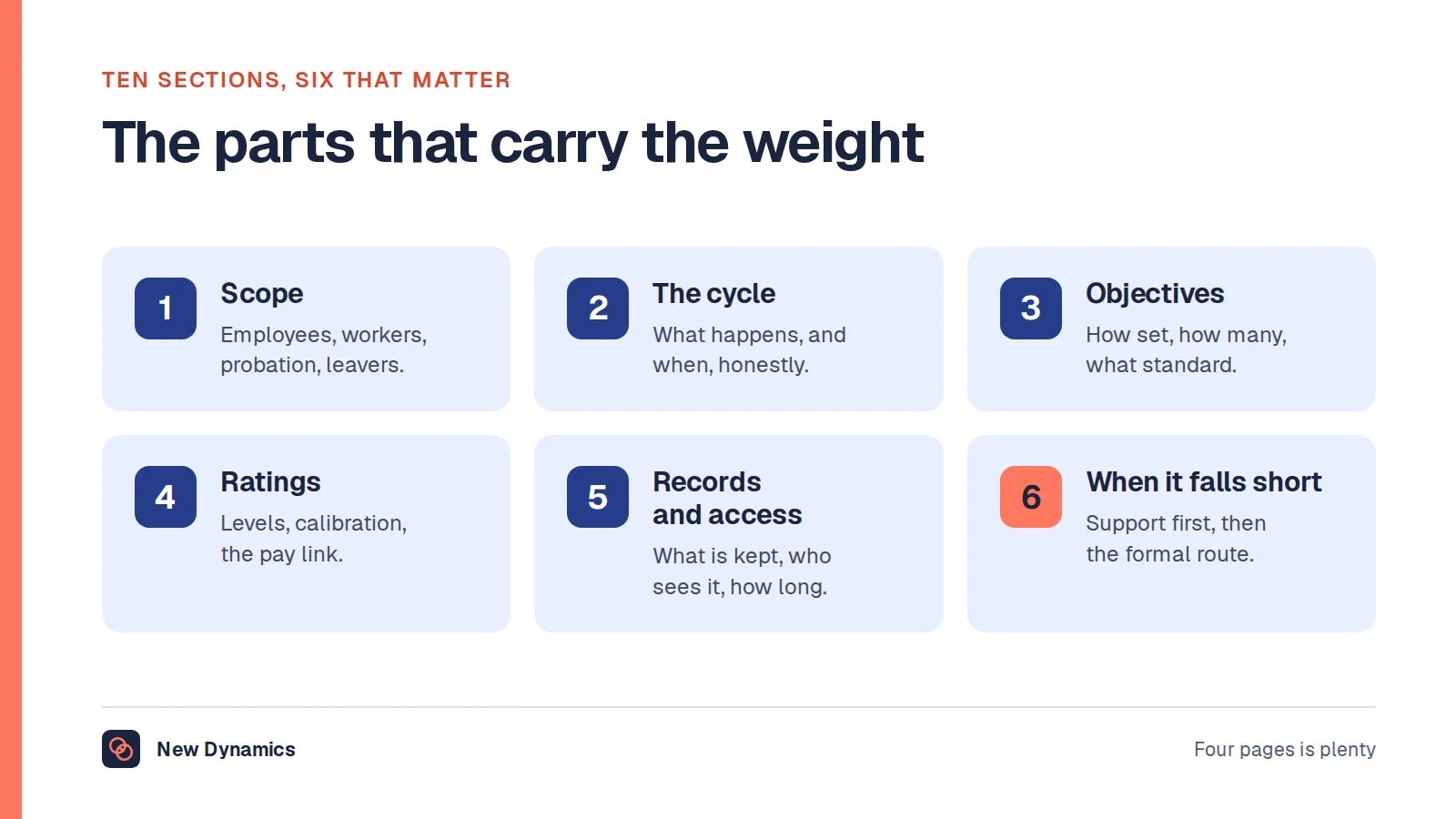
The ten sections of a performance management or appraisal policy, the decisions each one hides, what a policy should deliberately not promise, and the British specifics on capability, records and the written statement.
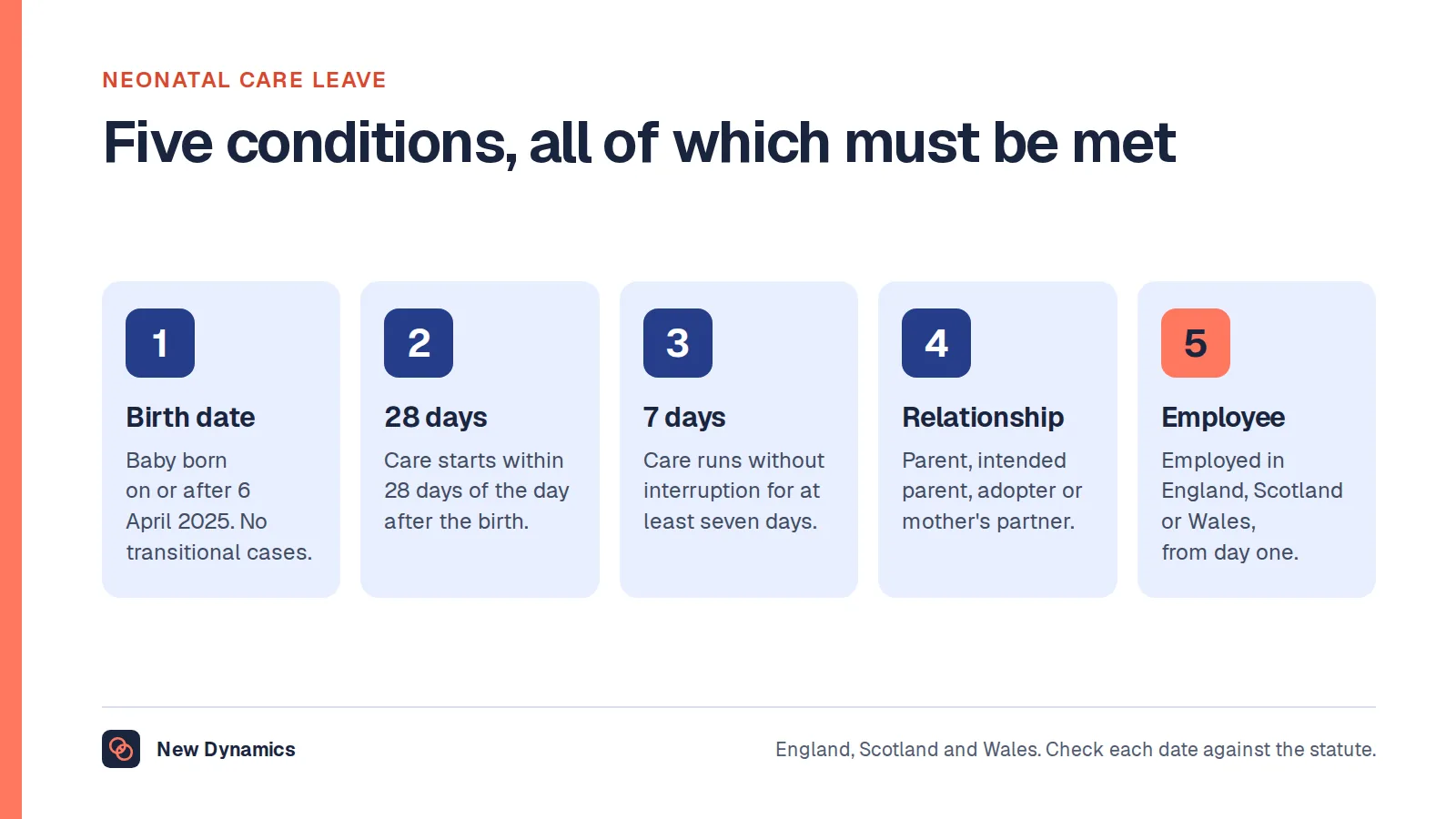
Neonatal care leave is a day one right of up to 12 weeks, but the pay is a separate test. The qualifying conditions, the 28 day and 7 day rules, tier 1 and tier 2 notice, the 2026 to 2027 rate and what you must record, from GOV.UK and the regulations.
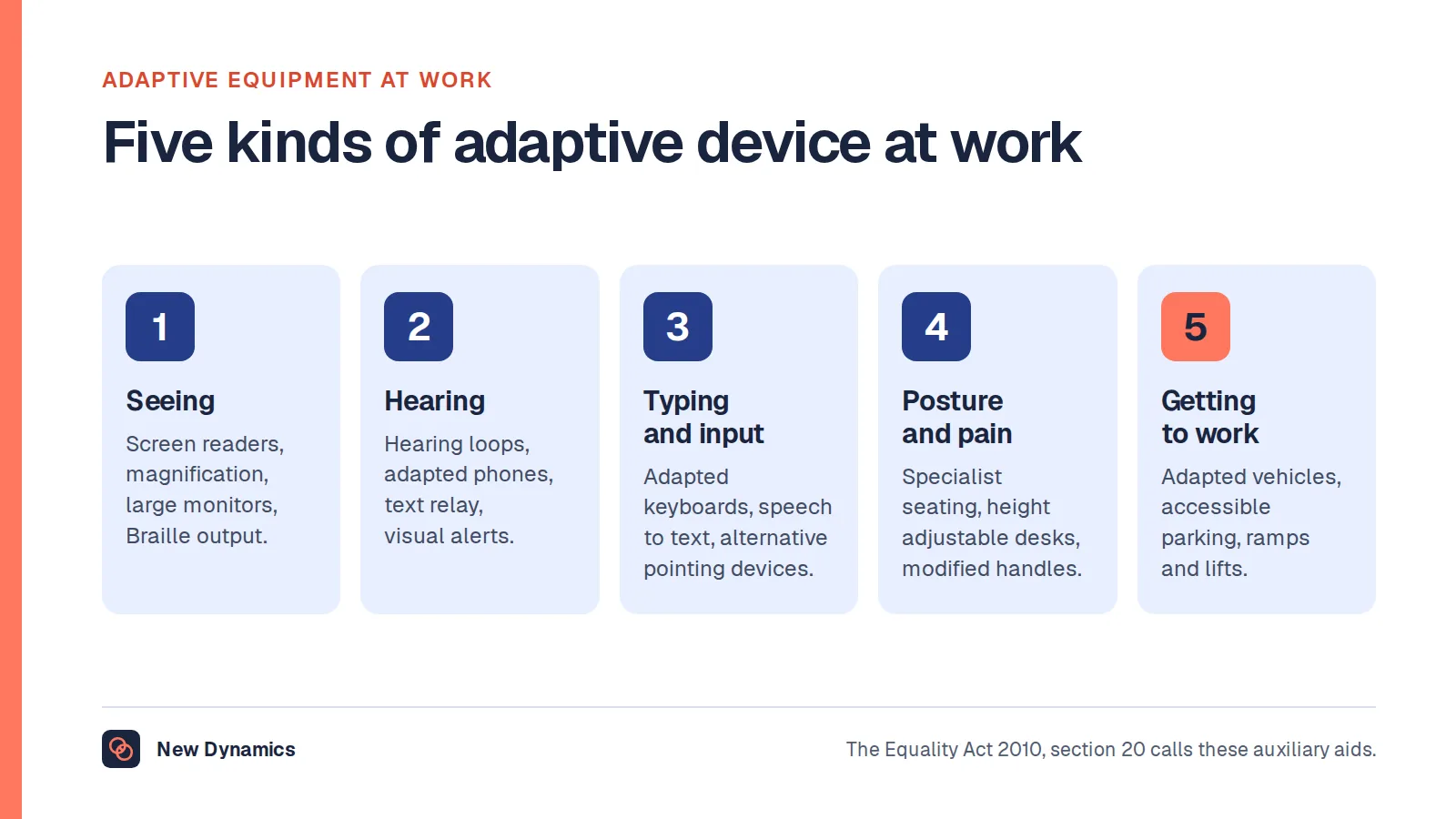
What counts as an adaptive device or piece of adaptive equipment at work, the Equality Act 2010 duty behind it, who pays, how a request is made and handled, what to record, and why providing the kit does not end the duty. UK position, with the US named.
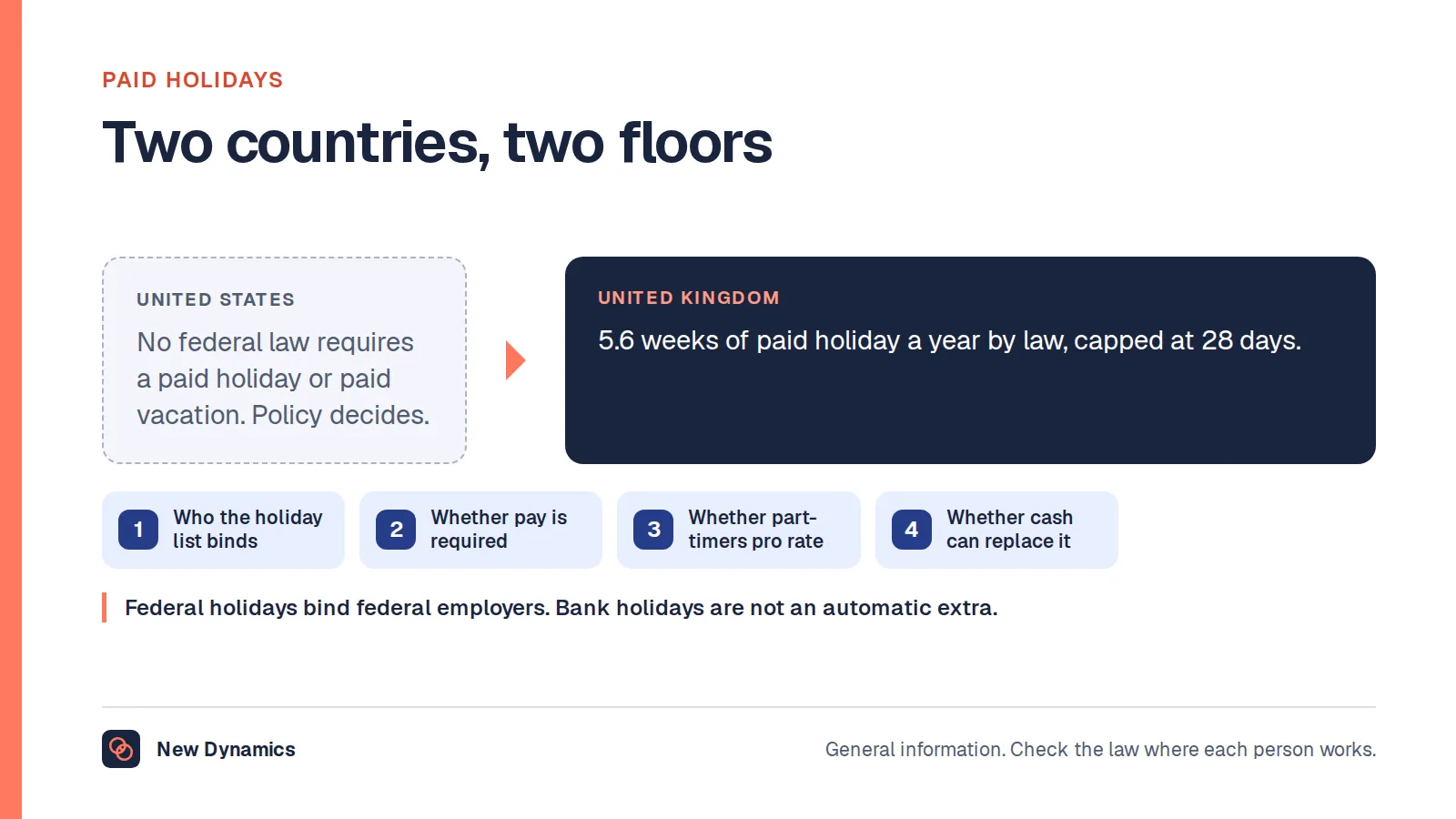
What paid holidays mean, the list of federal holidays in the USA as OPM publishes it, why no US federal law requires paid time off, and the UK statutory minimum. For employers running both.
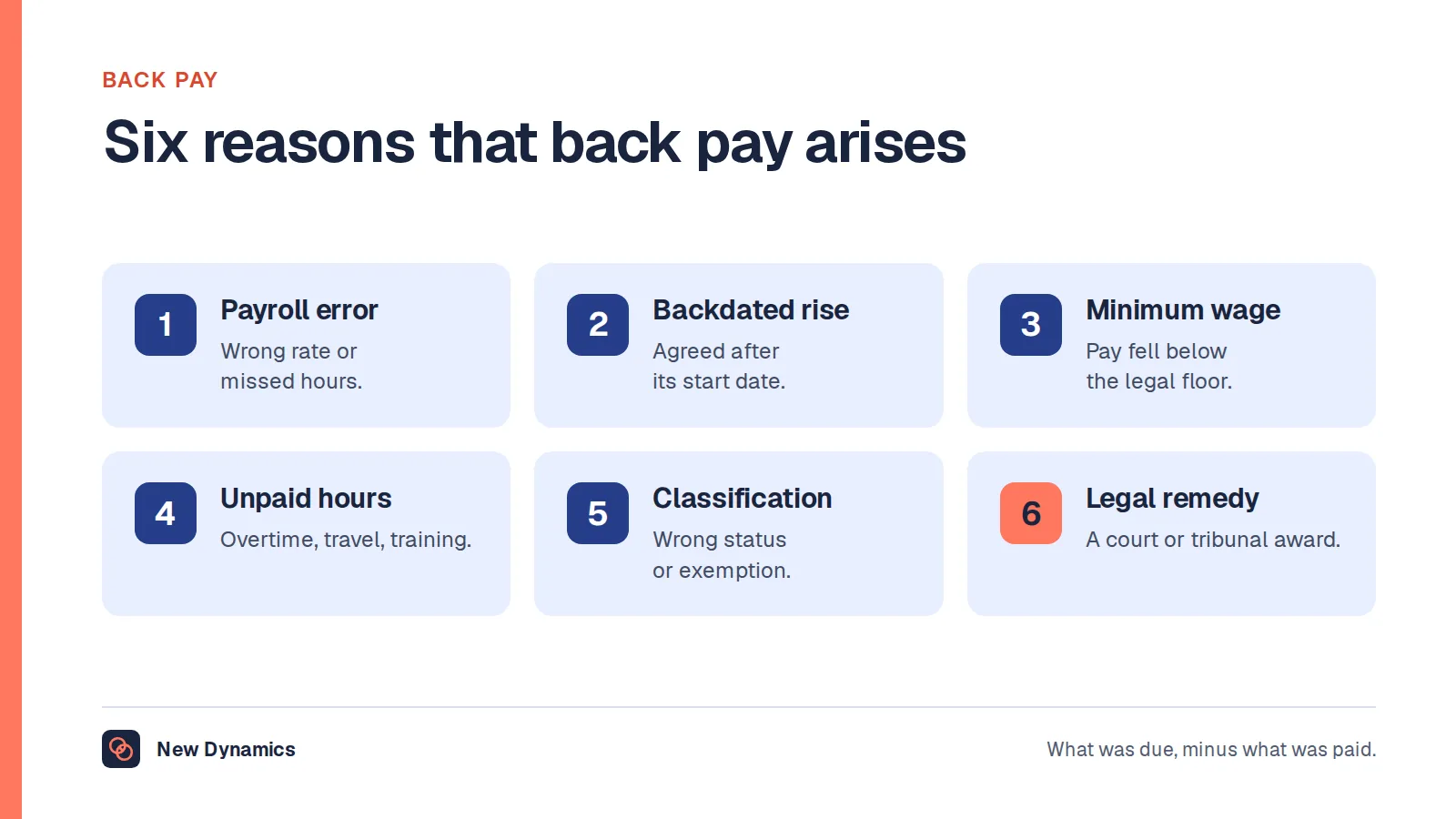
What back pay means, six reasons it arises, how to calculate it in five steps with an example, UK time limits for claims, and five things an employer should do.
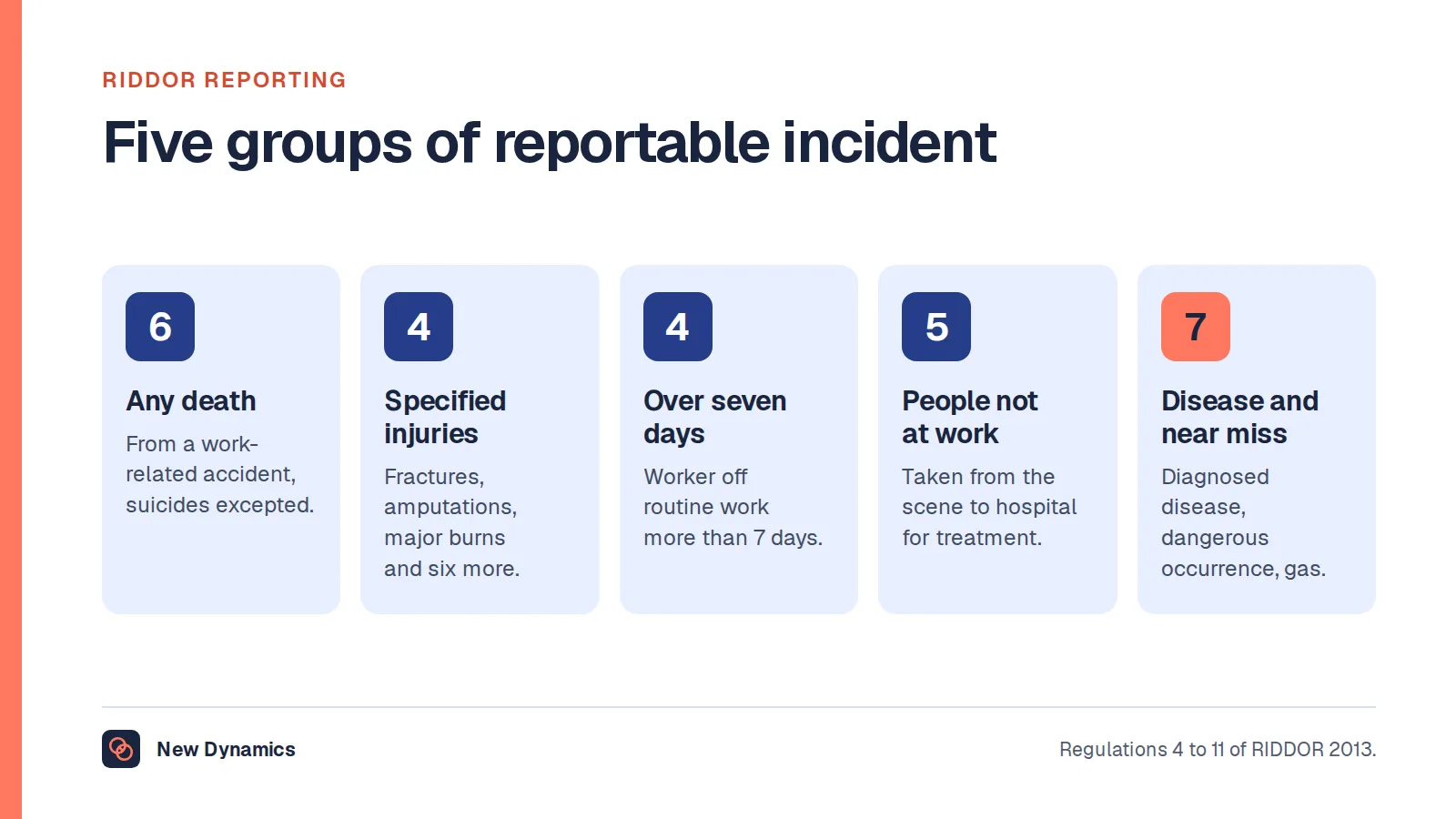
A plain guide to RIDDOR reporting in Great Britain: who the responsible person is, the full list of reportable injuries, diseases and dangerous occurrences, the 10-day and 15-day deadlines, the over-three-day recording duty people confuse with them, and what the record must contain.
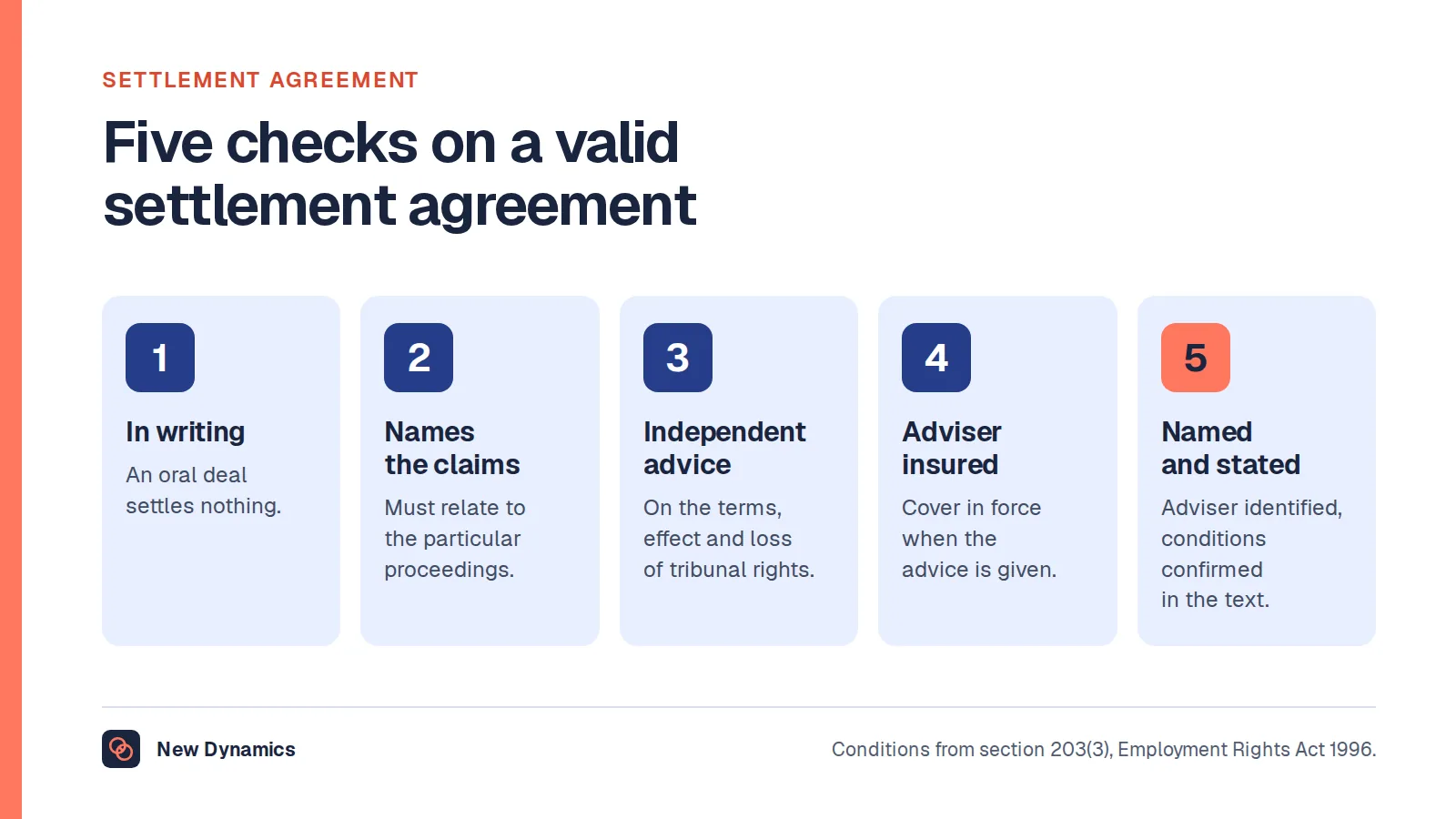
How a settlement agreement becomes binding under section 203 of the Employment Rights Act 1996, why a section 111A protected conversation is not the same as a without prejudice talk, which claims cannot be signed away, and how the £30,000 tax threshold actually works.
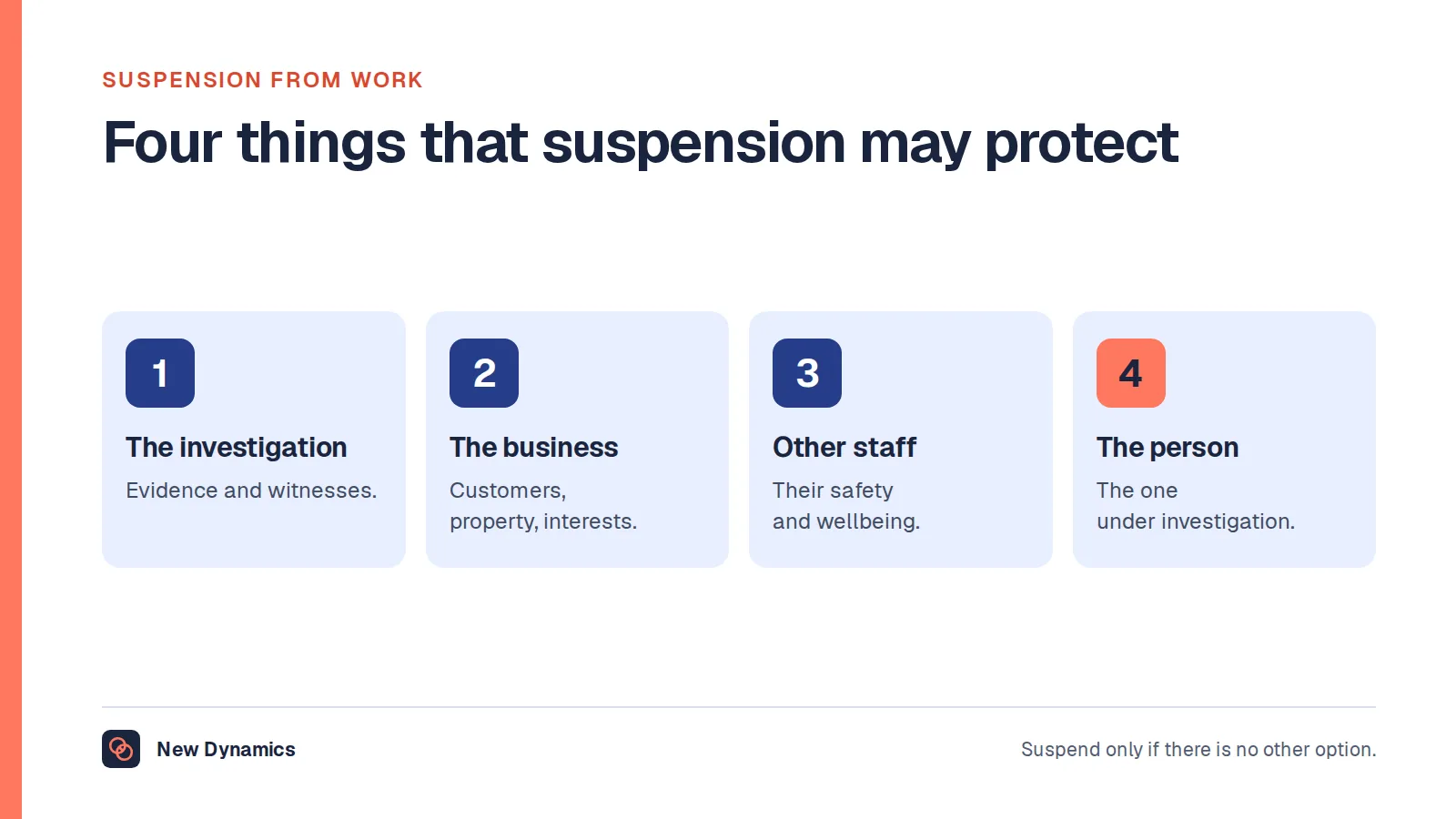
What suspension from work means in the UK: when it is appropriate, alternatives, what to tell the employee, pay and holiday, support during suspension and how it ends.
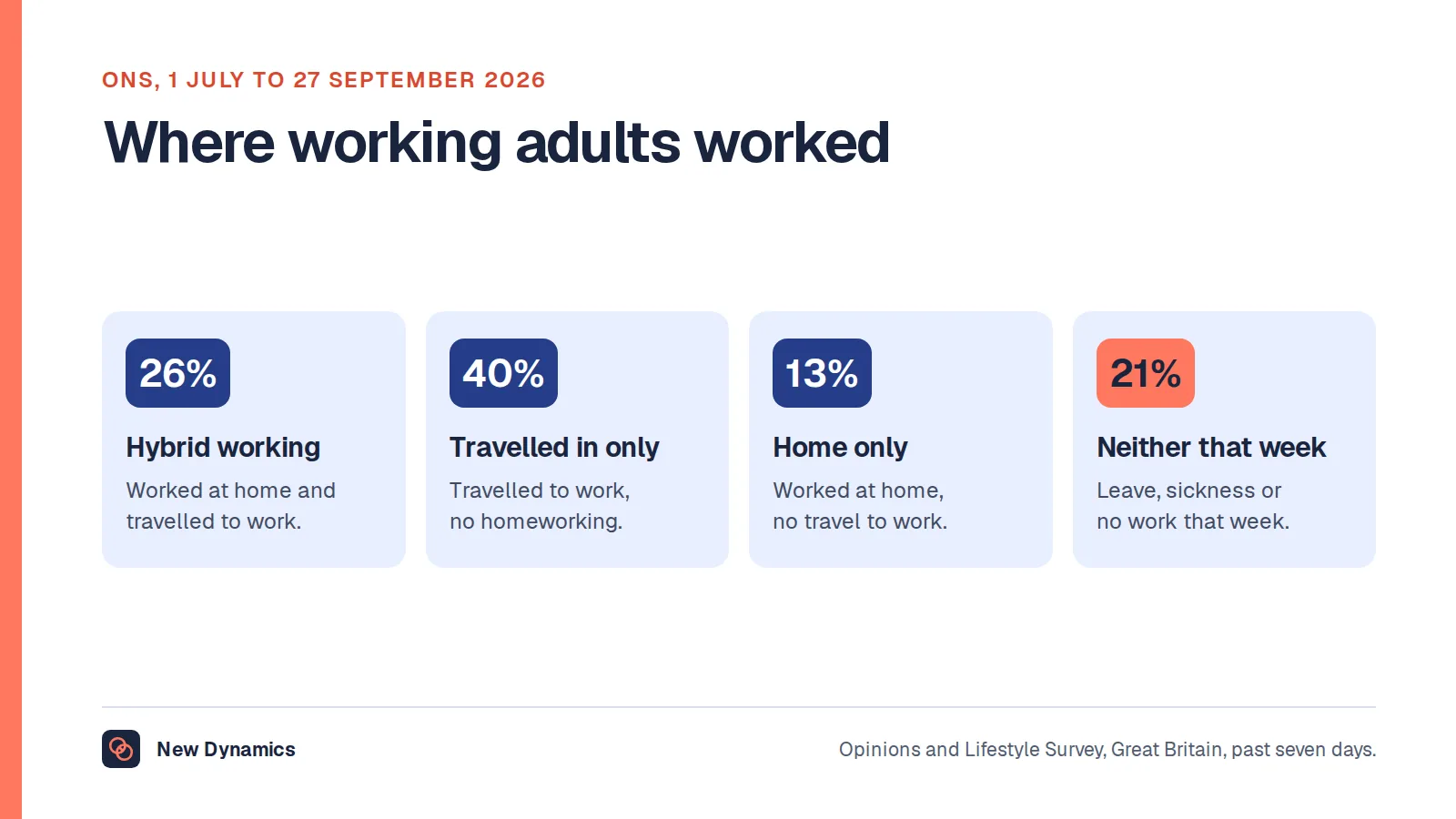
The official ONS figures on hybrid, home and office working in Great Britain, the law on flexible working requests, why there is no official return to office statistic, and what to measure in your own organisation.
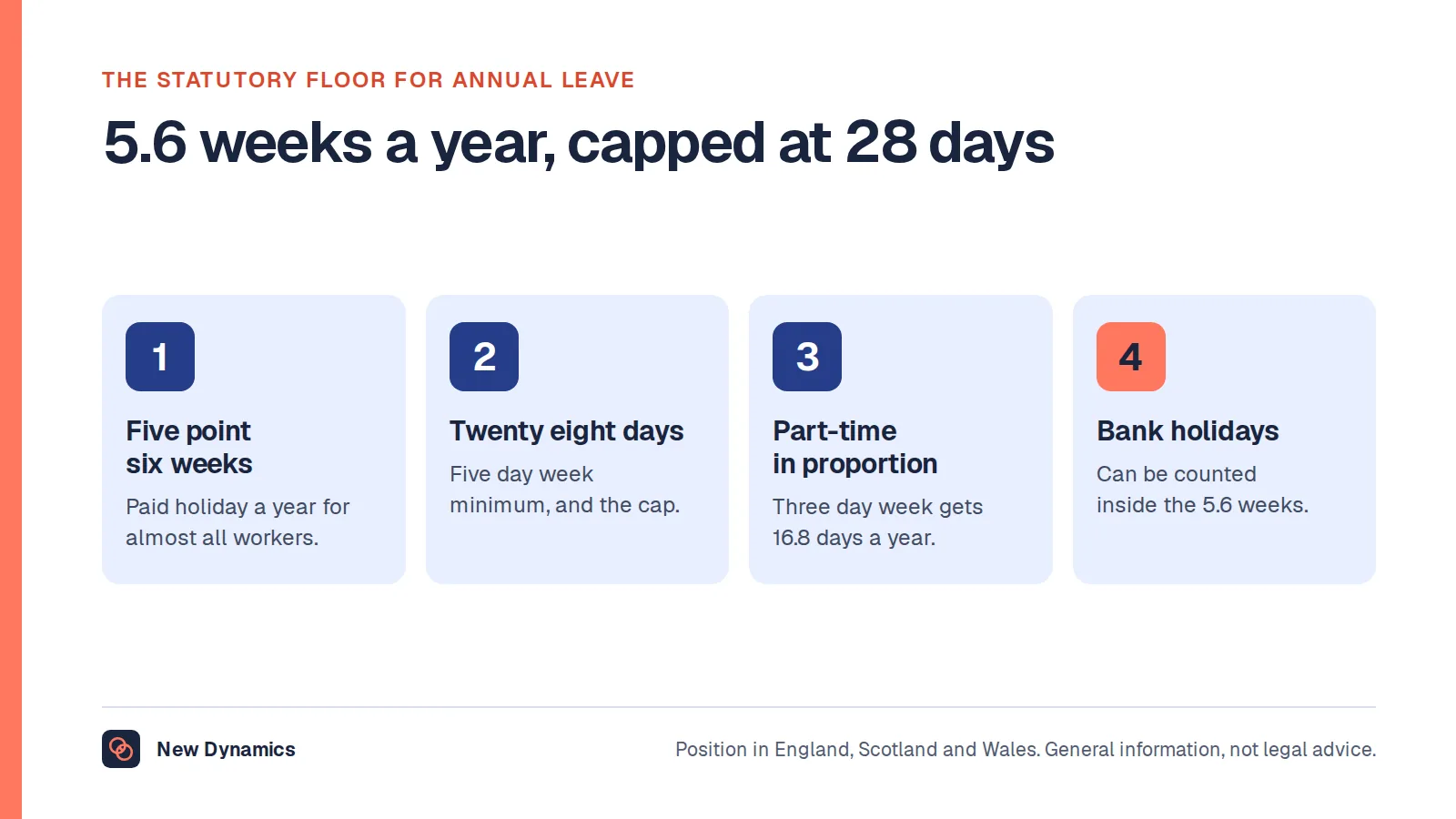
What holiday entitlement means in the UK: the statutory 5.6 weeks, the 28 day cap, part-time and irregular hours staff, accrual, holiday pay, carry over, notice rules, and how to write a leave policy that works.
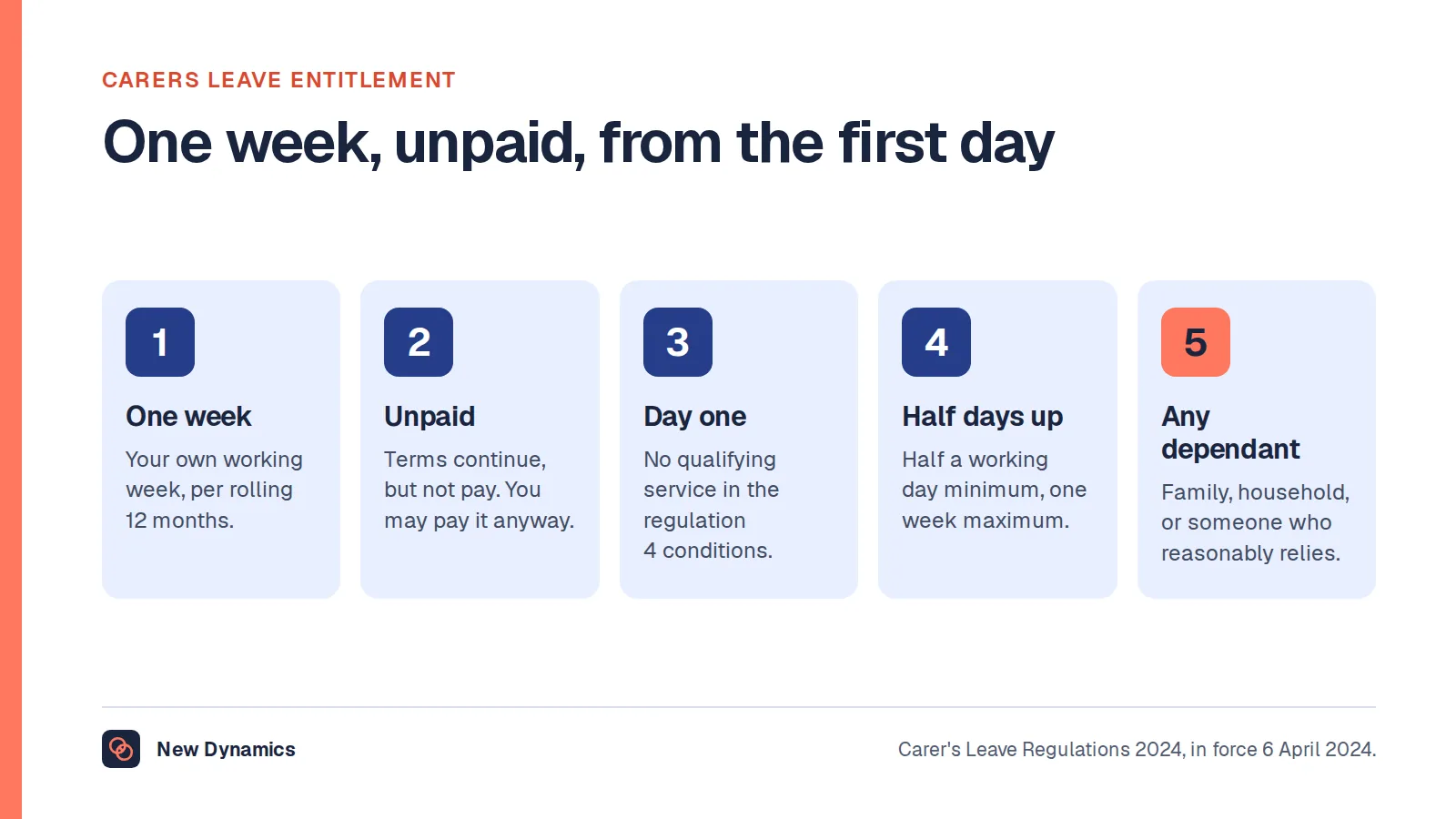
What the Carer's Leave Regulations 2024 actually say: one unpaid week per rolling 12 months from day one, who counts as a dependant, the notice test, and why an employer can postpone a request but never refuse it.
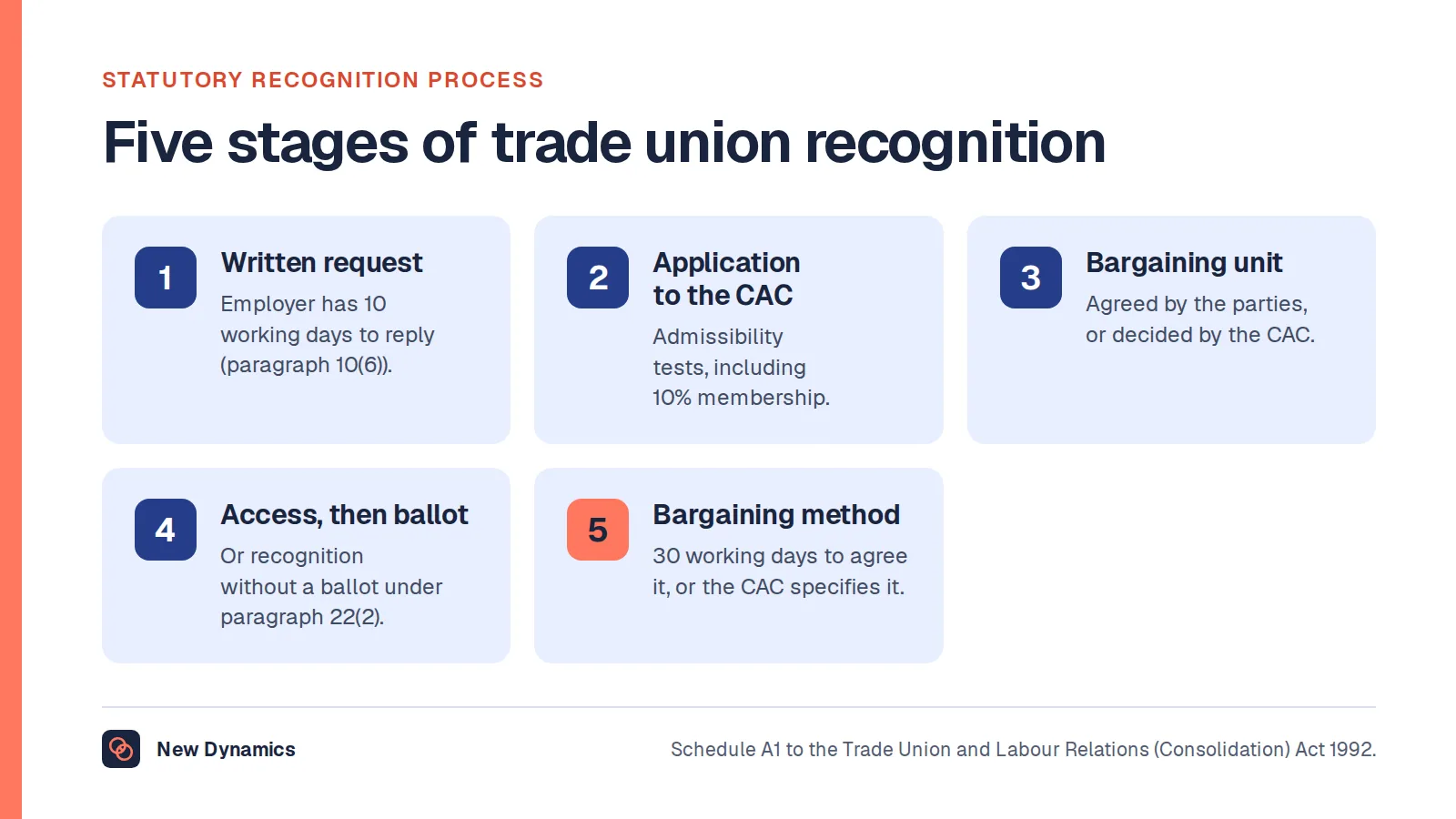
The statutory trade union recognition process in Great Britain: the 21 worker test, the 10 per cent membership test, access to the workforce, when the CAC recognises without a ballot, and the ballot threshold that changed in April 2026.