Absence management: meaning, policy and how to do it fairly
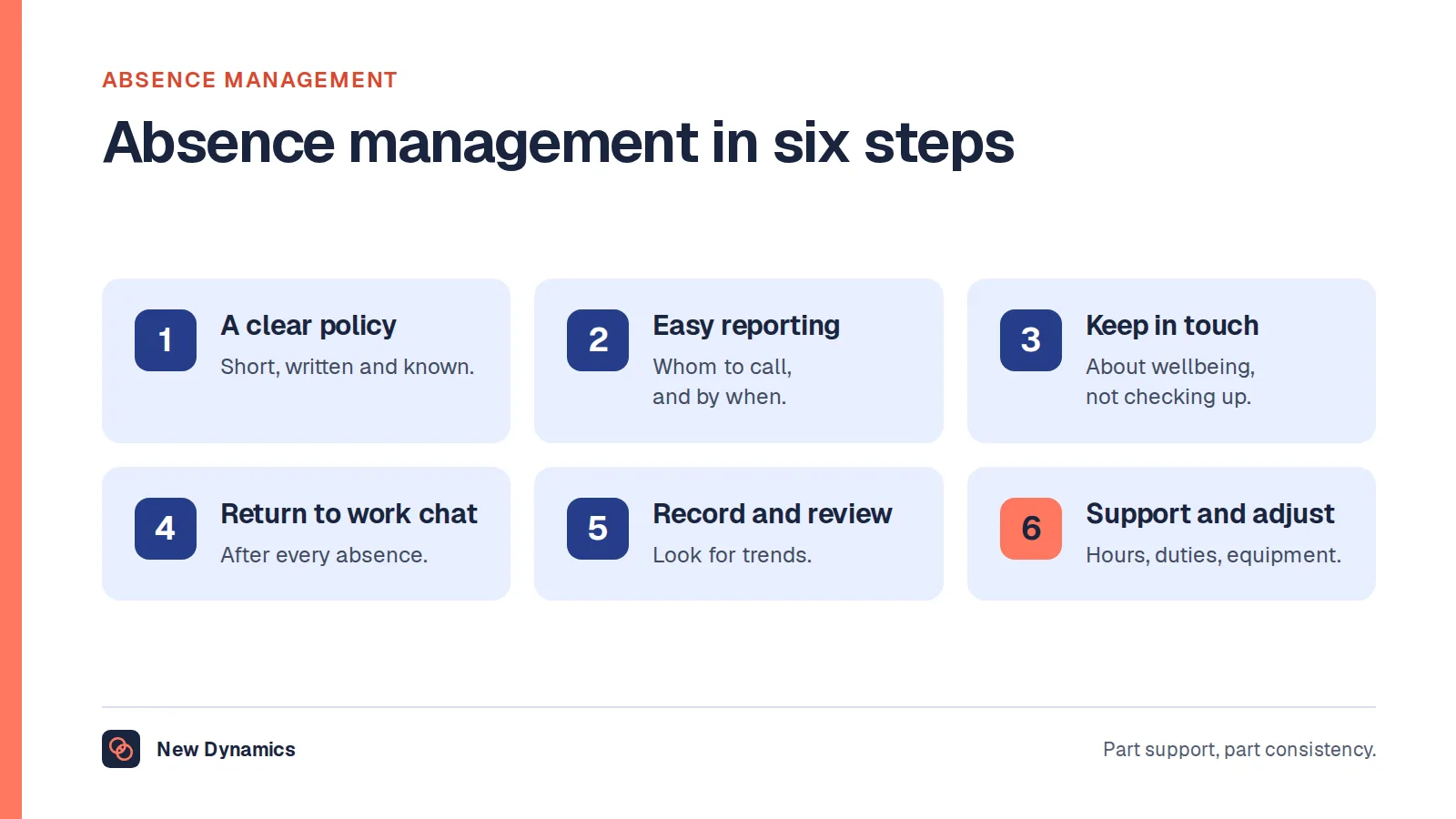
What absence management and absenteeism mean, what an absence policy should cover, how to measure absence, a six-step process and the mistakes that make it worse.
Read the articlePage 3 of 4. Workplace policies, employment basics, working time, wellbeing, fairness and inclusion, explained with examples you can adapt.
Page 3 of 4, 94 articles, newest first
What absence management and absenteeism mean, what an absence policy should cover, how to measure absence, a six-step process and the mistakes that make it worse.
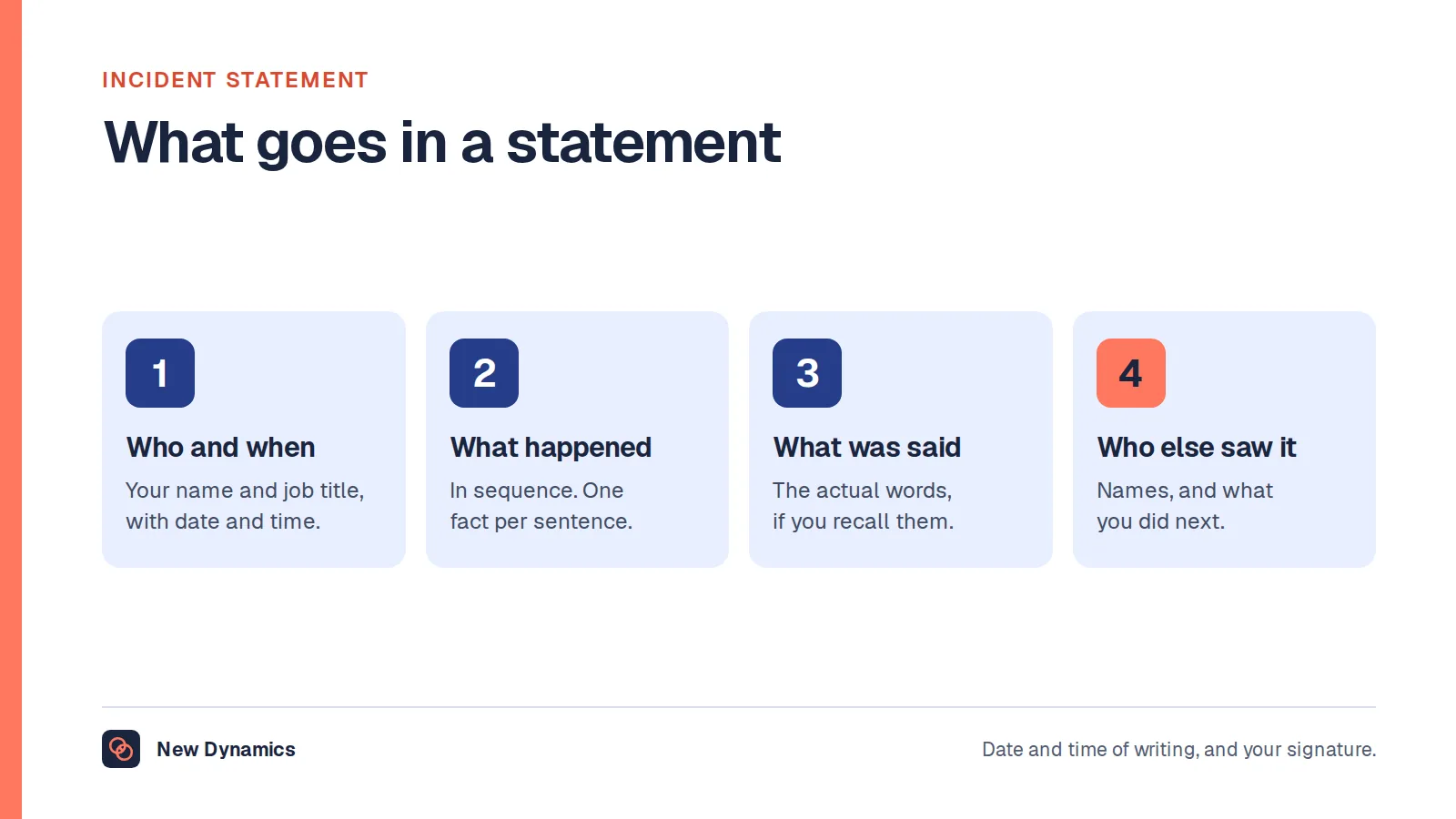
Read the articleHow to write an incident statement at work: what goes in it, the difference between what you saw and what you concluded, a generic example, signing and amending, and how an investigator should ask for one.
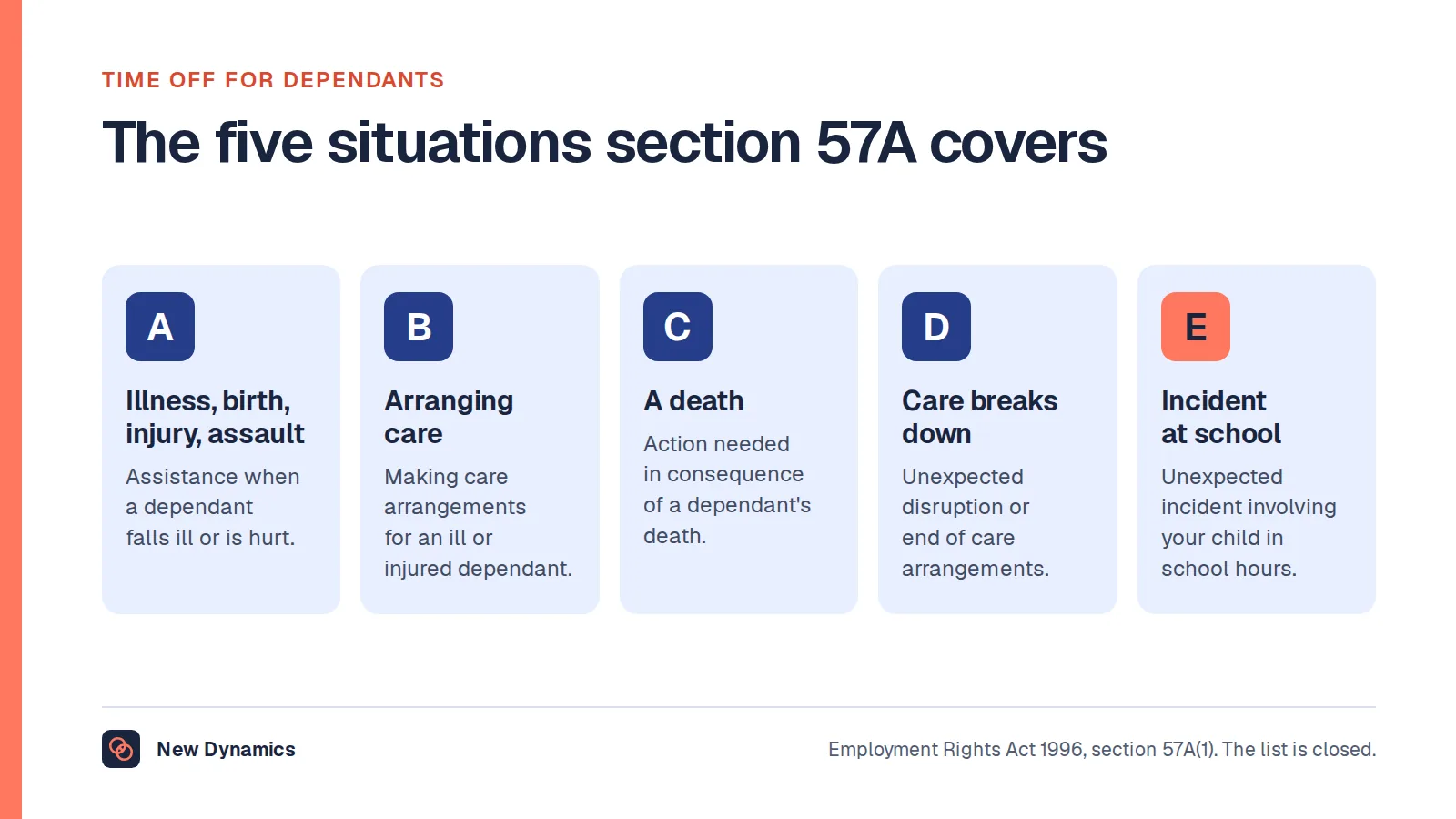
Read the articleThe UK right to time off for dependants explained from section 57A of the Employment Rights Act 1996: who counts as a dependant, the five situations covered, the notice an employee must give, why it is unpaid by default, and how it differs from carer's leave. Includes what your policy should settle.
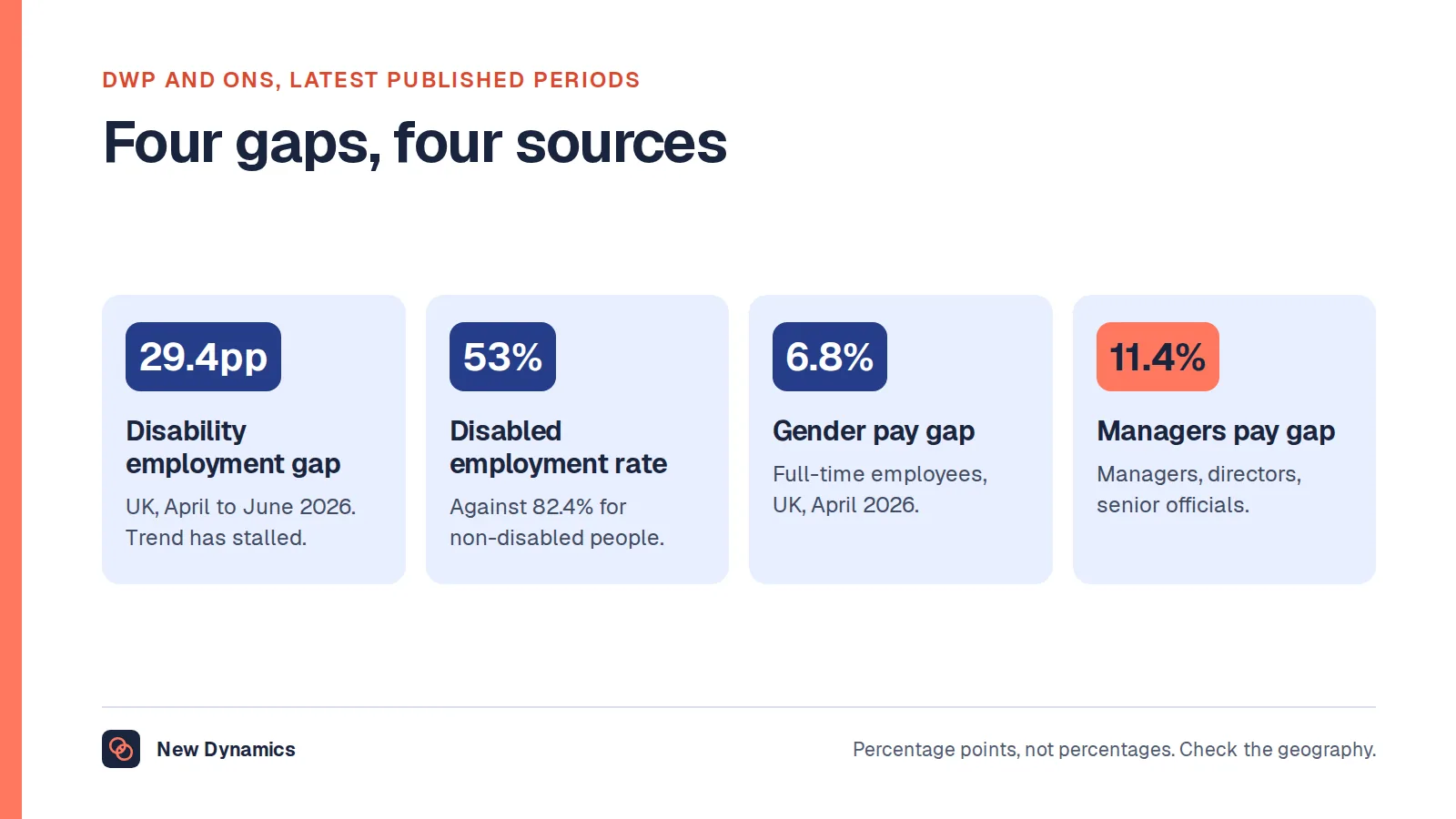
Read the articleThe official UK figures on the disability employment gap, the ethnicity pay gap, women in management and the age of the workforce, each quoted with its reference period and geographic coverage. Check them, then measure your own.
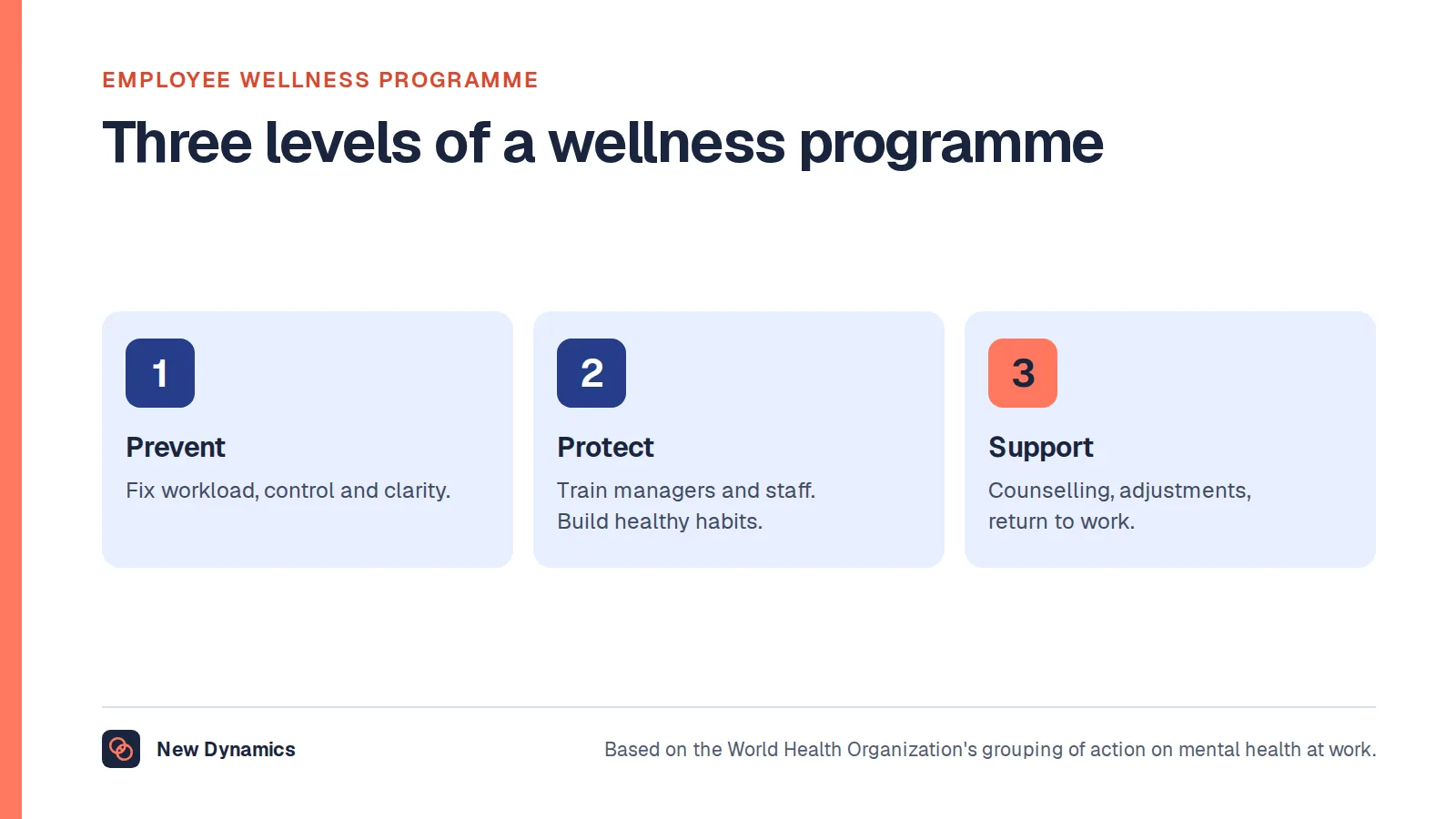
Read the articleBuild a staff wellness programme that works: start with how work is designed, then choose from 40 wellness program ideas across mental, physical, financial and social wellbeing.
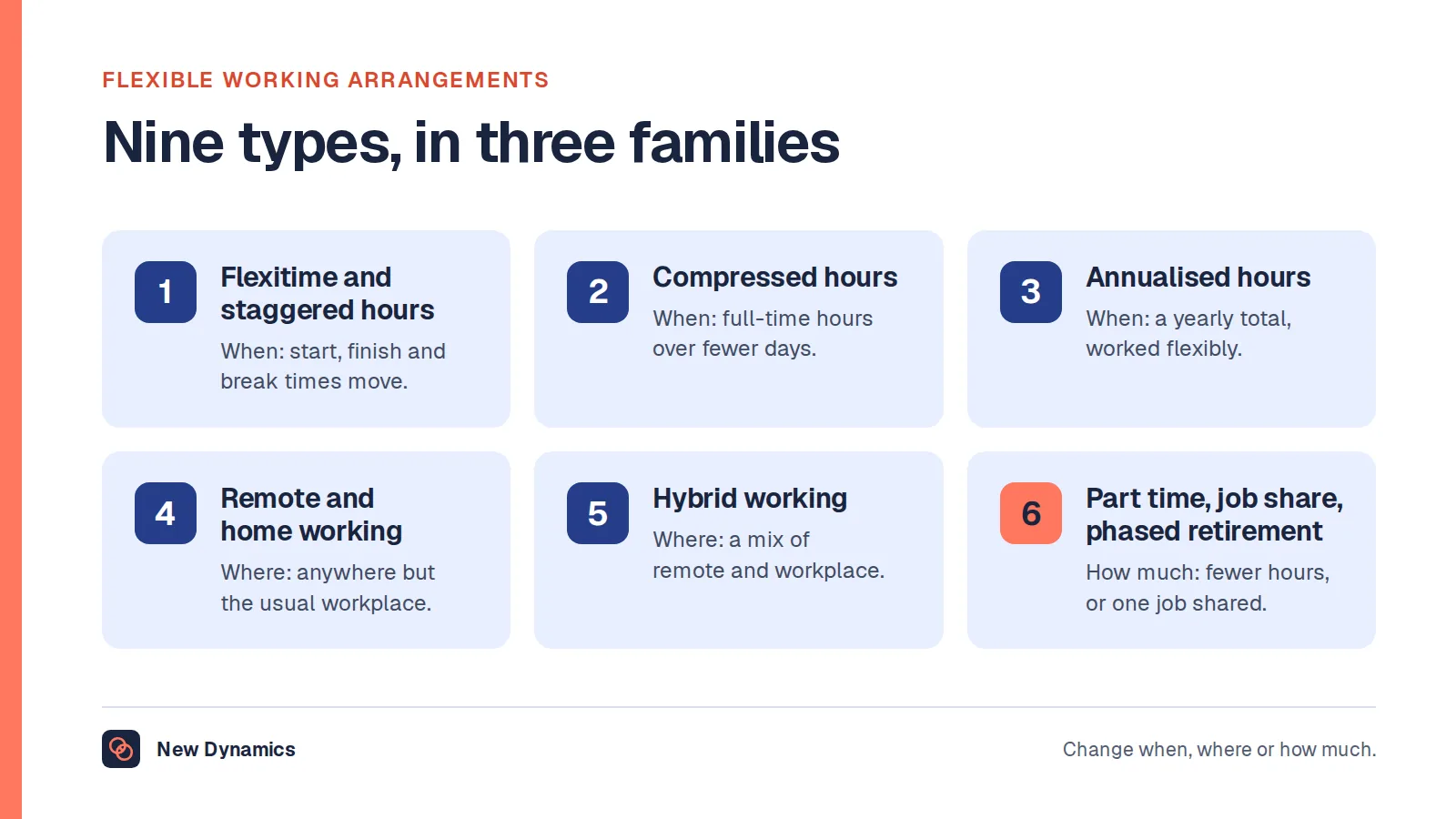
Read the articleWhat flexible working arrangements are, the nine types GOV.UK lists, the day-one right to request in Great Britain, the eight refusal reasons and how managers make flexibility work.
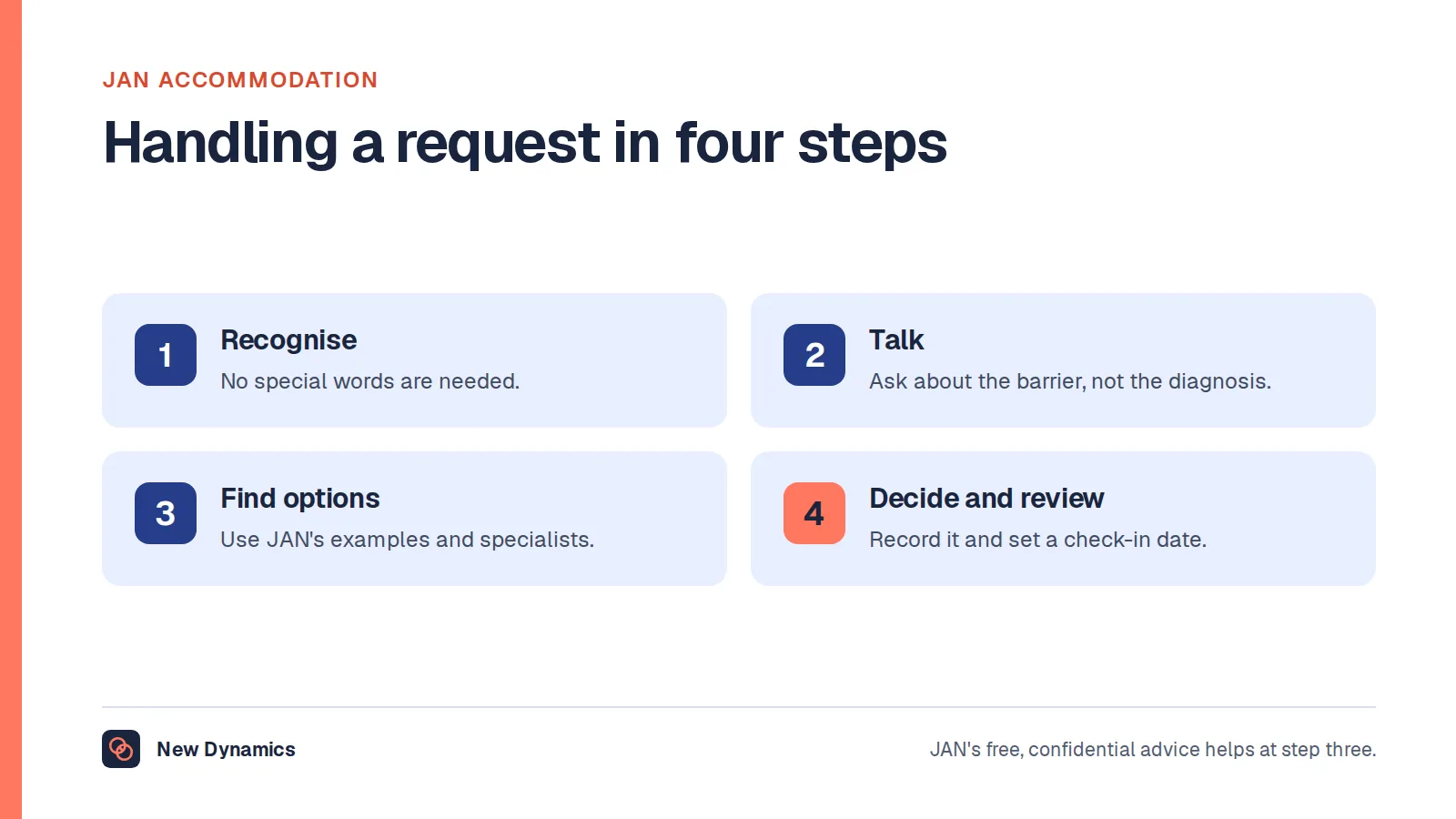
Read the articleJAN accommodation guidance explained: what the Job Accommodation Network is, what reasonable accommodation means under the ADA, how a request works, and the UK equivalent. Use it before your next request lands.
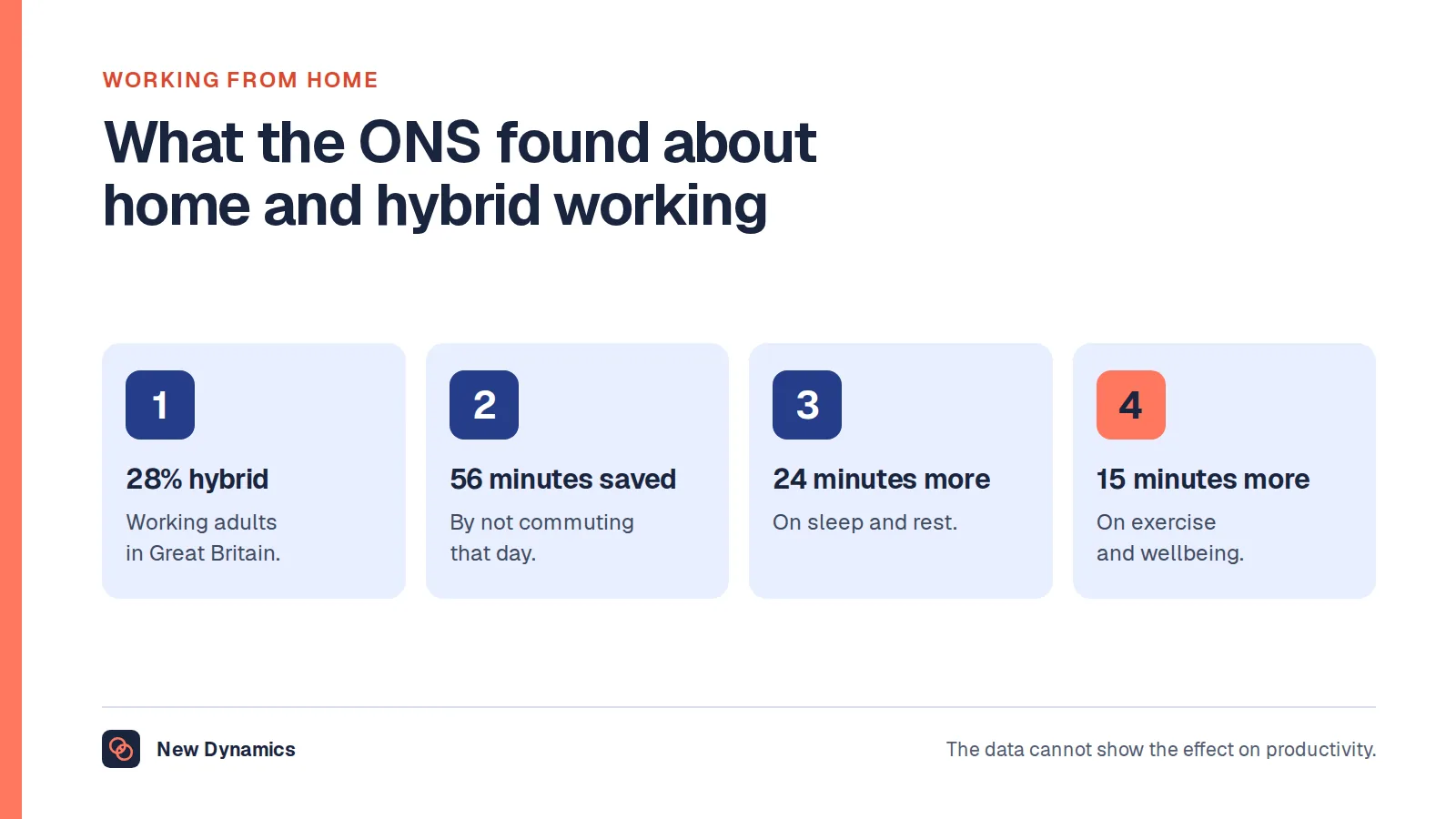
Read the articleThe benefits of working from home for employees and employers, with UK figures from the ONS, the drawbacks to manage and six steps that make home and hybrid working fair.
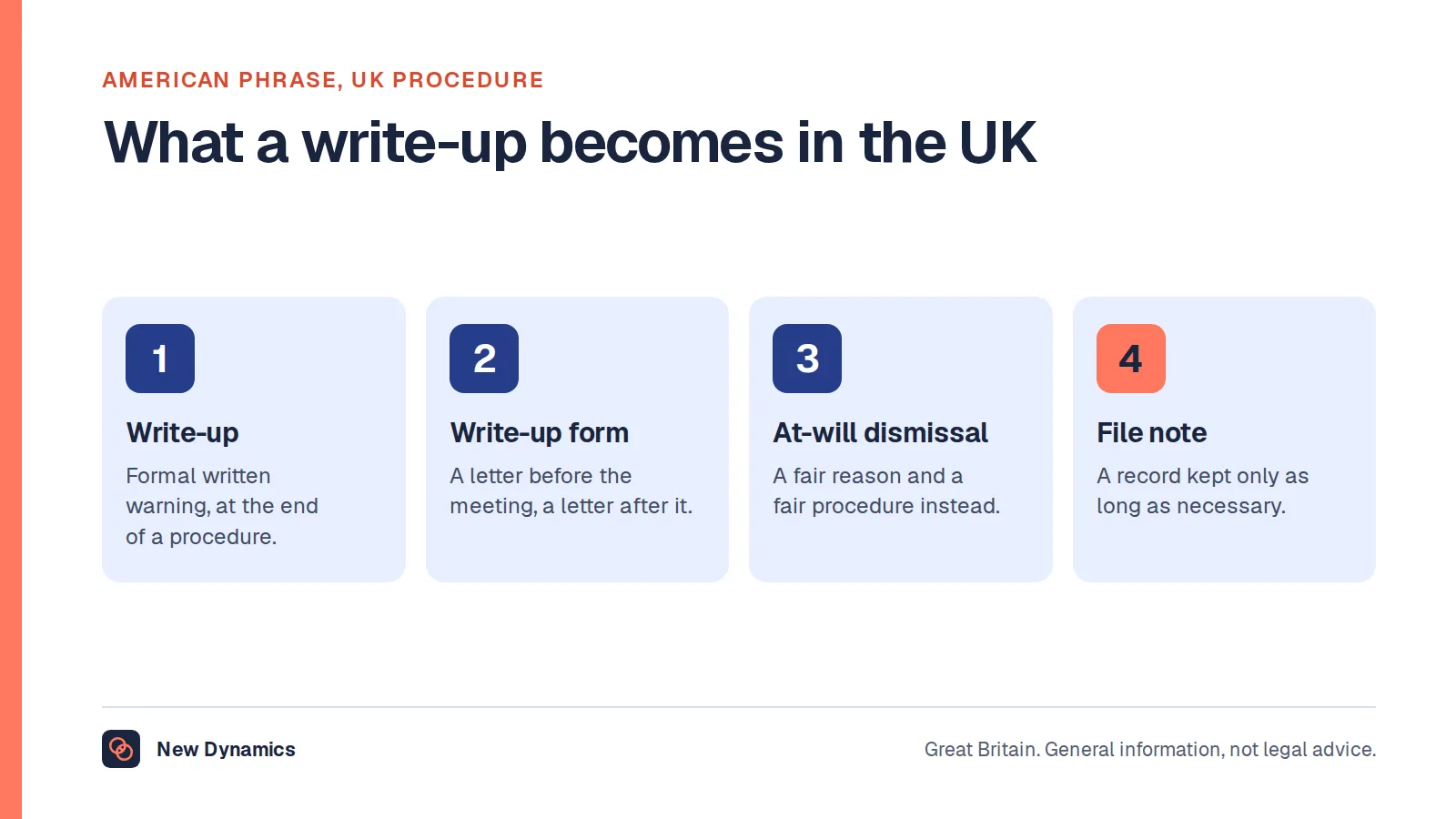
Read the articleWriting someone up is American usage. In the UK the equivalent is a disciplinary warning under the Acas Code, with an investigation, a letter, a meeting, a companion and an appeal first, plus a sample written warning to adapt.
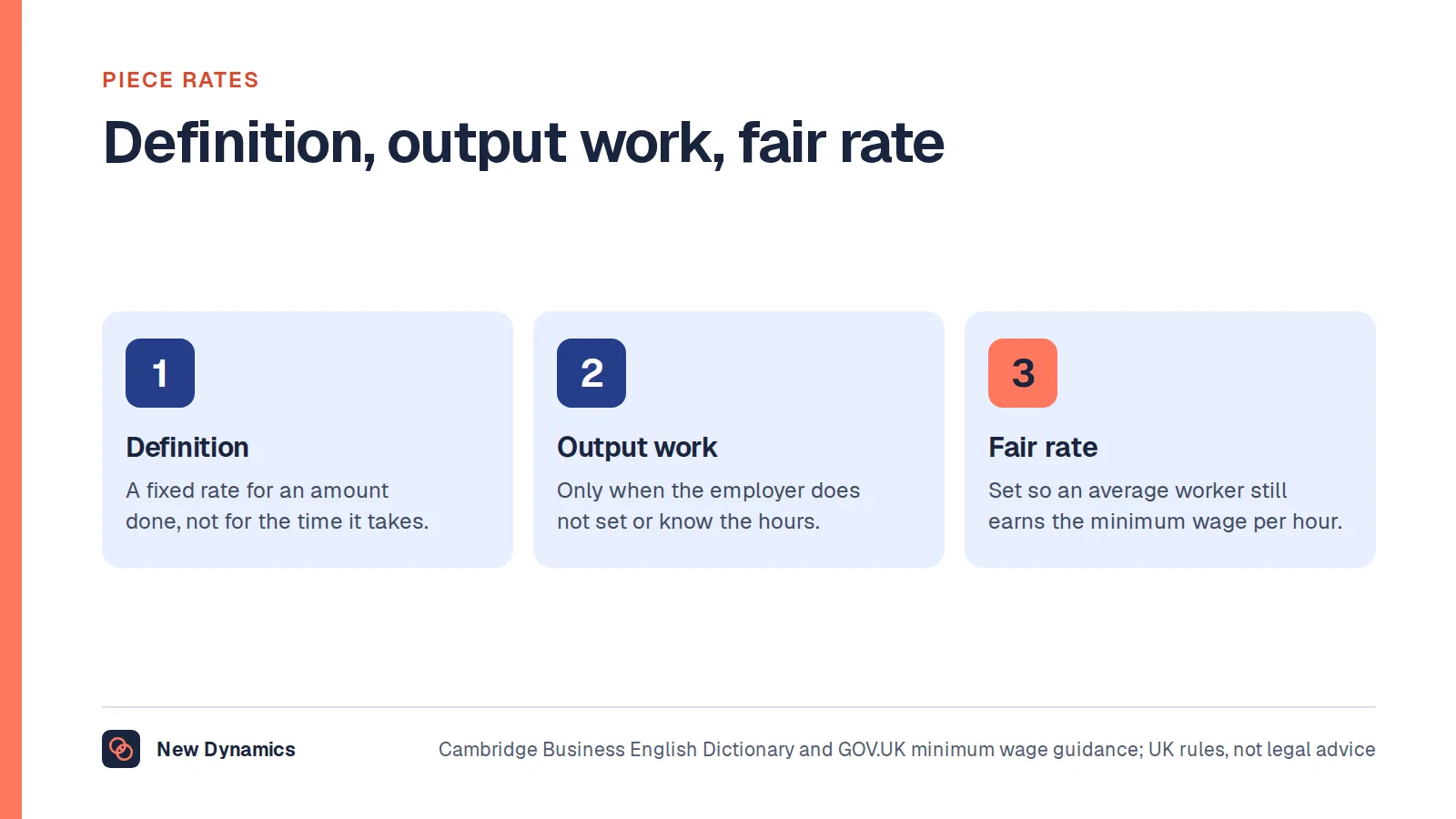
Read the articleThe meaning of piece rates, from the Cambridge definition and the GOV.UK minimum wage rules for output work: what piece work is, when it can be used, the fair rate method with GOV.UK's example, where piece rates are used, the pros and cons for employer and worker, piece rates beside time rates, commission and bonuses, and how to set, review and document a rate.
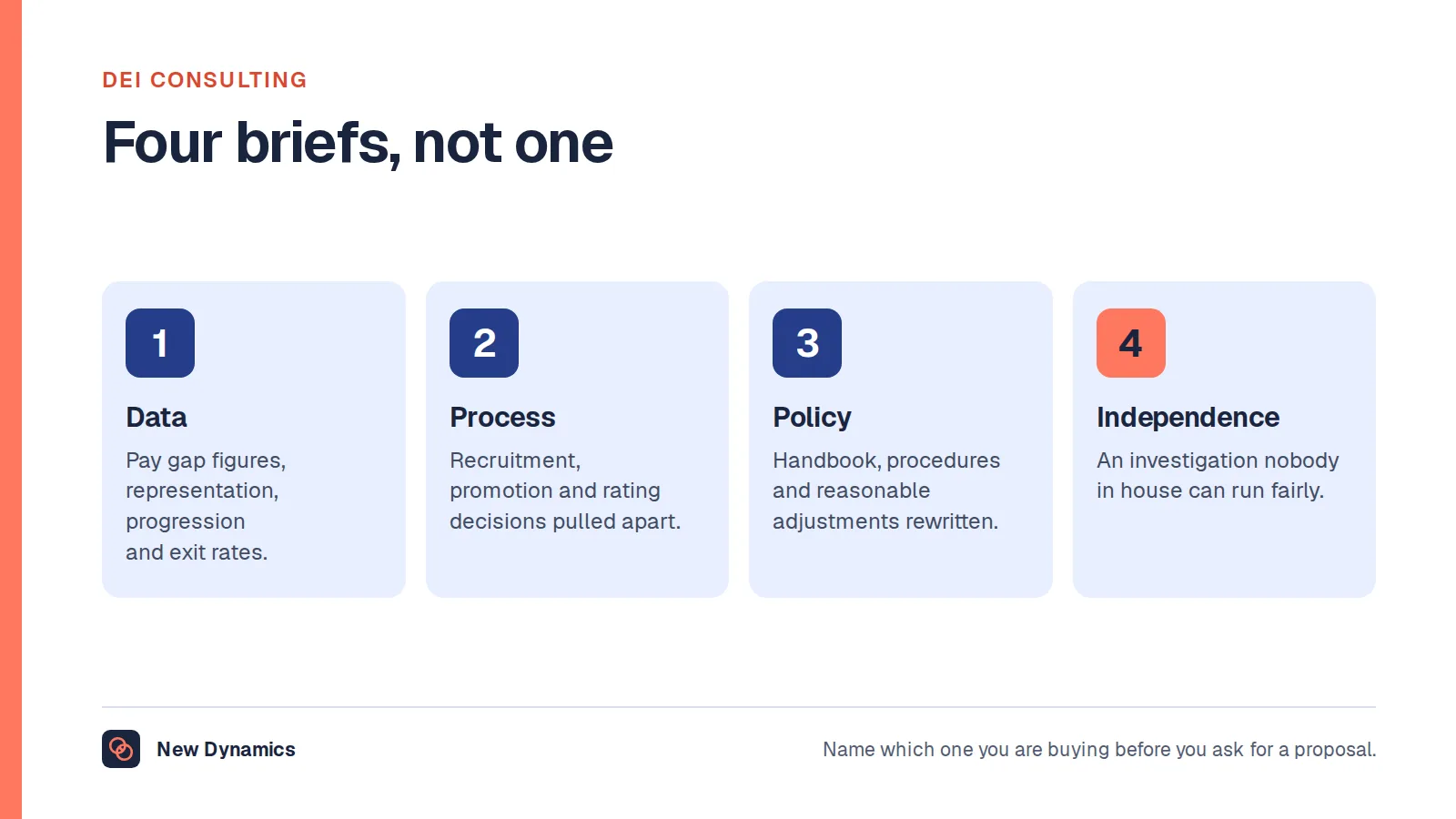
Read the articleDEI consulting for two readers: the employer deciding whether to bring someone in, and the person considering it as a career. The briefs that recur, what the published UK evidence says about unconscious bias training, the certification landscape, the measurement problem, and the data protection position when an outsider analyses workforce data.
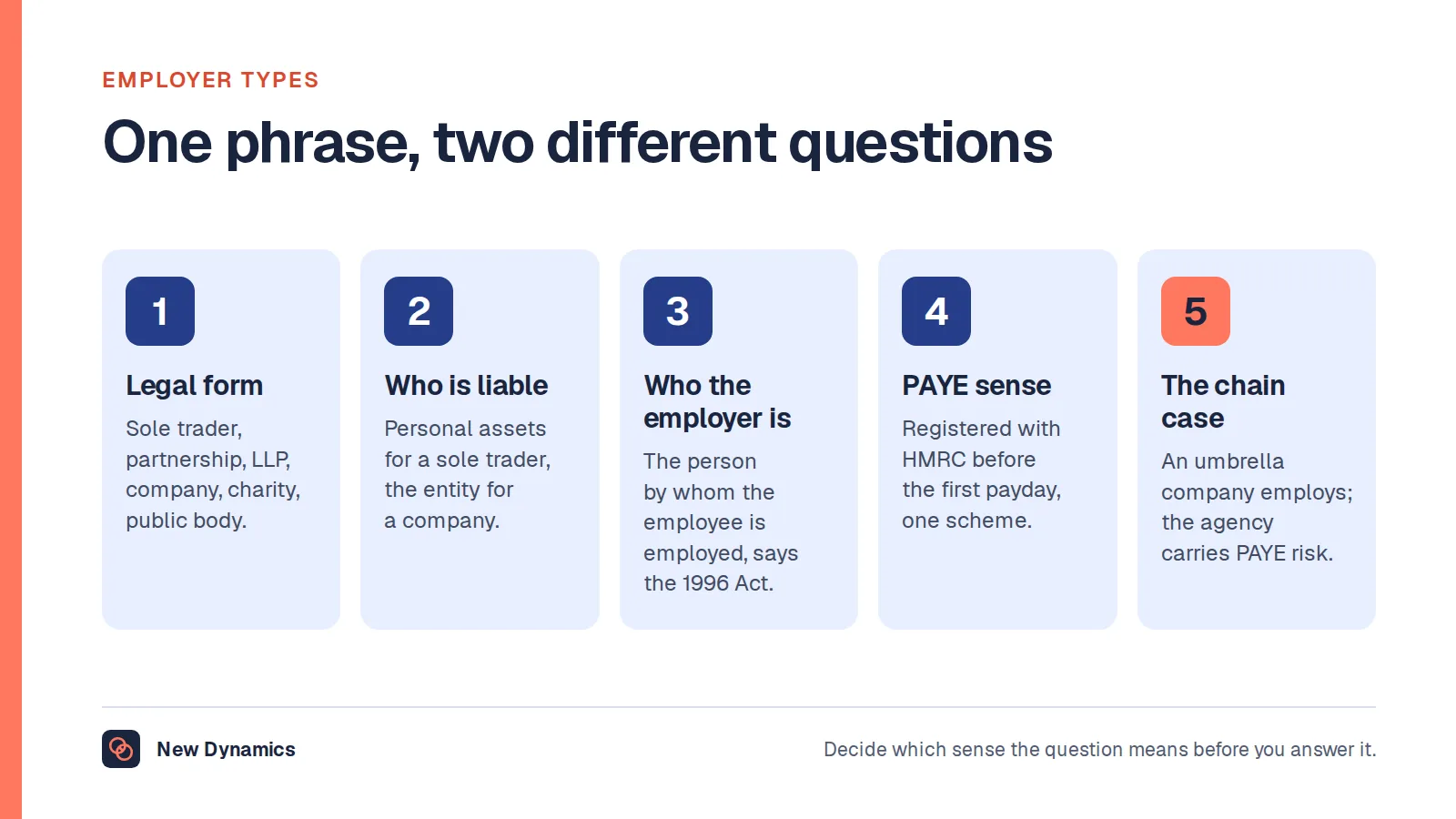
Read the articleEmployer type means two different things: the legal form of the employing entity (sole trader, partnership, LLP, limited company, charity, public body) and the HMRC and PAYE sense of registering as an employer. What changes with each, who the employer is when an agency or umbrella company is involved, and the thresholds that switch a duty on. UK, not legal advice.
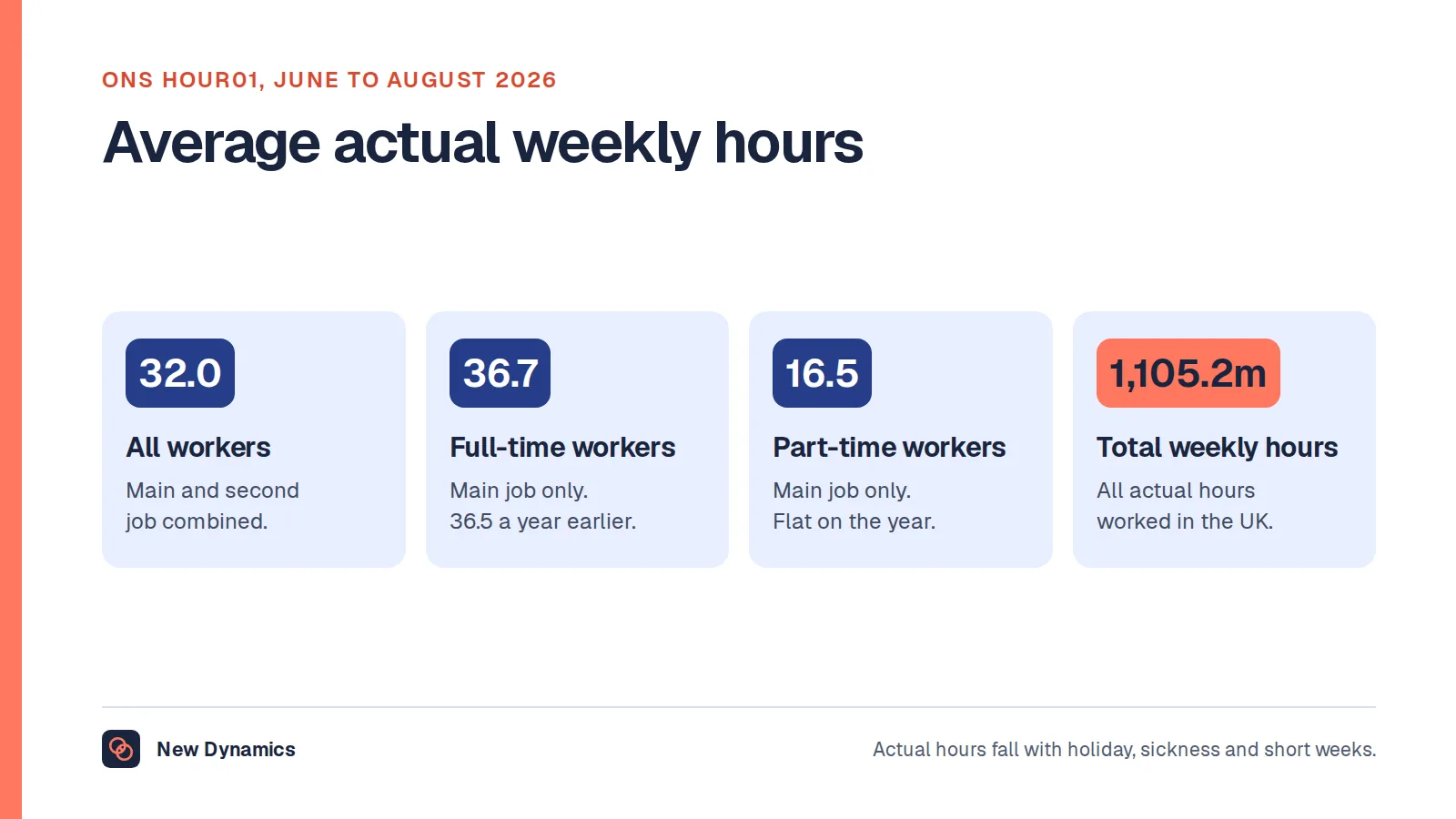
Read the articleWhat the ONS publishes on average actual weekly hours worked, what the Department for Business and Trade publishes on trade union membership, and why no official UK figure counts presenteeism. Every number with its reference period.
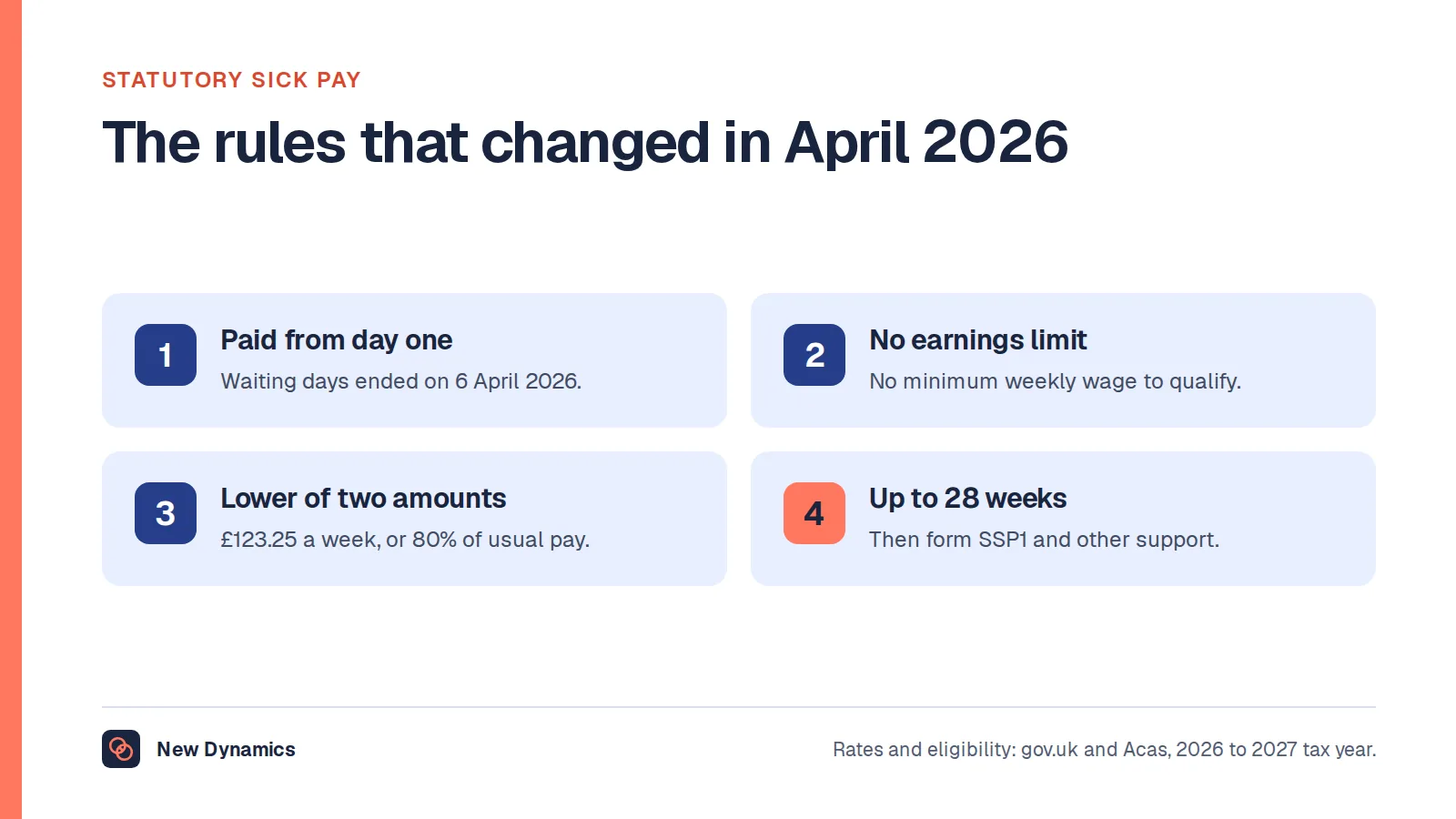
Read the articleWho qualifies for statutory sick pay and what it pays now, self-certification and fit notes, how and when to call in sick, how much contact is reasonable, confidentiality, and what to put in your own policy.
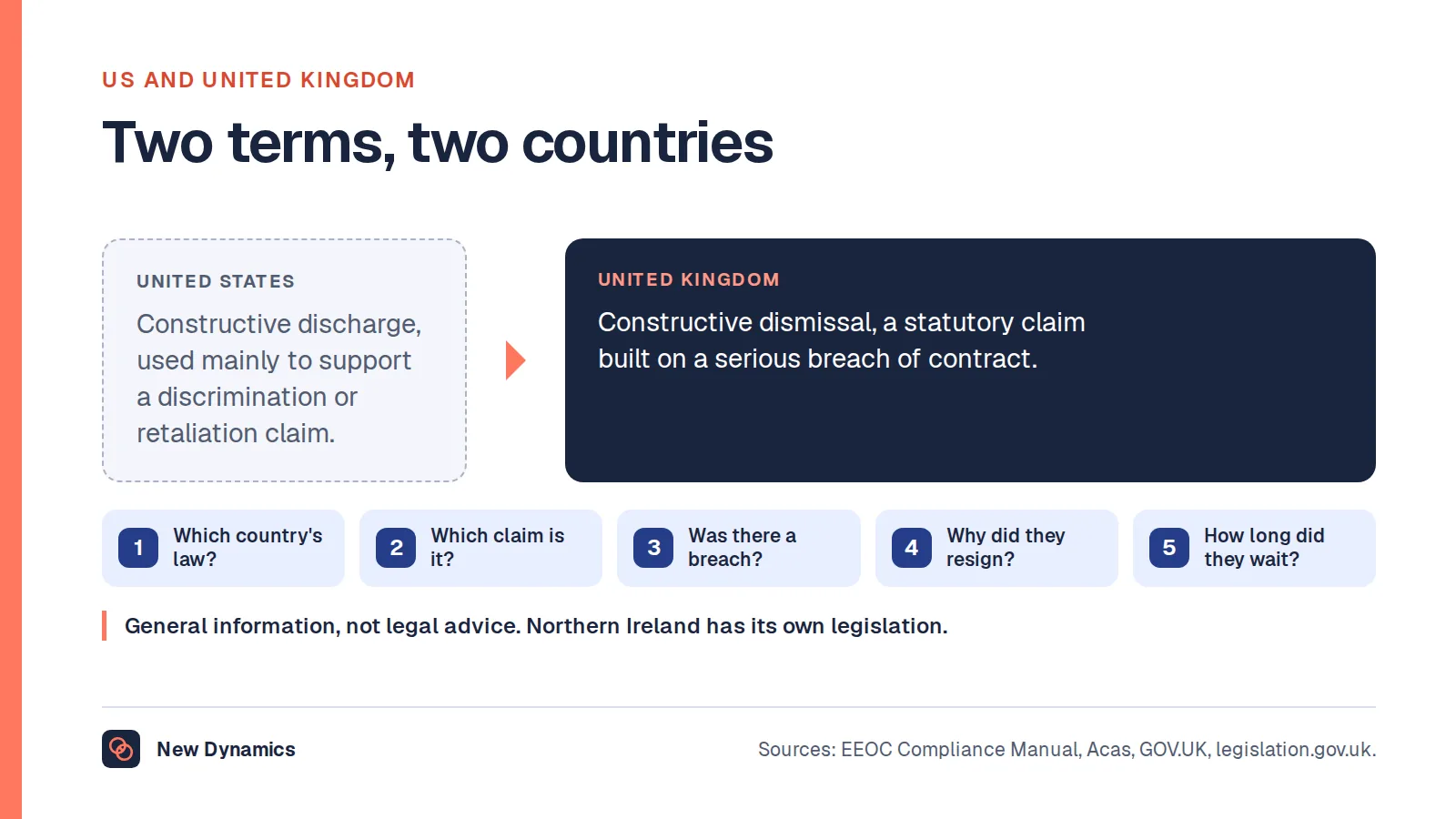
Read the articleWhat constructive discharge means in the United States, where the test of intolerable working conditions comes from, how constructive dismissal works as a statutory claim in the United Kingdom, examples of both, and what a manager should do when someone resigns citing their working conditions.
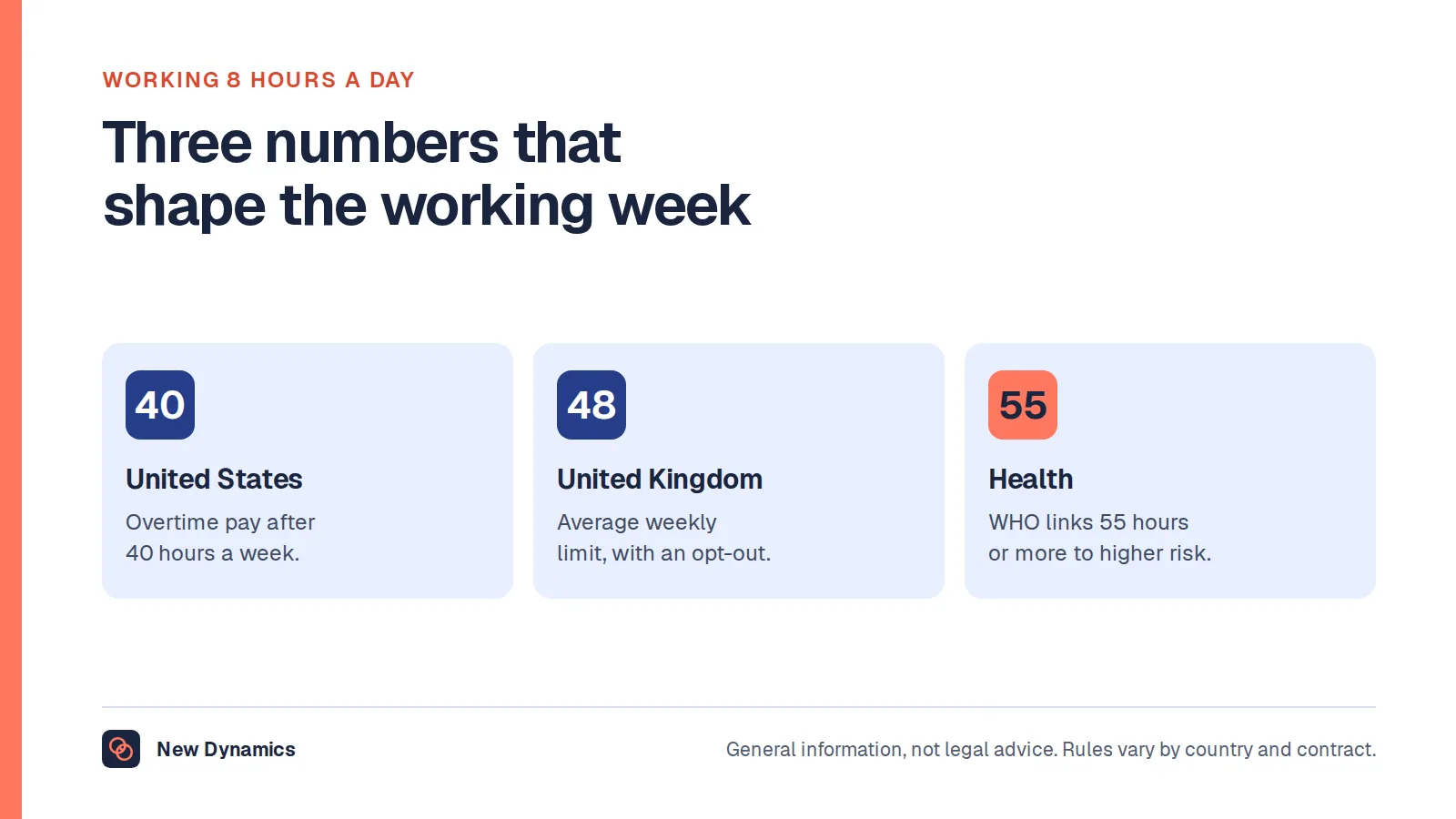
Read the articleWhy we work 8 hours a day: how the 40-hour week became law in the US, what the limits are in the UK, what long hours do to health and how to make eight hours count.
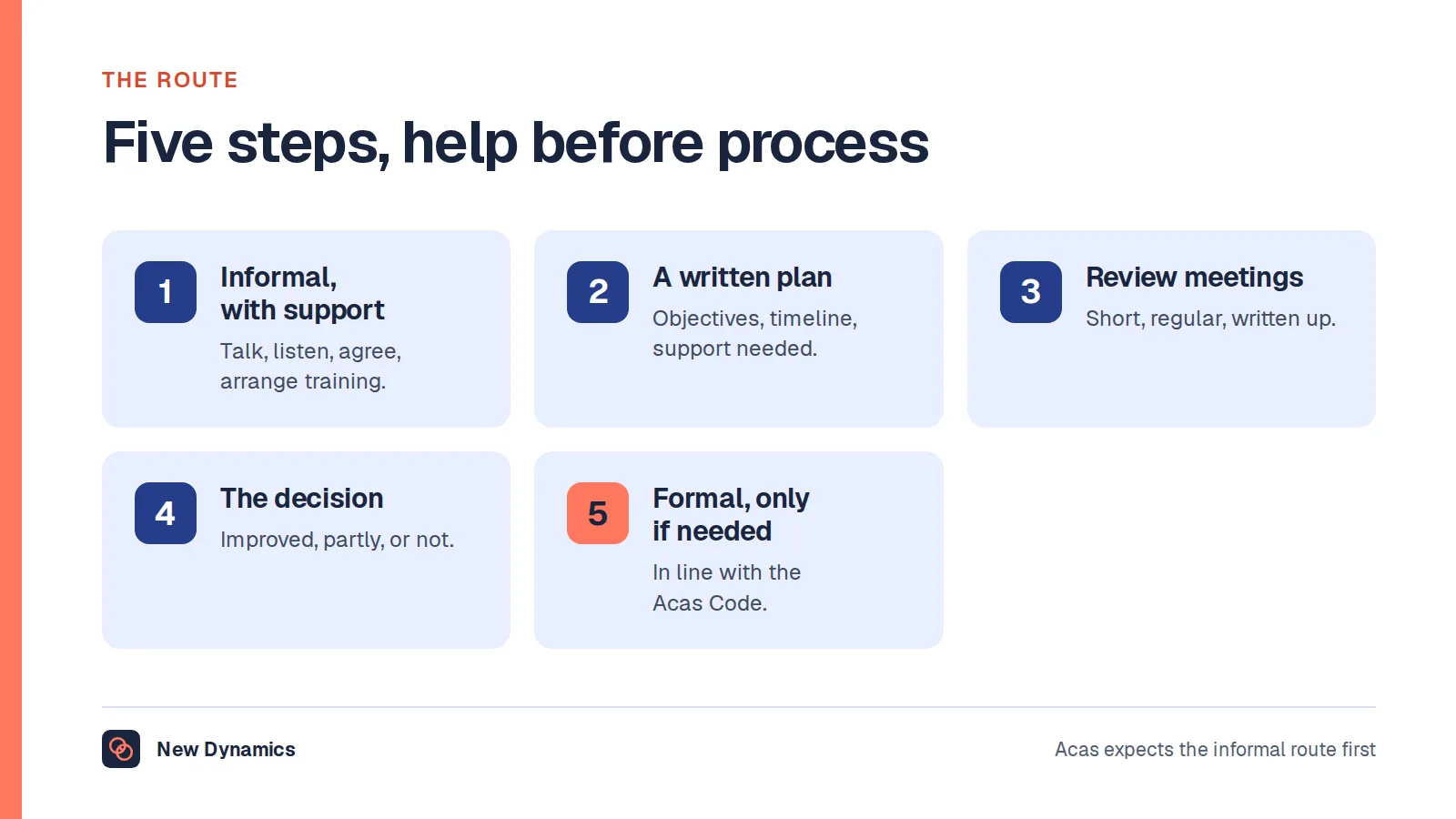
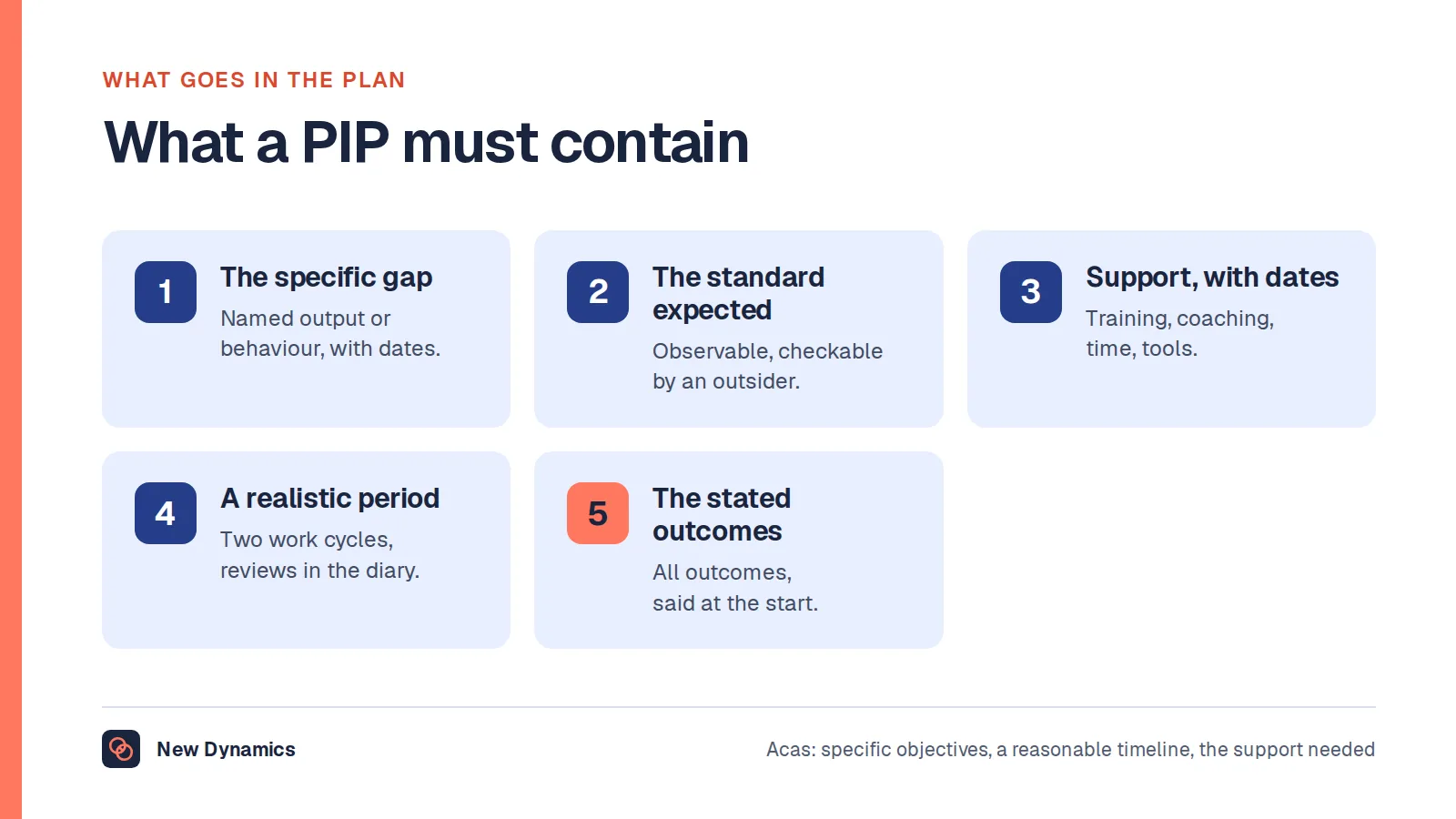
Read the articleThe capability route from first conversation to final decision: why there is no such thing as an informal warning, what an improvement plan must contain, the employer's half of it, and the options when a plan does not work.
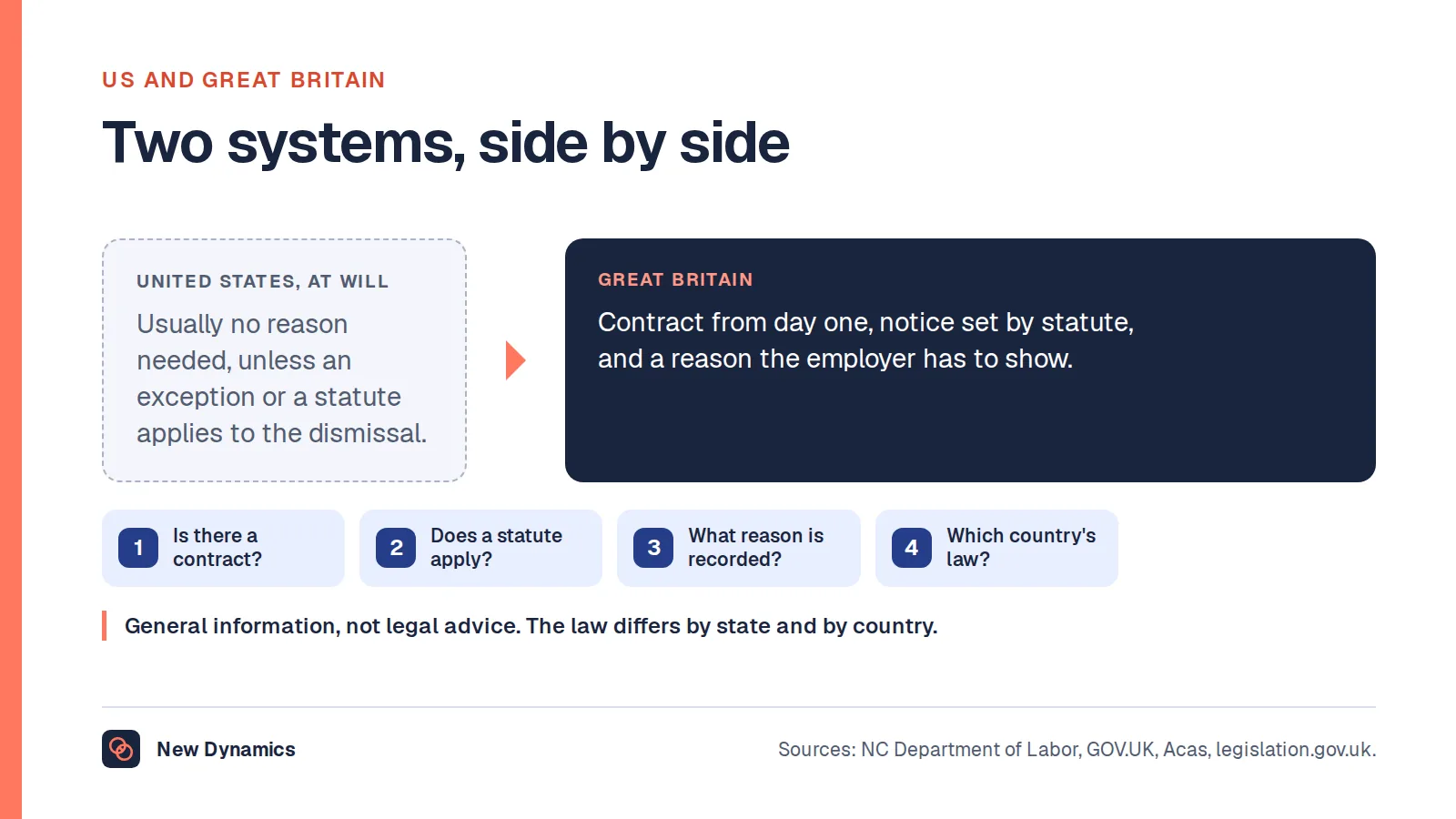
Read the articleWhat at-will employment means in the United States, the public policy, implied contract and good faith exceptions, the statutes that override it, Montana's different default, and the British position where at-will does not exist.
Read the articleWhat a PIP is in HR, the question that decides everything, when an improvement plan is the wrong tool, what to write in it, how to run the reviews, when an extension is fair, and where disability duties bite.
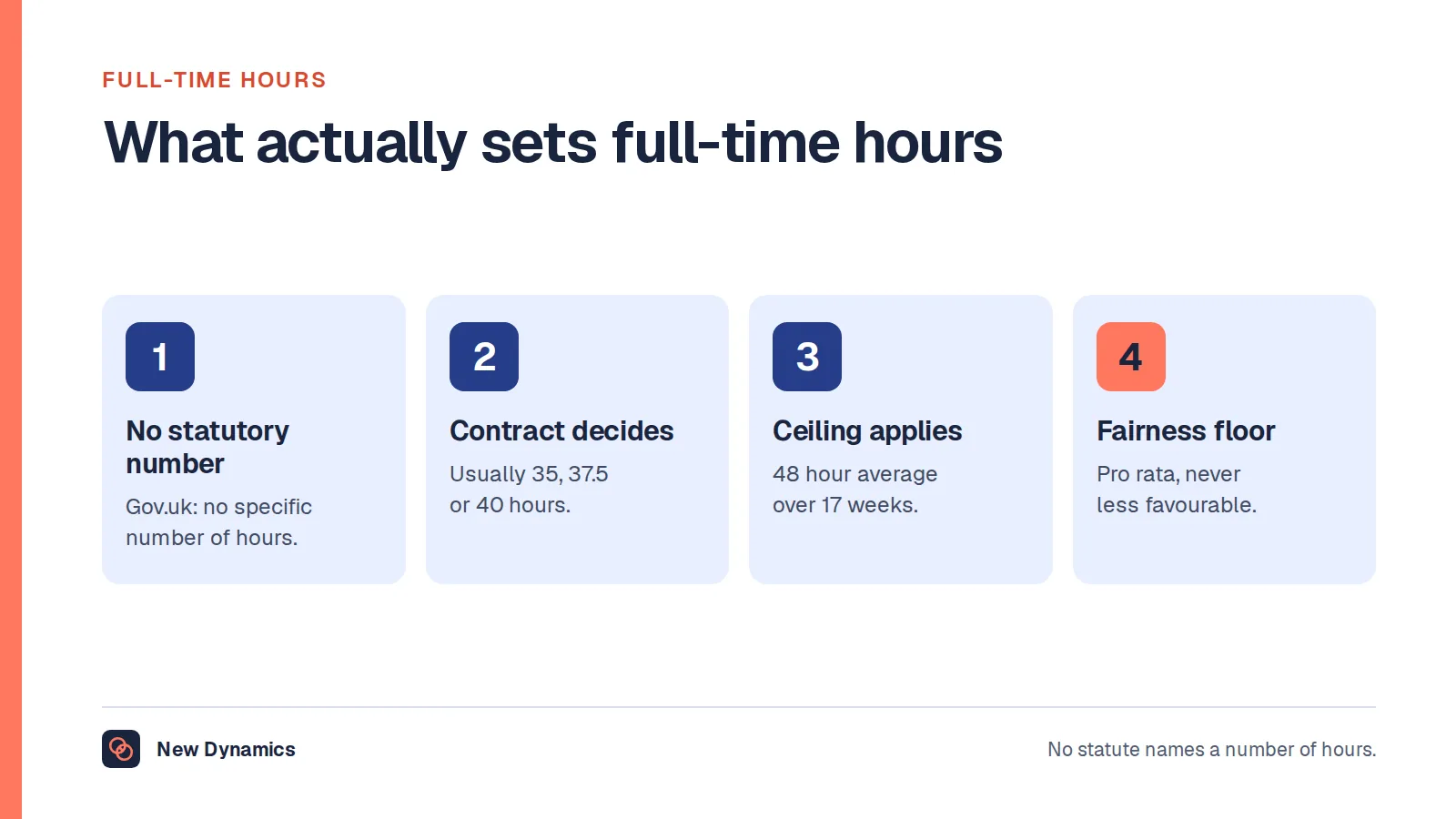
Read the articleThere is no legal definition of full-time hours in the UK. The contract sets them. What follows from that for the 48 hour limit, rest breaks, pro rata treatment, holiday and full-time equivalent, with a worked example and what to write in a contract.
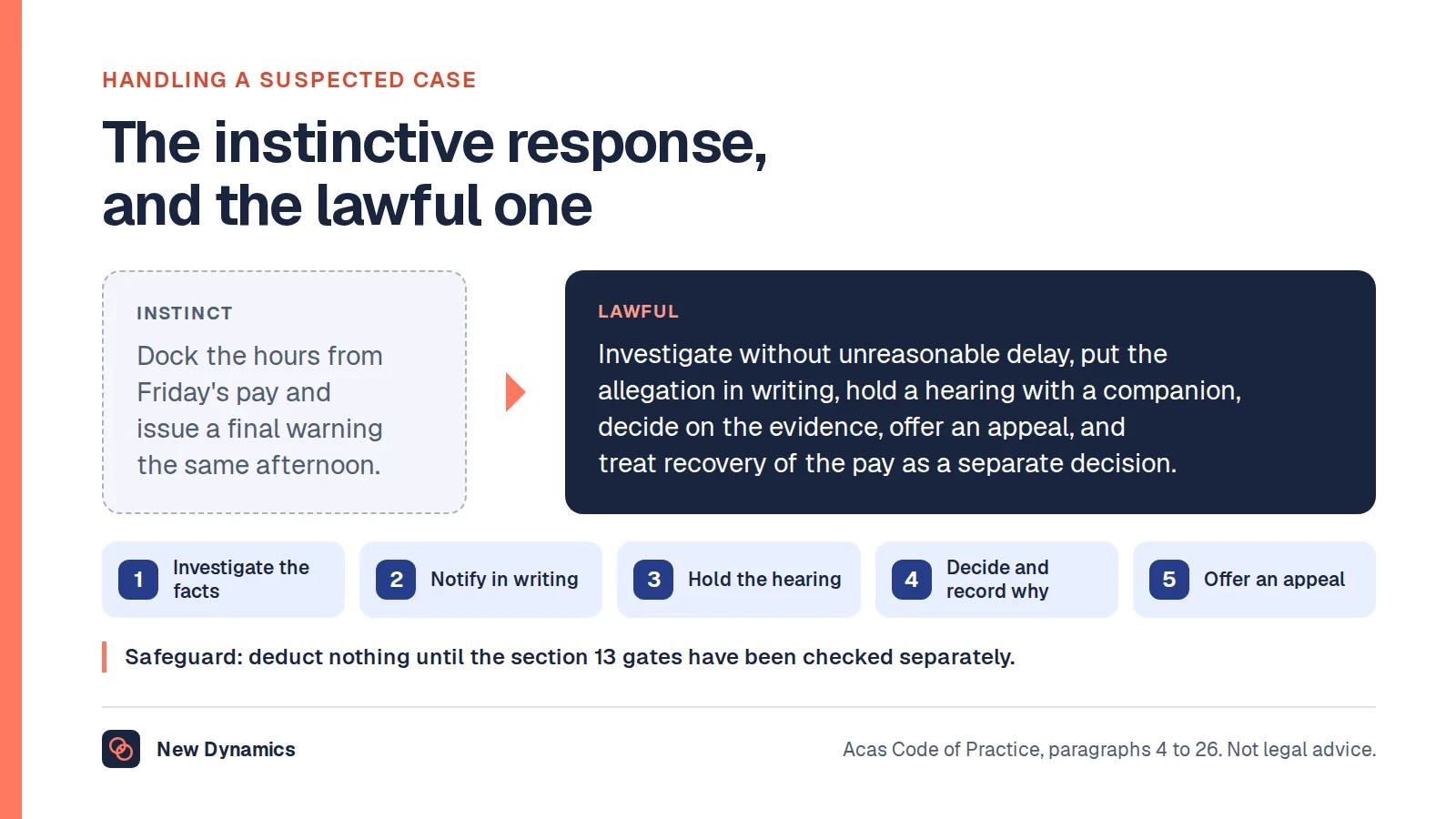
Read the articleWhat buddy punching is, why rounding and honour systems invite it, what UK employers may and may not do to detect it, how the Acas Code governs a suspected case, whether the pay is recoverable, and the test before biometrics.
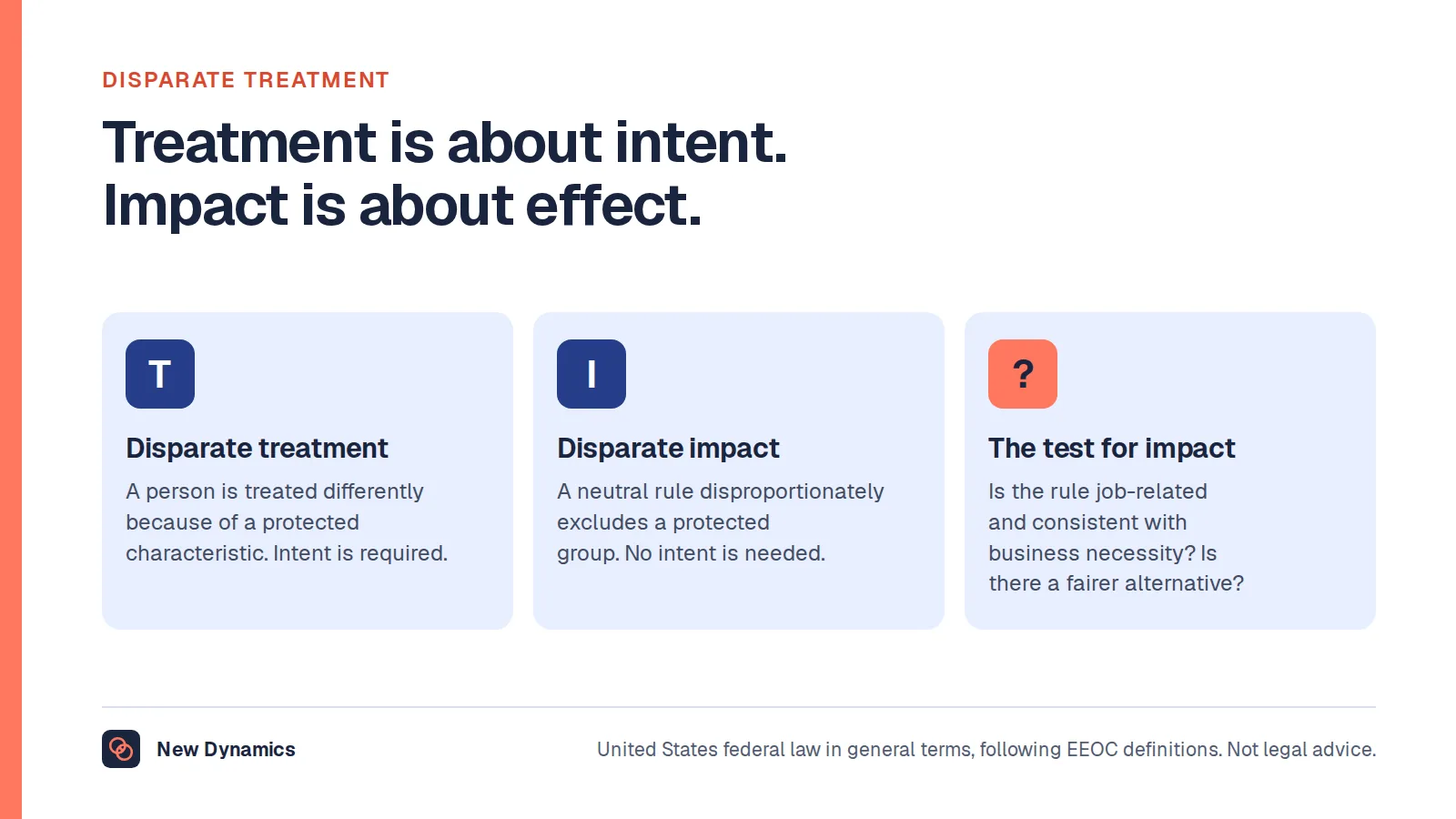
Read the articleDisparate treatment and disparate impact explained simply: EEOC definitions, clear examples, the three-step test and checks for your own decisions.
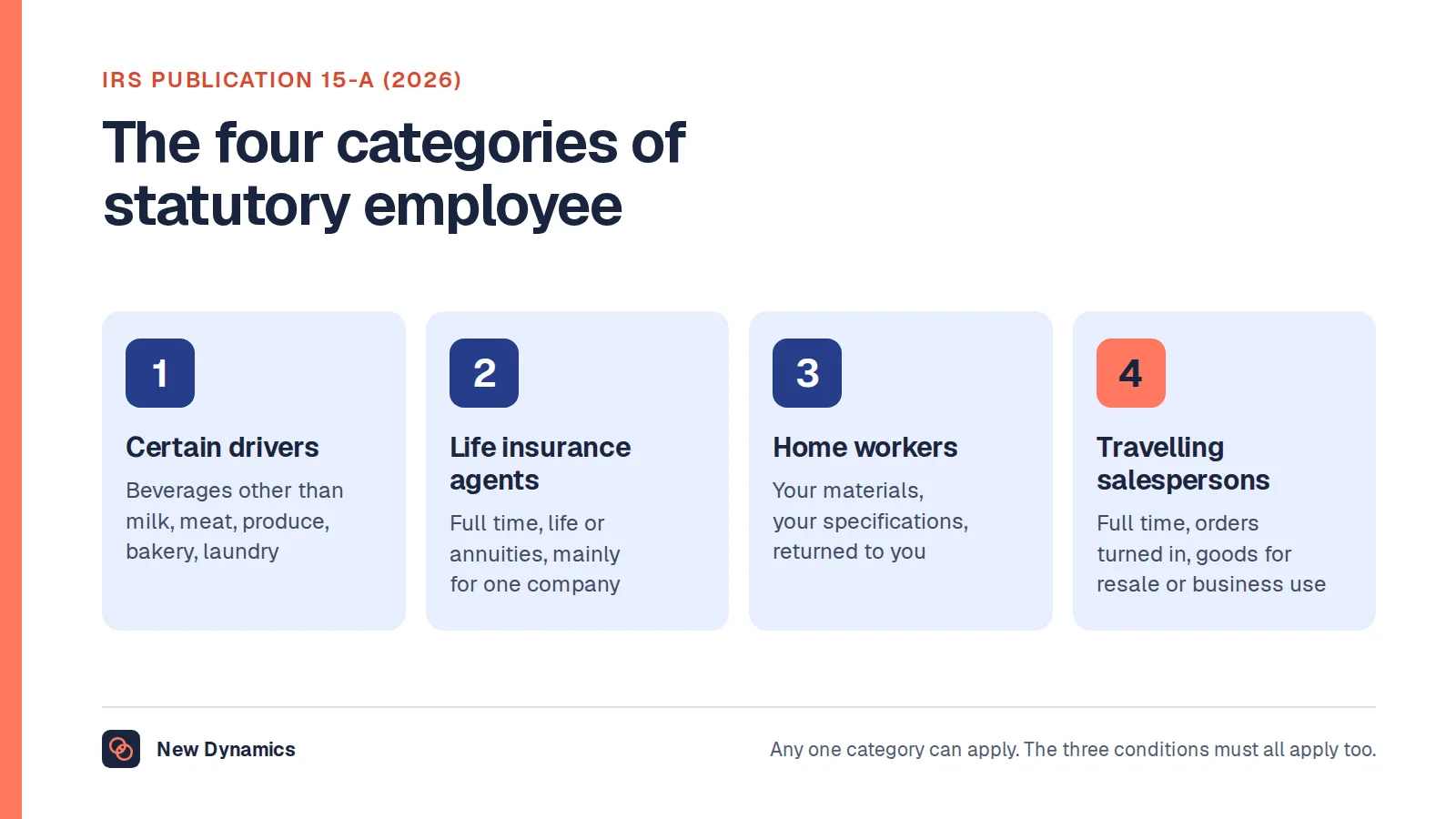
Read the articleA statutory employee is a United States tax category: a worker who is an independent contractor under common law but an employee by statute for certain employment taxes. The four IRS categories, the three conditions, box 13 on Form W-2 and Schedule C.
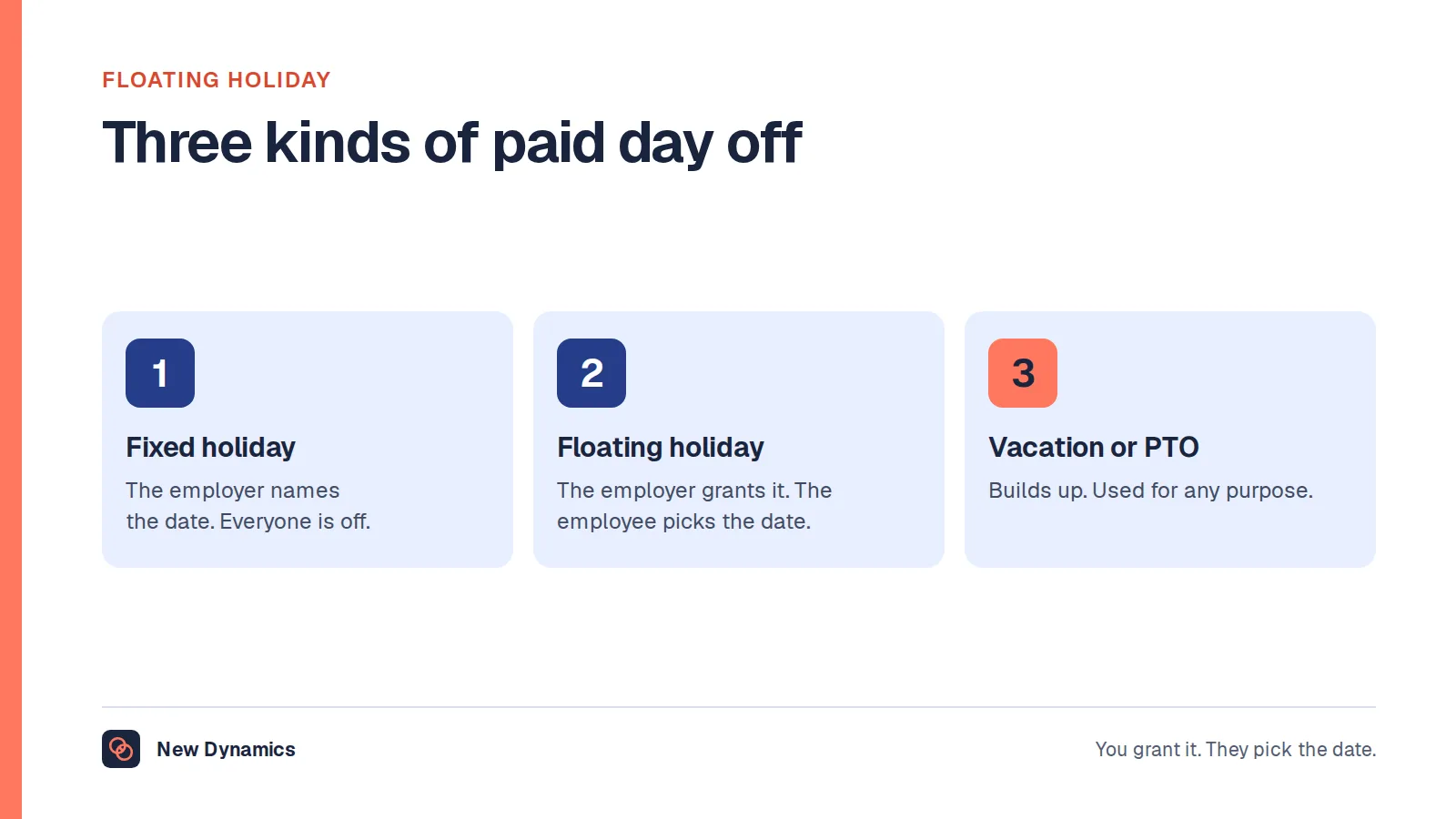
Read the articleWhat a floating holiday is, how it differs from fixed holidays and PTO, why employers offer it, six policy decisions, sample wording and the mistakes that cause disputes.
Read the articleSee what performance management could look like for your organisation.
Book a demo